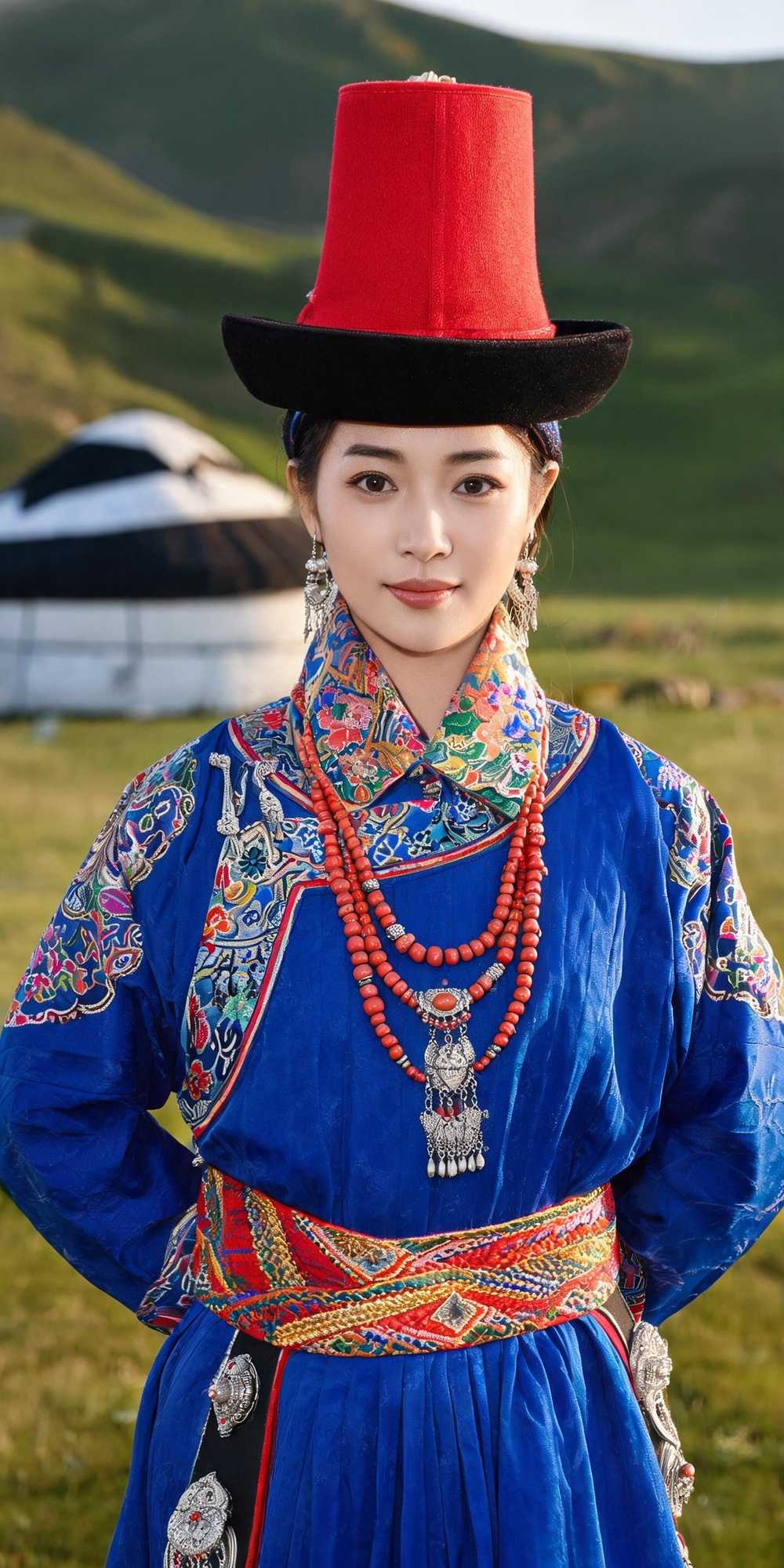
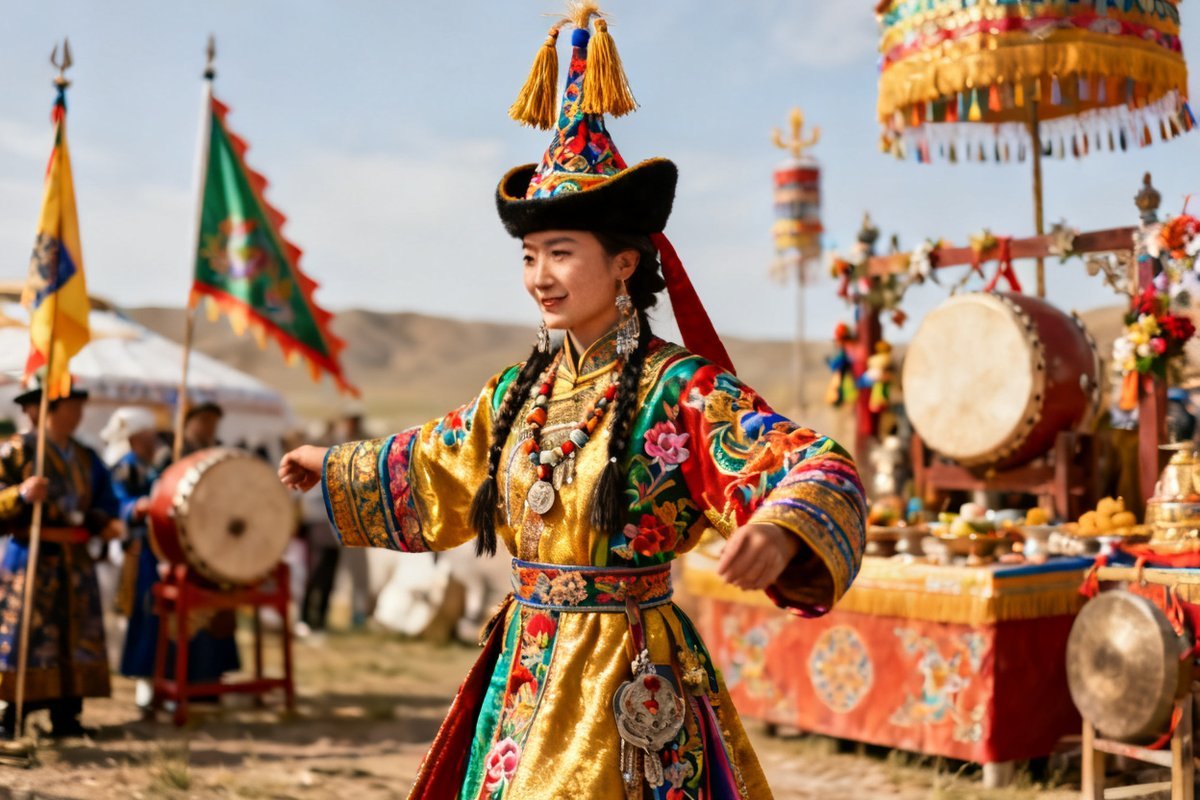
Yugur traditional clothing blends Mongolian and Tibetan influences with distinctive elements unique to this small ethnic group. Women wear an elaborate red tasseled headdress that is one of the most distinctive in China.
Historical Background
The Yugur people, numbering only about 14,000, are one of China's smallest officially recognized ethnic groups. They are descendants of the ancient Uyghur Khaganate who migrated southward into the Hexi Corridor of Gansu Province during the ninth century, eventually establishing the Yellow Head Uyghur Kingdom. Over centuries of interaction with neighboring Mongol, Tibetan, and Han Chinese populations, the Yugur developed a syncretic culture reflected vividly in their clothing traditions. Their name means "kingdoms within a kingdom," referencing their historical political structure. The Yugur are unique in speaking three distinct languages — Western Yugur (Turkic), Eastern Yugur (Mongolic), and Chinese — yet their clothing serves as a unifying visual identity that transcends these linguistic divisions.
Traditional Yugur society was pastoral and semi-nomadic, herding sheep, goats, and yaks across the grasslands of the Qilian Mountains. Their clothing evolved to meet the demands of high-altitude pastoral life: durable wool fabrics, layered construction for temperature regulation, and practical designs allowing freedom of movement on horseback. The bright red tassels of the women's headdress served both aesthetic and practical purposes, making women visible across the vast grassland landscapes.
Key Features of Yugur Attire
- Womens red-tasseled headdress (balian) with long red silk tassels hanging from the crown
- Long high-collared robes with vibrant embroidered collar bands
- Women's sleeveless embroidered jackets worn over long robes
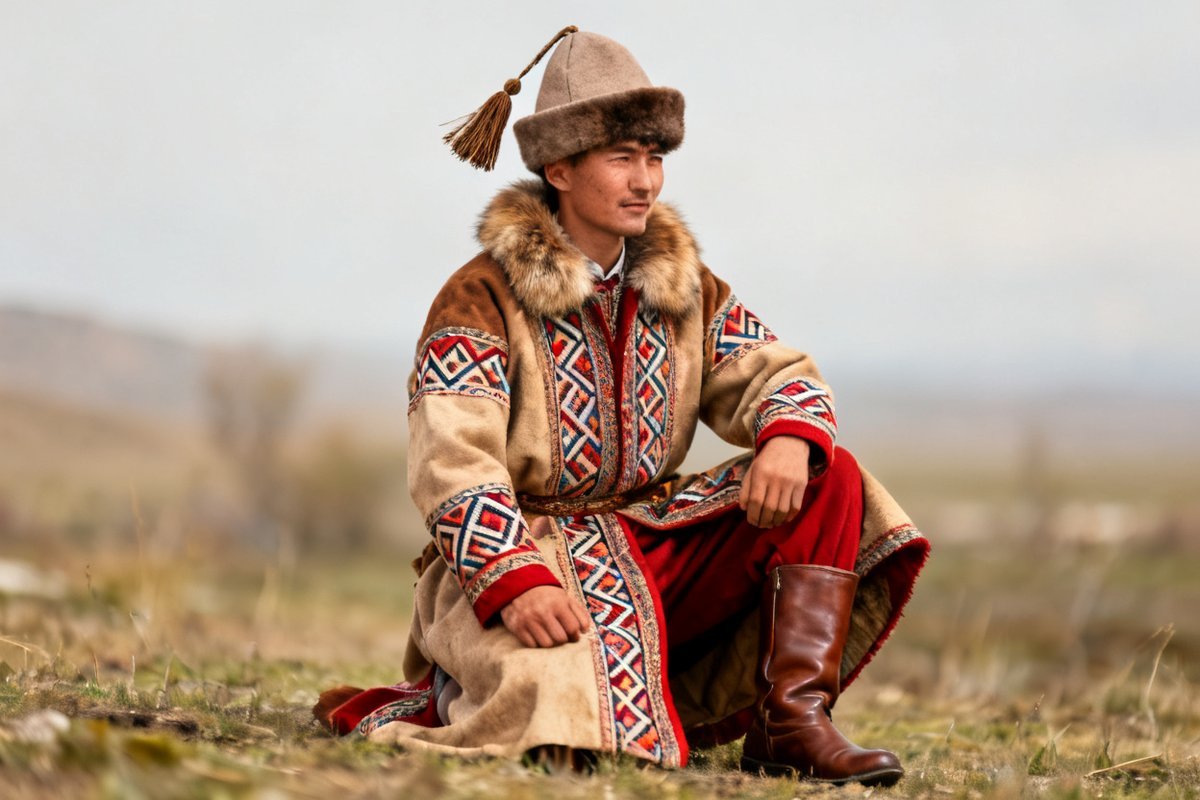
- Men's front-fastening robes with colorful cloth belts and Tibetan-style boots
- Fine silver and coral jewelry including large hoop earrings
Traditional Garments
Women wear a long high-collared robe in blue, green, or red, with a brightly embroidered collar band and front opening, covered by a short sleeveless embroidered jacket. The robe construction shows clear Mongolian influence in its cut and fastening, while the bright color palette and floral embroidery patterns reveal Tibetan aesthetic influence. The sleeveless jacket, typically in a contrasting color, is the most decorated garment piece, featuring dense embroidery along all edges and often incorporating small mirrors, coins, or coral beads as decorative accents. The red-tasseled headdress is the crowning element. Men wear a long front-fastening robe in blue or brown, with a cloth belt tied at the waist, and high leather boots. The belt is both practical and symbolic — a wider, more decorated belt indicates higher social standing. In winter, both men and women add sheepskin-lined coats and felt boots for protection against the severe Gansu plateau cold.
Headwear and Adornments
The Yugur womens headdress is iconic - a cloth cap with a flat top and upturned brim, covered with red silk tassels that hang down past the shoulders on both sides. Unmarried women wear smaller versions with fewer tassels. Married women add silver ornaments and coral to the cap.
Embroidery and Decorative Arts
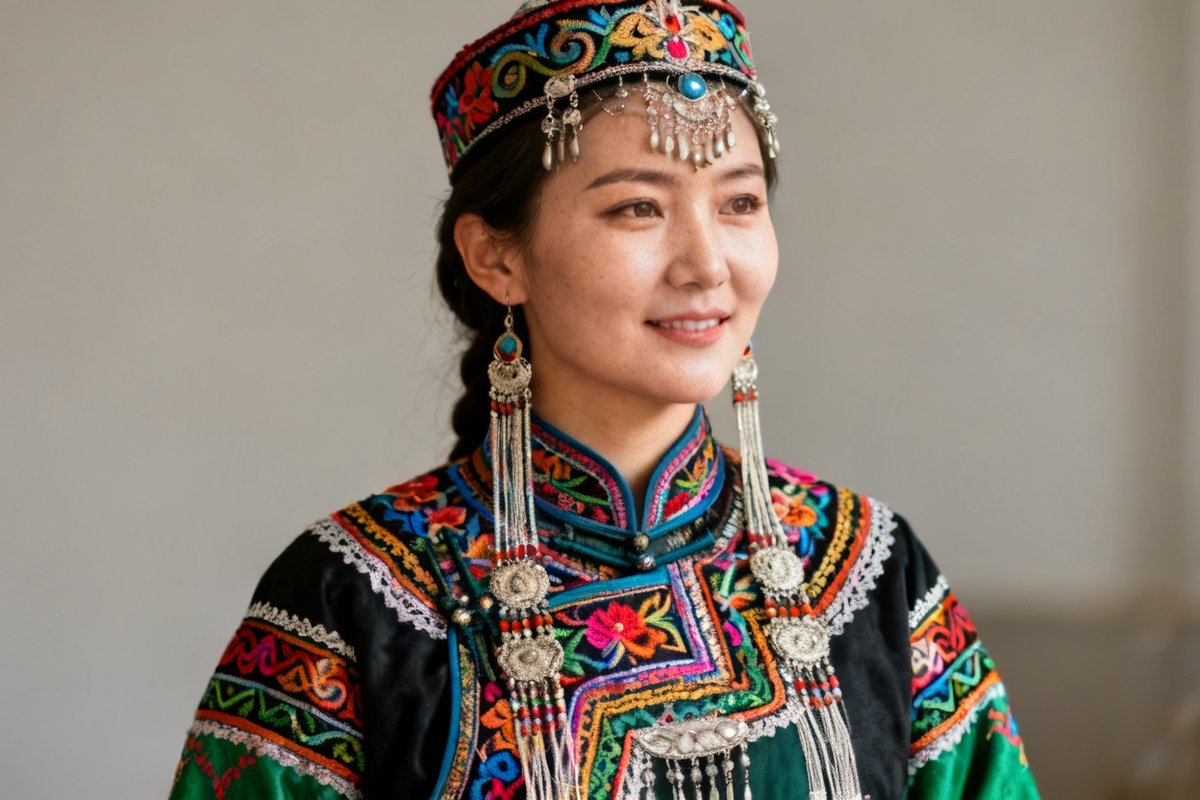
Yugur embroidery features floral and geometric patterns in bright colors on collar bands, vest edges, and headdress borders. Tibetan and Mongolian influences combine in the stylized clouds and floral scrolls. The embroidery is executed primarily in chain stitch and satin stitch, using silk threads on wool or cotton ground fabric. The contrast between the dark robe fabric and the vibrant embroidery creates a striking visual effect that is immediately recognizable as Yugur. Coral beads and small silver ornaments are often sewn directly onto embroidered surfaces, adding texture and precious materials to the textile. Yugur women traditionally create all the embroidered elements for their own clothing and for their family members, with the most skilled embroiderers earning community respect and often receiving commissions from neighboring families. The craft is closely tied to Yugur identity, and its preservation is considered essential to the survival of Yugur culture given the group's small population.
The Yugur red-tasseled headdress, with cascading crimson silk descending from the crown, is said by elders to represent the blood of their ancestors spilled in defending their homeland in the Hexi Corridor.
Color Symbolism
Red tassels on headdresses are the most distinctive color and carry deep symbolic meaning representing life force, ancestral blood, and protection from evil spirits. Robes in blue, green, red, and brown are preferred, with the choice of color often indicating the wearer's age and marital status. Younger unmarried women wear brighter blues and greens, while older married women favor deeper, more subdued tones. Embroidery uses bright red, yellow, green, blue, and pink, creating a vivid contrast against the dark robe fabric. The combination of coral red and silver for jewelry is considered the most auspicious pairing, believed to bring health and prosperity. White is occasionally used for special ceremonial garments but is generally avoided for everyday clothing due to its traditional association with mourning in Yugur culture.
Festival Attire
During the Yugur New Year and the Nadam Fair, women wear their largest red-tasseled headdresses with most elaborate embroidery, and men wear finest robes with silver-decorated belts.
Modern Influence and Preservation
Yugur embroidery and headdress-making are preserved through intangible cultural heritage programs in Sunan County. The Yugur Autonomous County government has established training centers where elder craftswomen teach younger generations traditional embroidery, robe-making, and headdress construction. These programs are particularly urgent given the Yugur's status as one of China's smallest ethnic minorities, with language loss accelerating among younger generations. The Yugur were also early beneficiaries of China's ethnic tourism development, with Yugur cultural villages in the Sunan area presenting traditional clothing demonstrations and selling handcrafted textiles to visitors. While tourism provides economic incentives for maintaining craft traditions, it also introduces the risk of simplification and commercialization. Balancing authentic preservation with economic sustainability remains a central challenge for Yugur cultural heritage efforts.
Did You Know?
The Yugur are one of the smallest ethnic groups in China (around 14,000 people) and the only group whose name means kingdoms within a kingdom, reflecting their history as rulers of the Yellow Head Uyghur Kingdom.
Pastoral Textiles of the Yugur
The Yugur people of Gansu Province, one of China's smallest officially recognized ethnic minorities, maintain textile traditions that reflect their historical position on the Hexi Corridor of the Silk Road. Yugur women produce felt and wool fabrics from the sheep herds that are central to their pastoral economy, using techniques that have been practiced on the Gansu grasslands for centuries. The wool is hand-spun into yarn, dyed using natural materials including local mineral pigments and plant extracts, and woven into fabric on horizontal looms.
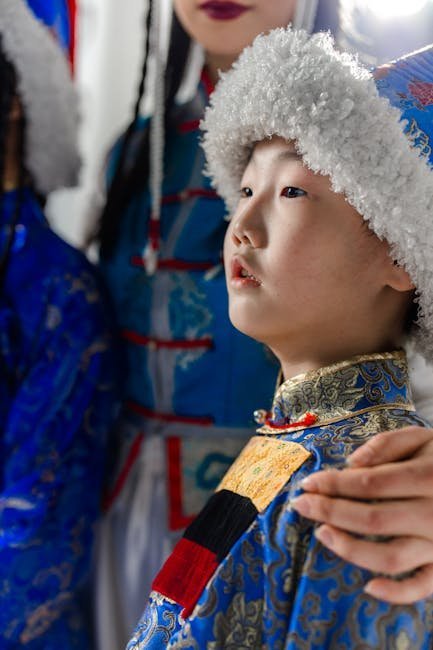
Color symbolism is particularly important in Yugur clothing, with each color carrying specific meanings rooted in Yugur cosmology and religious traditions. Red represents vitality and protection, blue symbolizes the sky, white signifies purity and honesty, and yellow represents the earth and stability. These colors appear in specific arrangements on women's festival garments, with the sequence and proportion following traditional prescriptions. Yugur women's headwear includes distinctive round or conical felt hats decorated with red tassels and beadwork, with the hat shape indicating the wearer's age and marital status.
Pastoral Textiles of the Yugur
The Yugur people of Gansu Province, one of China's smallest officially recognized ethnic minorities, maintain textile traditions that reflect their historical position on the Hexi Corridor of the Silk Road. Yugur women produce felt and wool fabrics from the sheep herds that are central to their pastoral economy, using techniques that have been practiced on the Gansu grasslands for centuries. The wool is hand-spun into yarn, dyed using natural materials including local mineral pigments and plant extracts, and woven into fabric on horizontal looms.
Color symbolism is particularly important in Yugur clothing, with each color carrying specific meanings rooted in Yugur cosmology and religious traditions. Red represents vitality and protection, blue symbolizes the sky, white signifies purity and honesty, and yellow represents the earth and stability. These colors appear in specific arrangements on women's festival garments, with the sequence and proportion following traditional prescriptions. Yugur women's headwear includes distinctive round or conical felt hats decorated with red tassels and beadwork, with the hat shape indicating the wearer's age and marital status.
Social Role of Yugur Clothing
Yugur clothing functions as a marker of identity in a region where multiple ethnic groups including Han Chinese, Tibetan, Mongolian, and Hui live in close proximity. The distinctive Yugur ensemble, with its specific color combinations and hat styles, allows immediate identification of ethnic affiliation in multi-ethnic settings. This identifying function is particularly important for a small minority group whose language and customs might otherwise be obscured by the dominant cultures surrounding them. Wearing traditional clothing in public settings is thus an assertion of Yugur identity as well as a personal fashion choice, carrying political and cultural significance beyond its aesthetic value.
The decline of daily traditional clothing wear among younger Yugur has been a concern for community leaders, who have responded with initiatives to encourage continued use of ethnic dress. Cultural festivals in Sunan Yugur Autonomous County feature traditional clothing prominently, with prizes awarded for the best-preserved or most skillfully made ensembles. Schools incorporate traditional clothing education into cultural curriculum, teaching students about the history and meaning of Yugur garment elements. These efforts have had measurable success, with a resurgence of interest in traditional clothing among younger Yugur who view ethnic dress as a meaningful connection to their heritage rather than an outdated convention.