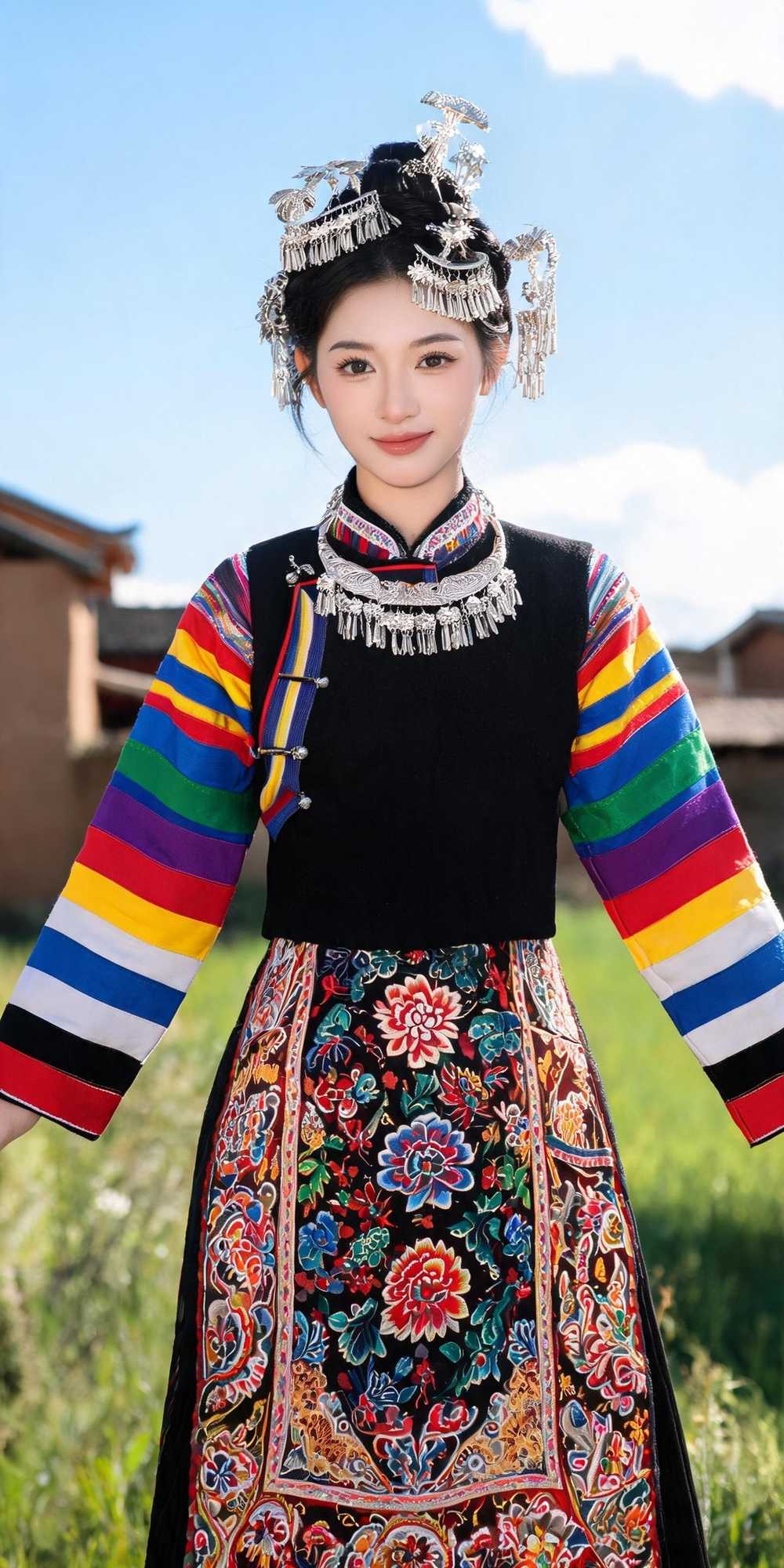
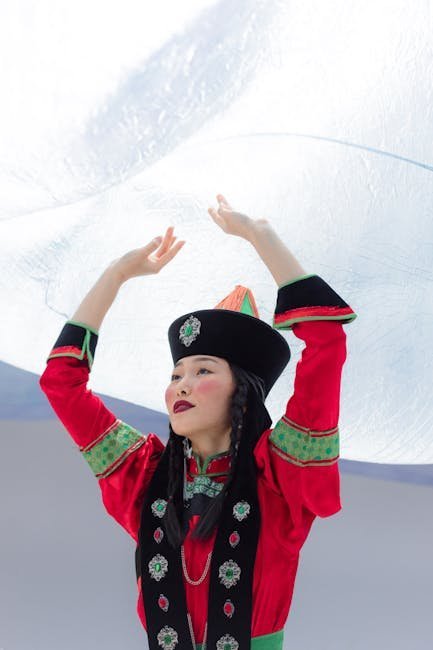
Tu traditional clothing is exceptionally colorful, known as the rainbow costume (cai yi) due to the multicolored embroidered sleeve bands worn by women. The rainbow sleeves are the most distinctive feature of Tu attire, featuring up to seven vivid color bands. The Tu people number approximately 290,000 and reside primarily in the Huzhu Tu Autonomous County and Minhe County of Qinghai province, with additional communities in neighboring Gansu province. Their name for themselves is "Monguor," reflecting their historical connections to Mongolian peoples.
The origins of the Tu people trace back to the Tuyuhun Kingdom, a powerful state established in the 4th century by Xianbei nomads who migrated westward from Manchuria to the Kokonor (Qinghai Lake) region. Over centuries, the Tuyuhun absorbed cultural influences from Mongols, Tibetans, Han Chinese, and various Central Asian peoples, creating a distinctive culture that is reflected in their clothing. The Tu language belongs to the Mongolic language family, and their religious traditions blend Tibetan Buddhism with elements of Taoism and shamanic practices.
Tu communities traditionally practice agriculture on the fertile terraces of the Huangshui River valley, cultivating wheat, barley, rapeseed, and potatoes. Their villages cluster along the river valleys of eastern Qinghai, surrounded by fields of brilliant yellow canola flowers in summer that echo the rainbow colors of their clothing. The Tu are famous throughout the region for their folk song tradition, particularly the "Hua'er" flower songs shared with neighboring ethnic groups, and their hospitality, expressed in the custom of greeting guests with embroidered scarves and barley wine.
Key Features of Tu Attire
- Rainbow sleeve bands (huan xiu) in up to seven colors on women's gowns
- Heavily embroidered collar panels in geometric and floral patterns
- Women's felt hats with upturned brims decorated with floral embroidery
- Embroidered waistbands and sashes with silver ornaments
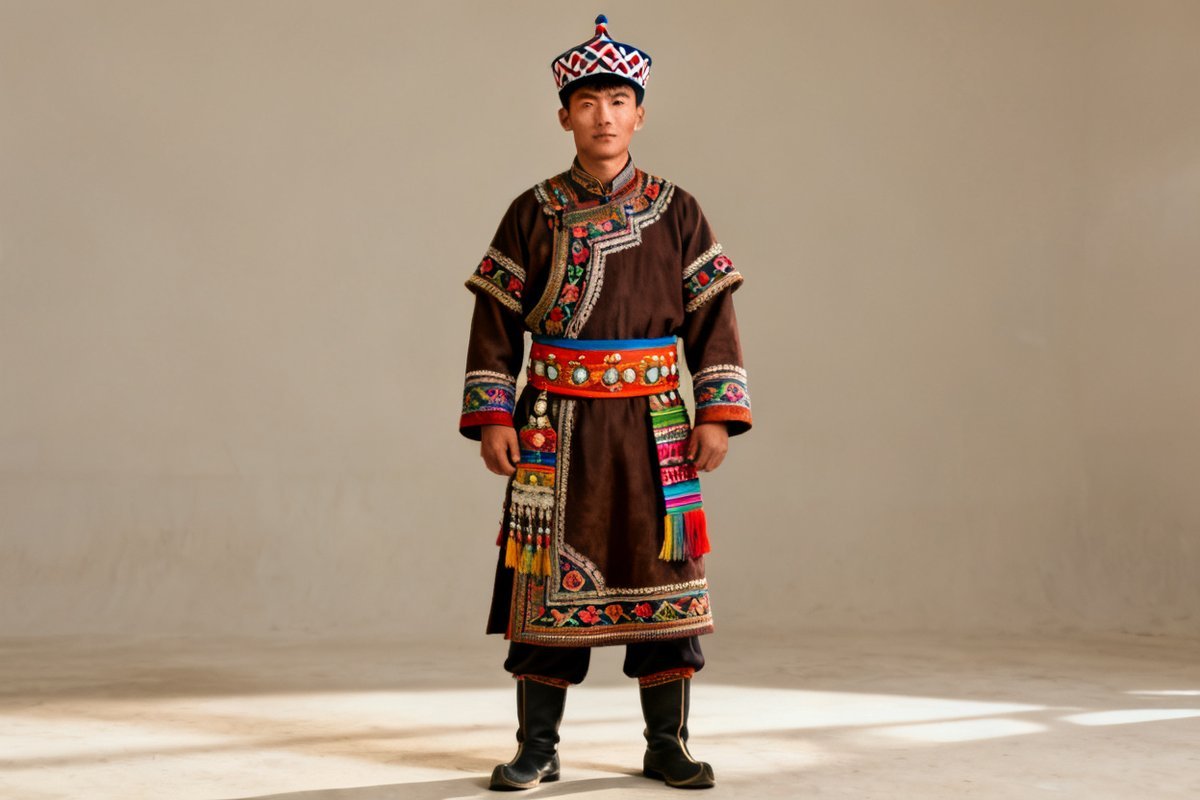
- Men's front-fastening jackets with multicolored embroidered edges
Traditional Garments
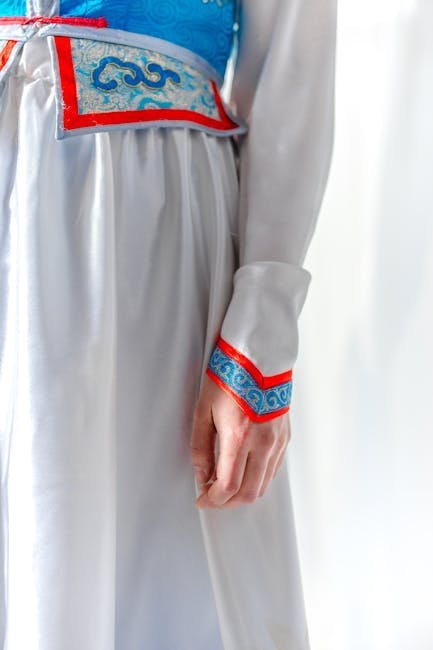
Women wear a long gown with distinctive rainbow-colored sleeve bands at the wrist - stacked bands of red, yellow, green, blue, purple, and white - and a heavily embroidered collar panel. A sleeveless embroidered vest or jacket is worn over the gown. Men wear a dark front-fastening jacket with rainbow-colored embroidered trim at the cuffs and collar, loose trousers, and a red or blue cloth belt. The women's gown is typically calf-length with side slits for ease of movement, and the collar panel is constructed as a separate piece that can be up to 30 centimeters wide, completely covering the shoulders with dense embroidery.
The sleeveless vest worn over the gown plays an important role in the overall visual effect. Typically black or dark blue, the vest frames the embroidered collar panel and provides a dark background that makes the rainbow sleeves pop dramatically when the wearer moves. The vest is often secured with silver buttons or decorative frogs at the front. For men, the embroidered trim at the cuffs and collar serves as a more subdued echo of the rainbow aesthetic, communicating cultural identity while remaining practical for agricultural work.
Headwear and Adornments
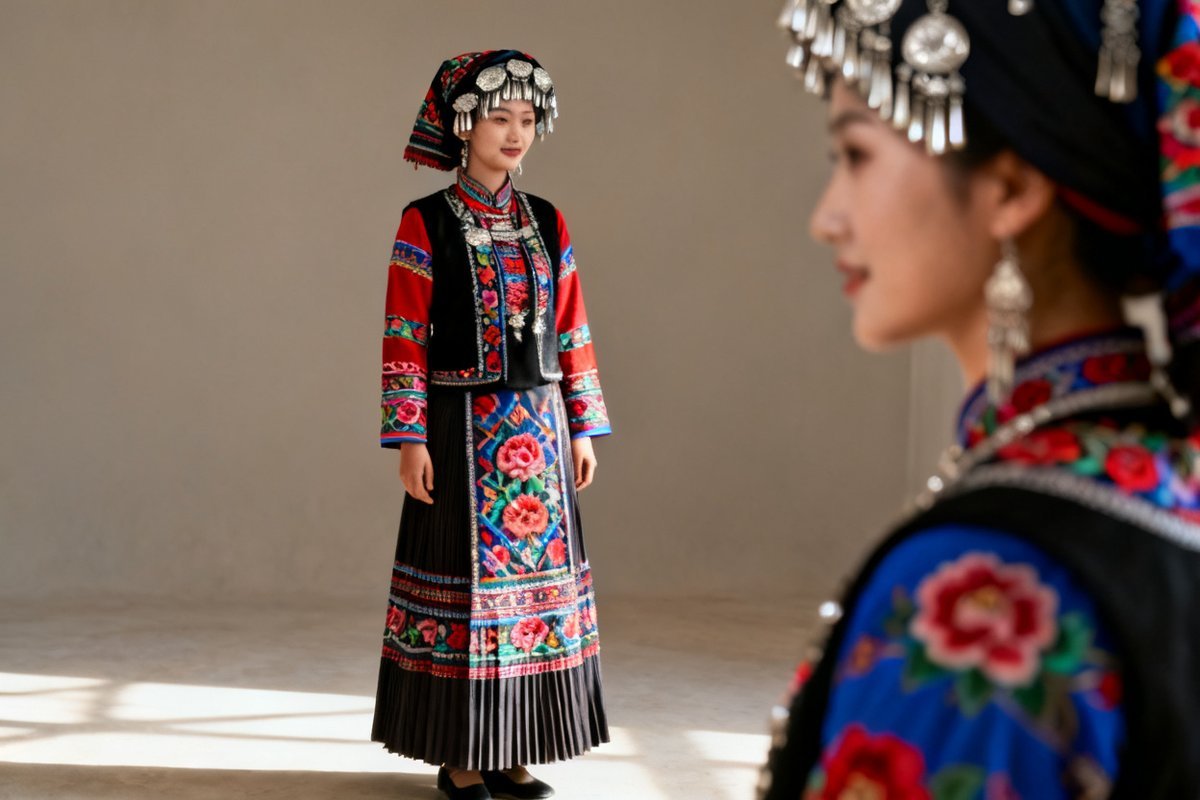
Women wear a distinctive felt hat with an upturned brim, resembling a lampshade or an inverted bowl, decorated with colorful embroidery and beadwork. In some regions, married women wrap their hair in large black cloth headdresses. Men wear white or black head wraps. The felt hat is hand-shaped from local wool and can take several days to construct, with the upturned brim providing shade from the intense high-altitude sun of the Qinghai plateau while allowing wind to circulate around the head.
Embroidery on the hat typically features floral and butterfly motifs in bright silk threads, with beadwork accents along the brim's edge. Silver hair ornaments, earrings, and necklaces complete the ensemble for festive occasions. Unmarried women historically signaled their availability through specific hat decorations and the presence of certain silver hairpins, while married women adopted more subdued headwear in accordance with Tu custom.
Embroidery and Decorative Arts
Tu embroidery is exceptionally vibrant and dense, featuring floral scrolls, auspicious symbols, geometric patterns, and butterfly motifs in satin and cross-stitch. Collar panels, sleeve bands, and hat brims receive the most elaborate coverage. Tu embroidery is distinguished by its extraordinary density — master embroiderers can produce work where the base fabric is nearly invisible beneath layer upon layer of silk thread, creating surfaces that shimmer with saturated color. This technique requires months of work for a single collar panel.
The design vocabulary of Tu embroidery draws from multiple cultural sources. Lotus and peony patterns reflect Buddhist and Chinese influences, while geometric interlocking designs recall Central Asian textile traditions. Butterfly patterns, ubiquitous in Tu embroidery, symbolize joy, transformation, and the soul's freedom. The embroidery also incorporates protective symbols believed to ward off evil spirits, including the endless knot and stylized thunder patterns. Mothers begin teaching their daughters embroidery around age eight, with a girl's first completed collar panel marking her transition toward adulthood.
The Tu rainbow sleeves, with up to seven stacked color bands at the wrist, encode the entire Tu color cosmology - red for joy, yellow for harvest, green for grassland, blue for sky, and white for purity - worn on the arm as a daily spectrum of meaning.
Color Symbolism
Rainbow multicolor is the Tu signature - red, yellow, green, blue, purple, white, and pink each carry specific meaning. Red symbolizes the sun, joy, and life force. Yellow represents the harvest of wheat and barley that sustains Tu communities. Green evokes the grasslands and mountain pastures of Qinghai. Blue mirrors the vast high-altitude sky. Purple represents spiritual depth and dignity. White signifies purity and honesty. Pink indicates youth and romance. When worn together as the rainbow sleeve, these colors create a visible prayer for a life of abundance, happiness, and spiritual fulfillment. Dark blue or black provides the grounding base. Silver for jewelry adds reflective brilliance.
Festival Attire
During the Nadun Festival (Tu harvest festival) and Spring Festival, women wear their most elaborate rainbow-sleeved gowns with the finest embroidered collar panels and full silver jewelry sets. The Nadun Festival is the most significant cultural event in the Tu calendar, held after the wheat harvest between the seventh and ninth lunar months. The festival can last over two months as different villages take turns hosting celebrations, making it one of the longest folk festivals in the world. Nadun features masked dances, folk opera performances, and ritual offerings to local deities.
For Nadun, women prepare their finest rainbow costumes months in advance, repairing worn embroidery and adding new elements to their outfits. The festival opens with a procession where women and men walk through the village streets in traditional dress, the rainbow sleeves creating waves of color against the golden autumn landscape. Weddings also showcase the finest Tu embroidery, with brides wearing gowns that may have taken a year or more to embroider, the rainbow sleeves symbolizing the hope for a colorful and prosperous married life.
Modern Influence and Preservation
Tu rainbow embroidery is recognized as a national intangible cultural heritage, and their distinctive colorful aesthetic is promoted through cultural tourism in Qinghai. The Huzhu Tu Autonomous County has established embroidery training centers where master artisans pass their skills to apprentices, ensuring that the rainbow embroidery tradition is not lost to modernization. Tu embroidery has been featured in national ethnic minority fashion exhibitions and has inspired contemporary Chinese fashion designers to incorporate rainbow sleeve elements into modern garments.
The Nadun Festival has been recognized by UNESCO as part of the Intangible Cultural Heritage of Humanity, bringing international attention to Tu cultural traditions including their clothing. Tourism focused on Nadun and Tu embroidery provides economic opportunities for Tu communities, with embroidered items becoming sought-after cultural souvenirs. However, the extreme time investment required for traditional embroidery — a single collar panel can represent a year of work — creates challenges for transmission in a modern economy. Heritage programs are addressing this by supporting artisan cooperatives that ensure fair compensation for embroiderers' skilled labor.
Did You Know?
The Tu rainbow sleeves have specific color meanings: red for happiness and the sun, yellow for the harvest of wheat and barley, green for green mountains and pastures, blue for the sky, and white for purity and honesty.
Did You Know?
The Tu rainbow sleeves have specific color meanings: red for happiness and the sun, yellow for the harvest of wheat and barley, green for green mountains and pastures, blue for the sky, and white for purity and honesty.
Rainbow Sleeves of the Tu People
The Tu people of Qinghai and Gansu provinces are known for their distinctive use of multicolored striped fabric in women's traditional attire. The most recognizable element of Tu women's dress is the rainbow-striped sleeve, where broad bands of red, green, yellow, blue, and white fabric are sewn horizontally across the upper arm of the garment. The sleeves are cut wide and long, extending past the fingertips when the arms are at rest. When Tu women dance or reach upward, the striped sleeves create a dramatic visual effect that has become emblematic of Tu cultural identity.
Tu women's traditional attire also includes a collarless jacket in dark blue or black, worn open at the front to reveal the striped sleeves of the inner garment. The jacket is often left unbuttoned, with a wide embroidered sash tied at the waist securing the ensemble. The sash is woven in geometric patterns using brightly colored silk threads, with the fringe at both ends being left long and visible. A long pleated skirt in a dark color completes the outfit, with the skirt hem falling to the ankle.