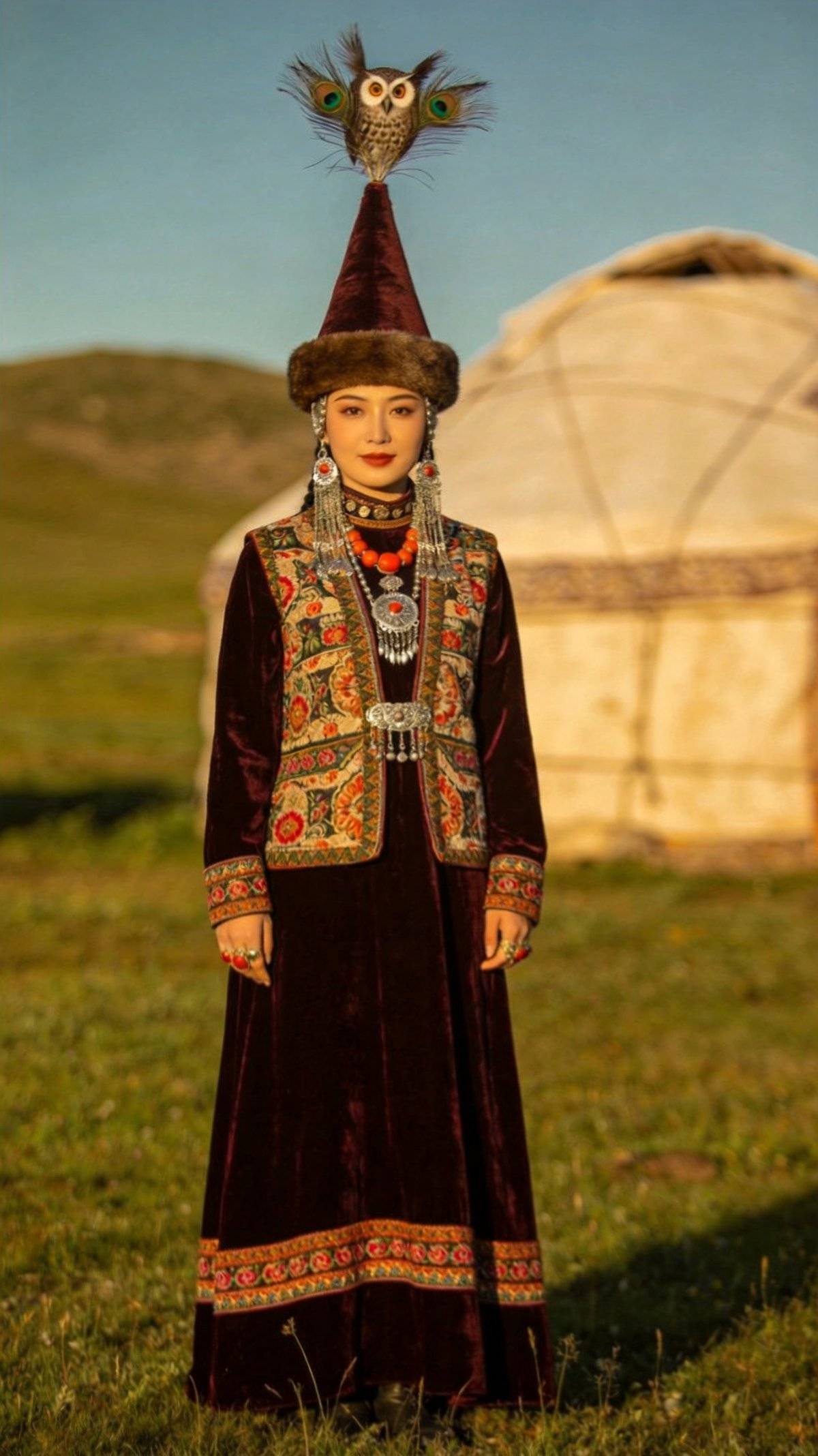
Kazakh traditional clothing reflects their nomadic pastoral heritage, with practical leather and sheepskin garments lavishly decorated with embroidery. The Kazakh people, numbering over 1.5 million within China, primarily inhabit the Ili Kazakh Autonomous Prefecture, Altay, and Tacheng regions of northern Xinjiang. Their clothing traditions evolved over centuries on the Eurasian steppe, where temperatures range from extreme cold in winter to intense heat in summer, demanding garments that are both functional and expressive.
Historical and Cultural Background
The Kazakhs are a Turkic people whose ancestors roamed the vast grasslands of Central Asia for millennia. Their traditional clothing system developed as a direct response to the demands of mounted nomadism. Every garment had to serve multiple purposes: protection from wind and cold on horseback, ease of movement for animal husbandry, and visual communication of clan identity, marital status, and social rank. Clothing was almost entirely produced within the family unit, with women responsible for felting wool, tanning leather, weaving textiles, and executing elaborate embroidery. The skill of a Kazakh woman was judged by the quality of her embroidery and the grandeur of the ceremonial garments she produced for her family. Silver was the primary form of portable wealth, and the density of silver ornamentation on clothing directly signaled a family's prosperity. This nomadic aesthetic values high contrast, bold color, and maximum visual impact across vast distances.
Key Features of Kazakh Attire
- Mens sheepskin overcoats with decorative embroidery
- Womens tall bridal headdresses with silver coins, coral, and feathers
- Fur-trimmed leather or felt hats with ear flaps for winter
- Embroidered vests and jackets with vibrant floral patterns
- Riding boots of hand-stitched leather with decorative stitching
Traditional Garments
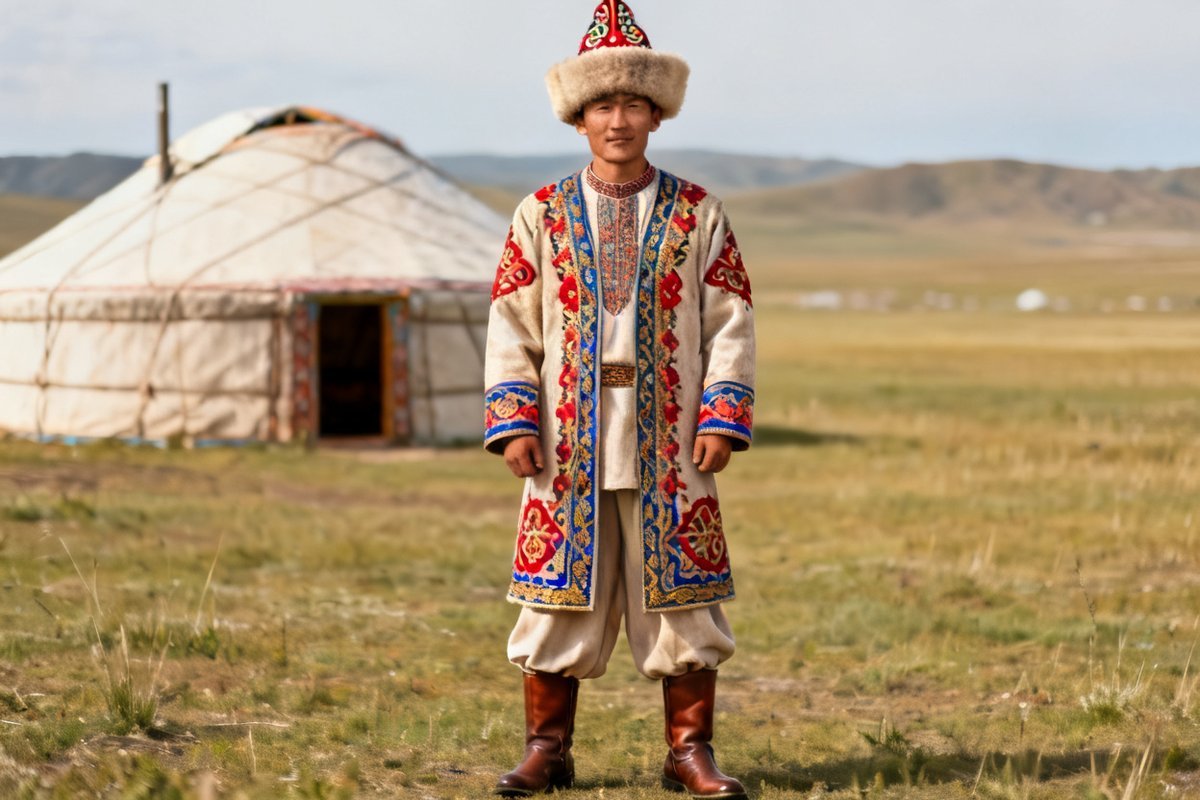
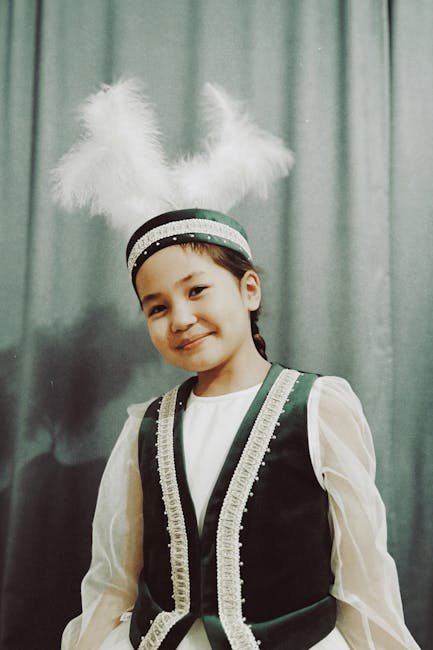
Men wear a white shirt under a short embroidered vest, with a long velvet robe (shapan) for formal occasions, leather trousers, and knee-high boots. The shapan is a full-length outer coat with wide sleeves, often made of dark velvet in deep burgundy, navy, or black, and fastened with an ornamental belt set with silver plaques. For winter, heavy sheepskin coats (ton) are worn with the wool facing inward for maximum insulation against the brutal steppe winds. Women wear long dresses with wide sleeves, covered by a fitted velvet vest heavily embroidered in floral patterns. These vests (kamzol) are the centerpiece of Kazakh women's attire, distinguished by dense embroidery across the front panels, hem, and collar. Unmarried women favor brighter colors such as red and pink, while married women traditionally wear deeper, richer tones. The dress underneath is typically silk or cotton with a stand-up collar and long sleeves, reaching mid-calf and worn over leather boots.
Headwear and Adornments
Womens headwear indicates marital status with remarkable precision: unmarried girls wear embroidered skullcaps (borik) topped with eagle-owl feathers, while married women wear elaborate white headscarves (kimeshek) that wrap around the head and neck. The bridal saukele is the most spectacular Kazakh headpiece -- a conical structure rising 60 to 70 centimeters, completely covered in silver coins, coral beads, and gold embroidery, culminating in a spray of eagle-owl feathers at the apex. A single saukele could represent years of family savings and was traditionally passed down as an heirloom. Men wear fur-trimmed leather or felt hats with ear flaps (tymak) for winter, and a lighter embroidered skullcap (taqiya) for daily wear. The white felt hat with a turned-up brim is another classic Kazakh men's style, signifying dignity and maturity.
Embroidery and Decorative Arts
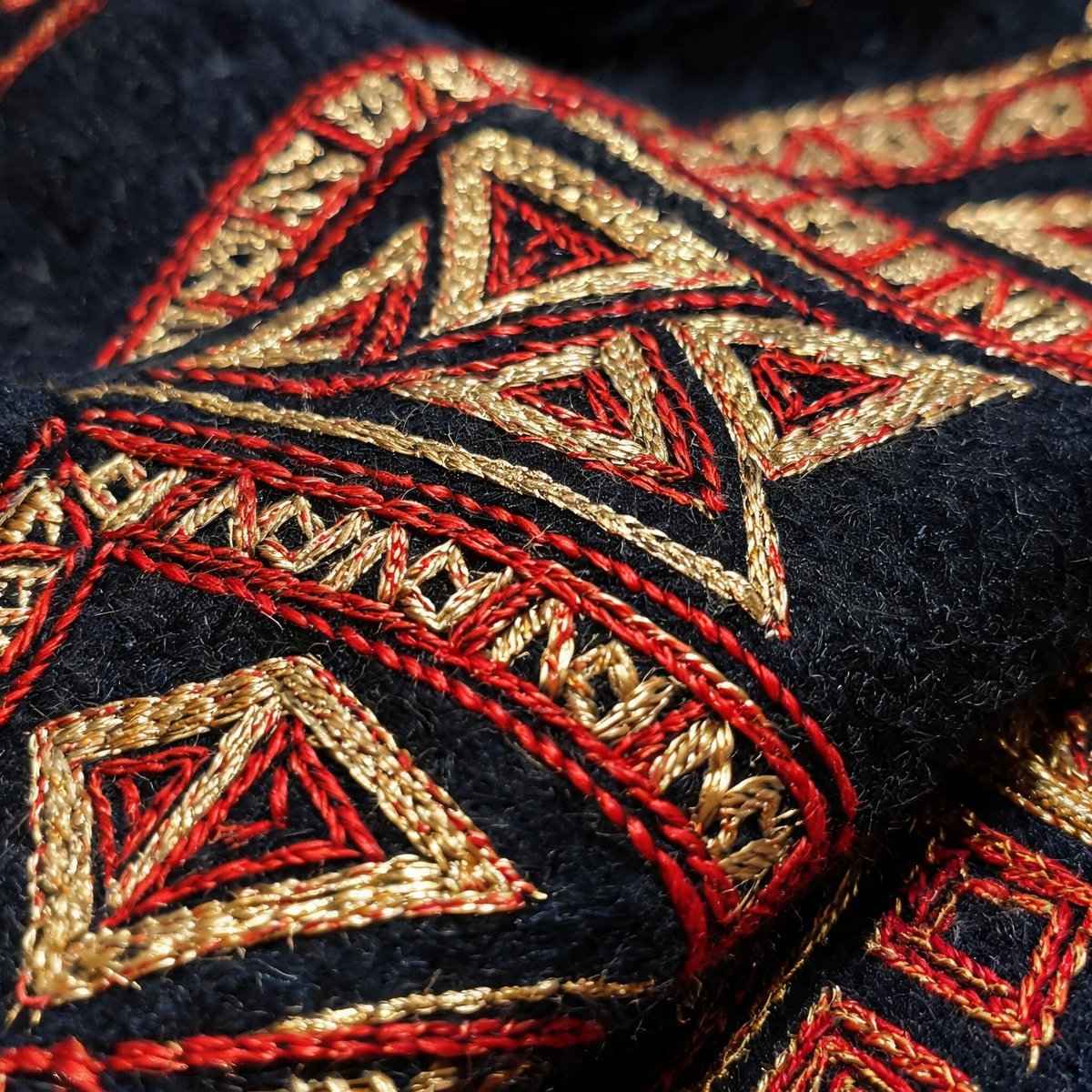
Kazakh embroidery features floral scrolls, ram's horn motifs (koshkar muyiz), and bird-wing patterns in vibrant colors on vests, caps, and decorative wall hangings. Chain stitch and satin stitch on velvet produce a raised, luxurious effect. Each region developed distinct embroidery dialects: the Ili Kazakhs favor large-scale floral medallions in crimson and gold, while Altay Kazakhs incorporate more geometric patterns influenced by Mongolian textile traditions. Beyond embroidery, Kazakh artisans excelled at felt applique (syrmak), creating bold mosaics from dyed felt that decorated yurt interiors and saddle blankets. Leather tooling and silver casting were traditionally male crafts, with silver belt buckles, horse tack ornaments, and jewelry forming a portable treasury for nomadic households.
The Kazakh bridal headdress, rising nearly two-thirds of a meter tall and laden with ancestral silver, transforms the bride into what folklorists call a walking altar of lineage memory.
Color Symbolism
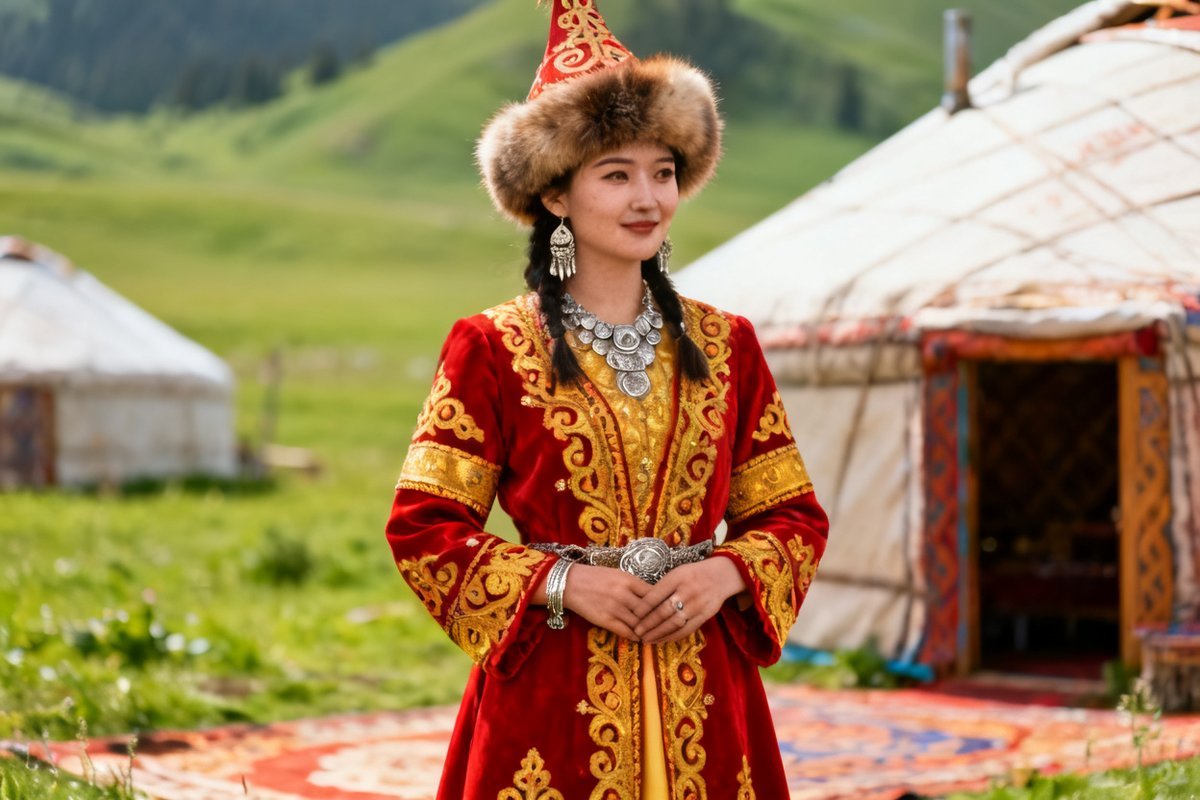
Deep reds, burgundies, blues, and greens dominate velvet outerwear. Embroidery uses bright red, yellow, orange, green, and white against dark backgrounds, creating a jewel-like contrast visible from great distances across the steppe. White holds special significance as the color of purity and new beginnings, central to wedding garments. Blue, the color of the eternal sky (Tengri), appears frequently in men's formal robes and symbolizes freedom. Gold embroidery is reserved for ceremonial garments and signals high social standing.
Festival Attire
During Nauryz (Kazakh New Year, celebrated at the spring equinox), women wear richly embroidered velvet vests over silk dresses in their brightest colors, while men don long velvet robes with fur-trimmed hats. The festival is the primary occasion for displaying full ceremonial dress, including the heaviest silver jewelry and most elaborate embroidery. Weddings are the other great clothing spectacle: a bride may change outfits multiple times throughout the multi-day celebration, beginning with the towering saukele headdress and transitioning through a sequence of increasingly elaborate ensembles, each stage having its prescribed garments. Horse-racing competitions during festivals see riders in coordinated embroidered vests representing their clans.
Modern Influence and Preservation
Kazakh embroidered textiles are produced in Xinjiang for cultural tourism and have gained recognition in global fashion circles. Kazakh designers in Almaty and beyond are incorporating traditional motifs such as ram's horn spirals and eagle-wing patterns into contemporary outerwear and accessories. The saukele headdress is a centerpiece in museum collections worldwide, including the British Museum and the Metropolitan Museum of Art. Within China, Kazakh embroidery has been listed as a national-level intangible cultural heritage, with government-supported training programs ensuring techniques are passed to younger generations. The annual Nauryz celebrations across Xinjiang showcase living Kazakh clothing traditions to tens of thousands of visitors each year, creating sustainable demand for artisans' work.
Did You Know?
The Kazakh bridal headdress (saukele) is so precious that it is traditionally handed down from mother to daughter - some family heirlooms have been worn by brides for over three generations.
Eagle and Steppe Motifs in Kazakh Embroidery
The Kazakh people of Xinjiang maintain embroidery traditions that draw deeply from their nomadic heritage on the Central Asian steppes. Eagle motifs are among the most important in Kazakh textile art, representing strength, freedom, and the traditional practice of eagle hunting that remains a source of cultural pride. The eagles are depicted in stylized form on clothing, with outstretched wings and spread tail feathers embroidered in silk threads on collar panels, sleeve cuffs, and the front opening of jackets. Ram horn motifs spiral across embroidered belts and bag trims, symbolizing the livestock wealth that sustained nomadic Kazakh life for centuries.
Kazakh women's headwear is among the most elaborate in China's ethnic minority traditions. Unmarried girls wear round caps covered in owl feathers or other bird plumage, with the number and arrangement of feathers indicating regional origin. After marriage, women transition to a tall, conical headdress called a saukele, which is covered in silk embroidery and ornamented with silver chains, coral beads, and semi-precious stones.
Eagle and Steppe Motifs in Kazakh Embroidery
The Kazakh people of Xinjiang maintain embroidery traditions that draw deeply from their nomadic heritage on the Central Asian steppes. Eagle motifs are among the most important in Kazakh textile art, representing strength, freedom, and the traditional practice of eagle hunting that remains a source of cultural pride. The eagles are depicted in stylized form on clothing, with outstretched wings and spread tail feathers embroidered in silk threads on collar panels, sleeve cuffs, and the front opening of jackets. Ram horn motifs spiral across embroidered belts and bag trims, symbolizing the livestock wealth that sustained nomadic Kazakh life for centuries.
Kazakh women's headwear is among the most elaborate in China's ethnic minority traditions. Unmarried girls wear round caps covered in owl feathers or other bird plumage, with the number and arrangement of feathers indicating regional origin. After marriage, women transition to a tall, conical headdress called a saukele, which is covered in silk embroidery and ornamented with silver chains, coral beads, and semi-precious stones.
Seasonal Clothing of the Kazakh People
Kazakh traditional clothing varies significantly with the seasons, reflecting the extreme temperature range of the Xinjiang steppes where summers are hot and winters intensely cold. Summer clothing is made from lightweight cotton or silk, with loose cuts that allow air circulation while providing coverage from the sun. Wide-brimmed felt hats protect the face and neck during summer herding work, and light robes are worn open at the front for ventilation. Women's summer dresses use thinner fabrics in lighter colors that reflect solar radiation rather than absorbing it. The seasonal wardrobe transition is a practical necessity in the steppe climate, where wearing inappropriate clothing can be uncomfortable at best and dangerous at worst.
Winter clothing among the Kazakh is primarily made from sheepskin and felt, materials that provide excellent insulation even when wet. The winter coat, or shapan, is a long quilted robe padded with sheep's wool and lined with fur, reaching below the knees and fastened at the waist with a fabric belt. Men wear fur hats with ear flaps that can be lowered in extreme cold, and both genders use woolen scarves and mittens for additional protection. Felt boots worn over leather shoes provide insulation from the frozen ground, with the felt being thick enough to maintain warmth even during long hours of stationary outdoor activity. The careful preparation of winter clothing was historically a matter of survival, and Kazakh families traditionally devoted the autumn months to ensuring that winter garments were in good repair before the first snow.