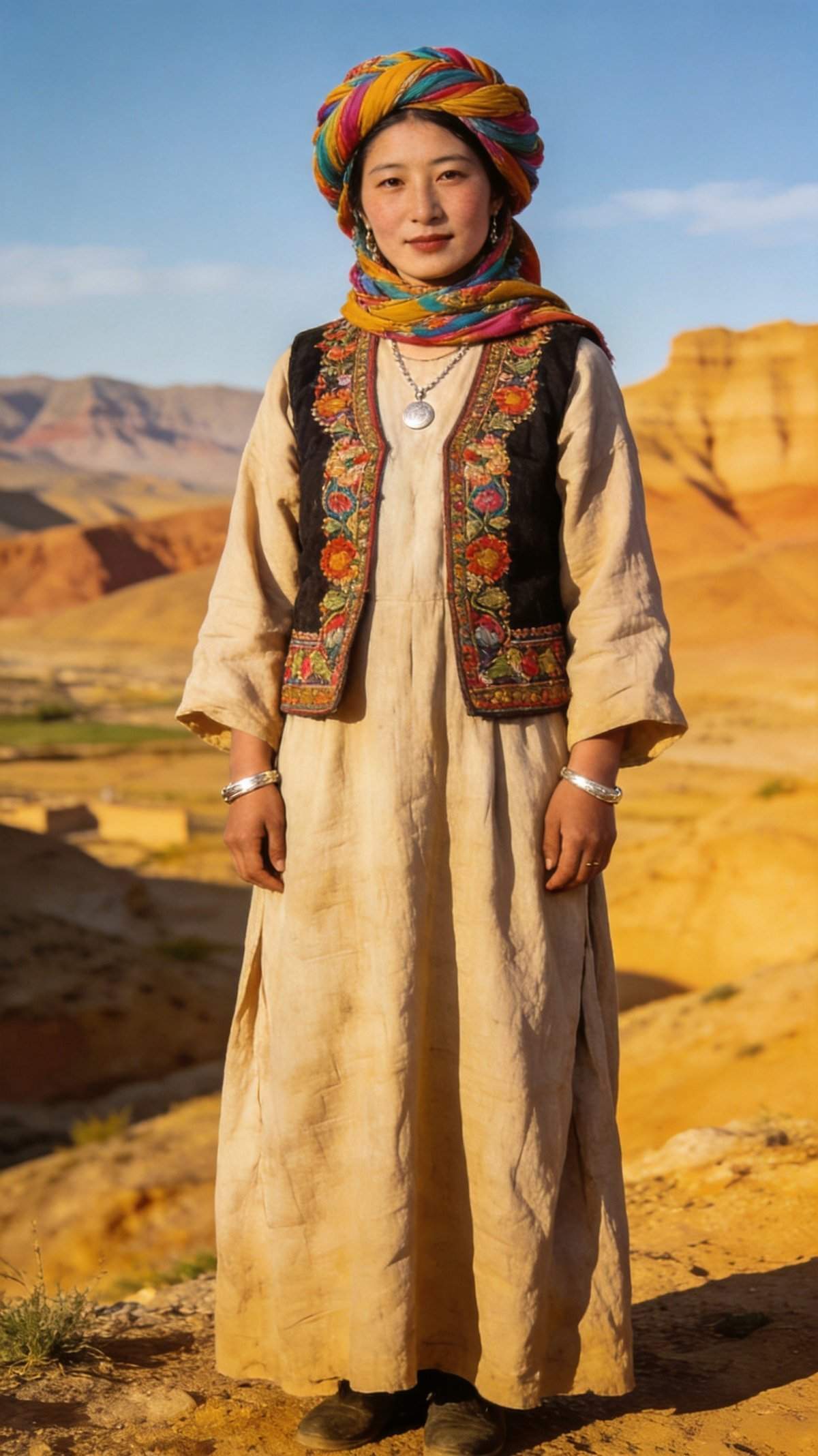
Dongxiang attire is characterized by Islamic modesty with Central Asian influences, featuring long robes, embroidered skullcaps, and womens colorful headscarves. The Dongxiang people, one of Chinas predominantly Muslim ethnic minorities, trace their origins to Central Asian merchants and soldiers who settled in Gansu Province during the Mongol Yuan dynasty in the 13th century.
Historical and Cultural Background
The Dongxiang people, also known historically as the Dongxiang Hui or Santa, emerged as a distinct ethnic group through the intermarriage of Central Asian settlers with local Han and Hui populations. Their name derives from their geographic home — Dongxiang literally translates to "eastern township" — rather than from an original endonym. Islam arrived with Central Asian migrants and has remained the cornerstone of Dongxiang cultural identity for over 700 years, deeply influencing every aspect of daily life including dress codes, dietary practices, and social customs.
The Dongxiang language belongs to the Mongolic family, reflecting their ancestral ties to the Mongol era, though it has absorbed considerable Chinese and Persian loanwords over centuries of coexistence. Despite having a population exceeding 600,000, the Dongxiang maintain a strong sense of distinct identity, preserved through oral epic poetry traditions, distinctive cuisine featuring hand-pulled noodles, and their unique sartorial heritage that bridges Islamic modesty requirements with Central Asian aesthetic sensibilities.
The majority of Dongxiang communities are concentrated in the Linxia Hui Autonomous Prefecture of Gansu Province, particularly in Dongxiang Autonomous County, a mountainous loess plateau region characterized by arid hills and deep ravines. This challenging terrain has historically limited outside influence, helping preserve traditional lifeways including textile arts and embroidery traditions passed down through generations of women.
Key Features of Dongxiang Attire
- Mens white or black embroidered skullcaps
- Womens colored headscarves varying by age (green, black, white)
- Long front-fastening robes with dark tones and embroidered trim
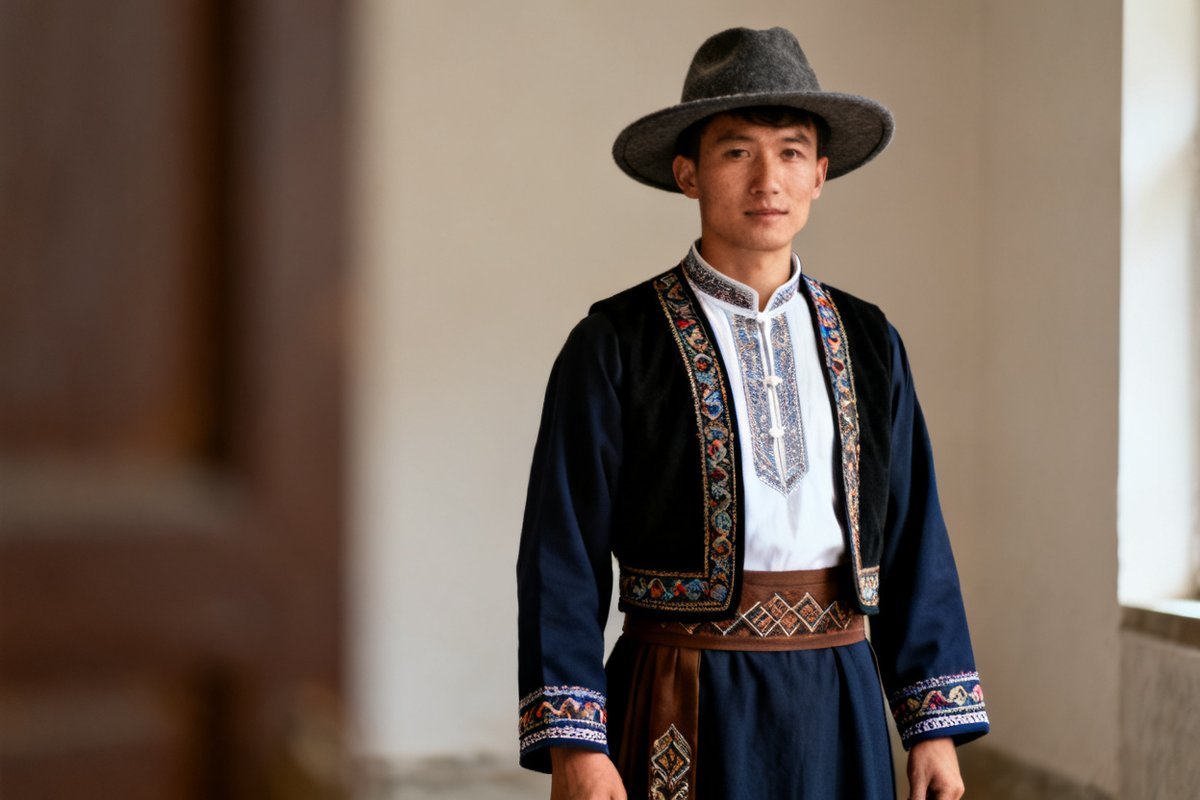
- Embroidered chest panels on mens formal jackets
- Delicate floral embroidery on collar edges, cuffs, and shoe tops
Traditional Garments
Men wear a white shirt under a short dark jacket or longer robe, with loose trousers and leather shoes. The traditional mens jacket, known locally as a zhongbai, is typically made from black or dark blue cotton or wool and fastens down the front with cloth buttons. For formal occasions and religious gatherings, men don a longer outer robe with wide sleeves and embroidered trim along the front opening and hem.
Women wear long, loose jackets with wide trousers beneath, always with a headscarf. The traditional womens jacket reaches below the knee and features a standing collar, side slits for ease of movement, and decorative embroidery along the collar band, front placket, and cuff edges. The jacket is secured with knotted cloth buttons or decorative silver clasps. Beneath the jacket, women wear wide-legged trousers gathered at the ankle, a silhouette that offers both modesty and comfort during agricultural work.
Headwear and Adornments
Womens headscarves are color-coded by life stage: green for young women, black for middle-aged, white for elderly. This visual language allows community members to immediately recognize a womans social position. Young married women typically wear green silk or cotton gauze scarves that drape over the head and shoulders. Middle-aged women transition to black, while elderly women wear white as a mark of seniority and piety. Men wear embroidered skullcaps, usually white for daily wear and black or dark blue for formal occasions, with the finest specimens featuring dense floral embroidery worked in silk thread around the crown and band.
Embroidery and Decorative Arts
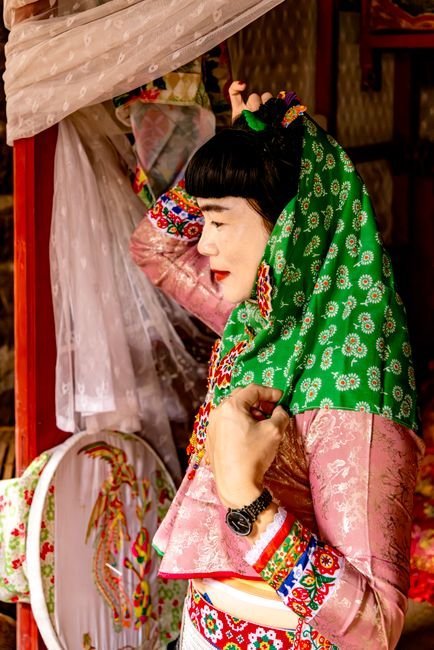
Dongxiang embroidery is concentrated on skullcaps, collar edges, cuffs, and shoe uppers, featuring small floral motifs like plum blossoms and peonies. The embroidery style is characterized by fine satin stitch and chain stitch executed in brilliantly colored silk threads — vivid reds, pinks, yellows, and greens — that create striking contrast against the dark background fabric of the garments. Skullcap embroidery is particularly esteemed, with complex patterns requiring weeks of meticulous handwork. The quality of a mans embroidered skullcap traditionally reflects the skill of the women in his household.
Beyond clothing, Dongxiang women also produce embroidered household textiles including prayer mat covers, pillowcases, and wall hangings that incorporate Islamic geometric patterns alongside traditional Chinese floral motifs. This fusion of aesthetic traditions — Central Asian Islamic geometry meeting Chinese botanical naturalism — is a defining characteristic of Dongxiang decorative arts and distinguishes their embroidery from that of neighboring ethnic groups.
Among the Dongxiang, the embroidery on a mans skullcap is considered a reflection of the women in his family - the finer the stitches, the greater the honor to his household.
Color Symbolism
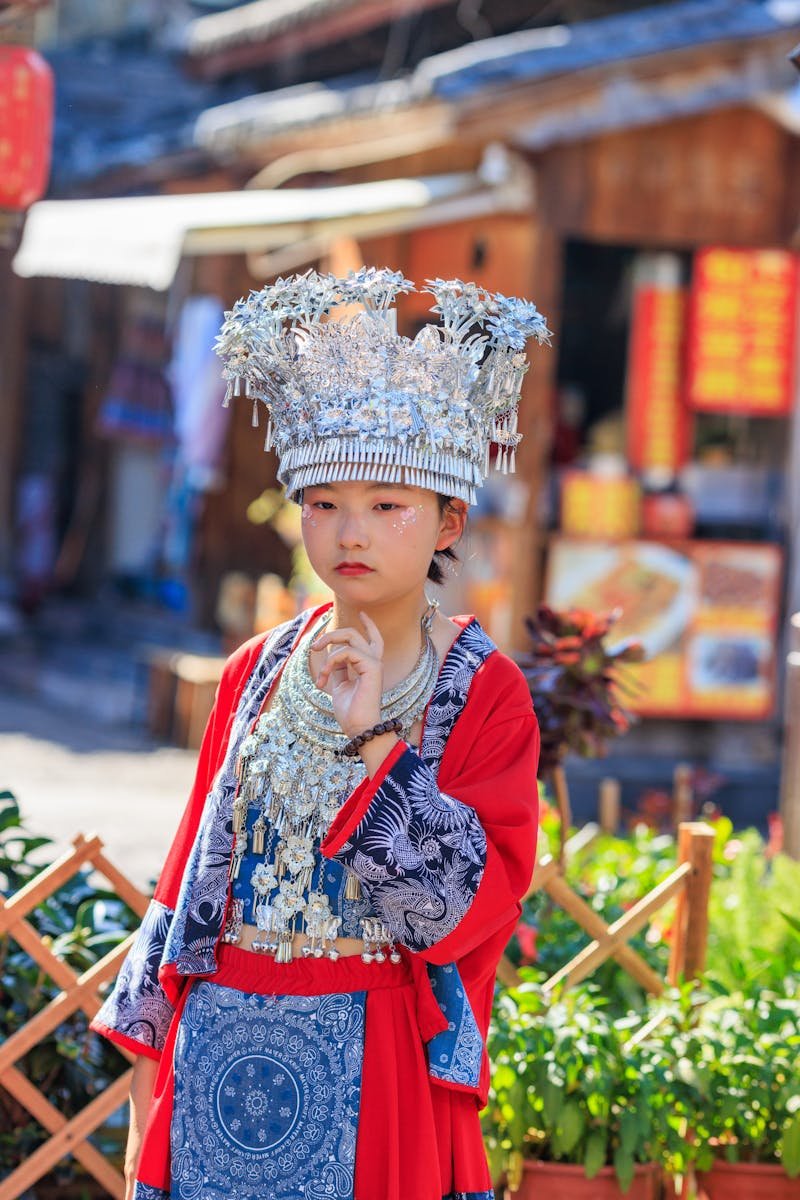
Black, white, dark blue, and gray for base garments. Headscarves use green, blue, black, and white. Embroidery in bright red, pink, yellow, green. White carries profound Islamic significance representing purity and spiritual cleanliness, which is why it predominates in mens daily skullcaps and inner shirts. Green holds special status as the color most associated with paradise in Islamic tradition, making it the chosen hue for young married womens headscarves and a symbol of fertility and new beginnings.
Festival Attire
During Eid al-Fitr and Eid al-Adha, new white shirts and robes are worn with the finest embroidery and best headscarves. Preparations for festival clothing begin weeks in advance, with women completing new embroidered pieces and men commissioning new skullcaps from skilled artisans. On the morning of Eid, the entire community gathers for congregational prayer dressed in their most immaculate attire. Young women wear their brightest green headscarves with new matching jackets, while men don crisp white shirts and freshly embroidered skullcaps. Beyond the major Islamic festivals, Dongxiang communities also celebrate weddings with distinctive ceremonial dress — brides wear elaborately embroidered red jackets accented with silver jewelry, a custom that blends Islamic modesty with Chinese bridal color traditions.
Modern Influence and Preservation
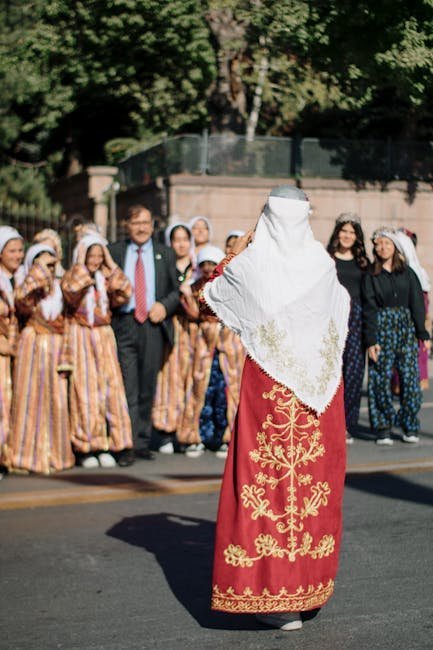
Dongxiang embroidery is preserved through local cultural industries in Linxia. In recent years, womens embroidery cooperatives have been established across Dongxiang County, providing income for rural women while maintaining traditional techniques. These cooperatives produce both traditional garments and contemporary products — embroidered bags, scarves, and home decor items — that bring Dongxiang craft aesthetics to broader markets. The Dongxiang Autonomous County government has designated several embroidery masters as intangible cultural heritage bearers, supporting apprenticeship programs that pair experienced artisans with younger generations. Digital documentation projects have also been launched to record traditional patterns and stitching techniques before they are lost to modernization.
Modern Influence and Preservation
Dongxiang embroidery is preserved through local cultural industries in Linxia.
Did You Know?
The Dongxiang are one of the few ethnic groups in China whose name derives from their place of residence rather than from their own endonym.
Wool Craft and Embroidery of the Dongxiang
The Dongxiang people of Gansu Province have developed textile traditions suited to the pastoral and agricultural rhythms of the Loess Plateau. Wool from locally raised sheep is processed into yarn through hand-spinning, then dyed using natural materials including walnut hulls for brown tones and pomegranate skins for yellow. The woolen fabric is woven into warm, durable clothing appropriate for the dry, windy climate of the region. Dongxiang women's jackets and vests feature dense embroidery on the collar, front opening, and hem, with geometric patterns and stylized floral motifs executed in brightly colored silk threads.
Dongxiang hat-making is a specialized craft, with married women wearing white crocheted or embroidered skullcaps that cover the hair completely. These caps are made from cotton or wool thread and feature intricate openwork patterns that allow the scalp to breathe while providing coverage. Unmarried women and girls wear colorful embroidered caps with tassels or bead decorations that signal their availability for courtship.
Wool Craft and Embroidery of the Dongxiang
The Dongxiang people of Gansu Province have developed textile traditions suited to the pastoral and agricultural rhythms of the Loess Plateau. Wool from locally raised sheep is processed into yarn through hand-spinning, then dyed using natural materials including walnut hulls for brown tones and pomegranate skins for yellow. The woolen fabric is woven into warm, durable clothing appropriate for the dry, windy climate of the region. Dongxiang women's jackets and vests feature dense embroidery on the collar, front opening, and hem, with geometric patterns and stylized floral motifs executed in brightly colored silk threads.
Dongxiang hat-making is a specialized craft, with married women wearing white crocheted or embroidered skullcaps that cover the hair completely. These caps are made from cotton or wool thread and feature intricate openwork patterns that allow the scalp to breathe while providing coverage. Unmarried women and girls wear colorful embroidered caps with tassels or bead decorations that signal their availability for courtship.
Community Textile Traditions of the Dongxiang
Textile production among the Dongxiang has historically been a community-oriented activity, with women gathering in groups for spinning, embroidery, and hat-making sessions. These working gatherings serve multiple purposes: they allow women to share the labor of repetitive tasks, provide opportunities for experienced craftswomen to instruct beginners, and create social bonds that strengthen community cohesion. During these sessions, patterns and techniques are discussed, design innovations are shared, and young women receive informal instruction from their elders. The gatherings also serve as occasions for social commentary and storytelling, with the rhythms of handwork providing a backdrop for oral traditions.
The decline of home textile production among the Dongxiang has been partially offset by the rise of embroidery as a marketable skill. Dongxiang embroidered items, particularly the distinctive white skullcaps and embroidered vest panels, have found markets among tourists and collectors interested in ethnic minority crafts. Women's cooperatives have formed in several Dongxiang villages to produce embroidered goods for sale, creating income opportunities that provide economic incentives for maintaining traditional skills. These cooperatives typically employ a mix of experienced older embroiderers and younger women in training, ensuring that techniques are transmitted across generations while also generating household income in a region with limited employment options.