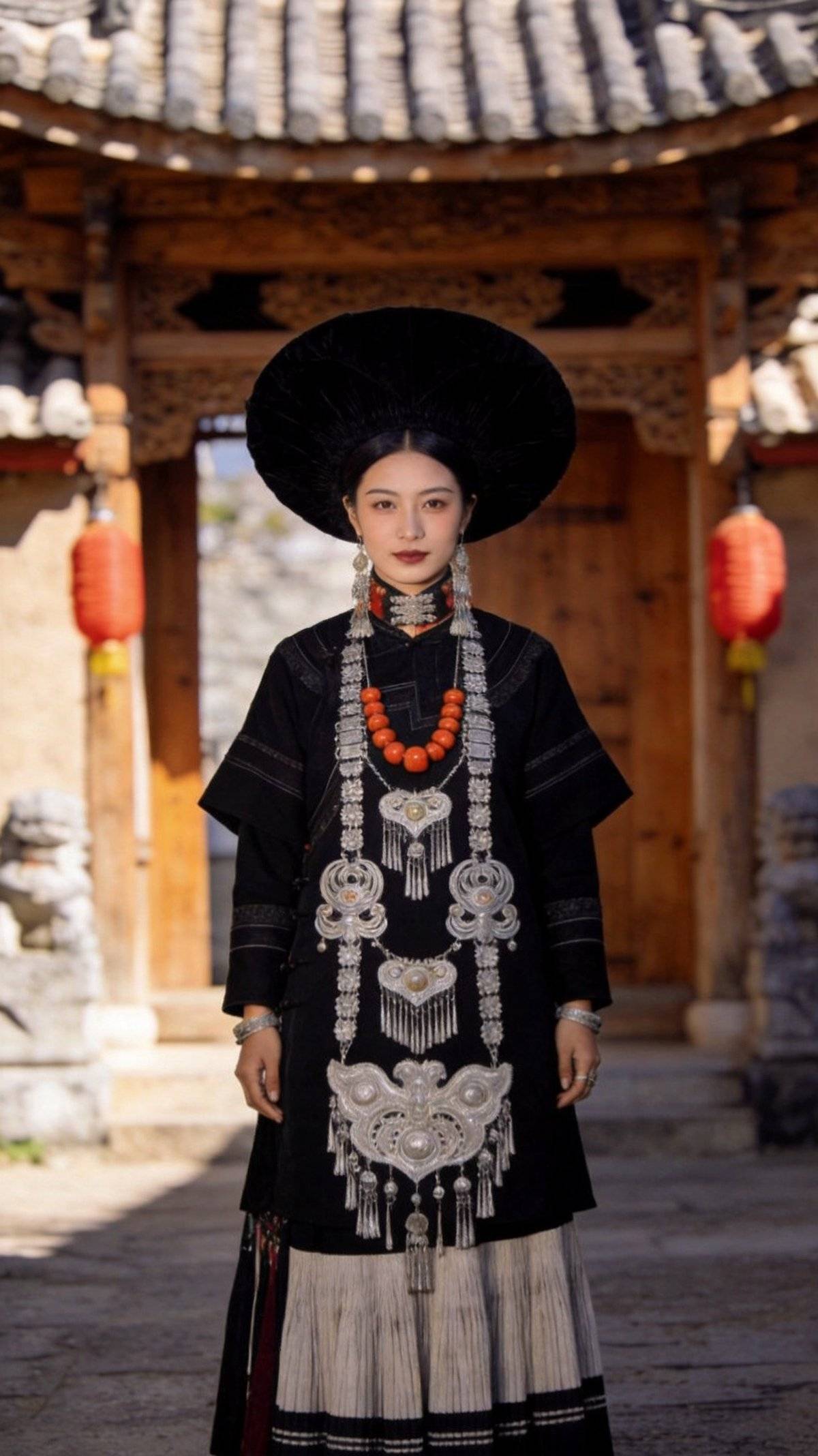
Yi traditional clothing is exceptionally diverse with over 100 subgroups, unified by characteristic flame-shaped embroidery patterns, heavy silver ornaments, and luxurious wool capes. The Yi are known for their magnificent silver crown headdresses and distinctive pleated skirts.
Historical and Cultural Background
The Yi people, numbering over 8.7 million, are one of China's largest ethnic minorities with a recorded history spanning more than 2,000 years. Concentrated in the mountainous regions of Yunnan, Sichuan, Guizhou, and Guangxi provinces, the Yi developed a sophisticated civilization with their own syllabic writing system, one of the few indigenous scripts still in use in China. Their traditional clothing reflects a deep connection to fire culture, with the annual Torch Festival being the most important celebration of the Yi calendar. Fire motifs dominate their embroidery because fire holds both practical and spiritual significance in the high-altitude environments where the Yi traditionally live, providing warmth, protection, and a central gathering point for community life.
The social structure of traditional Yi society was highly stratified, and clothing served as an immediate visual indicator of social class. The Black Yi nobility historically wore finer fabrics, more elaborate silver, and distinct headwear styles that commoners were forbidden from adopting. While these rigid class distinctions have largely disappeared in modern times, regional variations remain strong, with the Liangshan, Chuxiong, and Honghe areas each producing distinctive clothing sub-styles that Yi people proudly maintain as markers of local identity.
Key Features of Yi Attire
- Flame-shaped and spiral embroidery patterns (huowen) on jackets and skirts
- Womens long pleated skirts with multiple colored horizontal bands
- Magnificent silver crown headdresses with floral filigree and dangling ornaments
- Wool capes (shu'erwayi) made from handwoven wool in natural black, white, or blue
- Heavy silver neck rings and breastplates for festive wear
Traditional Garments
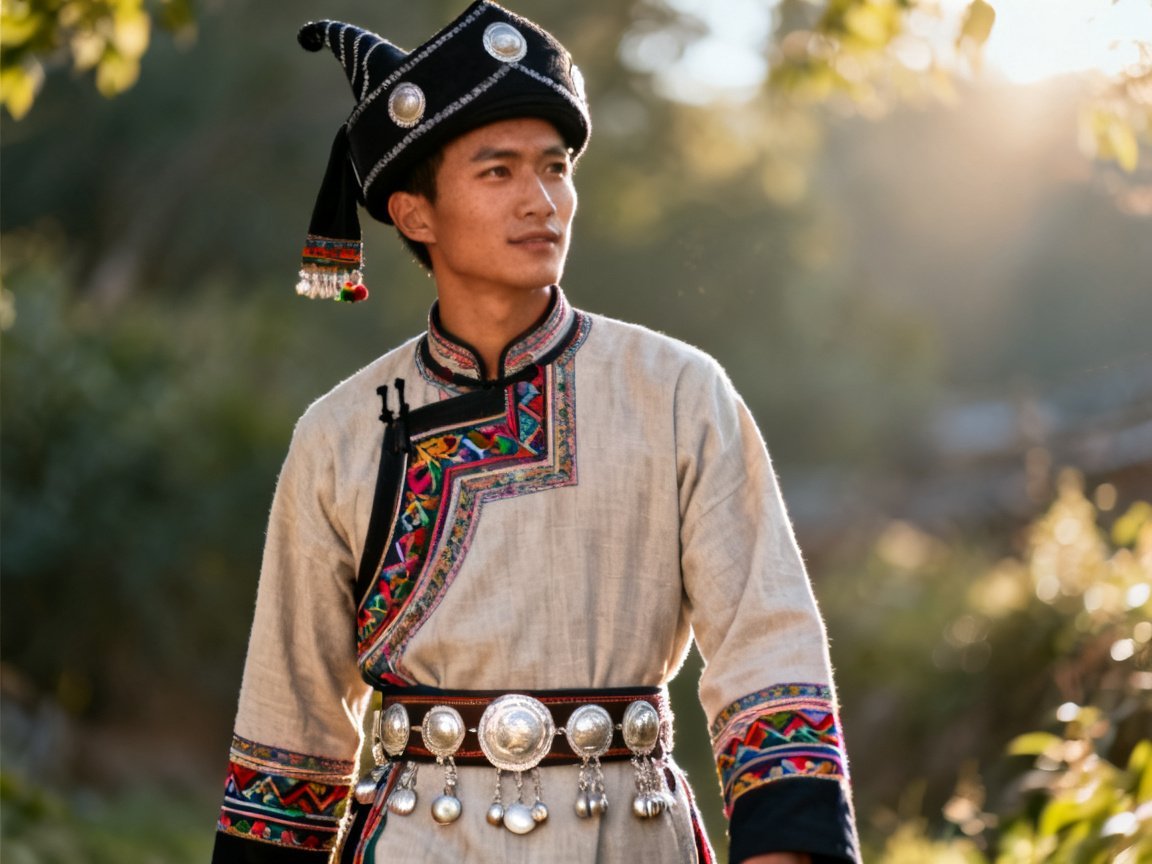
Women in the Liangshan region wear a long pleated skirt with horizontal bands of different colors (usually reaching the ankle), a long or short embroidered jacket, and a wool cape. The pleated skirt construction is remarkably labor-intensive, with some skirts containing over one hundred individually pressed pleats that must be precisely aligned and sewn. Each horizontal color band on the skirt carries meaning: black represents the earth and the Yi people's dignity, red symbolizes fire and life force, and yellow represents the sun and prosperity. In Chuxiong, the jacket is more fitted with flame-embroidery on the collar and cuffs, often featuring silver button closures shaped like flowers or butterflies. Men wear a black or blue front-fastening jacket with embroidered edges, loose trousers (Liangshan men wear extremely wide-legged trousers that can measure over one meter in circumference at each leg), and a wool cape. The wool cape, known as shu'erwayi, is handwoven from locally raised sheep wool and can take a skilled weaver three months to complete a single piece.
Headwear and Adornments
Women in Liangshan wear a distinctive square or triangular headscarf (yingboca), while those in Chuxiong wear large silver crown headdresses with floral filigree, silver globes, and dangling ornaments. The silver headdress of a Chuxiong Yi woman can weigh over two kilograms and may contain dozens of individual silver pieces, each handcrafted by Yi silversmiths using techniques passed down through generations. Men traditionally wear a black headwrap with a distinctive single horn-shaped protrusion at the front called the zheti (hero knot), symbolizing bravery. The zheti is formed by carefully wrapping and shaping a length of black cloth around the head, with the protruding horn requiring considerable skill to create. This headwear tradition is so central to Yi male identity that in the Liangshan region, a boy's transition to manhood was historically marked by his first zheti-wearing ceremony.
Embroidery and Decorative Arts
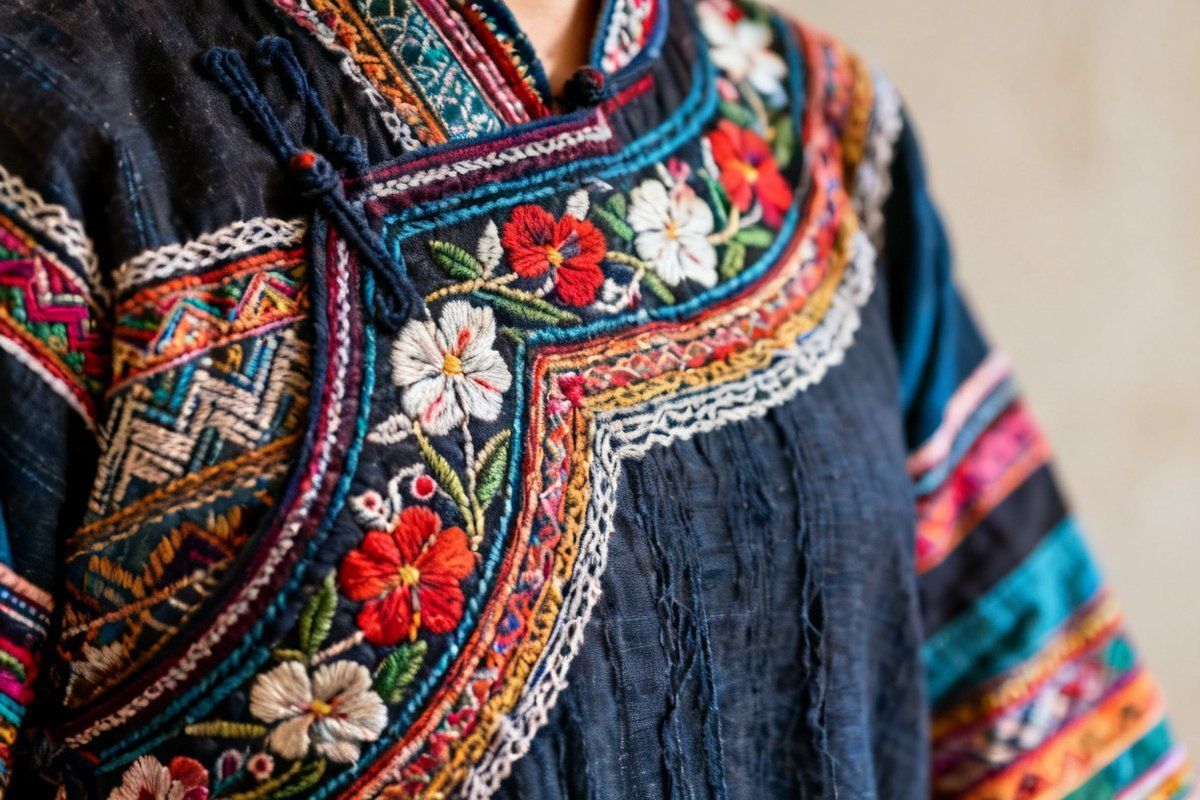
Yi embroidery is known for its flame and spiral motifs in brilliant colors on black fabric. Patterns include fire flames (representing the Yi fire culture), flowers, geometric shapes, and the distinctive panlan (coiling) stitch. The most elaborate embroidery appears on jacket cuffs, collars, front panels, and skirt bands. Yi embroiderers work without printed patterns, instead relying on memory and counting techniques passed through generations. A single festival jacket may contain over twenty distinct embroidery motifs, each with its own name and symbolic meaning. The embroidery process is highly social: women often gather in groups to embroider together, sharing techniques and stories while working. Some scholars have identified correspondences between certain Yi embroidery patterns and characters from the ancient Yi syllabic script, suggesting that embroidery may have once served as a form of textile-based writing. This theory, while debated, underscores the cultural depth encoded in what might appear to outsiders as purely decorative needlework.
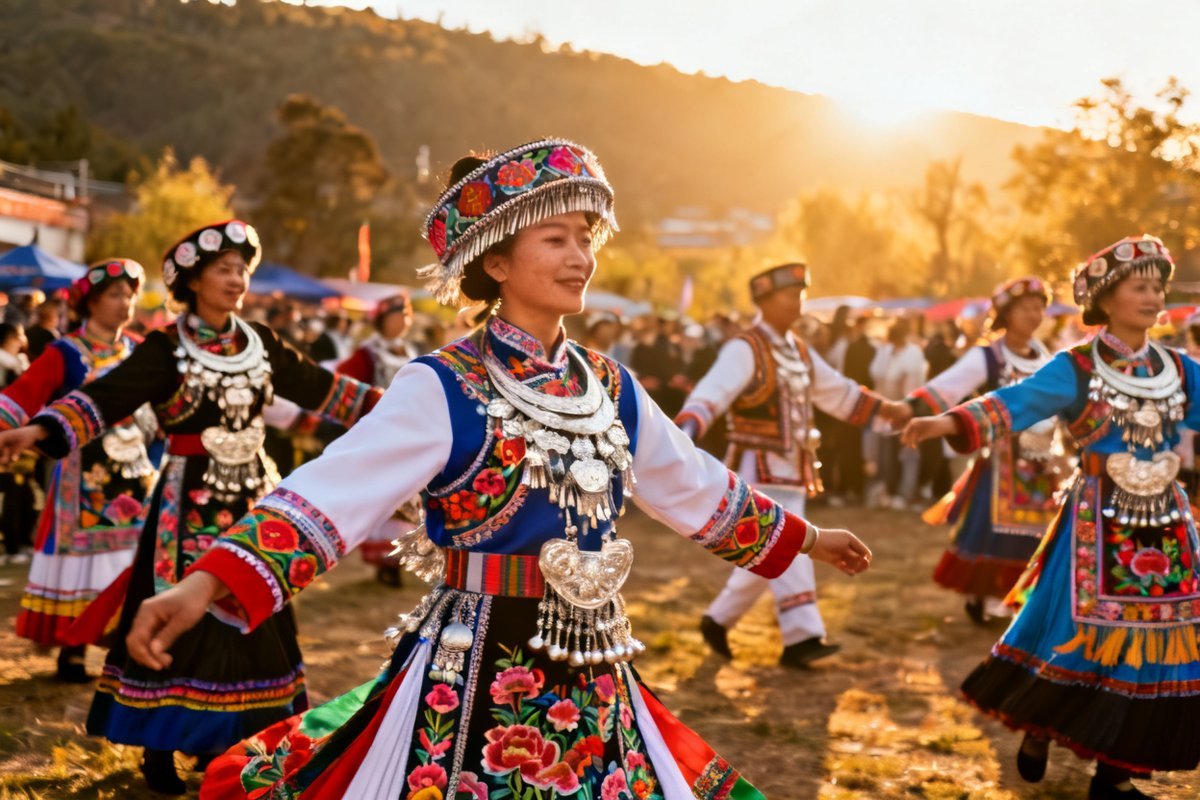
The Yi Torch Festival transforms women into walking flames - their fire-pattern embroidery, red-trimmed skirts, and silver ornaments catching the light of thousands of torches in what ethnographers call a ritual combustion of identity.
Color Symbolism
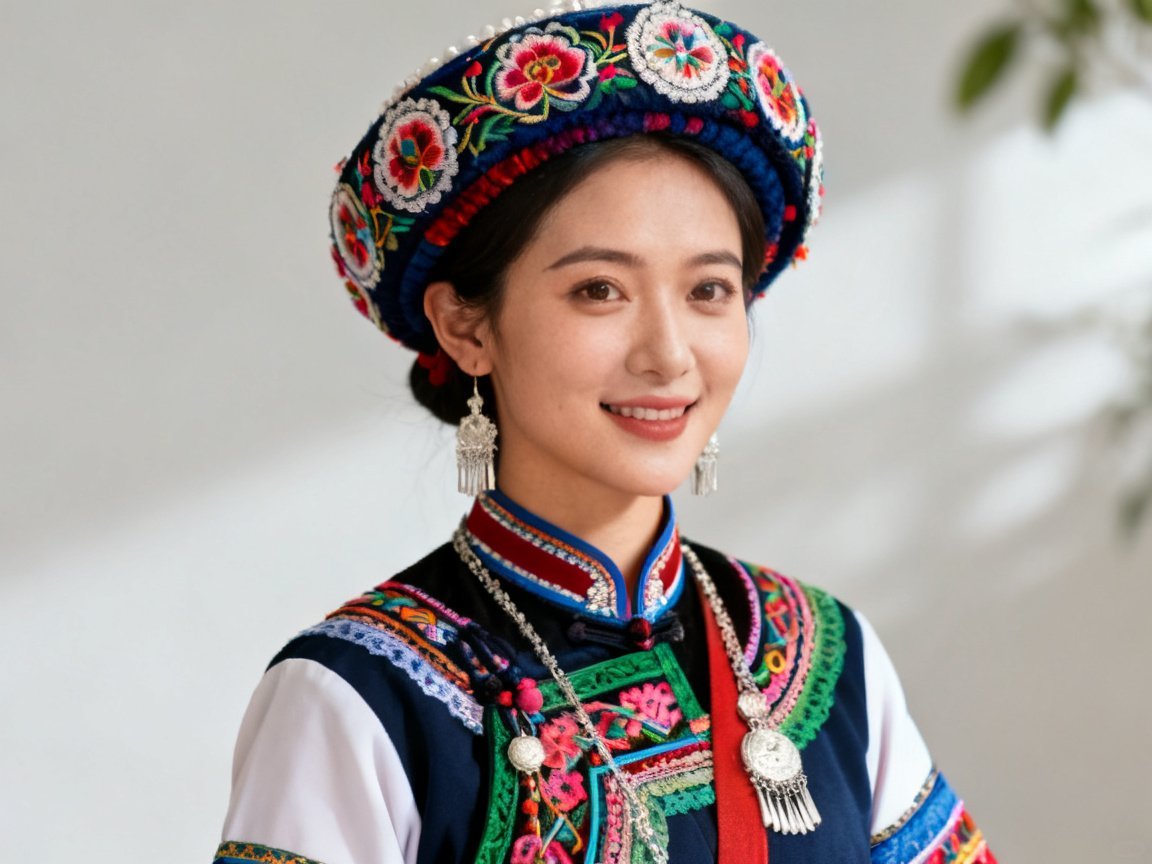
Black is the revered color (Yi means Black People in some contexts). Red (fire), yellow (sun), and blue are the main accent colors. Silver provides metallic brilliance. Wool capes in natural black, blue, or white.
Festival Attire
During the Torch Festival (the most important Yi celebration), women wear the full silver crown headdress, multiple silver neck rings and breastplates, the most elaborately embroidered jackets, and finest pleated skirts.
Modern Influence and Preservation
Yi silver craftsmanship is nationally celebrated, with Yi silversmiths recognized as masters of their craft throughout China. The Torch Festival clothing has become iconic in Chinese ethnic tourism, drawing photographers and cultural enthusiasts to Liangshan and Chuxiong each year. Yi flame patterns have appeared in contemporary fashion designs by Chinese designers seeking authentic ethnic inspiration, and several fashion brands have collaborated with Yi embroidery cooperatives to create modern clothing lines that incorporate traditional flame motifs. The Yi wool cape, with its minimalist design and practical warmth, has attracted particular interest from sustainable fashion advocates who appreciate its zero-waste production process and biodegradable materials. Despite these positive developments, younger Yi generations in urban areas increasingly wear mainstream modern clothing, and initiatives to teach traditional embroidery and garment-making in Yi schools have become important for cultural continuity.
Did You Know?
The Yi have one of the worlds few remaining syllabic scripts (Yi script), with over 8,000 characters in use - their embroidery patterns are believed by some scholars to contain ancient Yi script forms.
Capes, Cloaks, and Status Markers of the Yi
The Yi people of Sichuan, Yunnan, Guizhou, and Guangxi use outer garments as primary markers of social status, regional identity, and occasion. The most iconic Yi outer garment is the cape-like cloak called a caerwa, made from densely woven wool felt and worn over the shoulders. The caerwa is typically undyed or natural gray, falling to the waist or mid-thigh depending on the regional style. Yi men traditionally wear their hair in a distinctive topknot wrapped in black cloth, a style that has been documented for over two thousand years and is considered the most important marker of Yi male identity.
Yi women's clothing varies dramatically between the six major Yi dialect groups, with each group maintaining distinct garment cuts, color preferences, and ornamentation styles. The Liangshan Yi women of Sichuan wear long pleated skirts in bold colors, with the skirt length indicating marital status: shorter skirts for unmarried women and ankle-length skirts for married women. The women's jackets feature broad embroidered bands at the collar and cuffs in geometric patterns using silver and gold thread, with the embroidery density reflecting the formality of the occasion.
Capes, Cloaks, and Status Markers of the Yi
The Yi people of Sichuan, Yunnan, Guizhou, and Guangxi use outer garments as primary markers of social status, regional identity, and occasion. The most iconic Yi outer garment is the cape-like cloak called a caerwa, made from densely woven wool felt and worn over the shoulders. The caerwa is typically undyed or natural gray, falling to the waist or mid-thigh depending on the regional style. Yi men traditionally wear their hair in a distinctive topknot wrapped in black cloth, a style that has been documented for over two thousand years and is considered the most important marker of Yi male identity.
Yi women's clothing varies dramatically between the six major Yi dialect groups, with each group maintaining distinct garment cuts, color preferences, and ornamentation styles. The Liangshan Yi women of Sichuan wear long pleated skirts in bold colors, with the skirt length indicating marital status: shorter skirts for unmarried women and ankle-length skirts for married women. The women's jackets feature broad embroidered bands at the collar and cuffs in geometric patterns using silver and gold thread, with the embroidery density reflecting the formality of the occasion.
Regional Diversity in Yi Women's Dress
The clothing of Yi women varies so dramatically between the six major dialect groups that observers sometimes question whether they belong to a single ethnic tradition. The Liangshan Yi of Sichuan wear long pleated skirts in bold colors with elaborately embroidered jackets featuring broad decorative bands at collar and cuffs. The Sani Yi of Yunnan, by contrast, wear headdresses shaped like stylized tiger heads and shorter skirts with different embroidery patterns. The Axi Yi favor white as their primary clothing color with embroidery in fine geometric patterns, while the Nuosu Yi use predominantly black and blue with silver ornamentation. Each subgroup's clothing is immediately identifiable to community members and serves as a primary marker of ethnic subgroup affiliation.
The diversity of Yi women's dress reflects the group's history of settlement in isolated mountain valleys with limited inter-community contact across difficult terrain. Each valley community developed its own textile traditions in relative isolation, producing the remarkable range of styles observed today. Efforts to document and preserve the full range of Yi clothing traditions have been undertaken by cultural researchers, with photographic archives and pattern libraries being compiled to ensure that the diversity of Yi women's dress is recorded even as some regional traditions face pressure from modernization and assimilation.