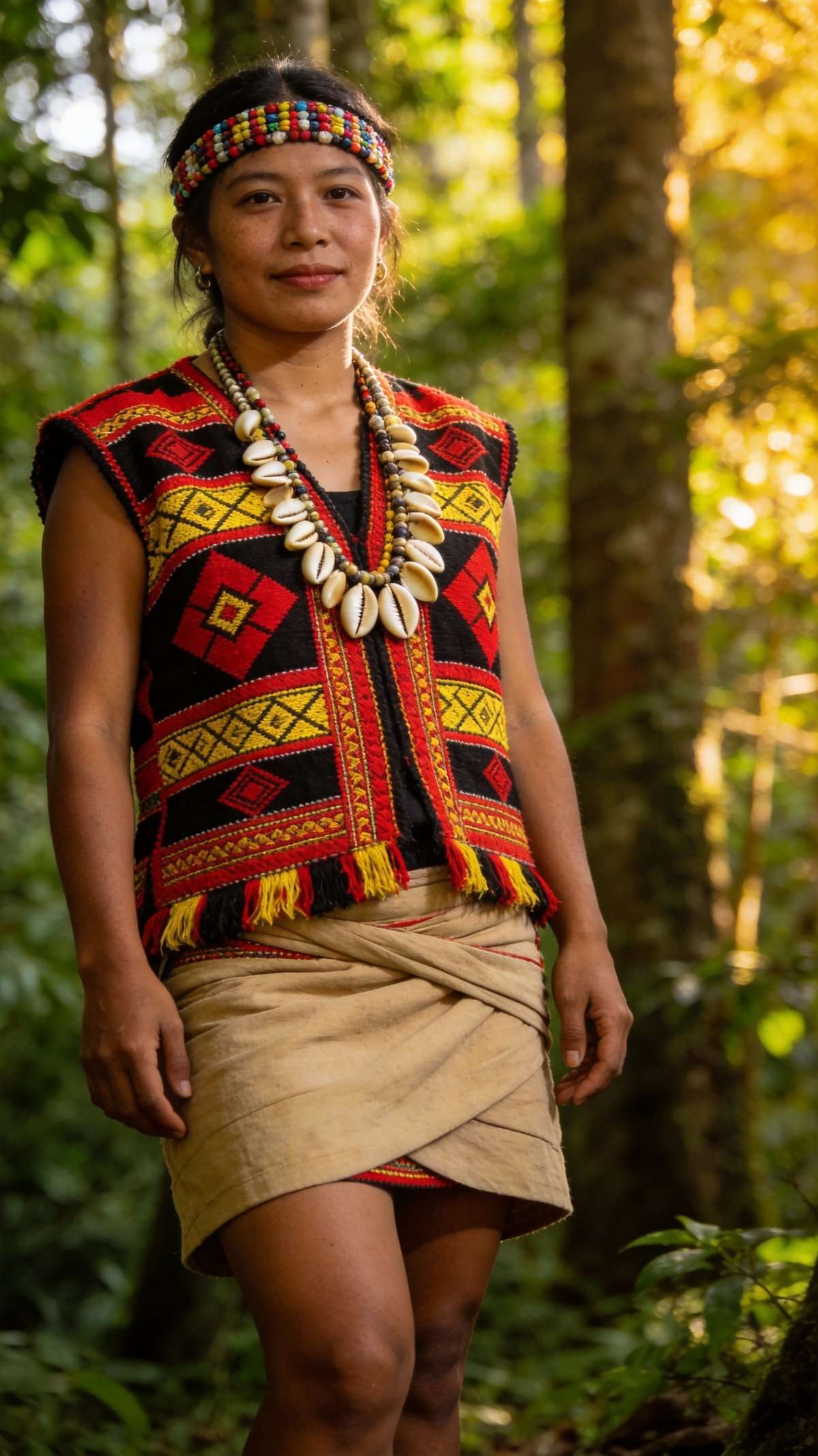
Gaoshan clothing varies among Taiwans diverse indigenous groups but is unified by the use of bark cloth, diamond-shaped embroidery, and elaborate beadwork. Shell bead embroidery and woven geometric patterns are distinctive hallmarks. The term "Gaoshan" collectively refers to the indigenous Austronesian peoples of Taiwan, encompassing at least sixteen recognized tribes each with their own language, customs, and clothing traditions.
Historical and Cultural Background
Taiwans indigenous peoples have inhabited the island for at least 6,000 years, predating Han Chinese settlement by millennia. These Austronesian-speaking groups developed sophisticated textile traditions using materials from their island environment — tree bark, plant fibers, animal hides, shells, and feathers. The Gaoshan peoples were historically organized into autonomous village communities with complex social hierarchies, age-grade systems, and headhunting traditions among certain groups such as the Atayal and Bunun. Headhunting was not mere warfare but was integrated into a belief system centered on ancestral spirits and the acquisition of spiritual power.
The sixteen officially recognized Gaoshan tribes — including the Amis, Atayal, Paiwan, Bunun, Rukai, Puyuma, Tsou, Saisiyat, Yami (Tao), Thao, Kavalan, Truku, Sakizaya, Sediq, Hlaalua, and Kanakanavu — each possess distinct visual languages expressed through their clothing. The Amis, the largest group concentrated along Taiwans eastern coast, are known for their vibrant red and black costumes with elaborate headdresses. The Paiwan and Rukai of southern Taiwan developed the most extensive beadwork traditions, while the Atayal are celebrated for their weaving and facial tattooing customs that marked transition to adulthood.
The Yami (Tao) people of Orchid Island, geographically isolated from the main island, developed a unique clothing tradition based on woven plant fibers rather than animal products, reflecting their maritime fishing culture and the absence of large game animals on their small volcanic island.
Key Features of Gaoshan Attire
- Diamond-shaped geometric patterns in woven and embroidered designs
- Bark cloth made from beaten mulberry or paper mulberry bark
- Thousands of tiny shell beads sewn into intricate patterns
- Feathered headdresses and adornments for ceremonial use
- Dense multicolored beadwork on ceremonial jackets and aprons
Traditional Garments
Amis women wear black or blue short jackets with embroidered sleeves and colorful wraparound skirts. Atayal and Paiwan are known for their long shell-beaded tunics. Men traditionally wear loincloths and jackets of bark cloth or woven hemp. Paiwan noblewomen wear elaborate long robes densely covered with shell bead and glass bead embroidery featuring the hundred-pace viper motif, a sacred symbol reserved for chiefly families. Rukai attire similarly uses beadwork to denote social rank, with lily flower patterns signifying aristocratic status.
Bark cloth production involves harvesting the inner bark of the paper mulberry tree, soaking it in water, and beating it with wooden mallets until it forms a pliable, fabric-like material. This labor-intensive process yields a soft, durable textile with a texture similar to felt, which is then cut and sewn into sleeveless vests, loincloths, and wraparound skirts. The bark cloth garments are lightweight and breathable, well-suited to Taiwans subtropical climate.
Headwear and Adornments
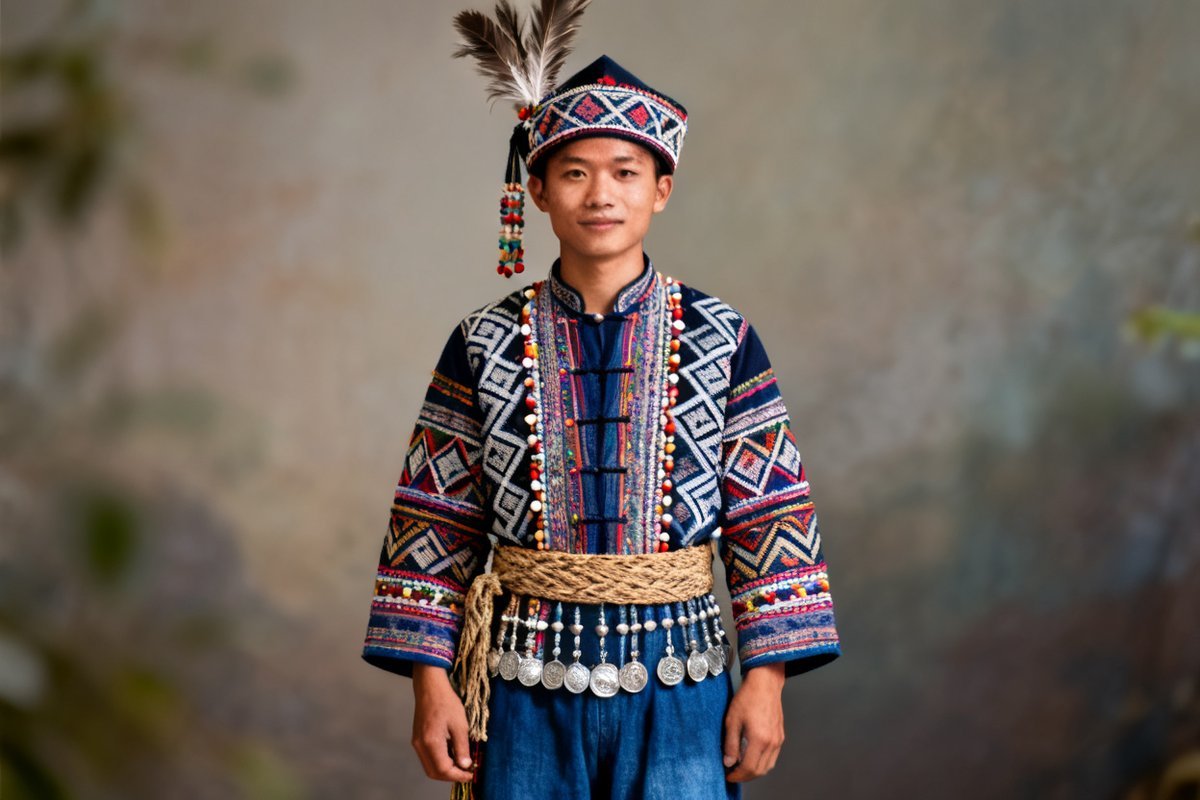
Feathered headdresses are iconic — men wear caps or bands adorned with eagle, pheasant, or kingfisher feathers during ceremonies. Women wear floral garlands or embroidered headbands. Among the Paiwan and Rukai, headdresses also incorporate boar tusks, animal teeth, and shell discs that indicate martial achievement or noble lineage. The Amis are famous for their spectacular feather crowns worn during the annual harvest festival, with the height and fullness of the feather arrangement corresponding to the wearers status within the age-grade system.
Embroidery and Decorative Arts
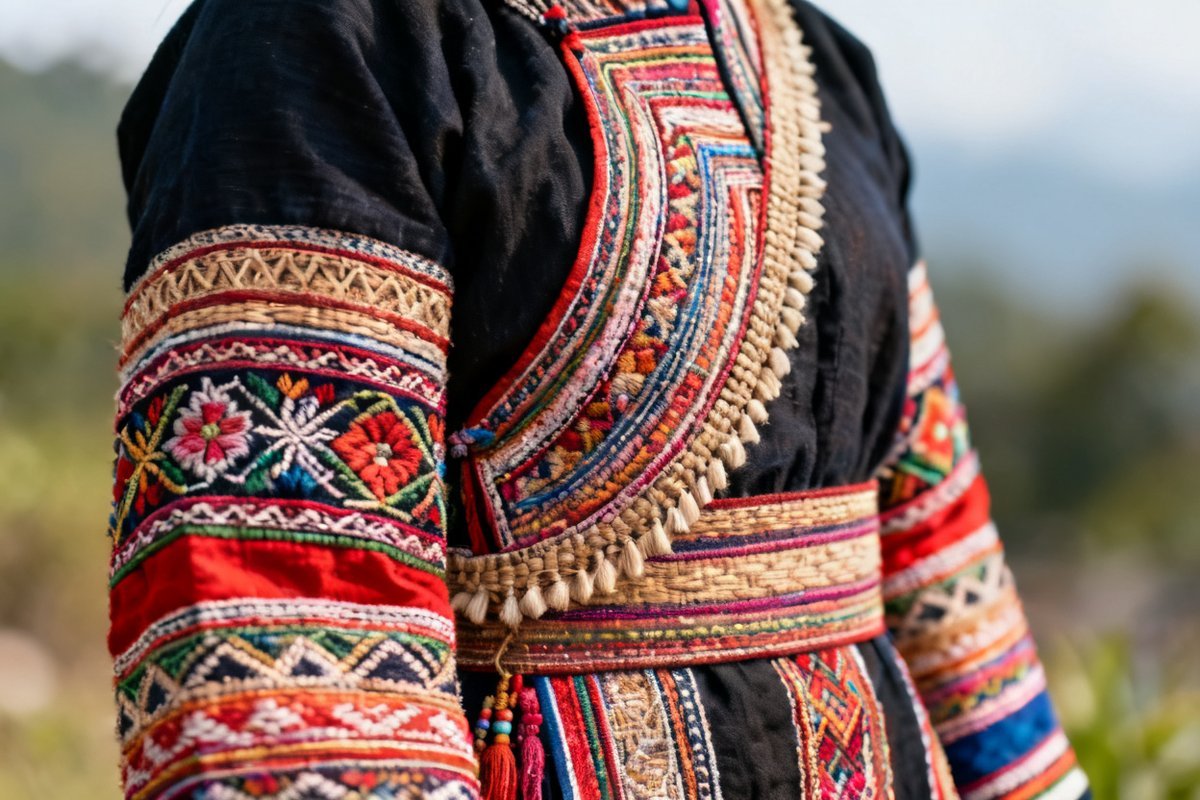
Gaoshan embroidery is renowned for shell-bead work — tiny shell disks sewn onto dark fabric in geometric patterns including diamond, zigzag, and human-figure motifs. Creating shell beads requires breaking shells into small fragments, drilling a center hole with a fine awl, and grinding each piece into a uniform disk shape on a whetstone. A single ceremonial garment may incorporate thousands of these shell beads, representing months of painstaking labor.
Weaving is equally central to Gaoshan decorative arts. The Atayal are considered the finest weavers among Taiwans indigenous groups, producing intricate geometric textiles on traditional backstrap looms. Their patterns feature horizontal bands of diamonds, zigzags, and stripes created through supplementary weft techniques. Facial tattooing, historically practiced by the Atayal and Sediq, constituted another form of bodily adornment — women earned the right to facial tattoos after demonstrating weaving proficiency, while men qualified through successful headhunting.
Among the Atayal, the shell-bead embroidery on a ceremonial robe was believed to require a thousand individual shell disks, each representing a prayer for the wearers protection.
Color Symbolism
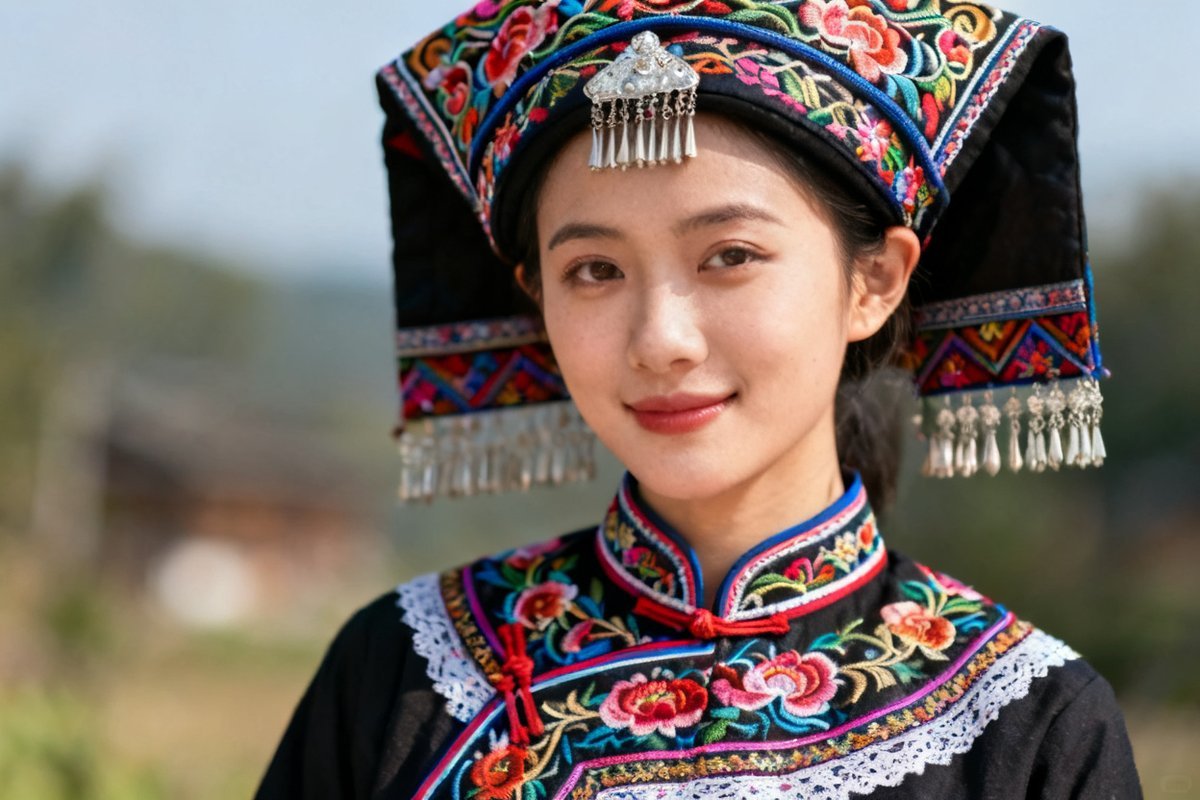
Black, dark blue, and natural browns for base fabrics. Beadwork uses vivid red, yellow, green, blue, white, and orange. Shell beads provide white contrast. Red is the most potent color across Gaoshan cultures, symbolizing life force, bravery, and spiritual power. Among the Paiwan, the combination of red fabric with white shell beads creates the characteristic visual signature of their ceremonial garments.
Festival Attire
During harvest festivals and tribal ceremonies, the most elaborate bead-embroidered tunics and feathered headdresses are worn. The Amis Ilisin harvest festival, held annually between July and September, features thousands of participants in full traditional regalia performing synchronized circle dances. The Paiwan Maleveq ceremony, held every five years, is the most important ritual occasion where noble families display their ancestral garments and beadwork heirlooms. The Flying Fish Festival of the Yami (Tao) on Orchid Island features distinct ceremonial attire including woven rattan helmets and silver conical hats worn by men during the launching of fishing boats.
Modern Influence and Preservation
Indigenous designers in Taiwan have revitalized traditional shell-bead and weaving techniques in contemporary fashion. A growing indigenous cultural renaissance in Taiwan has brought Gaoshan textile arts to international attention, with designers incorporating traditional diamond patterns, beadwork, and weaving structures into modern clothing lines. Cultural festivals and workshops organized by tribal communities teach young people traditional skills that were at risk of being lost. Government and private initiatives support elder artisans as instructors, ensuring that the profound knowledge embedded in Gaoshan clothing traditions — from bark cloth processing to shell bead production — continues to be transmitted across generations.
Modern Influence and Preservation
Indigenous designers in Taiwan have revitalized traditional shell-bead and weaving techniques in contemporary fashion.
Did You Know?
The term Gaoshan encompasses at least 16 distinct indigenous groups in Taiwan, each with its own unique clothing traditions.
Weaving Traditions and Shell Beadwork of the Gaoshan
The Gaoshan people of Taiwan have a rich textile heritage characterized by intricate weaving techniques and distinctive shell bead ornamentation. Traditional Gaoshan looms are backstrap looms that allow weavers to create fabric of precise widths suited to individual garment needs. The weaving incorporates geometric patterns that carry clan-specific meanings, with each Gaoshan subgroup maintaining its own pattern repertoire. Women specialize in particular pattern families, and the ability to weave complex designs accurately is a highly respected skill within communities.
Shell beadwork is among the most treasured Gaoshan adornment traditions, with small disc-shaped beads carved from local seashells and strung into elaborate necklaces, bracelets, and garment trims. The beads produce a soft rattling sound when the wearer moves that is considered aesthetically pleasing. The most elaborate shell bead pieces are reserved for ceremonial use and are passed down through families as heirlooms.
Weaving Traditions and Shell Beadwork of the Gaoshan
The Gaoshan people of Taiwan have a rich textile heritage characterized by intricate weaving techniques and distinctive shell bead ornamentation. Traditional Gaoshan looms are backstrap looms that allow weavers to create fabric of precise widths suited to individual garment needs. The weaving incorporates geometric patterns that carry clan-specific meanings, with each Gaoshan subgroup maintaining its own pattern repertoire. Women specialize in particular pattern families, and the ability to weave complex designs accurately is a highly respected skill within communities.
Shell beadwork is among the most treasured Gaoshan adornment traditions, with small disc-shaped beads carved from local seashells and strung into elaborate necklaces, bracelets, and garment trims. The beads produce a soft rattling sound when the wearer moves that is considered aesthetically pleasing. The most elaborate shell bead pieces are reserved for ceremonial use and are passed down through families as heirlooms.
Gaoshan Facial Tattoos and Body Adornment
Among several Gaoshan subgroups, facial tattooing was historically practiced as a rite of passage marking the transition from adolescence to adulthood. The tattooing process was performed using a group of sharp needles bound together and dipped in soot-based ink, with the pigment being tapped into the skin using a small mallet. The procedure was painful and carried ritual significance, with young people expected to endure the process without showing distress as proof of their readiness for adult responsibilities. The tattoo patterns were applied to specific areas of the face according to each subgroup's traditions: the forehead, cheeks, and chin all carried identifying marks that communicated the wearer's community affiliation and social status.
While facial tattooing is no longer practiced among the Gaoshan, the patterns continue to appear in woven and embroidered forms on contemporary ceremonial clothing. The traditional sunburst motif, representing the celestial origins of Gaoshan spirits, is the most persistent tattoo pattern to have survived in textile form. Women's festival garments often feature the sunburst embroidered at the center of back panels, preserving the symbolic meaning of the original tattoo patterns in a modified medium. Elders who received facial tattoos in their youth are now recognized as cultural treasures, and photographic documentation of their patterns has been undertaken by cultural preservation organizations.