
The Achang people, numbering approximately 40,000, reside primarily in the Dehong Dai and Jingpo Autonomous Prefecture of Yunnan Province, with concentrations in Lianghe and Longchuan counties. Their traditional clothing reflects centuries of cultural exchange with neighboring Dai and Jingpo communities while maintaining distinctive Achang identity markers. Womens attire features tight-fitting collarless jackets adorned with silver dome buttons and elaborately embroidered belts known as bai jian dai, which serve as both functional waist fasteners and artistic statements of the wearer's skill and family heritage. The Achang are also renowned metalworkers, and this expertise manifests directly in their clothing through handcrafted silver ornaments passed down through generations of artisan families.
Key Features of Achang Attire
- High-collared collarless jackets with silver dome buttons
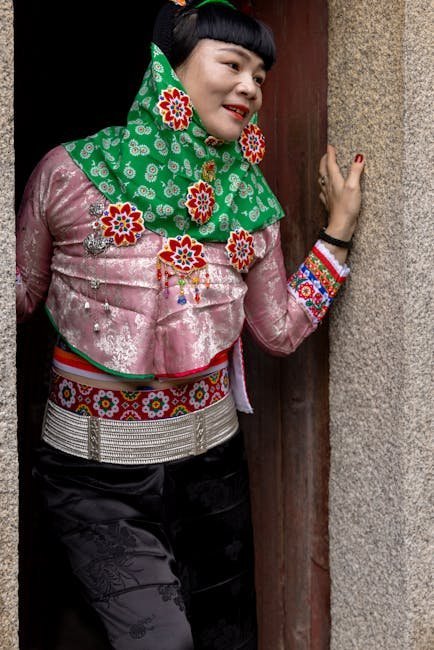
- Embroidered belts (bai jian dai) with intricate geometric patterns
- Black turbans for married women, colorful headscarves for unmarried
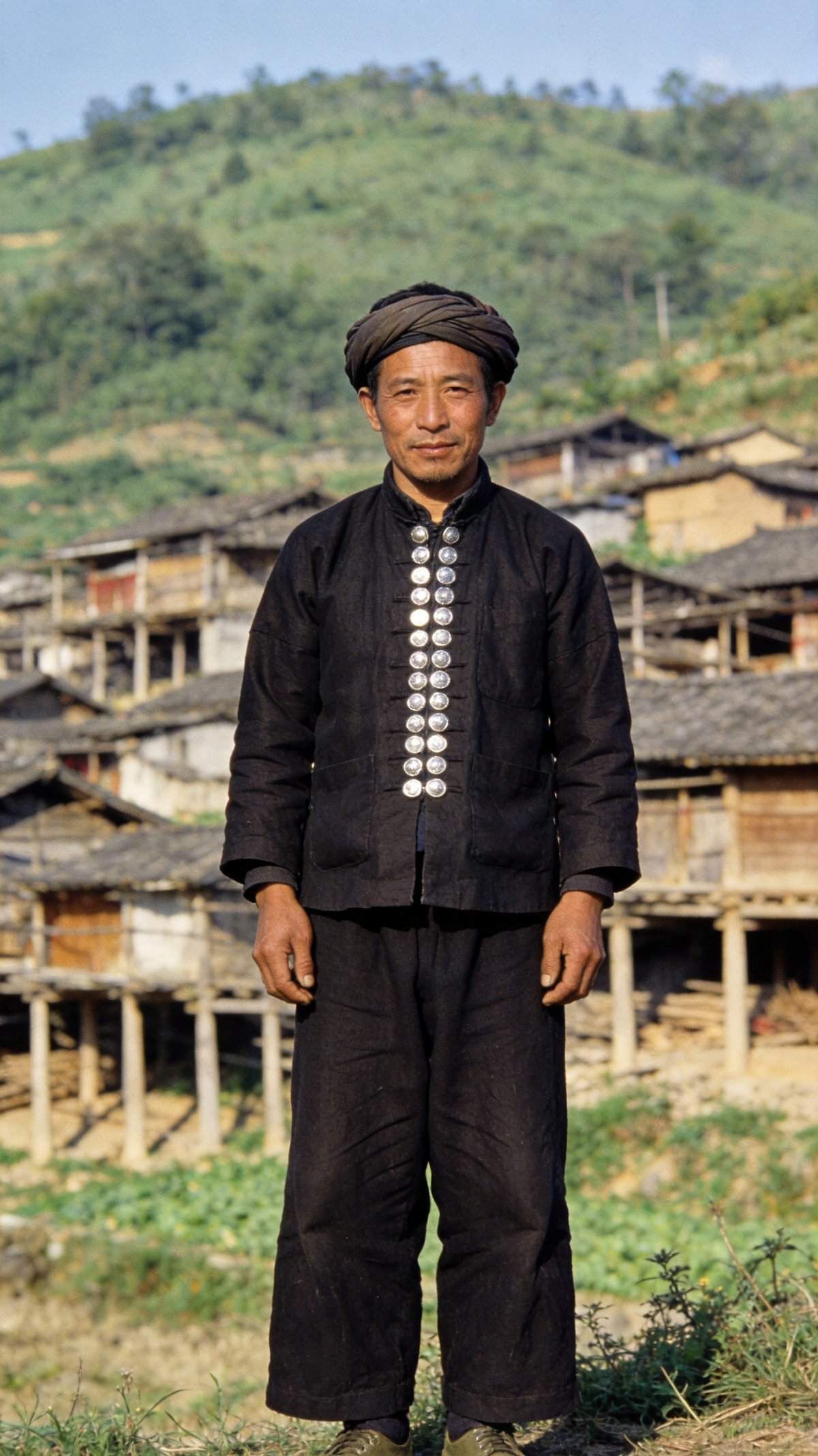
- Mens front-fastening short jackets with wide-leg trousers
- Hemp-woven fabric as a traditional textile base
Traditional Garments
Women wear collarless, tight-fitting blue or black jackets fastened with hand-forged silver buttons positioned at the right side, a style shared with neighboring Dai communities but distinguished by the density and craftsmanship of Achang silverwork. These jackets are typically paired with a long wrapped skirt or loose trousers, and the ensemble is anchored by the heavily embroidered waist belt that may measure up to three meters in length when fully unwrapped. The belt fabric is traditionally hemp-woven and densely stitched with geometric patterns in bright red, yellow, green, and white threads against a black or dark blue ground. Men wear blue or black front-fastening short jackets with cloth buttons and wide-leg trousers cut for ease of movement during farming and metalwork. For labor-intensive tasks, Achang men often roll their trouser legs to the knee and secure their jacket sleeves with cloth ties. During colder months, both genders add layers of handwoven hemp undershirts beneath their outer jackets, a practice that showcases the Achang mastery of hemp cultivation and textile production.
Headwear and Adornments
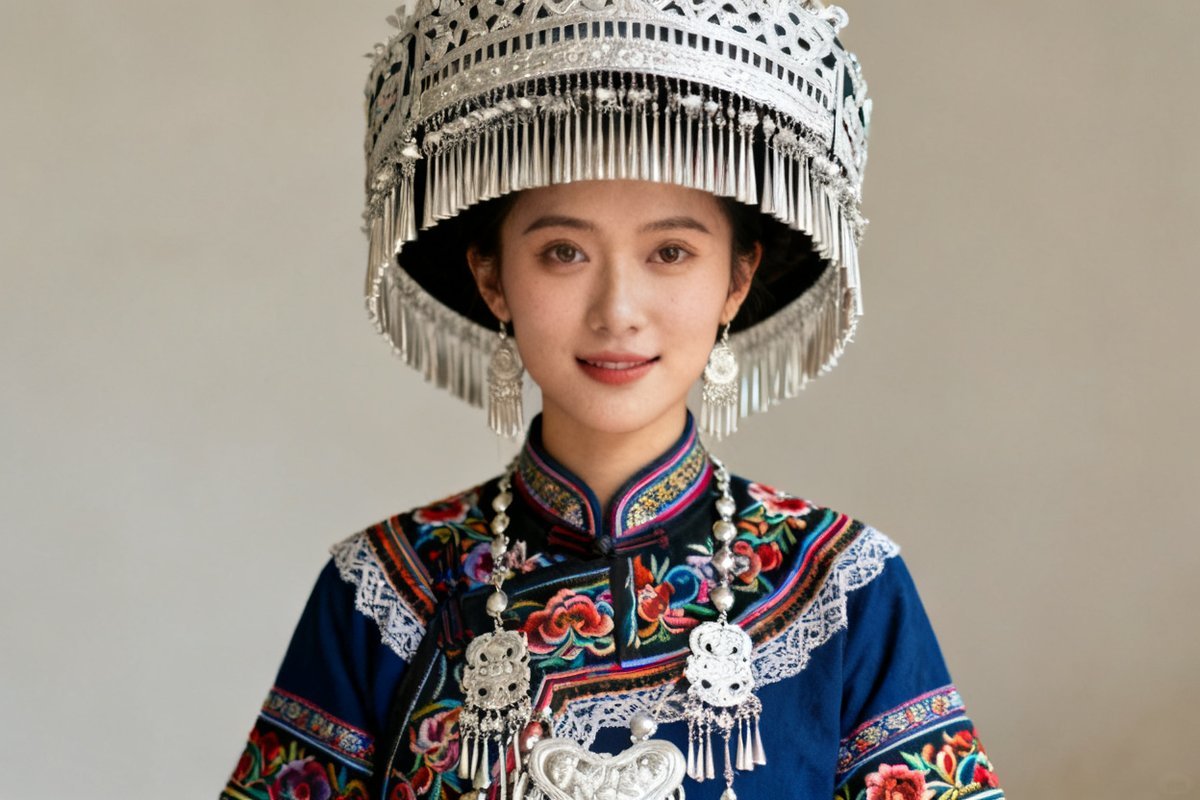
Married Achang women wrap their hair in black cloth turbans that can reach considerable height, with the wrapping style and number of layers indicating a woman's marital status and community standing. These turbans are secured with silver hairpins and may incorporate small embroidered panels at the temples. Unmarried women wear colorful headscarves with densely embroidered edges featuring floral and geometric motifs, the vivid colors of youth contrasting with the dignified dark turbans of married women. Men traditionally wear white or blue cloth head wraps that protect against sun during fieldwork and serve as a marker of ethnic identity. Beyond headwear, Achang adornment includes heavy silver earrings worn by both men and women in traditional contexts, silver neck chains with lock-shaped pendants, and multiple silver bracelets that produce a distinctive sound when the wearer moves. This silver ornamentation is not merely decorative but functions as portable family wealth, with some pieces passed down through four or more generations.
Embroidery and Decorative Arts
Achang embroidery focuses on geometric patterns including zigzags representing mountain ranges, diamonds symbolizing fields, and stylized floral motifs drawn from the natural world of western Yunnan. These designs appear predominantly on belts, collar edges, cuff bands, and the edges of headscarves. The embroidery is executed primarily in chain stitch and satin stitch using silk or cotton threads in vivid contrasting colors against dark fabric. A distinctive Achang technique involves integrating small silver discs and studs directly into embroidered surfaces, creating a mixed-media textile effect found in few other ethnic traditions. The metalworking skill of the Achang, famous for their Husa knives, extends naturally into clothing ornamentation with local silversmiths producing custom buttons, clasps, and decorative plaques that are sewn onto garments. Teaching embroidery traditionally begins in childhood with mothers passing patterns and techniques to daughters through hands-on apprenticeship that can span a decade before a young woman is considered fully skilled.
The Achang peoples mastery of metalwork is so revered that their ancient knife-making tradition is said to have influenced the distinctive silver ornaments adorning their ceremonial garments.
Color Symbolism
Deep blue represents the sky and the spiritual realm in Achang cosmology, black signifies the fertile soil of their Yunnan homeland and connection to ancestors, and white symbolizes purity and new beginnings. Daily wear is dominated by these three foundational colors, creating a restrained elegance that sets Achang clothing apart from the more vibrantly colored traditions of some neighboring groups. Bright red, associated with vitality and celebration, appears prominently in festive embroidery along with emerald green representing agricultural abundance and pink signifying youth and courtship. This color hierarchy governs every garment, with older community members wearing increasingly darker and more subdued tones while younger people incorporate brighter accents. The silver of ornaments carries its own symbolic weight, representing the moon, prosperity, and the Achang metalworking heritage that has sustained communities for centuries.
Festival Attire
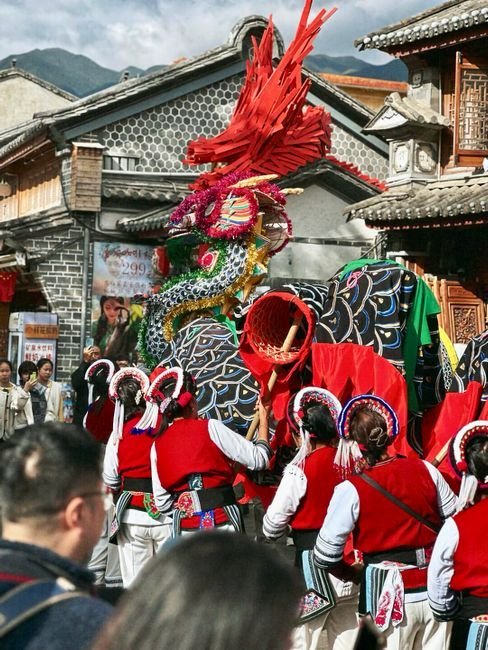
During the Aolu Festival, the most significant Achang celebration held annually after the rice planting season, women wear their finest silver-buttoned jackets with the most elaborate embroidered belts and complete silver jewelry sets including multiple earrings, layered bracelets, and heavy neck chains that may collectively weigh over two kilograms. Men don new blue jackets with freshly polished silver buttons and clean white head wraps for the occasion. The Spring Festival sees similar finery, with families preparing new garments weeks in advance and local silversmiths experiencing their busiest season as orders pour in for custom buttons and ornaments. Matchmaking events embedded within these festivals place intense social pressure on clothing presentation, with a young woman's embroidery skill and silver collection directly influencing marriage prospects. The preparation and wearing of festival attire follows prescribed communal rhythms, with neighboring women gathering to help each other dress, adjust turbans, and arrange silver pieces in correct order, turning the act of dressing into a social ritual that reinforces community bonds.
Modern Influence and Preservation
Achang textile techniques, particularly their hemp weaving and integrated silver ornamentation, are preserved through craft cooperatives in Yunnan's Dehong Prefecture that connect village artisans with broader markets. These cooperatives train younger generations in traditional skills while innovating product designs suited to contemporary consumers. The Achang silver button has become a recognized motif in ethnic-inspired fashion lines, with designers adapting the domed shape and hand-hammered texture for modern garments ranging from jackets to handbags. However, the community faces challenges familiar to many minority textile traditions: fewer young people pursue full mastery of embroidery and weaving as economic opportunities shift toward urban employment. Documentation projects by cultural heritage organizations have recorded pattern libraries and production techniques, and annual cultural festivals in Lianghe County provide living showcases where Achang clothing continues to be worn, celebrated, and passed to new generations. The intangible cultural heritage designation for Achang metalworking also indirectly protects clothing traditions, since the silversmithing that produces garment ornaments draws from the same protected knowledge system.
Did You Know?
The Achang are famous for their Huludao (gourd) knife-making tradition, and their silver buttons are often crafted by local silversmiths using techniques passed down through generations.
For further reading on Achang textile traditions and the broader context of China's ethnic minority clothing, explore the Achang people on Wikipedia and the overview of Chinese ethnic minority clothing.
Textile Traditions of the Achang
The Achang have a long history of hemp cultivation and weaving that predates written records in Yunnan Province. Women traditionally spin hemp fibers into thread using hand-operated spinning wheels, then dye the yarn using natural materials before weaving on backstrap looms. The resulting fabric has a distinctive texture and durability that makes it well suited for daily wear in the mountainous environment of western Yunnan. Indigo dyeing is the primary coloring method, producing the characteristic deep blue and black hues that dominate Achang clothing. The hemp fabric breathes well in warm weather and becomes softer with each washing, making it practical as well as culturally significant.
Pattern weaving is a specialized skill among Achang women, with certain motifs restricted to specific families or villages. The most skilled weavers can produce fabrics with up to twelve distinct pattern bands running parallel across the width of the cloth. These patterned bands are most often seen on the bai jian dai belts and on the decorative panels of festival jackets. Younger women are increasingly learning modern dyeing techniques that offer brighter colors, though many families still maintain traditional indigo vats passed down through multiple generations of women in the community.
Textile Traditions of the Achang
The Achang have a long history of hemp cultivation and weaving that predates written records in Yunnan Province. Women traditionally spin hemp fibers into thread using hand-operated spinning wheels, then dye the yarn using natural materials before weaving on backstrap looms. The resulting fabric has a distinctive texture and durability that makes it well suited for daily wear in the mountainous environment of western Yunnan. Indigo dyeing is the primary coloring method, producing the characteristic deep blue and black hues that dominate Achang clothing. The hemp fabric breathes well in warm weather and becomes softer with each washing, making it practical as well as culturally significant.
Pattern weaving is a specialized skill among Achang women, with certain motifs restricted to specific families or villages. The most skilled weavers can produce fabrics with up to twelve distinct pattern bands running parallel across the width of the cloth. These patterned bands are most often seen on the bai jian dai belts and on the decorative panels of festival jackets. Younger women are increasingly learning modern dyeing techniques that offer brighter colors, though many families still maintain traditional indigo vats passed down through multiple generations of women in the community.