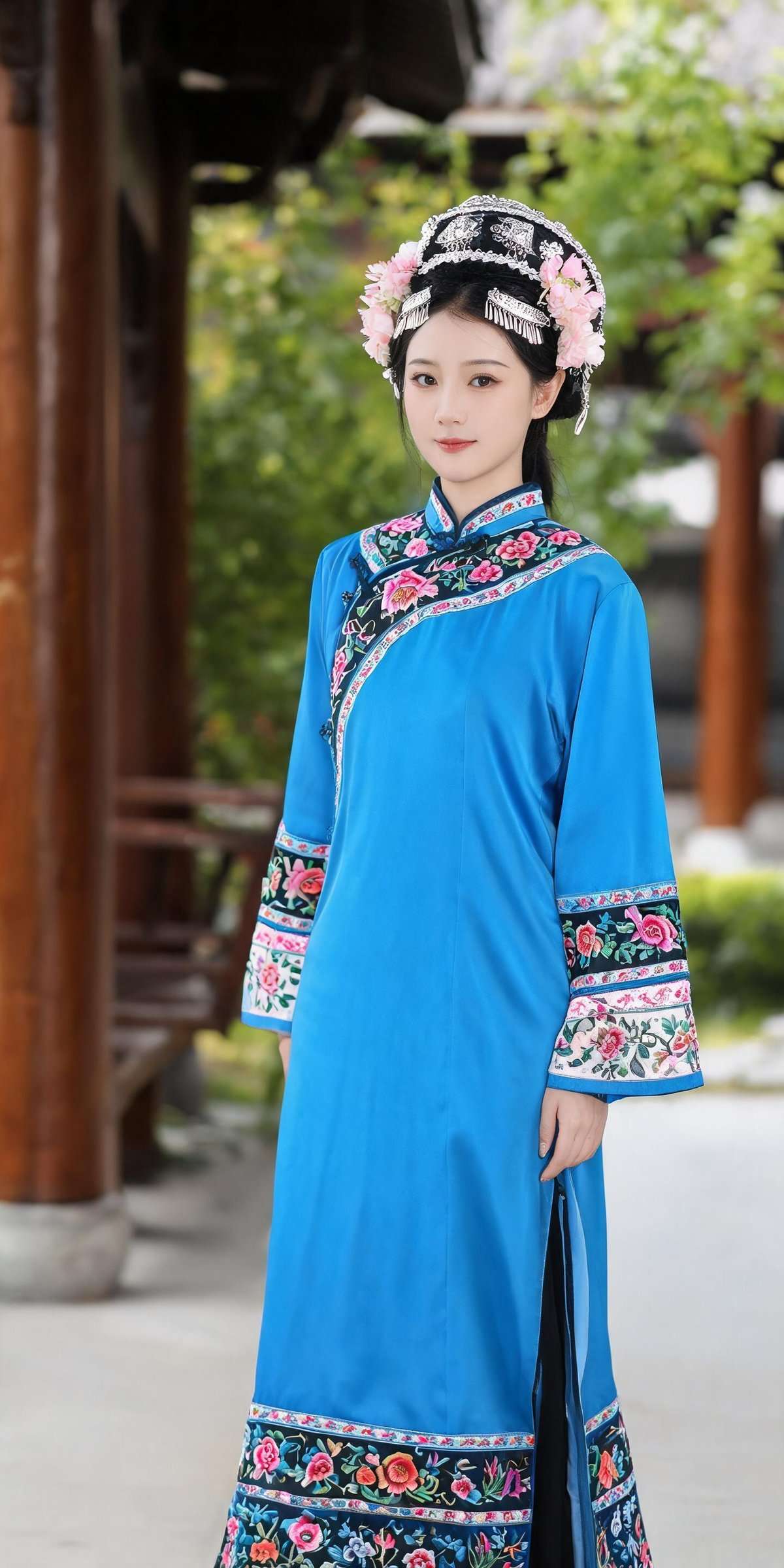
Xibe traditional clothing combines Manchu-style robes with distinctive Central Asian influences acquired during their 18th-century migration to Xinjiang. Women's long gowns and men's riding jackets showcase this unique blend of northeastern Chinese heritage and western frontier adaptation.
Historical Background and Migration
The Xibe people originated in the forests and plains of what is now northeastern China, closely related to the Manchu and sharing many cultural elements. In 1764, during the reign of the Qianlong Emperor, a significant portion of the Xibe population was ordered to relocate to the newly pacified Ili region of Xinjiang. This forced migration, covering over 4,000 kilometers, took more than a year to complete. The Xibe who settled in Xinjiang preserved their language and customs with remarkable fidelity, including their traditional clothing styles, which gradually absorbed Central Asian and Turkic influences from neighboring peoples such as the Uyghur and Kazakh.
The Xibe who remained in the northeast continued to wear clothing closely resembling Manchu attire, while the Xinjiang Xibe developed a hybrid style that incorporated thicker fabrics for the harsh continental climate and decorative elements borrowed from Central Asian textile traditions. Today, approximately 190,000 Xibe live primarily in Liaoning Province and the Qapqal Xibe Autonomous County in Xinjiang, with each community maintaining distinct variations of traditional dress.
Key Features of Xibe Attire
- Long front-fastening gowns with side slits (Manchu influence)
- Women's embroidered collar and cuff bands in floral patterns
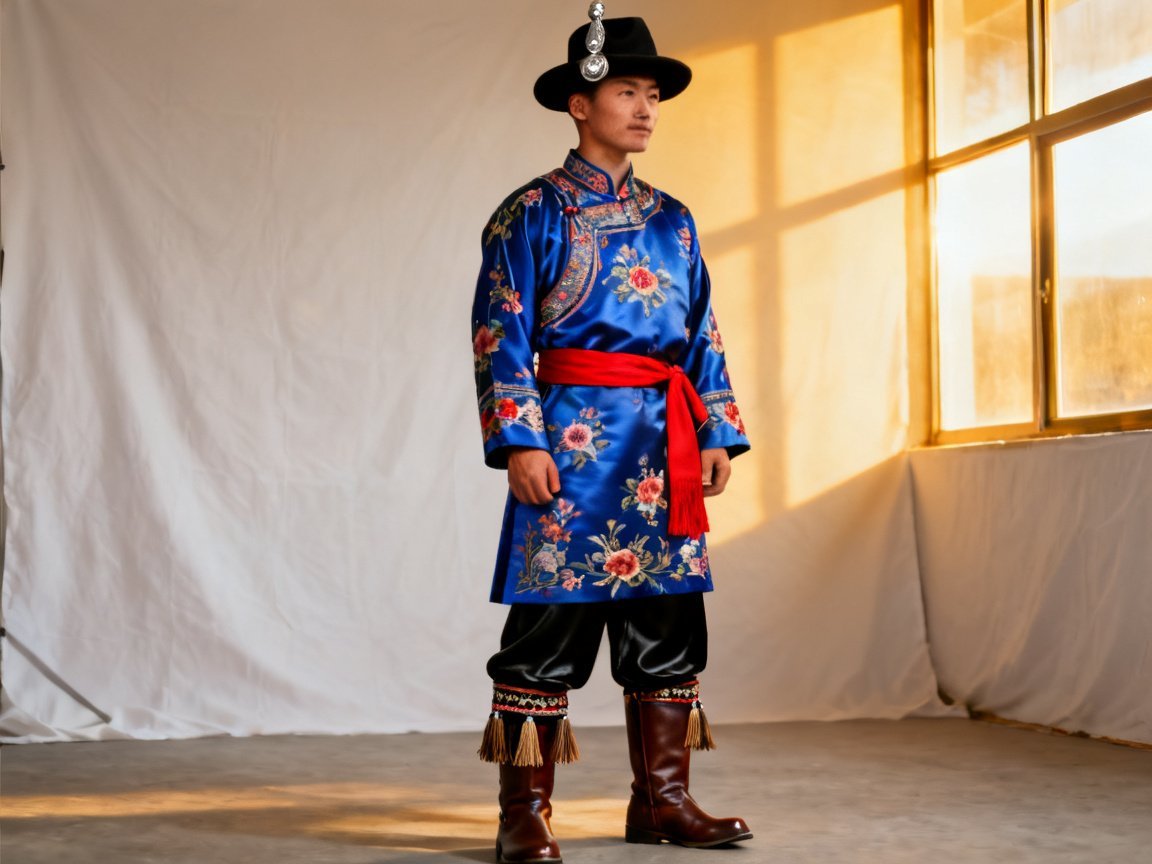
- Men's short riding jackets worn over long robes
- Distinctive Xibe embroidery featuring peonies and plum blossoms
- Embroidered cloth shoes with pointed upturned toes
Traditional Garments
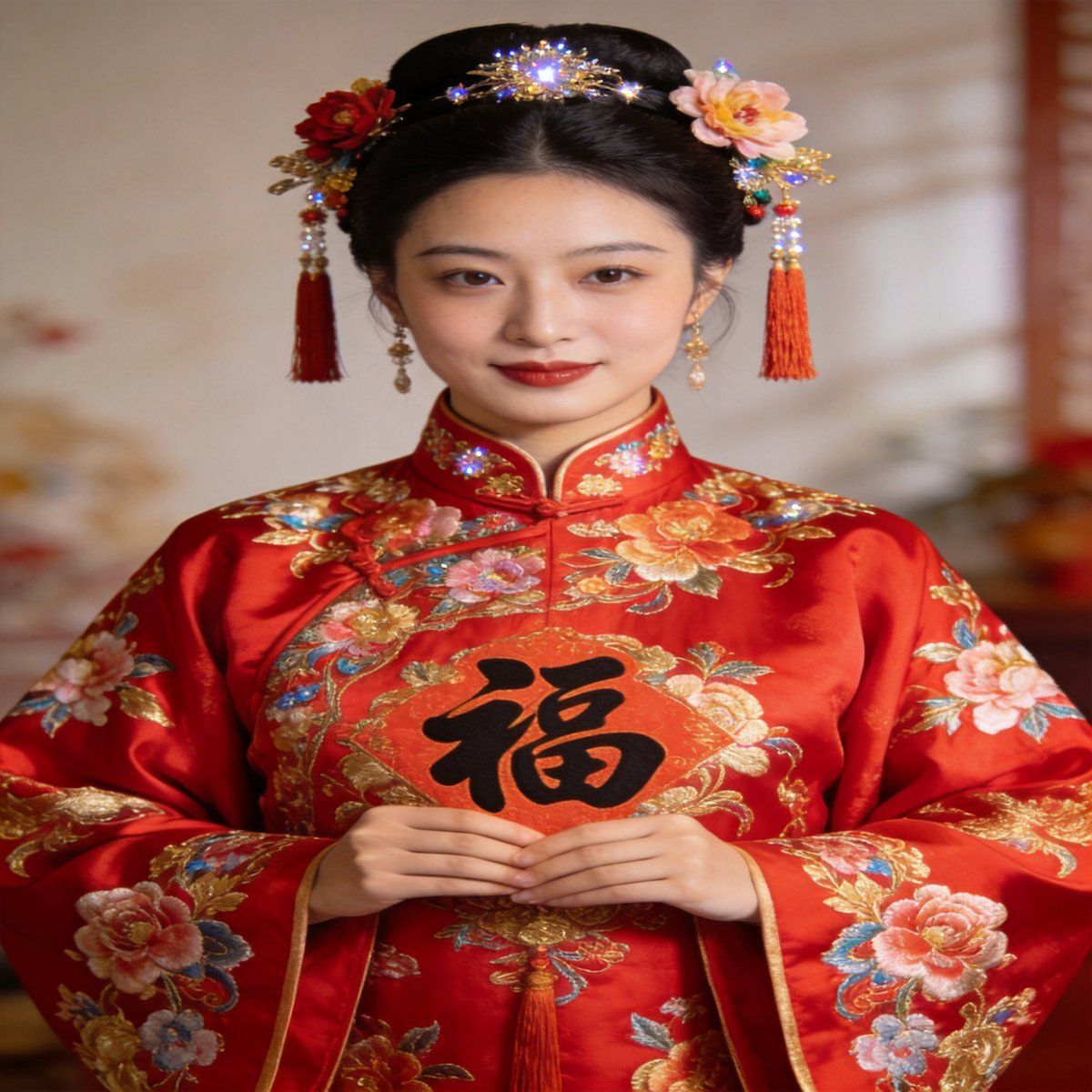
Women wear a long front-fastening gown reaching the ankles, with side slits and a high collar, embroidered at the collar, cuffs, and front opening, paired with embroidered trousers beneath. The gown is typically made from dark blue, black, or gray cotton or silk, with elaborate floral embroidery in satin stitch along the edges. For formal occasions, women may wear an additional sleeveless embroidered jacket over the gown. Men wear a long robe with a short riding jacket over it, similar to Manchu style but with distinctive Xibe embroidery. The riding jacket is practical for horseback activities and features snug sleeves and a front opening fastened with cloth buttons and loops. Beneath the jacket, men wear loose trousers tucked into cloth or leather boots. Both men and women favor practical, well-constructed garments suited to both agricultural work and ceremonial occasions.
Headwear and Adornments
Women wear their hair in a coiled bun decorated with silver hairpins, flowers, and beaded ornaments. Married women may wear a headscarf. Men wear round felt or cloth caps. For festive occasions, women may wear an elaborate headdress with silver filigree ornaments, coral beads, and jade pendants that frame the face. The headdress style varies by marital status: unmarried women favor brighter hair ornaments with red silk flowers, while married women opt for more subdued silver pieces and darker fabric headwraps. Silver earrings, often in the form of elongated drops or hoops, are worn by women of all ages and are considered essential accessories for formal dress.
Embroidery and Decorative Arts
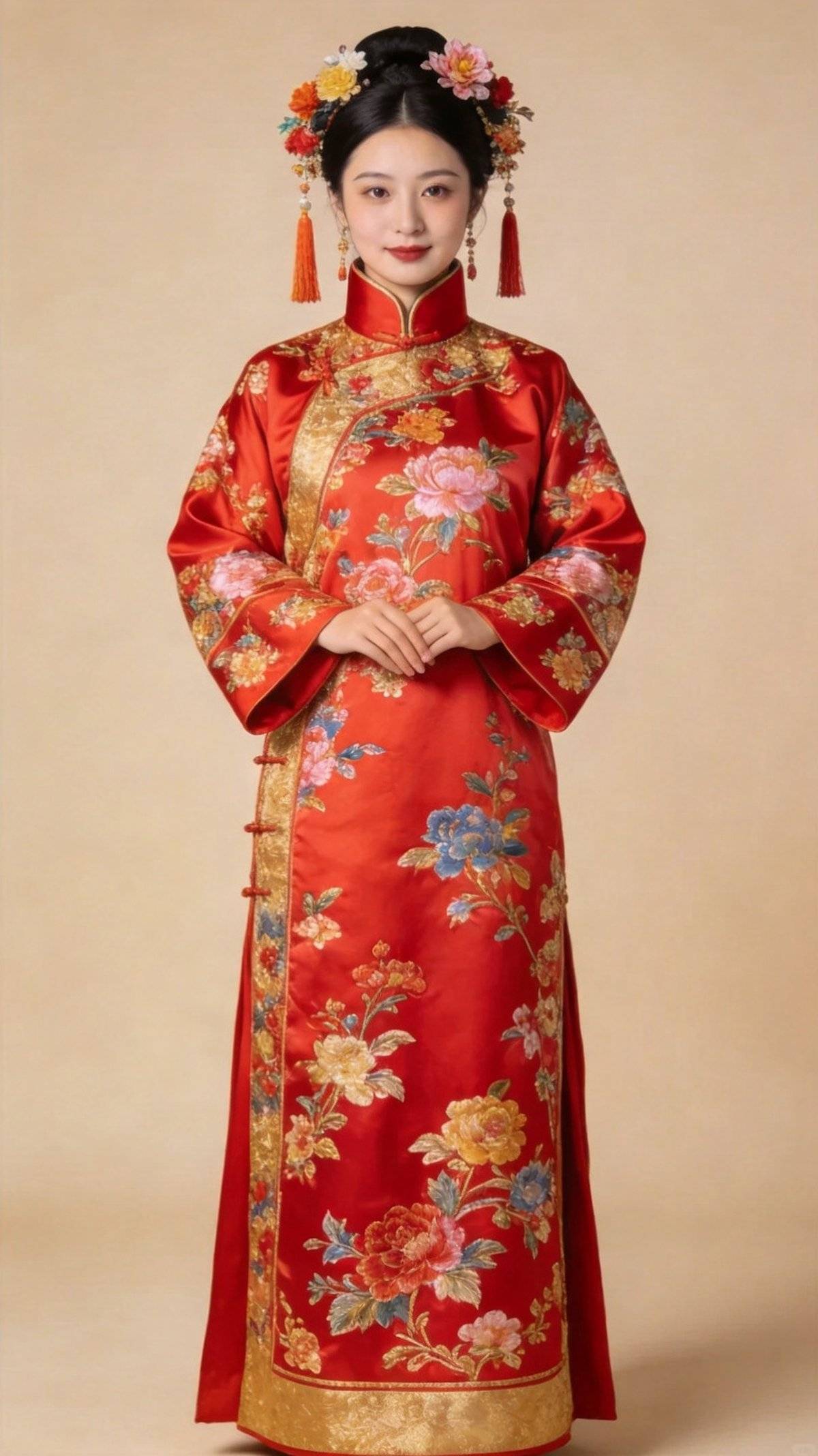
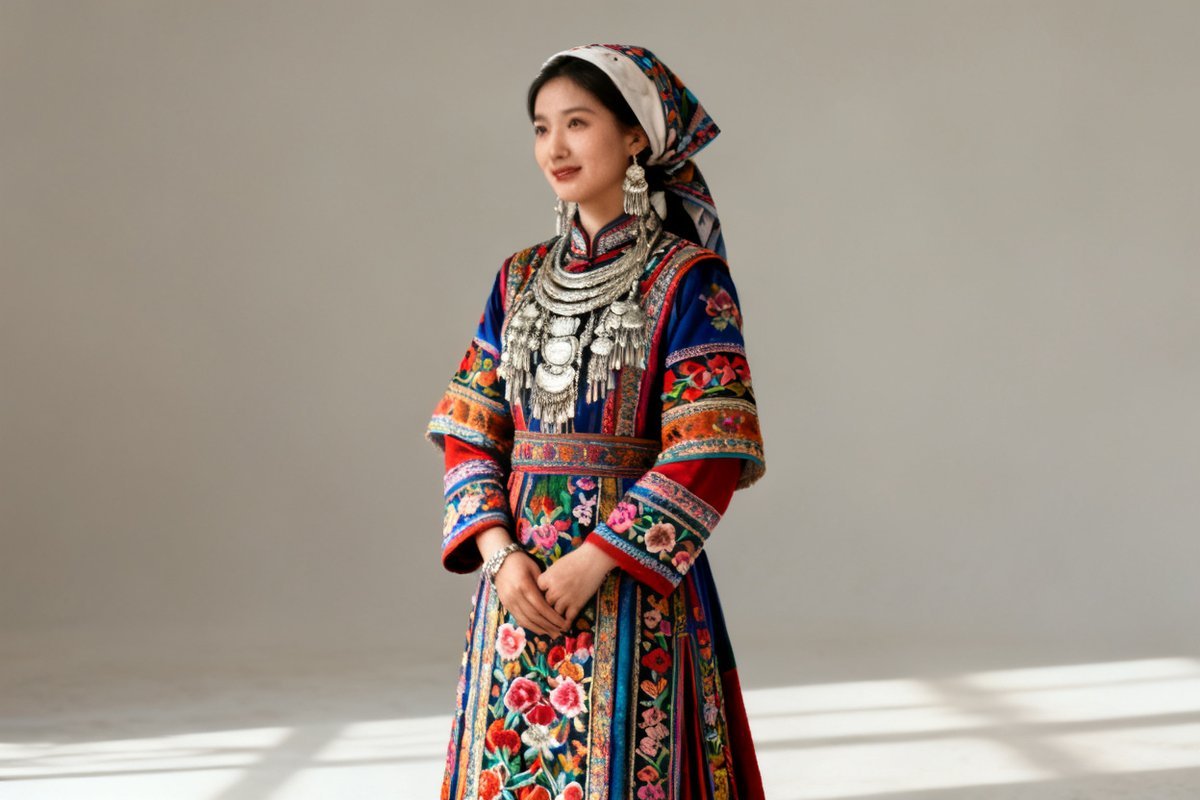
Xibe embroidery features peonies, plum blossoms, butterflies, and geometric borders on collars, cuffs, fronts, and shoe toes. Satin stitch and cross-stitch in bright colors on dark fabric create refined patterns. The embroidery tradition holds deep cultural significance, with specific motifs passed down through generations of women. Young Xibe girls traditionally learn embroidery from their mothers and grandmothers starting around age ten, and a woman's skill with needlework was historically considered an important measure of her refinement and marriageability. Common motifs beyond flowers include bats for good fortune, fish for abundance, and endless knot patterns representing longevity. Each stitch and color choice follows conventions that encode regional identity within the larger Xibe aesthetic tradition.
The Xibe embroidery tradition is unique for encoding their migration history - some patterns incorporate stylized representations of the deserts and mountains their ancestors crossed on the 4,000-kilometer journey from Manchuria to Xinjiang.
Color Symbolism
Blue, black, and gray for gowns. Embroidery in red, pink, green, yellow, and white. Festive gowns in brighter blue or turquoise.
Festival Attire
During the Xibe Spring Festival and the April 18 Memorial Day (commemorating their migration), the finest embroidered gowns and jackets are worn. The April 18 celebration, unique to the Xibe, features processions where community members wear complete traditional ensembles passed down through families or newly created for the occasion. Women compete subtly through the quality of their embroidery, with families preparing festival clothing months in advance. Traditional Xibe archery displays are also incorporated into festival celebrations, with men wearing riding jackets and boots suited to mounted archery, maintaining a connection between clothing and the martial traditions of their Manchu ancestors. The festival serves as both cultural preservation and community bonding, with elder women recognized as living treasures for their mastery of traditional embroidery techniques.
Modern Influence and Preservation
Xibe embroidery is preserved in Qapqal County's cultural heritage programs. The county government has established cultural centers where traditional Xibe crafts including embroidery, garment-making, and headdress construction are taught to younger generations. The Xibe April 18 Memorial Day, commemorating the 1764 migration, has become a major cultural tourism event where traditional clothing is prominently displayed. Xibe embroidery has also attracted attention from textile researchers studying the unique fusion of Manchu and Central Asian design elements. Despite their relatively small population, the Xibe have maintained their clothing traditions with remarkable consistency, and Xibe-influenced embroidery patterns have begun appearing in contemporary fashion collections that draw inspiration from ethnic minority textiles. The Xibe language, closely related to Manchu, is still spoken among the Xinjiang Xibe community, and traditional clothing terminology is actively used in craft instruction, helping to maintain the connection between language, identity, and material culture.
Did You Know?
The Xibe were forcibly relocated from Manchuria to Xinjiang in 1764 to serve as frontier guards for the Qing empire - a 4,000-kilometer march that took over a year - and their clothing style still reflects this dual Manchu-Central Asian heritage.
Archery Heritage and Embroidery of the Xibe
The Xibe people, with communities in Xinjiang and Liaoning provinces, maintain clothing traditions that reflect their historical identity as skilled archers and border guards. Xibe women's traditional attire features a long jacket with distinctive side slits that allow freedom of movement, a practical design rooted in the community's historical military service. The jacket is decorated with embroidered patterns at the collar, cuffs, and side slits, with floral and butterfly motifs executed in brightly colored silk threads. The quality of a woman's embroidery was traditionally considered an indicator of her household management skills.
Xibe women's headwear is among the most distinctive elements of their traditional dress. Married women wear a tall, pointed hat covered in silk embroidery and decorated with silver ornaments and colored beads, with the hat shape varying between Xibe communities in Xinjiang and those in Liaoning. Unmarried women wear simpler head coverings or flower ornaments in their hair, transitioning to the formal married woman's headdress only after their wedding ceremony.
Archery Heritage and Embroidery of the Xibe
The Xibe people, with communities in Xinjiang and Liaoning provinces, maintain clothing traditions that reflect their historical identity as skilled archers and border guards. Xibe women's traditional attire features a long jacket with distinctive side slits that allow freedom of movement, a practical design rooted in the community's historical military service. The jacket is decorated with embroidered patterns at the collar, cuffs, and side slits, with floral and butterfly motifs executed in brightly colored silk threads. The quality of a woman's embroidery was traditionally considered an indicator of her household management skills.
Xibe women's headwear is among the most distinctive elements of their traditional dress. Married women wear a tall, pointed hat covered in silk embroidery and decorated with silver ornaments and colored beads, with the hat shape varying between Xibe communities in Xinjiang and those in Liaoning. Unmarried women wear simpler head coverings or flower ornaments in their hair, transitioning to the formal married woman's headdress only after their wedding ceremony.
Cultural Preservation Among the Xibe
The Xibe people have made deliberate efforts to preserve traditional clothing practices, particularly in the Xinjiang communities that descend from the eighteenth-century military migration from Manchuria. Cultural organizations in the Qapqal Xibe Autonomous County organize regular events where traditional clothing is worn, including festivals, museum exhibitions, and educational programs in schools. These events serve multiple purposes: they provide opportunities for community members to wear and display traditional garments, they educate younger generations about clothing history and techniques, and they demonstrate Xibe cultural vitality to the broader multi-ethnic population of Xinjiang. The Xibe Preservation Association maintains a collection of historical garments that serve as reference material for contemporary clothing makers.
The process of making a complete set of Xibe traditional clothing involves skills distributed across multiple specialists. Embroiderers produce the decorated panels, tailors cut and assemble the garments, and silversmiths create the buttons and ornaments. This specialization has helped preserve traditional techniques, as each specialist focuses on mastering a particular skill rather than attempting to learn the entire production process. Younger people training in these specialties learn from established masters through extended apprenticeships that may last several years. The master-apprentice relationship is formalized through community recognition, and the title of master embroiderer or master silversmith carries significant prestige within Xibe society.