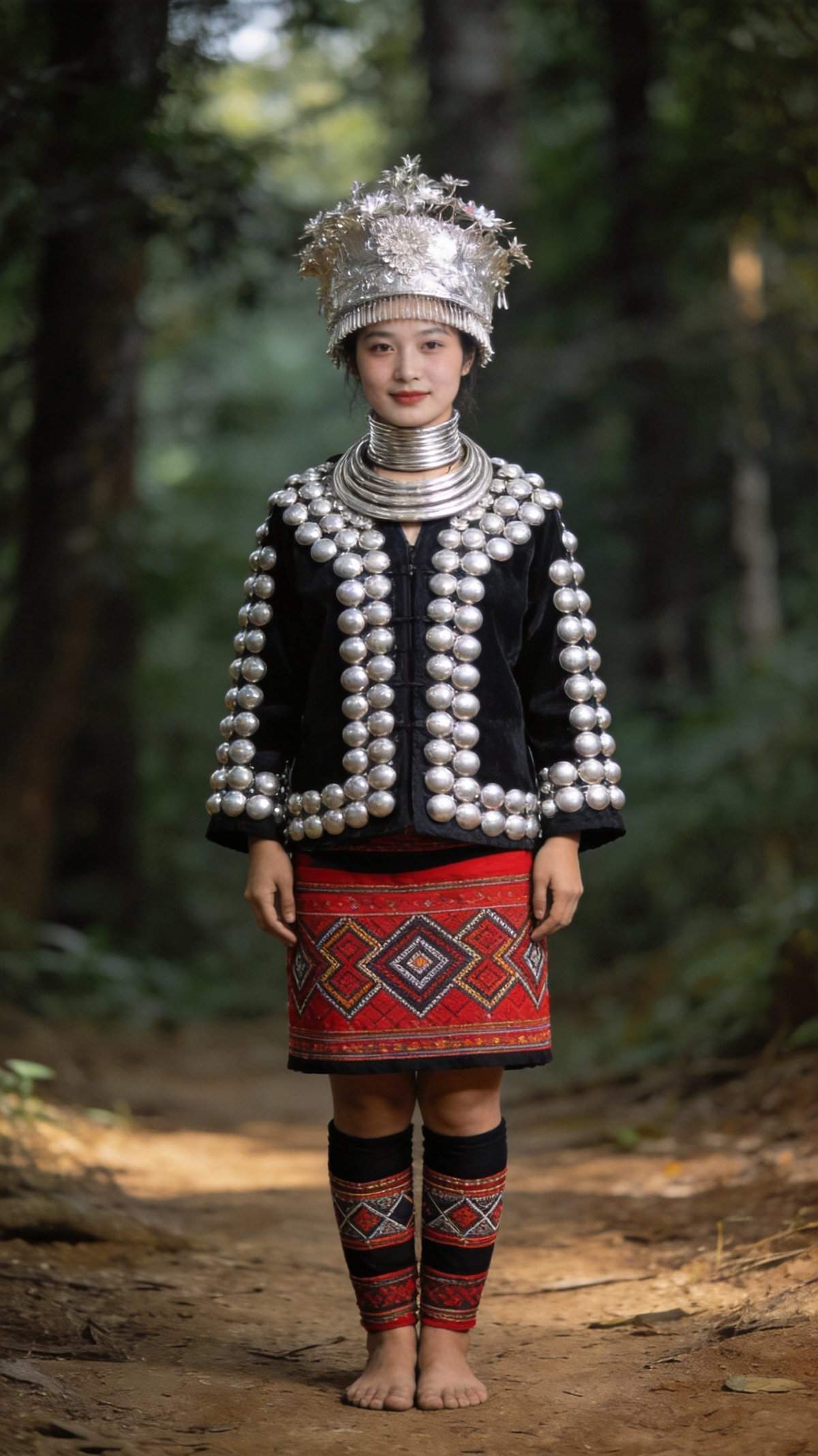
Jingpo traditional clothing is distinguished by its bold use of black and red, the iconic silver-studded female jacket, and the distinctive red headwraps. The Jingpo people are renowned for the Munao Zongge Festival, one of the most spectacular ethnic celebrations in China, where thousands of participants dance in synchronized patterns wearing full traditional regalia.
Historical and Cultural Background
The Jingpo people, known as the Kachin across the border in Myanmar, number approximately 145,000 in China and are concentrated in the Dehong Dai and Jingpo Autonomous Prefecture of western Yunnan Province. According to Jingpo oral tradition, their ancestors migrated from the Tibetan plateau centuries ago, traveling southward along river valleys until they reached the mountainous borderlands where Yunnan meets Myanmar. The Jingpo were historically organized into a hierarchical society with a chiefly class, commoners, and slaves, with social distinctions clearly encoded in clothing regulations — certain colors, materials, and decorative elements were reserved for chiefly families.
Jingpo culture places profound emphasis on communal celebration, with the Munao Zongge (literally "dancing together") serving as the central ritual and social event. This grand festival, whose origins are traced to a myth about birds teaching humans to dance, traditionally required years of preparation and was hosted by chiefs to demonstrate their wealth and spiritual authority. The festival was banned for a period but has been revived and now serves as a powerful symbol of Jingpo cultural identity.
The Jingpo language belongs to the Jingpho branch of the Tibeto-Burman language family and serves as a lingua franca among several related groups in the region. Traditional Jingpo religion is animistic, centered on the worship of nature spirits known as nat, though Christianity has gained significant adherence in recent decades, particularly among the Kachin in Myanmar. This religious shift has influenced some aspects of dress, with Western-style clothing adopted for church attendance while traditional garments are reserved for festivals and ceremonies.
Key Features of Jingpo Attire
- Black velvet front-fastening jackets with silver dome buttons
- Sleeveless silver-studded womens jackets with extensive silver ornamentation
- Colorful woven wool skirts with bold red, black, and white stripes
- Red turbans for men and elaborately wrapped red headpieces for women
- Long swords worn as part of mens formal attire
Traditional Garments
Women wear a black velvet sleeveless jacket with the front densely covered in silver hemispheres, over a white inner blouse, paired with a boldly striped woven skirt. The iconic silver-studded jacket, known as the yindeng, features rows and rows of silver hemispheres — some as large as two centimeters in diameter — sewn onto the black velvet ground in precise geometric arrangements. A single jacket may bear over 200 silver pieces, creating a garment of considerable weight that produces a distinctive jingling sound with every movement. The silver hemispheres are handmade by Jingpo silversmiths who hammer silver ingots into thin sheets and then shape them over rounded molds.
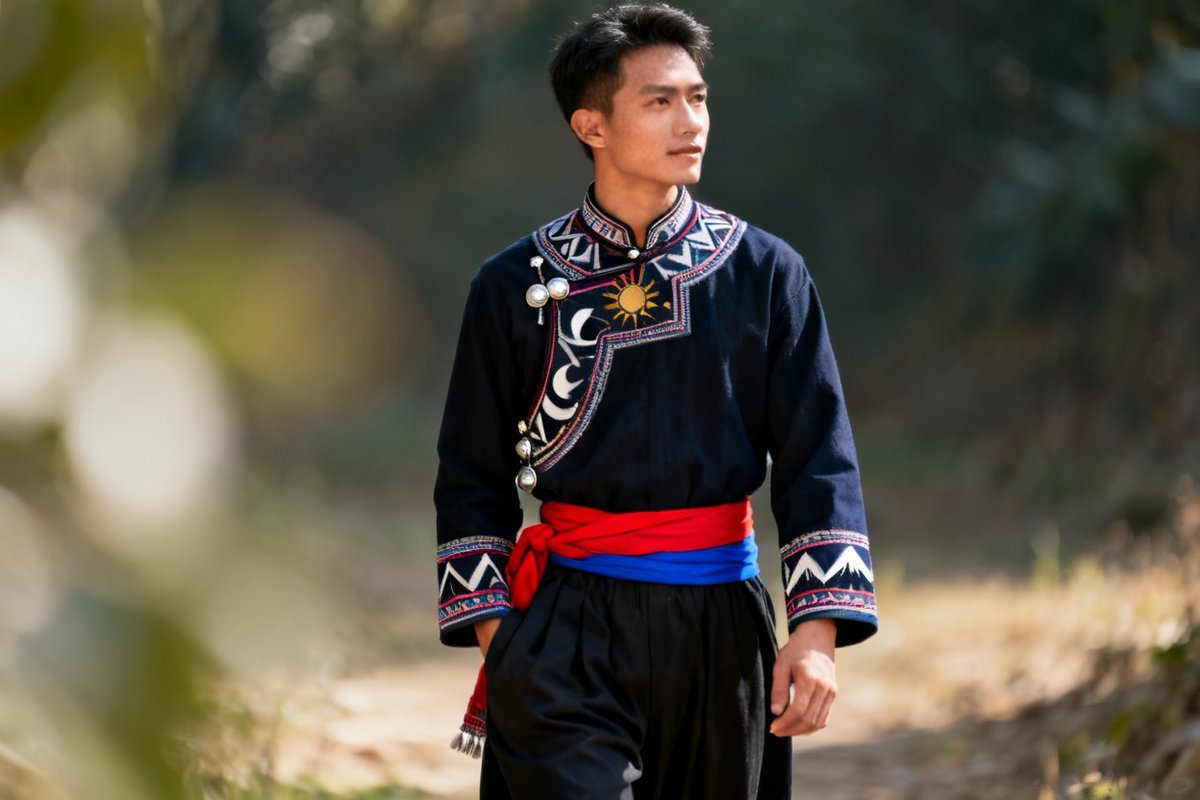
Men wear a white or dark shirt under a short black jacket, with striped wraparound skirts or trousers, and always a red turban. The mens formal ensemble includes a long sword (dao) carried in a decorated scabbard and worn at the waist, a tradition stemming from the Jingpo historical role as expert swordsmen and warriors. The sword is both a practical tool for clearing jungle paths and a potent symbol of masculine honor and readiness to defend family and community.
Headwear and Adornments
Womens headwear varies: some wear a red cloth headwrap with beaded fringe. Married women wear a more subdued black turban. Mens red headwrap is a cone-shaped turban with one end pointing upward, secured with a distinctive configuration of folds and tucks that requires practice to execute correctly. The upward-pointing end symbolizes the Jingpo warriors vigilance and readiness. During the Munao Zongge Festival, both men and women wear elaborate headdresses featuring hornbill feathers, peacock plumes, and colorful pom-poms — the hornbill being a sacred bird in Jingpo mythology that appears in the creation story of the Munao dance itself.
Embroidery and Decorative Arts
Jingpo women excel in weaving rather than embroidery. Their skirts feature complex woven geometric patterns including zigzags, diamonds, and stripes in multiple colors. Jingpo weaving is executed on simple backstrap looms that produce narrow widths of fabric, which are then sewn together to create the full skirt. The weaving process for a single ceremonial skirt can take months, with each horizontal pattern band requiring multiple shuttle changes and precise counting of warp and weft threads. The designs are not pre-drawn but exist in the weavers memory — an impressive feat of mental visualization passed from mother to daughter.
Beyond weaving, Jingpo decorative arts include leatherwork for sword scabbards and belts, often tooled with geometric patterns and studded with silver or brass ornaments. Bamboo and rattan basketry, another important craft, produces the carrying baskets used by women for transporting goods from market and field, some of which are decorated with colored geometric designs woven into the basket body.
The Jingpo silver-studded jacket, whose hem jingles with every step of the Munao dance, creates what ethnomusicologists describe as an accidental percussion line woven into the fabric of ceremony.
Color Symbolism
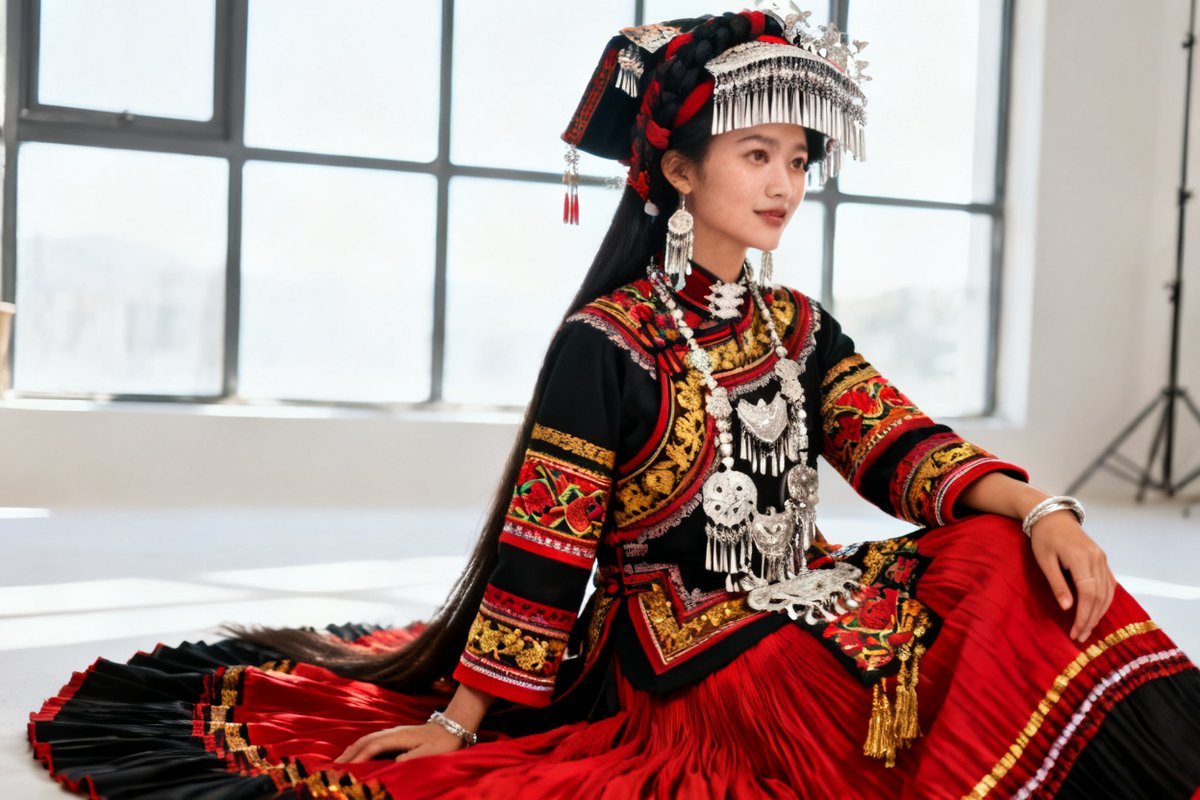
Black and red dominate as primary colors, with white for inner garments. Bold stripes in red, black, white, and green on skirts. Silver provides metallic accent. Red carries the most profound cultural significance for the Jingpo — it represents blood, life force, courage in battle, and the burning energy of communal celebration. The red turban worn by Jingpo men is not merely decorative but a declaration of ethnic identity and masculine pride. Black velvet, reserved for the finest jackets, symbolizes dignity and solemnity, providing the perfect dark ground against which the silver ornaments achieve their maximum visual impact.
Festival Attire
During the Munao Zongge Festival, women wear full silver-studded jackets and striped skirts, men in complete formal dress with red turbans and ceremonial long swords. The Munao Zongge is a spectacular event that can draw tens of thousands of participants. Dancers follow the naushi, a master of ceremonies who leads the formations in a spiraling pattern around the Munao pillars — tall wooden posts carved with sacred symbols and painted in red, black, and white. The synchronized movement of thousands of silver-studded jackets creates a shimmering, undulating surface that reflects sunlight and produces a collective musical sound — the jingling of silver on silver — that becomes an integral part of the festival's sonic landscape. Other important Jingpo celebrations include the New Rice Festival, when the first harvest of the season is offered to ancestors and spirits, and weddings where the bride and groom process through the village in their most elaborate traditional dress.
Modern Influence and Preservation
Jingpo woven textiles are produced in Dehong cooperatives for both traditional garments and modern accessories. The Munao Zongge Festival has become a major cultural tourism event, attracting visitors from across China and internationally. This tourism provides economic incentive for maintaining traditional textile and silverwork production. Jingpo weaving cooperatives in Luxi, Longchuan, and Yingjiang counties produce traditional skirts and contemporary products — scarves, bags, cushion covers — that feature Jingpo stripe patterns. Several Jingpo silversmiths have adapted their craft to produce modern jewelry incorporating traditional hemispherical stud motifs. The Dehong Prefecture Ethnic Culture Museum houses comprehensive collections of historical Jingpo garments and sponsors research into traditional dye recipes and weaving patterns that were at risk of being lost.
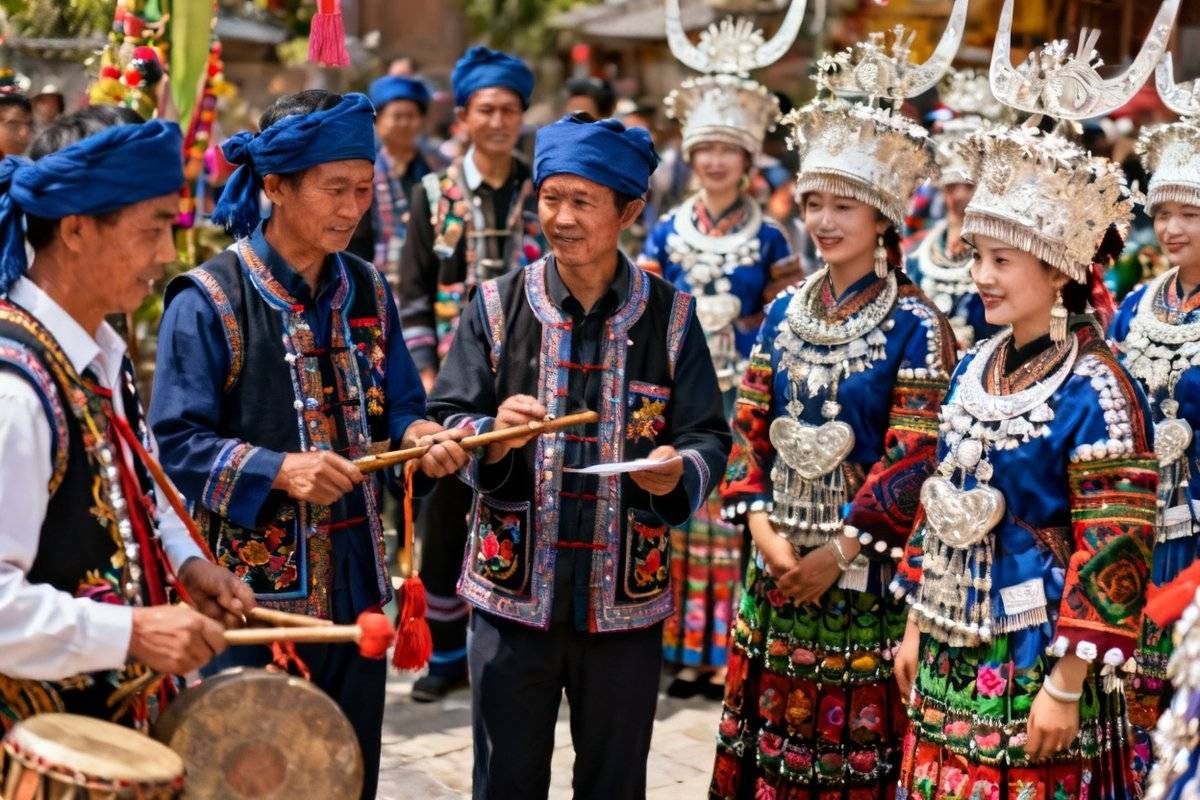
Modern Influence and Preservation
Jingpo woven textiles are produced in Dehong cooperatives for both traditional garments and modern accessories.
Did You Know?
The Jingpo Munao Zongge Festival features a massive dance where thousands of people move in synchronized patterns - the silver ornaments on womens jackets create a collective jingling sound that becomes part of the music.
Silver and Crimson in Jingpo Dress
The Jingpo people of Yunnan Province are known for the dramatic visual impact of their traditional clothing, which combines deep crimson, black, and silver elements in striking arrangements. Women's festival attire features a black velvet jacket trimmed with crimson fabric at the collar and cuffs, worn over a red and white patterned skirt. The jacket front is covered with multiple rows of silver coins, medallions, and conical ornaments that create a metallic armor-like appearance. The quantity and arrangement of silver pieces carry social meaning, with women from wealthier or higher-status families displaying more elaborate silver arrangements.
Jingpo men's traditional garment is a white or light-colored jacket worn over a dark shirt, paired with loose trousers tucked into knee-high leggings. A red or patterned sash is tied around the waist, with the knot style and sash material indicating the wearer's age and social position. The most striking element of Jingpo men's attire is the headdress, a turban-like wrap decorated with feathers, beads, and silver ornaments that rises to a peak above the forehead.