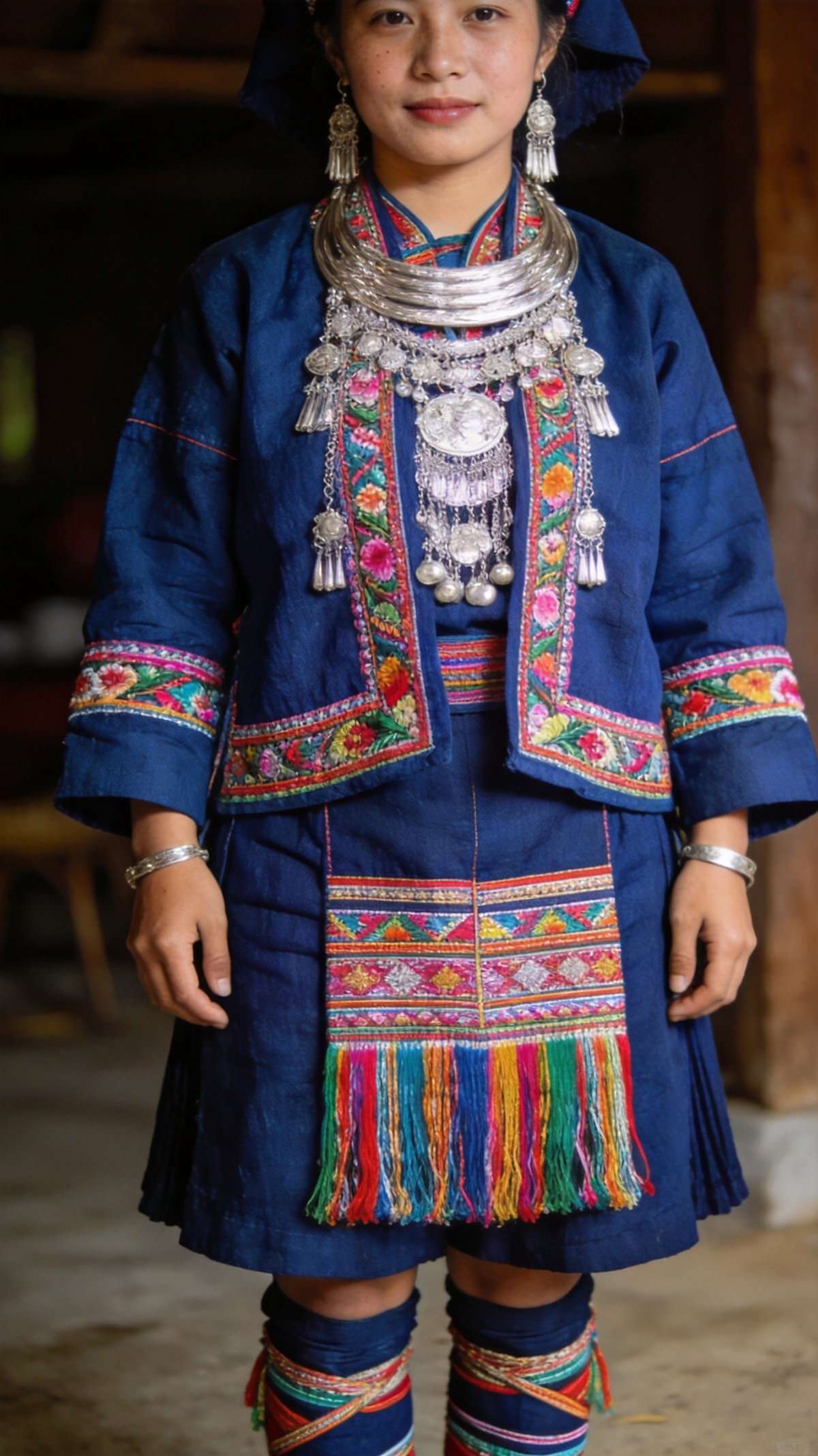
The Blang people, numbering approximately 119,000, reside primarily in the Xishuangbanna, Lincang, and Simao regions of southern Yunnan Province in communities that have cultivated tea for over a millennium. As one of the oldest tea-growing peoples, their culture and clothing reflect deep connections to the mountainous forest environment. Blang traditional attire is characterized by dark indigo-dyed fabrics with striking silver ornamentation that catches light against the dark textile ground. Women favor cylindrical ankle-length skirts with patterned hem bands and collarless jackets densely adorned with silver studs and multicolored beads, while men wear similarly dark garments with more restrained ornamentation. The Blang share cultural and sartorial affinities with neighboring Dai and Wa communities but maintain distinct identity markers through their specific arrangement of silver work, bead colors, and headwear customs including the traditional practice of eyebrow shaving among women.
Key Features of Blang Attire
- Dark indigo-dyed fabric as the primary textile
- Cylindrical ankle-length skirts with patterned hem bands
- Silver studs and beads sewn onto jacket collars and front panels
- Colorful beaded necklaces and earrings in geometric arrangements
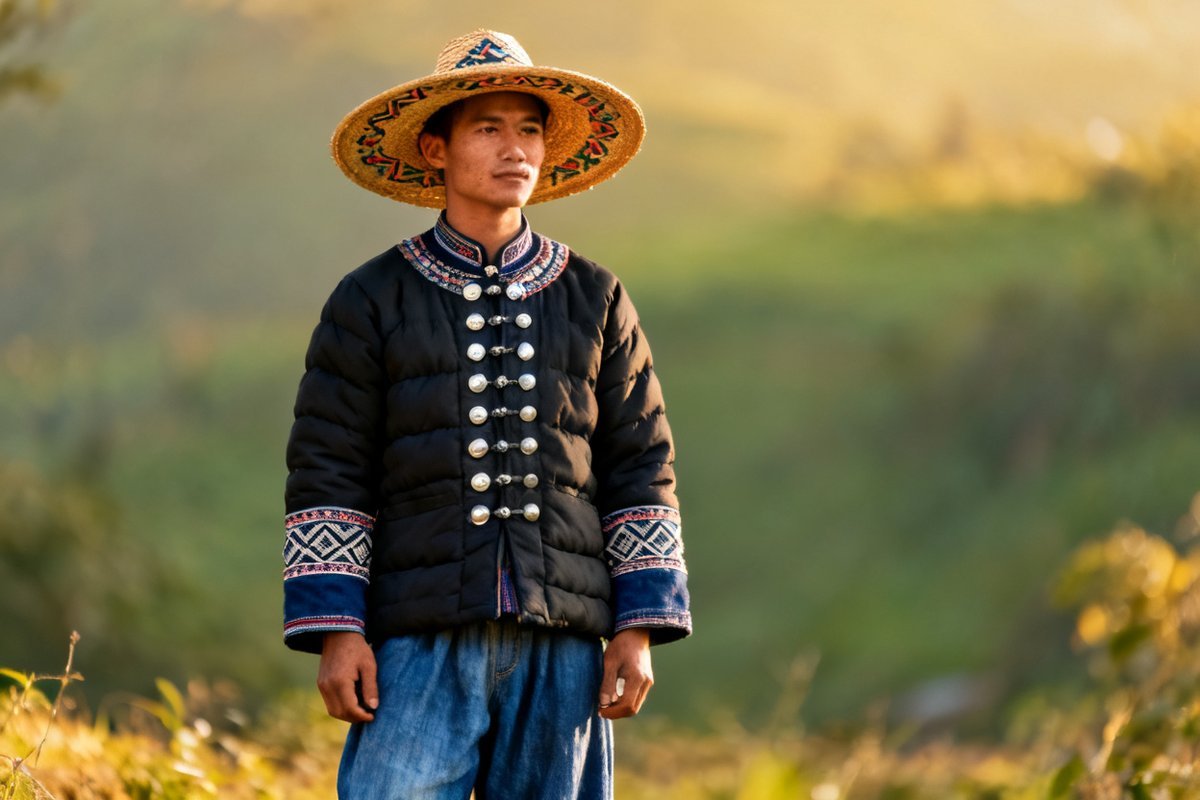
- Mens front-fastening jackets with decorative silver buttons
Traditional Garments
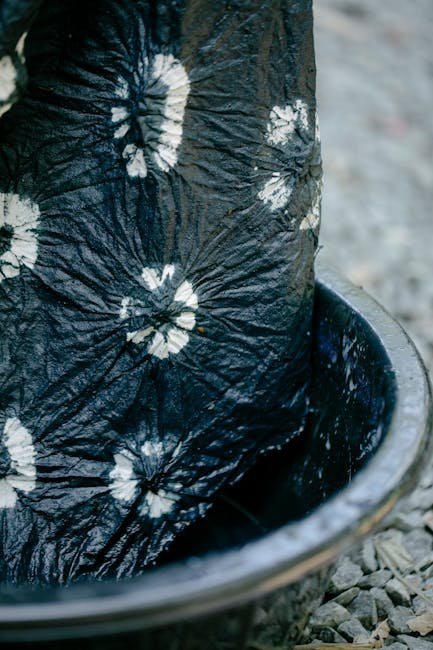
Women wear collarless, tight-fitting short jackets in dark blue or black indigo-dyed cotton, fastened with hand-hammered silver buttons and further decorated with rows of silver studs sewn along the collar edge and front opening. These jackets are paired with a long cylindrical skirt reaching the ankles, constructed from panels of indigo fabric with horizontally woven or embroidered bands at the hem featuring geometric diamond and zigzag patterns in red, yellow, and white thread. Skirts are wrapped and held in place without zippers or buttons, relying on precise fit and the tension of the waistband. Men wear collarless front-fastening jackets in similar dark indigo fabric, though with fewer silver ornaments, paired with wide-leg trousers and a simple cloth belt. Both genders may add a shoulder bag woven from plant fibers for carrying daily items during work in tea gardens and fields. The indigo dyeing process itself is a communal activity that follows seasonal rhythms, with dye vats maintained by experienced elder women who control the fermentation and dipping schedule that produces the characteristic deep blue-black hue.
Headwear and Adornments
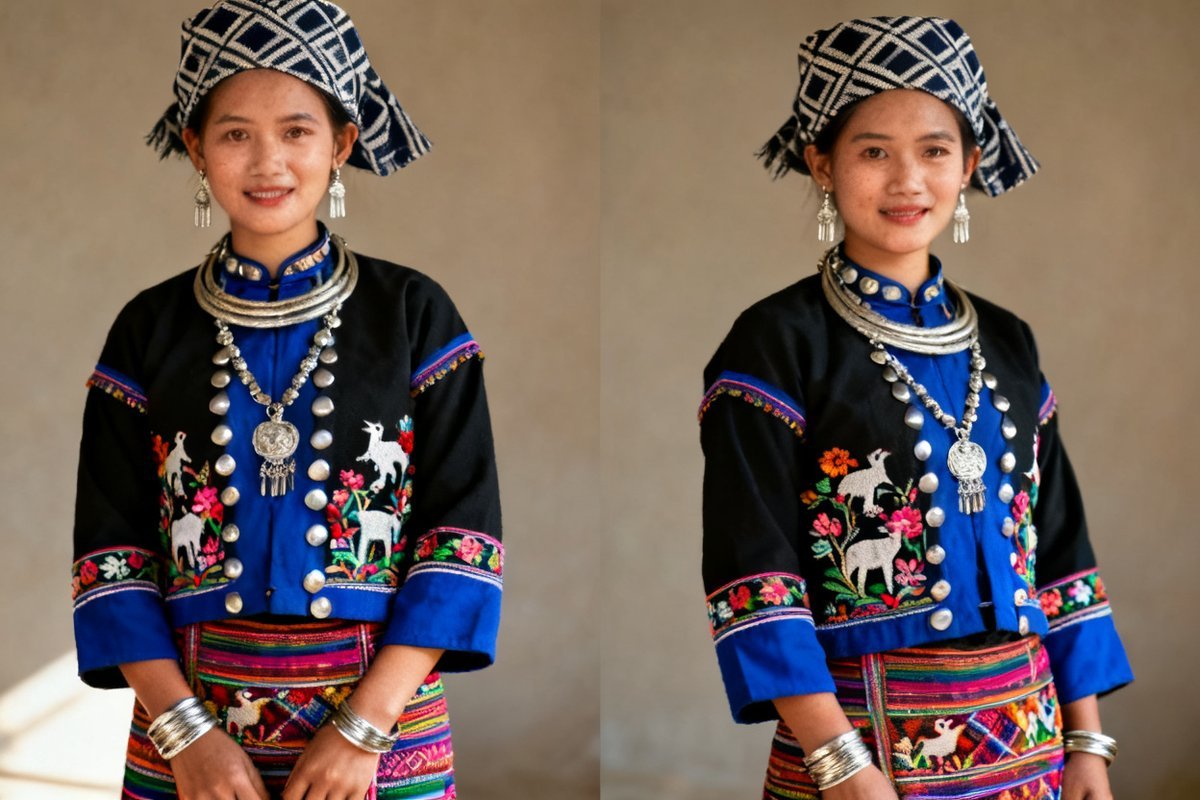
Women wrap their hair in black or dark blue cloth turbans, the wrapping style varying between communities with some favoring compact rounded forms and others preferring taller cylindrical wraps. Fresh flowers or small silver ornaments are inserted at the temples as decoration, with fragrant blooms from the tropical Yunnan environment preferred for festive occasions. Some Blang women continue the traditional practice of shaving their eyebrows, a beauty standard that historically distinguished Blang women from neighboring ethnic groups and was considered a marker of refinement. Both men and women wear multiple strands of beaded necklaces in geometric color arrangements, with red, white, yellow, and turquoise beads threaded in repeating patterns. Silver ear ornaments range from simple studs for daily wear to elaborate dangling earrings worn during festivals. Men traditionally wear red or black cloth head wraps, the color and wrapping technique signaling regional affiliation within Blang territory.
Embroidery and Decorative Arts
Blang embroidery is concentrated on skirt hems and jacket edges, featuring geometric diamond and zigzag patterns interpreted as representations of mountain ridges, tea terraces, and snake scales drawn from the Blang natural and agricultural environment. These designs are executed in red, yellow, and white cotton threads against the dark indigo ground, with simple running stitch and cross-stitch predominating over more complex techniques. Beadwork rivals and often surpasses thread embroidery in prominence, with seed beads in vivid colors strung and applied in geometric arrangements to jacket fronts, collar edges, and bag straps. Silver studs and small domed buttons are sewn directly onto fabric in patterns that follow the garment's structural lines, creating a rhythmic punctuation of light across the dark textile surface. Tea-leaf motifs occasionally appear in bead and embroidery work as a quiet reference to the Blang identity as one of the earliest tea-cultivating peoples, though these are abstract rather than naturalistic representations.
The Blang, one of Chinas oldest tea-growing peoples, often incorporate tea-leaf motifs into their embroidery patterns as a quiet homage to their ancestral livelihood.
Color Symbolism
Dark indigo blue and black form the base, representing the forest canopy and fertile soil of the Blang homeland. Bright red embodies life force and is the most prominent accent color, used extensively in beadwork and embroidery. Yellow signifies prosperity and the sun, white represents purity and spiritual protection, and green symbolizes the tea gardens that have sustained Blang communities for over a thousand years. This color system creates a dramatic visual contrast: the dark, almost black indigo ground makes accent colors appear to glow, particularly when silver studs catch and reflect light. The overall effect is one of understated richness, where decoration reveals itself gradually as the wearer moves rather than being immediately visible from a distance.
Festival Attire
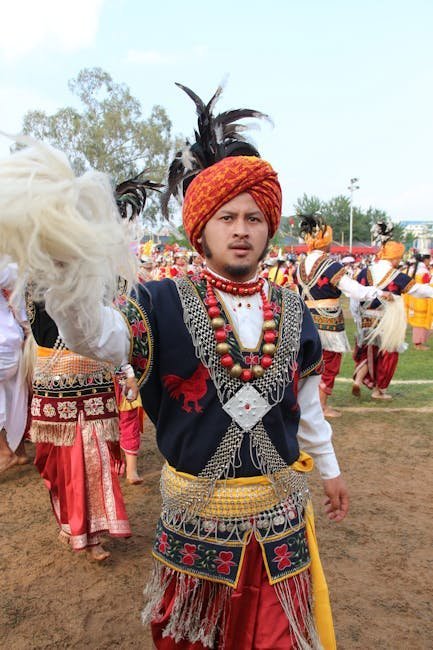
During the Water Splashing Festival, shared with neighboring Dai communities, Blang women wear their most heavily silver-ornamented jackets with every silver stud polished to brilliance, multiple strands of beaded necklaces arranged from shortest to longest, and full-length embroidered skirts reserved for ceremonial occasions. The Gannian Festival, a uniquely Blang celebration marking the agricultural year, sees similar levels of formal dress with the addition of specific ritual ornaments passed down within families. Festival preparation begins days in advance as garments are aired, silver is polished with tamarind paste, and new bead strands may be strung to replace worn ones. Young women often debut newly completed embroidery or beadwork at these festivals, with the public display serving as an informal assessment of skill by community elders. Dressing for festivals is a communal activity with female relatives and neighbors gathering to help each other arrange turbans, position silver ornaments correctly, and ensure skirt hems sit at the proper height above the ankle.
Modern Influence and Preservation
Blang indigo dyeing techniques are maintained by village cooperatives in Yunnan that produce textiles for both local use and external markets. These cooperatives have become important economic institutions within Blang communities, providing income for women who might otherwise need to migrate for work. The tea-tourism nexus in Xishuangbanna has created opportunities for cultural display, with Blang villagers sometimes wearing traditional dress during tea-picking demonstrations for visitors. However, the intimate knowledge required for indigo vat maintenance, which depends on understanding fermentation cycles through smell and touch rather than measurement, is held primarily by older women and faces transmission challenges as young people pursue education and employment outside villages. Documentation projects have recorded vat recipes and dyeing schedules, and some younger Blang entrepreneurs have established small brands selling naturally dyed scarves and bags that use traditional techniques at smaller, more commercially viable scales.
Did You Know?
The Blang people have a unique tradition where girls in some communities traditionally shave their eyebrows, considering it a mark of beauty.
Dyeing and Pattern Traditions of the Blang
The Blang people, residing in the mountainous regions of Yunnan, have preserved a distinctive approach to textile decoration that centers on indigo dyeing and wax-resist patterning. The deep indigo blue that characterizes Blang clothing is achieved through multiple immersion cycles in locally fermented indigo vats, with each dip building color intensity. Between dyeing sessions, the fabric is beaten and washed to ensure even color penetration. Blang women apply wax-resist patterns using bamboo tools, creating geometric designs that appear as white or light blue motifs against the dark indigo ground after dyeing. These patterns typically include zigzag lines representing mountain paths, diamond shapes symbolizing rice fields, and concentric circles evoking the moon.
The silver ornaments worn by Blang women are produced by village silversmiths using techniques passed down within families. Earrings, bracelets, and neck rings are the most common items, with the quantity and size of ornaments indicating family prosperity. Blang babies receive their first silver bracelet within weeks of birth, and these pieces are never removed, accumulating personal significance over a lifetime.
Dyeing and Pattern Traditions of the Blang
The Blang people, residing in the mountainous regions of Yunnan, have preserved a distinctive approach to textile decoration that centers on indigo dyeing and wax-resist patterning. The deep indigo blue that characterizes Blang clothing is achieved through multiple immersion cycles in locally fermented indigo vats, with each dip building color intensity. Between dyeing sessions, the fabric is beaten and washed to ensure even color penetration. Blang women apply wax-resist patterns using bamboo tools, creating geometric designs that appear as white or light blue motifs against the dark indigo ground after dyeing. These patterns typically include zigzag lines representing mountain paths, diamond shapes symbolizing rice fields, and concentric circles evoking the moon.
The silver ornaments worn by Blang women are produced by village silversmiths using techniques passed down within families. Earrings, bracelets, and neck rings are the most common items, with the quantity and size of ornaments indicating family prosperity. Blang babies receive their first silver bracelet within weeks of birth, and these pieces are never removed, accumulating personal significance over a lifetime.