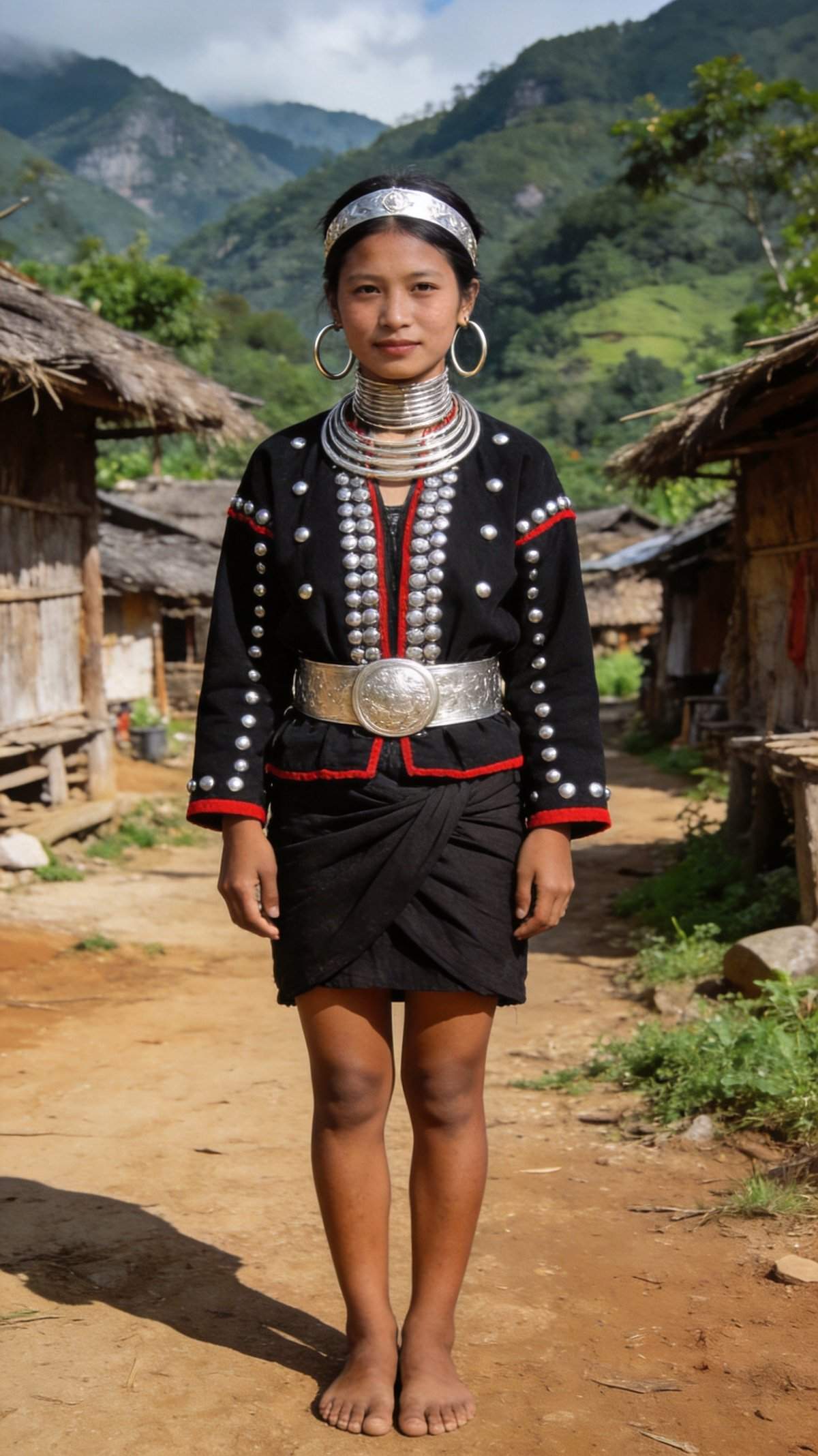
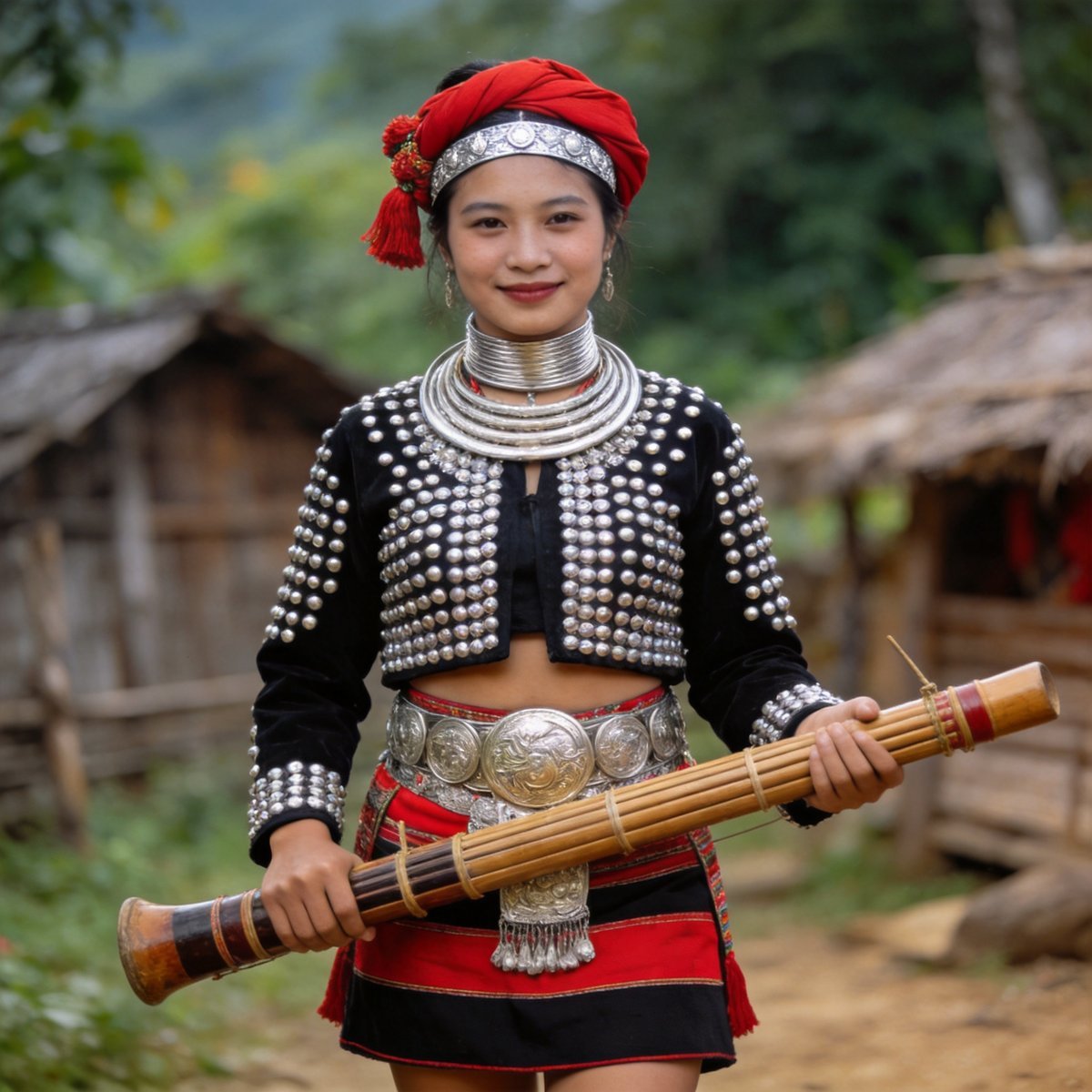
Va traditional clothing is distinctive for its deep black fabric with bold silver ornamentation, short fitted jackets, and iconic silver belts. Red and black are the dominant colors, reflecting their fierce warrior heritage. The Va people, also known as the Wa, number approximately 430,000 and inhabit the remote Awa Mountain region along the border of southwestern Yunnan province and Myanmar's Shan State. Their territory, characterized by steep forested mountains and deep river valleys, has historically been one of the most isolated regions of Southeast Asia.
The Va are one of the oldest indigenous populations of mainland Southeast Asia, with archaeological evidence of their ancestors dating back to the Neolithic period. Their language belongs to the Mon-Khmer branch of the Austroasiatic language family, linking them to the ancient populations that inhabited the region long before the arrival of Tibeto-Burman and Tai-speaking peoples. For centuries, the Va maintained their independence through fierce resistance to outside control, developing a warrior culture that prized bravery and physical prowess — values that are encoded in their clothing's emphasis on bold visual statements of power and prestige.
Traditional Va society was organized around autonomous village-states, each led by a hereditary chief and a council of elders. The practice of headhunting, which persisted in some remote Va communities until the mid-20th century, was central to their traditional religious beliefs, which held that human skulls possessed spiritual power that ensured village prosperity and agricultural fertility. While this practice has long been abandoned, its historical significance shaped Va material culture, including clothing traditions that emphasize strength, protection, and the warrior's command of respect. Today, the Va maintain their distinct identity through language preservation, the revival of traditional festivals, and the continuation of silver-working and textile traditions.
Key Features of Va Attire
- Deep black fabric with silver studs and hemispheres on jackets
- Iconic broad silver belts worn by women at the waist
- Heavily beaded leg bands and anklets
- Women's short jackets leaving the midriff partially exposed
- Red and black striped or bordered skirts and headwraps
Traditional Garments
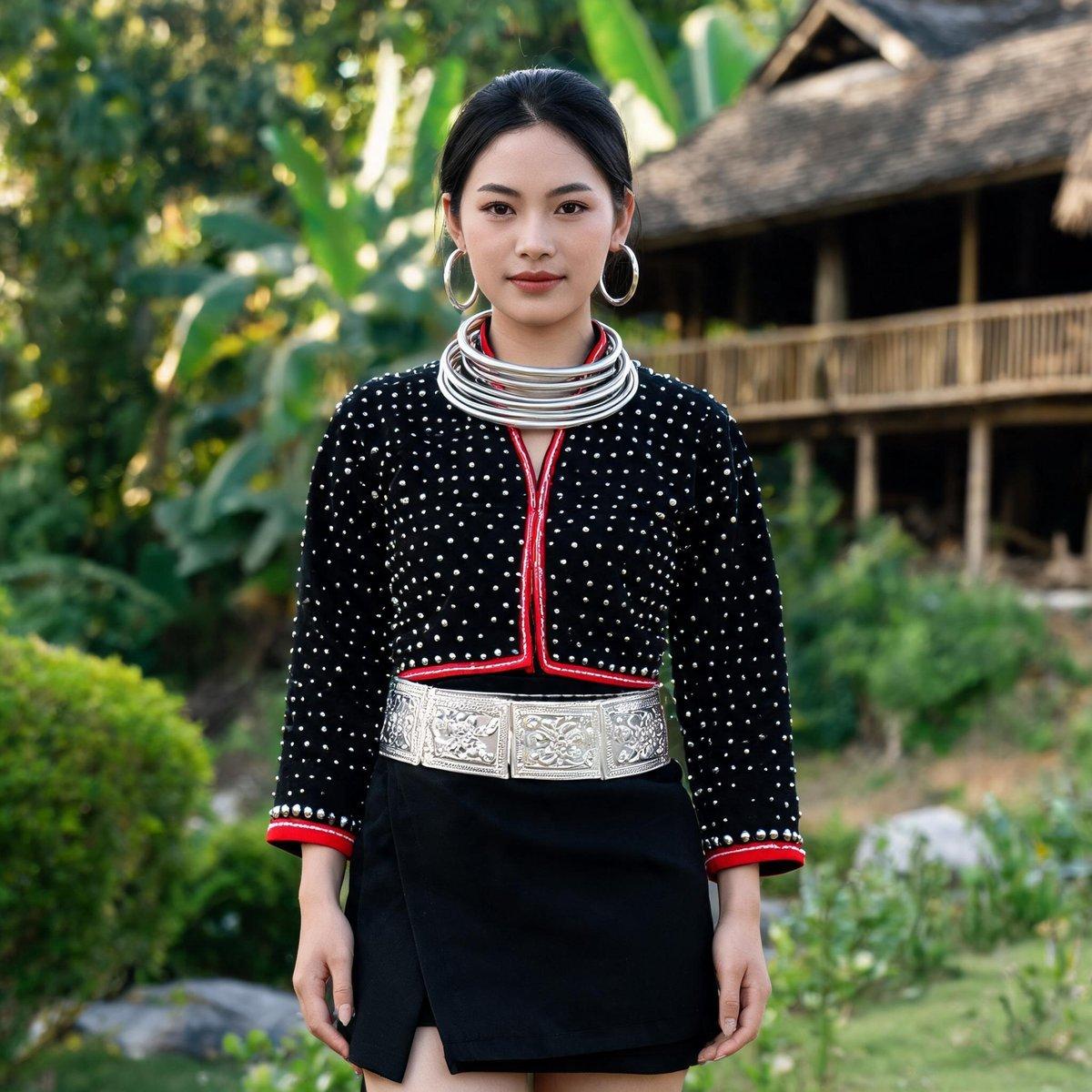
Women wear a short black collarless jacket that barely reaches the waist, with the front opening decorated with rows of silver studs and hemispheres, paired with a black or red-black striped wraparound skirt reaching the knee. Multiple beaded and silver-wire leg bands encircle the calves. Men wear black front-fastening short jackets with silver buttons and loose black or blue trousers. The women's short jacket is perhaps the most distinctive element of Va dress — its abbreviated length, exposing the midriff between the jacket hem and the skirt waistband, is unusual among China's ethnic minorities and reflects historical adaptation to the hot, humid climate of the Awa Mountains.
The silver studs and hemispheres applied to women's jackets are not merely decorative but constitute a form of portable wealth. Va families traditionally invested their savings in silver ornaments, which could be worn daily, displayed during festivals, and passed down as inheritance. The arrangement of silver pieces on the jacket follows specific patterns that can indicate clan affiliation, marital status, and family wealth. The leg bands, constructed from plant fibers or metal wire and decorated with colored beads, serve both aesthetic and practical purposes — they protect the lower legs during movement through dense forest undergrowth while creating a distinctive rhythmic sound when the wearer walks.
Headwear and Adornments
Women wrap their heads in red, black, or red-and-black headcloths, with the ends sometimes hanging at the side. Silver hair ornaments are common. Men also wear red or black head wraps, often with a distinctive raised front. The headcloth is an essential element of Va dress, serving as protection from the tropical sun, a marker of ethnic identity, and a medium for personal expression through the style of wrapping and the choice of fabric colors.
The broad silver belt worn by Va women is the most significant single item of personal adornment. These belts can measure up to 15 centimeters in width and span the entire circumference of the waist, constructed from solid silver links, plates, or chains. A single belt may weigh over a kilogram and represent months of skilled silversmith work. The belt is traditionally received as a coming-of-age gift from the woman's family, marking her transition to adulthood and marriageability. In addition to the belt, women wear silver earrings — some large enough to stretch the earlobes — silver neck rings, and bracelets. The cumulative effect is one of striking metallic brilliance against the dark fabric of the clothing.
Embroidery and Decorative Arts
Va decoration emphasizes silver application and beadwork rather than thread embroidery. Silver hemispheres, studs, and coins are applied to jackets and belts. Beaded bands decorate leg wraps and headwear. This preference for hard materials — metal and beads — over thread embroidery distinguishes Va decorative arts from those of neighboring groups like the Dai and Lahu. The silver-working tradition is highly developed, with Va silversmiths producing ornaments through lost-wax casting, hammering, and filigree techniques.
Beadwork is predominantly executed in white, red, yellow, and black seed beads, arranged in geometric patterns on leg bands, necklaces, and headbands. The patterns include zigzags, diamonds, and stripes that echo the textile patterns of Va woven fabrics. Va weaving, while less famous than their silverwork, produces the distinctive black cotton cloth used for their clothing, woven on simple backstrap looms and dyed with natural pigments derived from local plants and minerals. The textile production process — from cotton cultivation to spinning, weaving, and dyeing — is traditionally women's work, while silversmithing is a male craft.
The Va peoples striking silver belts, some spanning the entire width of a womans waist and crafted from solid silver, represent a portable treasury - traditionally a Va family invests its entire savings in a womans silver.
Color Symbolism
Black is the dominant color in Va clothing, representing the earth, the depth of ancestral tradition, and the protective darkness of the forest. Red provides accent on skirts, headwraps, and jewelry details, symbolizing blood — both the life force that sustains the living and the blood of ancestors and enemies that was central to traditional Va religious practice. The red-and-black color combination creates a visual language of power, vitality, and connection to ancestral forces. Silver provides reflective contrast, its brilliance against black fabric creating a dramatic visual effect. White beadwork on leg bands introduces a lighter note into the predominantly dark palette, symbolizing clarity and spiritual purity.
Festival Attire
During the Va Traditional New Year (Niguan Festival) and the Wooden Drum Festival, women wear their broadest silver belts, most silver-studded jackets, and most elaborate beaded leg bands. The Wooden Drum Festival is perhaps the most significant Va cultural celebration. The wooden drum, carved from a single large tree trunk, is considered sacred — its deep resonant sound is believed to communicate with the spirit world and summon the community for rituals, warnings, and celebrations.
During the Wooden Drum Festival, the entire community gathers for days of ritual drumming, dancing, and feasting. Women and men dress in their finest traditional clothing, with special attention to silver ornaments. The festival includes the Hair Dance, a distinctive Va performance in which women with long unbound hair swing it in rhythmic arcs while dancing, creating a hypnotic visual effect against the dark fabric of their clothing. The Niguan Festival, marking the Va New Year, involves community cleansing rituals and the wearing of new or freshly prepared clothing to welcome the coming year with vigor and good fortune.
Modern Influence and Preservation
Va silver-working traditions are maintained in Ximeng County, and their distinctive short-jacket aesthetic has been featured in ethnic fashion exhibitions. The recognition of Va silver craftsmanship as intangible cultural heritage has supported the continuation of traditional metalworking skills. Ximeng Va Autonomous County and Cangyuan Va Autonomous County have established cultural centers where Va silverwork, weaving, and music are preserved and presented to visitors.
The remote location of Va communities has historically slowed the erosion of traditional practices, but improved road access and economic development are accelerating cultural change. Silver-working cooperatives provide income for Va artisans while maintaining traditional techniques, and the distinctive Va aesthetic — bold, minimalist, with striking contrasts of black fabric and silver metal — has attracted attention from contemporary designers. The challenge, as with many ethnic minority traditions, is balancing the economic benefits of cultural tourism and commercial production with the preservation of the cultural meanings and ritual contexts that give Va clothing its deeper significance.
Did You Know?
The Va have a fearsome historical reputation as headhunters (a practice abandoned in the 1950s), and their traditionally short, midriff-baring jackets and bold red-black color scheme were designed to intimidate enemies and honor warrior ancestors.
Did You Know?
The Va have a fearsome historical reputation as headhunters (a practice abandoned in the 1950s), and their traditionally short, midriff-baring jackets and bold red-black color scheme were designed to intimidate enemies and honor warrior ancestors.