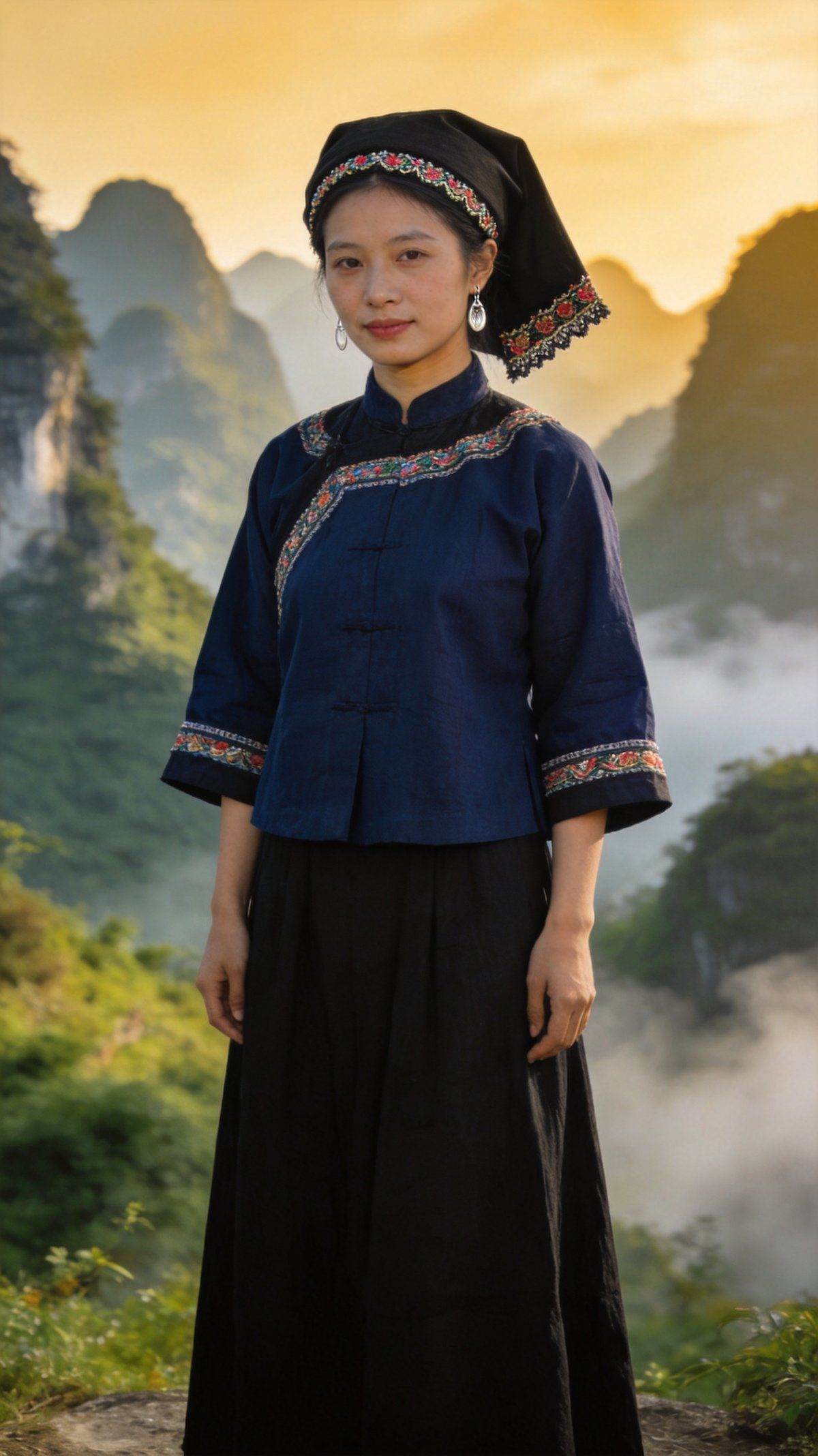
Maonan traditional clothing is characterized by elegant simplicity with indigo-blue or black jackets, embroidered collars, and distinctive silver accessories. The Maonan are one of China's smaller ethnic groups, numbering approximately 100,000 people concentrated almost entirely in Huanjiang Maonan Autonomous County in northern Guangxi, a karst mountain landscape of limestone peaks and narrow river valleys. They are known for exceptional bamboo hat craftsmanship that transforms a practical farming accessory into an object of remarkable precision and beauty.
Historical and Cultural Background
The Maonan are a Tai-Kadai speaking people whose ancestors settled in the mountainous border region of Guangxi and Guizhou over a millennium ago. Their name for themselves is "Anan," meaning "people of this place," reflecting their deep-rooted connection to the Huanjiang karst landscape. The Maonan developed a sophisticated agricultural system on the region's limited arable land, cultivating rice in narrow valley floors and tending cattle on mountain slopes, and their clothing reflects a farming culture that values practicality, durability, and understated elegance. Unlike neighboring groups such as the Miao and Yao, whose clothing emphasizes visual exuberance, the Maonan aesthetic is one of restraint: the quality of indigo dyeing, the precision of embroidery placement, and the fineness of bamboo weaving speak quietly rather than shout. The Maonan language had no written form until the 20th century, so clothing and craft traditions served as important carriers of cultural identity across generations.
Key Features of Maonan Attire
- Dark indigo front-fastening jackets with embroidered collar panels
- Distinctive patterned bamboo hats with intricate weave
- Silver hairpins, earrings, and bracelets with filigree work
- Embroidered cloth shoes with floral patterns on the toe
- Mens blue or black jackets with cloth buttons and matching trousers
Traditional Garments
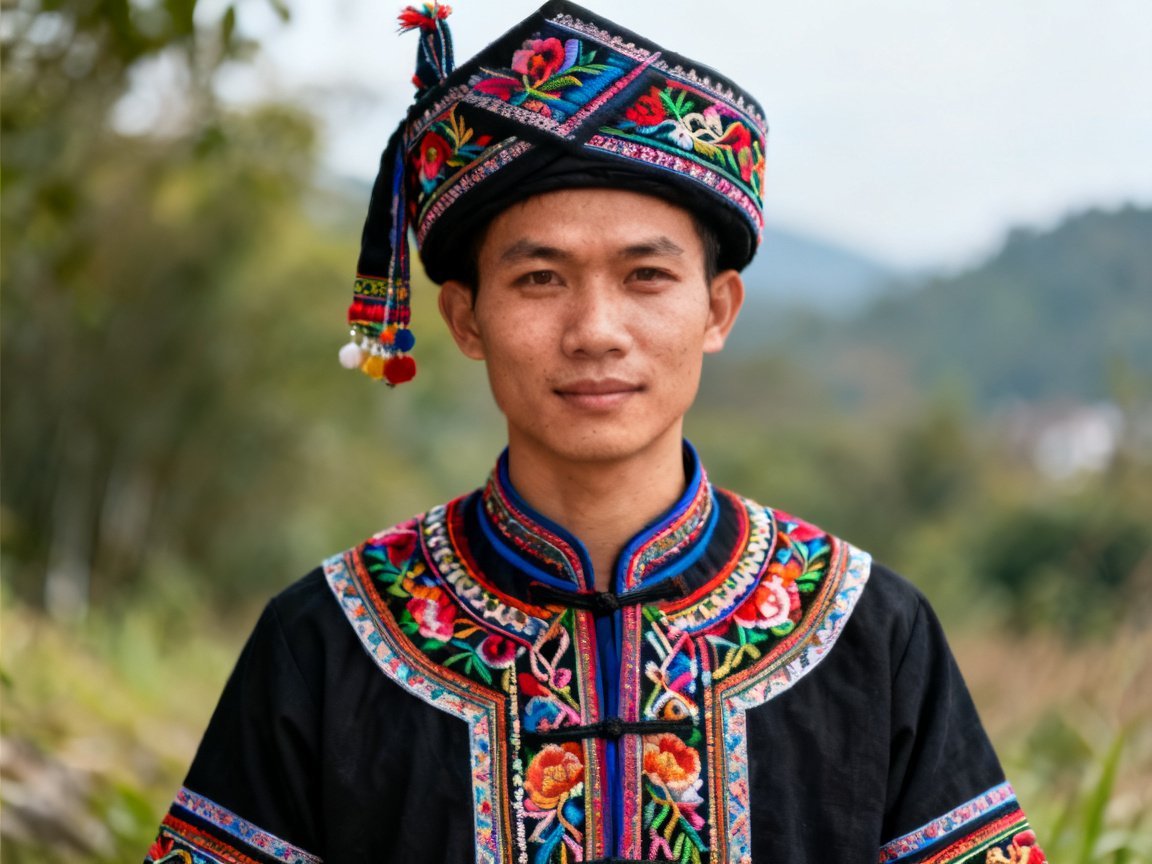
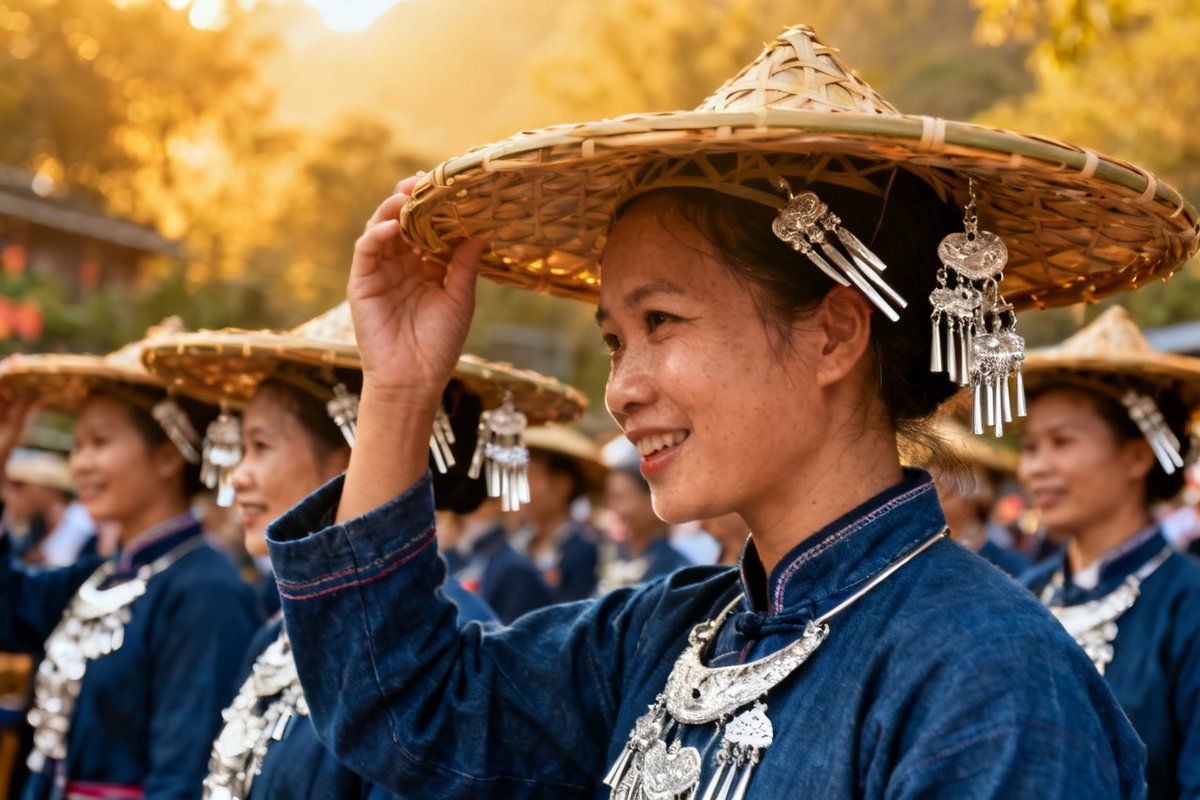
Women wear a front-fastening jacket in indigo or black with embroidered trim at the collar and along the front opening, paired with wide-leg trousers and a patterned cloth belt. The jacket is typically secured with hand-made cloth buttons (pan kou), a distinctive feature shared with Chinese clothing traditions but executed in a Maonan style using slightly thicker cord. The wide-leg trousers are plain, allowing the jacket's embroidery and the belt's pattern to provide the visual interest. The cloth belt is often woven with a supplementary weft pattern in a single accent color against the dark ground. Men wear similar jackets with cloth buttons and matching trousers, their version distinguished by narrower embroidered trim or a simple bound edge. The bamboo hat (dingnan) is worn by both genders for fieldwork and is the Maonan craft most recognized beyond their region.
Headwear and Adornments
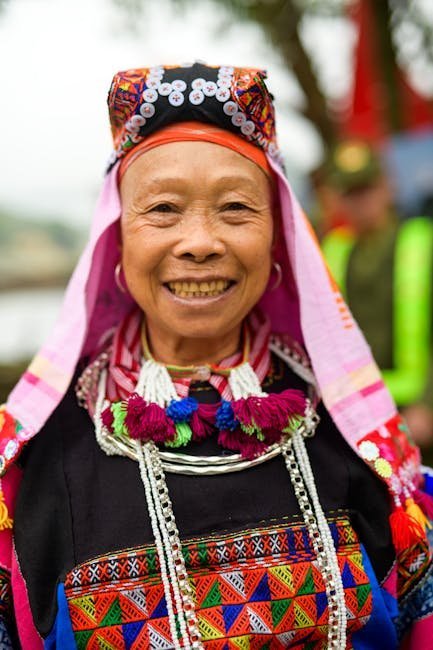
The Maonan bamboo hat (dingnan) is their most famous accessory -- finely woven from bamboo strips with decorative patterns, so tightly constructed that a well-made hat can hold water without leaking. The hat's construction involves splitting bamboo into strips as fine as half a millimeter, then weaving them in a complex twill pattern that creates a geometric design visible only upon close inspection. The brim is broad for sun protection in the subtropical climate, and the underside is often lined with a patterned cloth for comfort. Women wear silver hairpins, earrings, and bracelets with delicate filigree work, the silver-smithing tradition being shared with neighboring Zhuang artisans. The silver pieces are relatively modest in scale compared to Miao silver work, reflecting the Maonan preference for understated ornament. Men historically wore a simple cloth cap or headwrap in indigo or black.
Embroidery and Decorative Arts
Maonan embroidery features floral and butterfly motifs on jacket collars, cuffs, and cloth shoes. Cross-stitch and satin stitch in bright colors on dark fabric create a restrained but cheerful effect. The butterfly motif is particularly significant: in Maonan folklore, the butterfly is associated with the mother goddess who created humanity, and its presence on clothing serves as a protective blessing. Floral patterns are drawn from the local environment, with plum blossoms, chrysanthemums, and lotus flowers being the most common. Maonan embroidered cloth shoes, with their floral designs on the toe panel, are a traditional gift from a bride to her groom's female relatives. Bamboo weaving, while technically not embroidery, is the Maonan decorative art of greatest technical sophistication, with hat patterns achieving a level of refinement comparable to the finest textiles.
The Maonan bamboo hat is a masterpiece of functional art - a single hat may contain hundreds of hand-split bamboo strands so fine they are barely visible, creating fabric more water-resistant than most textiles.
Color Symbolism
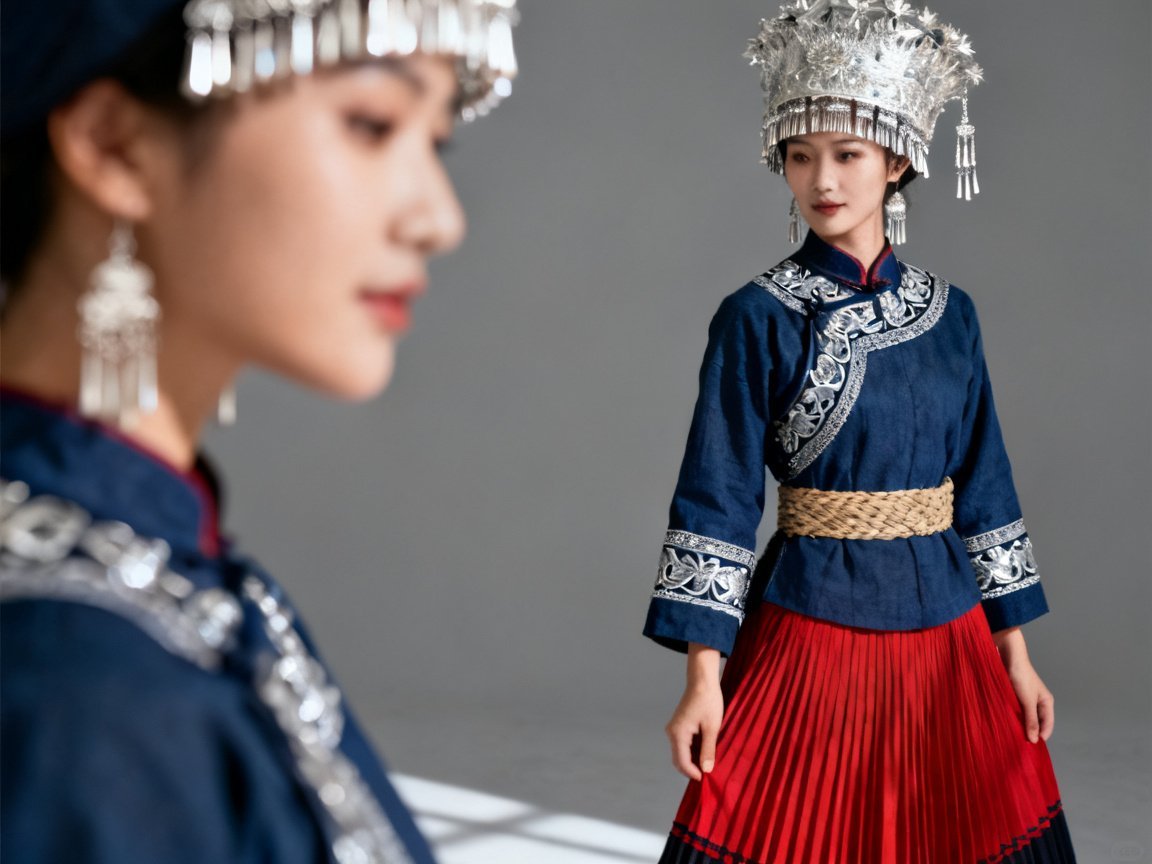
Indigo blue and black dominate, with the indigo achieved through a fermentation dyeing process using locally cultivated plants. The depth of indigo color on a jacket indicates the number of dye baths it received, with the finest garments undergoing 10 or more immersions to achieve a near-black blue-black. Embroidery uses red, pink, green, yellow, and white, applied sparingly to create accents rather than all-over coverage. The natural tan of bamboo provides warm contrast against the dark fabric, a color relationship that defines the Maonan aesthetic. Silver accessories add reflective highlights that catch light during festival dances. The overall Maonan color philosophy might be described as "economy of brightness" -- each colored element counts precisely because it is surrounded by so much restraint.
Festival Attire
During the Fenlong Festival (Dragon Division Festival, celebrated after the summer harvest), the most important Maonan celebration, women wear new indigo jackets with their finest embroidery and full sets of silver jewelry. The festival includes the ritual sacrifice of cattle and the performance of the Maonan Nuo opera, a masked drama tradition recognized as national intangible cultural heritage. Performers wear specific costumes combining elements of everyday Maonan dress with theatrical additions. Weddings feature the bride in a new set of indigo clothing with extra embroidery, accompanied by the presentation of embroidered shoes to the groom's family. The funeral ceremonies of the Maonan involve specific clothing protocols: mourners wear plain undyed hemp, reflecting the temporary suspension of color during the period of grief, after which indigo garments are ritually resumed.
Modern Influence and Preservation
Maonan bamboo hat weaving has been recognized as national-level intangible cultural heritage in China, and the Huanjiang Maonan Autonomous County government has established a bamboo weaving training center to ensure the craft survives. The hat-making tradition faces serious challenges: the skill required for the tightest weaves takes years to develop, and younger Maonan increasingly prefer manufactured hats and clothing. However, the "dingnan" has found a second life in the cultural tourism market, where its combination of practicality and beauty appeals to visitors seeking authentic crafts. The Maonan museum in Huanjiang preserves historical examples of bamboo hats alongside embroidered jackets from the early 20th century. The small size of the Maonan population means that every master artisan lost without a trained successor represents a significant threat to the continuity of these unique craft traditions.
Did You Know?
Maonan bamboo hats (dingnan) take several days to weave and are so tightly constructed that they can hold water.
Bamboo Hats and Indigo Dyeing of the Maonan
The Maonan people of Guangxi Zhuang Autonomous Region are skilled bamboo weavers, and their expertise extends to the production of fine bamboo hats that are integral to Maonan women's traditional attire. The hats are woven from thinly split bamboo strips, with the crown featuring a tight weave for water resistance and the brim using a more open weave for lightness. Women wear these hats daily for sun protection during outdoor work and for decorative effect during festivals. The hat's shape and weave pattern distinguish Maonan headwear from the bamboo hats of neighboring ethnic groups.
Indigo dyeing is central to Maonan textile production, with the deep blue-black fabric serving as the foundation for most traditional garments. Maonan women manage the entire indigo production cycle, from growing the indigofera plants to preparing the dye bath and conducting the multi-stage dyeing process. The fabric is dyed repeatedly over several weeks, with each immersion followed by oxidation and rinsing. After the final dyeing, the fabric is beaten with wooden mallets to create a subtle luster, then starched with rice water to add body.
Bamboo Hats and Indigo Dyeing of the Maonan
The Maonan people of Guangxi Zhuang Autonomous Region are skilled bamboo weavers, and their expertise extends to the production of fine bamboo hats that are integral to Maonan women's traditional attire. The hats are woven from thinly split bamboo strips, with the crown featuring a tight weave for water resistance and the brim using a more open weave for lightness. Women wear these hats daily for sun protection during outdoor work and for decorative effect during festivals. The hat's shape and weave pattern distinguish Maonan headwear from the bamboo hats of neighboring ethnic groups.
Indigo dyeing is central to Maonan textile production, with the deep blue-black fabric serving as the foundation for most traditional garments. Maonan women manage the entire indigo production cycle, from growing the indigofera plants to preparing the dye bath and conducting the multi-stage dyeing process. The fabric is dyed repeatedly over several weeks, with each immersion followed by oxidation and rinsing. After the final dyeing, the fabric is beaten with wooden mallets to create a subtle luster, then starched with rice water to add body.