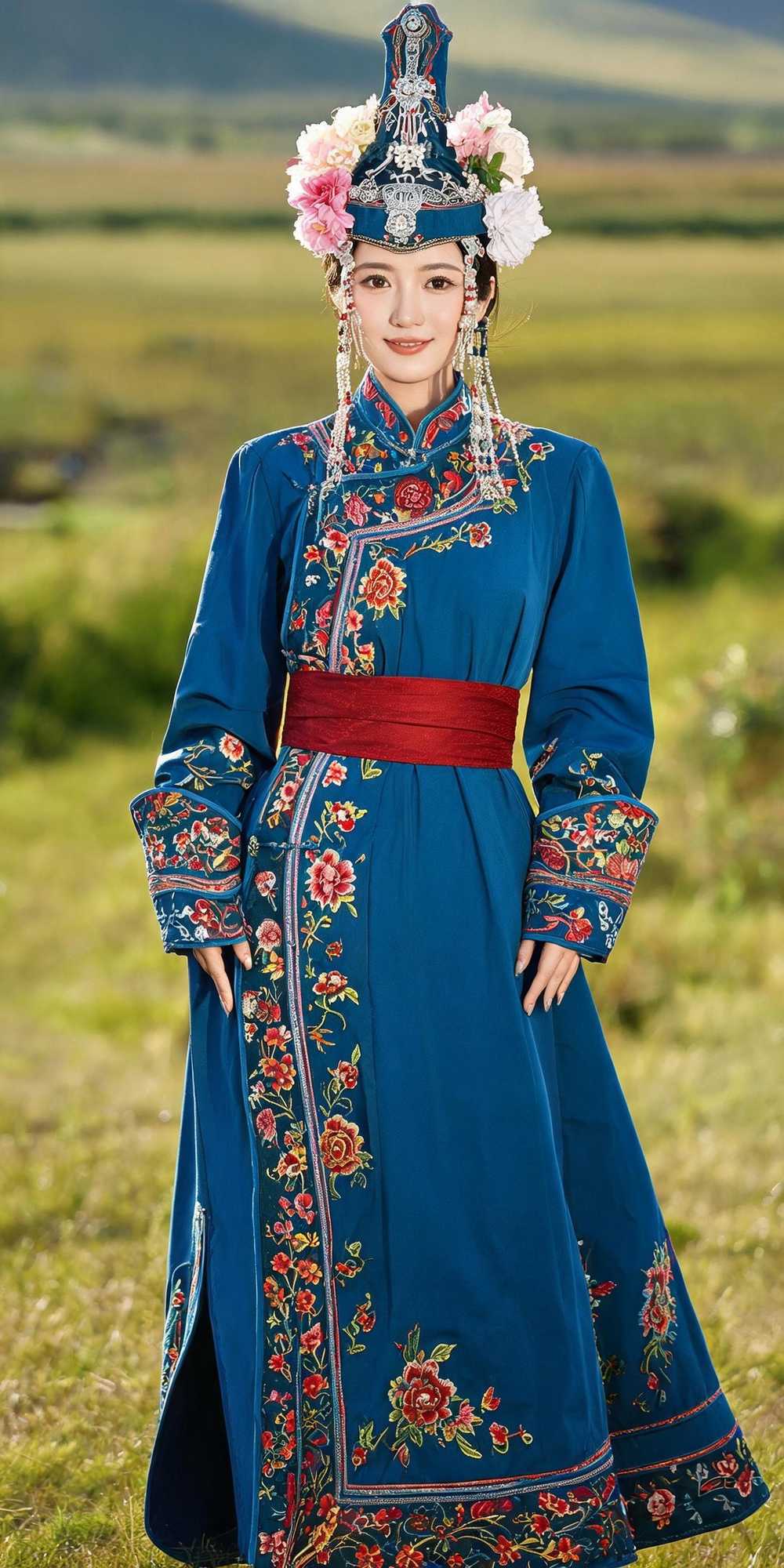
The Daur people, numbering approximately 130,000, reside primarily in the Morin Dawa Daur Autonomous Banner of Inner Mongolia and along the Nenjiang River in Heilongjiang Province. Descendants of the Khitan who once ruled northern China as the Liao Dynasty, the Daur maintain a clothing tradition shaped by their nomadic equestrian heritage and the extreme continental climate of Manchuria where winters routinely drop below minus thirty degrees Celsius. Daur traditional clothing reflects this environment through robes cut with deep side slits for horseback riding, layered construction incorporating fur linings and trim for warmth, and a preference for durable cotton and leather materials suited to outdoor labor. The distinctive blue cotton robes worn by both men and women, with their clean lines and restrained decoration, express a nomadic aesthetic that values functionality, movement, and quiet dignity over elaborate ornamentation.
Key Features of Daur Attire
- Long blue cotton robes with side slits for horseback riding
- Fur-trimmed collars and cuffs for winter warmth
- Decorative cloth belts with hanging pouches and accessories
- Womens embroidered insoles and boot tops with floral patterns
- Separate sleeve covers as a distinctive protective garment
Traditional Garments
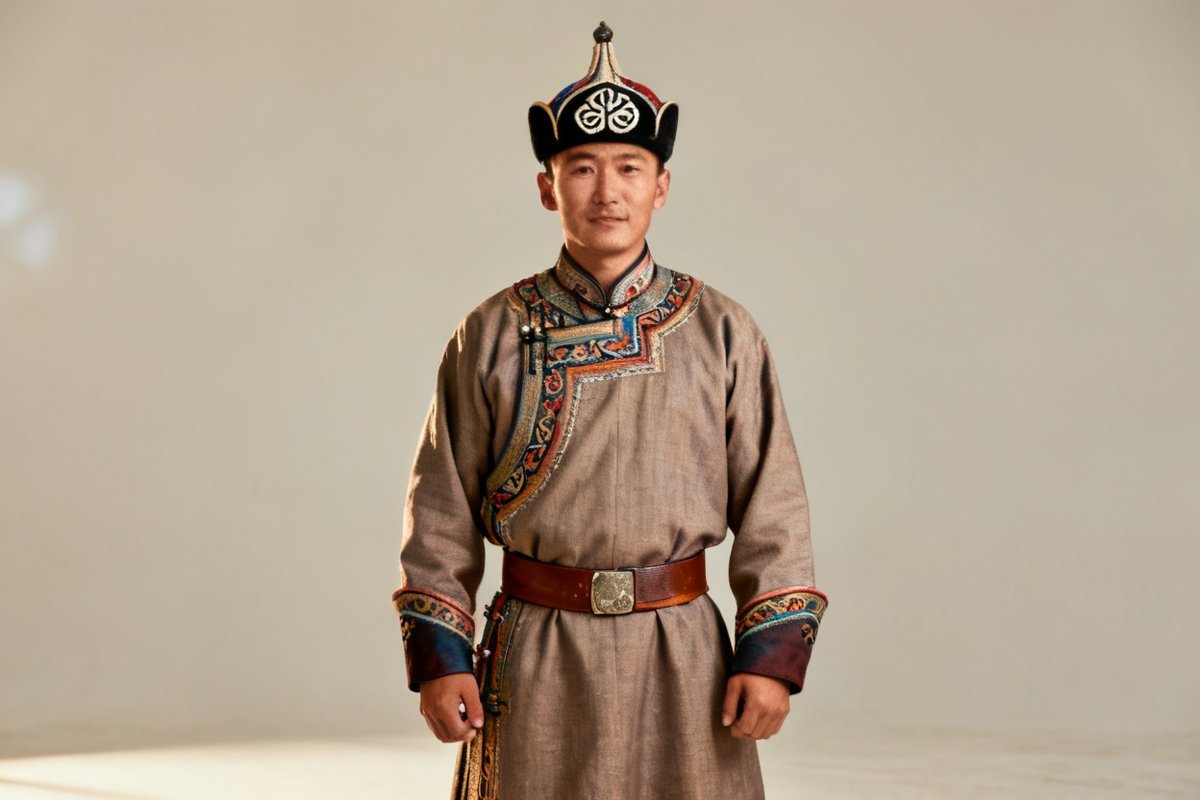
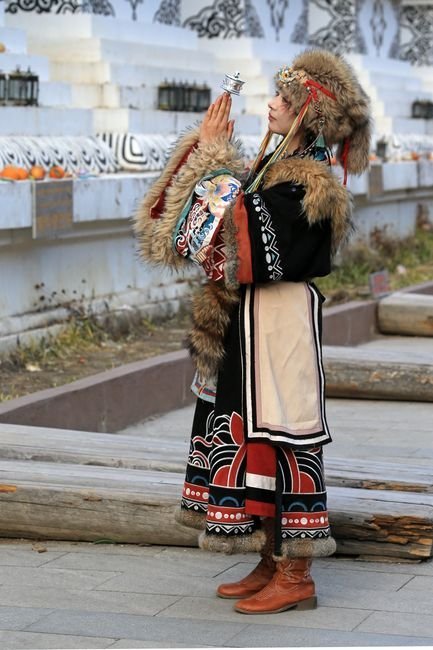
Men wear a long front-fastening robe reaching below the knees in blue or gray cotton for warmer months and padded or fur-lined versions for winter, with side slits extending to the waist that allow the garment to part naturally when seated on horseback. A cloth belt or leather sash is tied at the waist, from which small pouches containing flint, tobacco, or personal items may hang, and wide-leg trousers are tucked into knee-high leather boots with upturned toes that aid stirrup control. The robe's cut is deceptively simple, requiring precise tailoring to achieve the correct drape and freedom of movement. Women wear similarly styled robes with more extensive embroidery at collars, cuffs, front opening edges, and hem bands, featuring floral patterns of peonies, lotuses, and chrysanthemums. A distinctive Daur garment is the separate decorative sleeve cover, a detachable embroidered panel that protects and adorns the forearm area and can be changed independently from the main robe, a practical innovation for a culture where clothing represented significant material investment.
Headwear and Adornments
Men wear fur hats with ear flaps in winter, typically made from fox, sable, or sheepskin, with the fur type indicating social status and the flaps able to be tied up or down depending on temperature. Summer headwear shifts to wide-brimmed straw hats that protect against the intense Manchurian sun during agricultural work. Women wrap their hair in black cloth or wear rectangular headscarves folded and tied at the back, with embroidery along the scarf's visible edge serving as the primary decorative element. Silver hairpins with floral finials secure the wrapped hair, and women wear drop earrings featuring small jade or coral beads. The Daur aesthetic for jewelry is understated compared to southern ethnic groups, with quality of material and simplicity of design valued over quantity or elaboration, consistent with the broader aesthetic of functional elegance that characterizes Daur material culture.
Embroidery and Decorative Arts
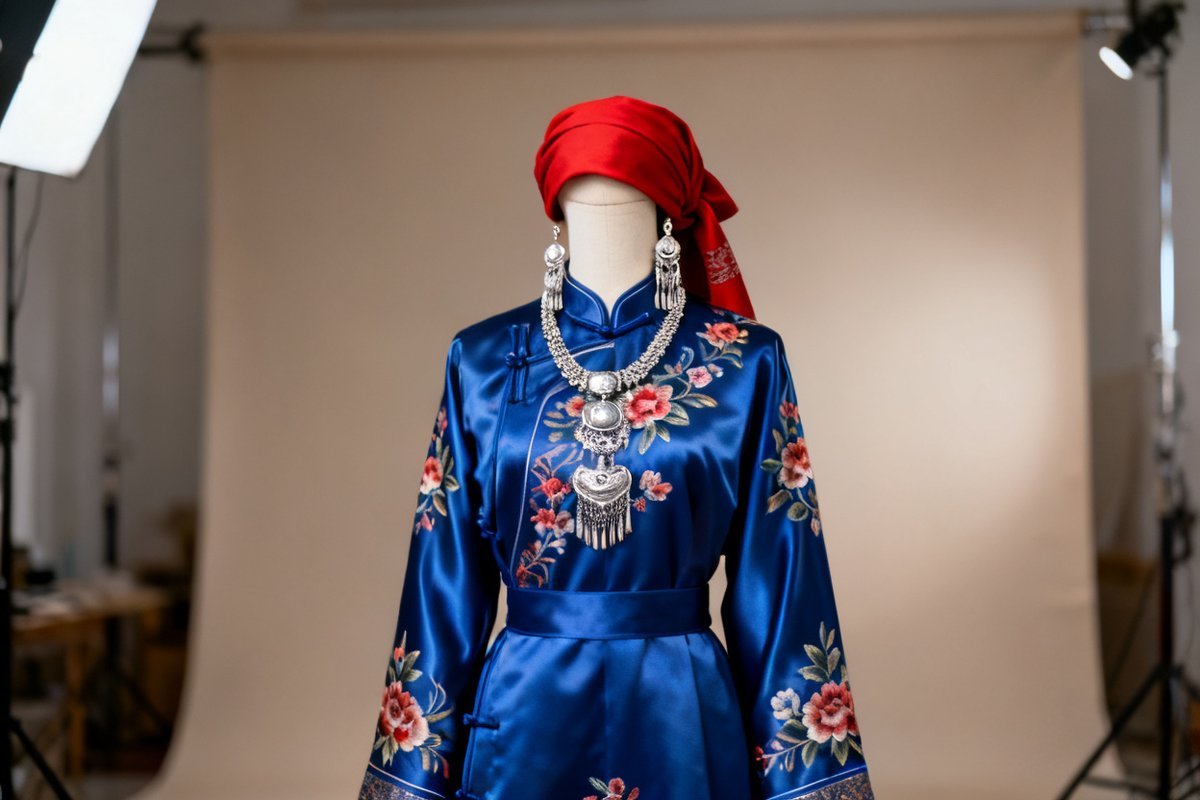
Daur embroidery concentrates on practical items that receive focused attention: boot tops where floral patterns wrap around the leather shaft, insoles where embroidered designs remain hidden beneath the foot in a tradition of private beauty, tobacco pouches presented as gifts that convey affection and respect, and the edges of sleeve covers and collar bands. Peonies, lotuses, chrysanthemums, and plum blossoms are the primary motifs, executed in satin stitch and stem stitch using silk threads in red, pink, yellow, green, and blue against dark fabric. The embroidery on a woman's boot tops is among the first things noticed when she walks, making it a particularly important site of decorative skill display. Daur women also produce applique work using contrasting fabrics cut into floral shapes and stitched onto garments, a technique that creates bold graphic effects with less labor than full-coverage embroidery. The overall approach to decoration follows the Daur principle of selective emphasis, where limited areas receive intensive decorative treatment while the majority of the garment remains unadorned.
The Daur robes distinctive side slits, which scholars trace to Khitan origins, reveal a design philosophy where practical equestrian mobility dictated every tailoring decision.
Color Symbolism
Blue is the predominant color in Daur clothing, representing the vast sky of the Mongolian-Manchurian steppe and the spiritual realm of Tengri, reflecting the shamanic and animist beliefs that predate Buddhist influence among the Daur. Gray, black, and brown serve as practical daily wear colors that conceal the dust and dirt of equestrian and agricultural life. Embroidery accents introduce red for vitality and protection, pink for feminine grace, yellow for the sun and prosperity, green for the grasslands that sustain their herds, and white for purity and spiritual cleanliness. This restrained palette distinguishes Daur clothing from the multicolored traditions of southern ethnic groups and reflects the aesthetic values of a people who have historically prioritized functionality, durability, and quiet refinement in their material culture.
Festival Attire
During the Spring Festival and the Daur traditional New Year, families prepare new blue robes months in advance, with women's robes featuring freshly completed embroidery around collars and cuffs that represents the preceding year's needlework accumulation. Fur-trimmed jackets in sable or fox are worn open to display the embroidered robe beneath, and new embroidered boots complete the festival ensemble. The Daur traditional sports festival, featuring horseback riding, archery, and wrestling competitions, provides another occasion for traditional dress, with competitors wearing shortened robe styles that allow full range of motion. Weddings showcase the most elaborate Daur clothing, with brides wearing layered robes topped with embroidered vests and grooms in new blue robes with silver buttons and ceremonial boots. The Daur emphasis on newness for festival dress reflects a worldview in which clothing renewal parallels the seasonal and calendrical renewal of the natural world.
Modern Influence and Preservation
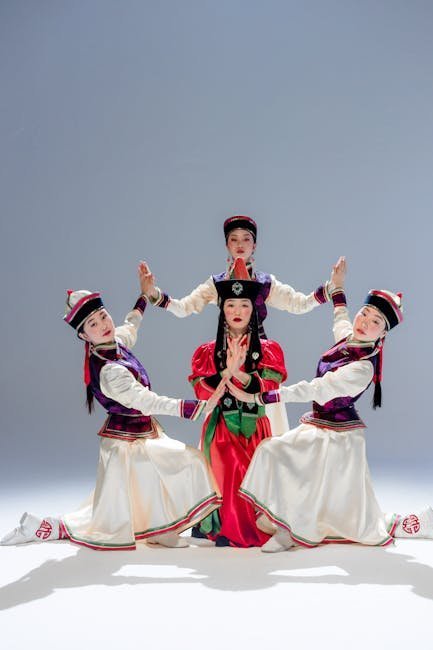
Daur embroidery and clothing crafts are preserved through cultural heritage programs in the Morin Dawa Daur Autonomous Banner, where local government supports embroidery training workshops and festivals that provide venues for traditional dress display. The relatively small Daur population and the extreme climate that once necessitated their distinctive fur-lined robes have both contributed to the decline of daily traditional dress, as modern synthetic winter wear offers practical advantages in weight and cost. Daur embroidery persists most visibly in boot and insole production, where the tradition of hidden beauty appeals to contemporary consumers as decorative insoles have found a market beyond Daur communities. The Daur sleeve cover tradition, while rarely practiced in daily life, has been documented and occasionally revived for cultural performances. The broader challenge of maintaining textile traditions among small northern ethnic groups, where climate-driven functional design once drove distinctive garment forms, involves balancing accurate preservation against the reality that few young Daur today need robes cut for horseback riding in minus-thirty-degree weather.
Did You Know?
Unlike many other ethnic groups, the Daur have a tradition of wearing separate decorative sleeve covers that can be changed independently from the main garment.
Quilting and Fur Craft in Daur Clothing
The Daur people of Inner Mongolia and Heilongjiang have developed clothing traditions adapted to the harsh winters of Northeast China. Quilting is a particularly important technique, with women stitching multiple layers of cotton fabric together to create insulated garments that trap body heat. The quilting stitches follow geometric patterns that serve both functional and decorative purposes, with running stitches forming parallel rows or diamond grids across the surface of jackets and vests. Fur trim along collars, cuffs, and hemlines provides additional insulation in extreme cold, with rabbit, fox, and sheepskin being the most commonly used materials.
Daur embroidery focuses on floral and vine motifs drawn from the wildflowers of the northeastern forests. The embroidery is executed primarily on collar edges, sleeve bands, and the front opening of women's jackets, using satin stitch and chain stitch in bright silk threads that contrast with the dark blue or black ground fabric. Women begin learning embroidery techniques in childhood, and a young woman's skill is considered an indicator of her readiness for marriage.
Quilting and Fur Craft in Daur Clothing
The Daur people of Inner Mongolia and Heilongjiang have developed clothing traditions adapted to the harsh winters of Northeast China. Quilting is a particularly important technique, with women stitching multiple layers of cotton fabric together to create insulated garments that trap body heat. The quilting stitches follow geometric patterns that serve both functional and decorative purposes, with running stitches forming parallel rows or diamond grids across the surface of jackets and vests. Fur trim along collars, cuffs, and hemlines provides additional insulation in extreme cold, with rabbit, fox, and sheepskin being the most commonly used materials.
Daur embroidery focuses on floral and vine motifs drawn from the wildflowers of the northeastern forests. The embroidery is executed primarily on collar edges, sleeve bands, and the front opening of women's jackets, using satin stitch and chain stitch in bright silk threads that contrast with the dark blue or black ground fabric. Women begin learning embroidery techniques in childhood, and a young woman's skill is considered an indicator of her readiness for marriage.