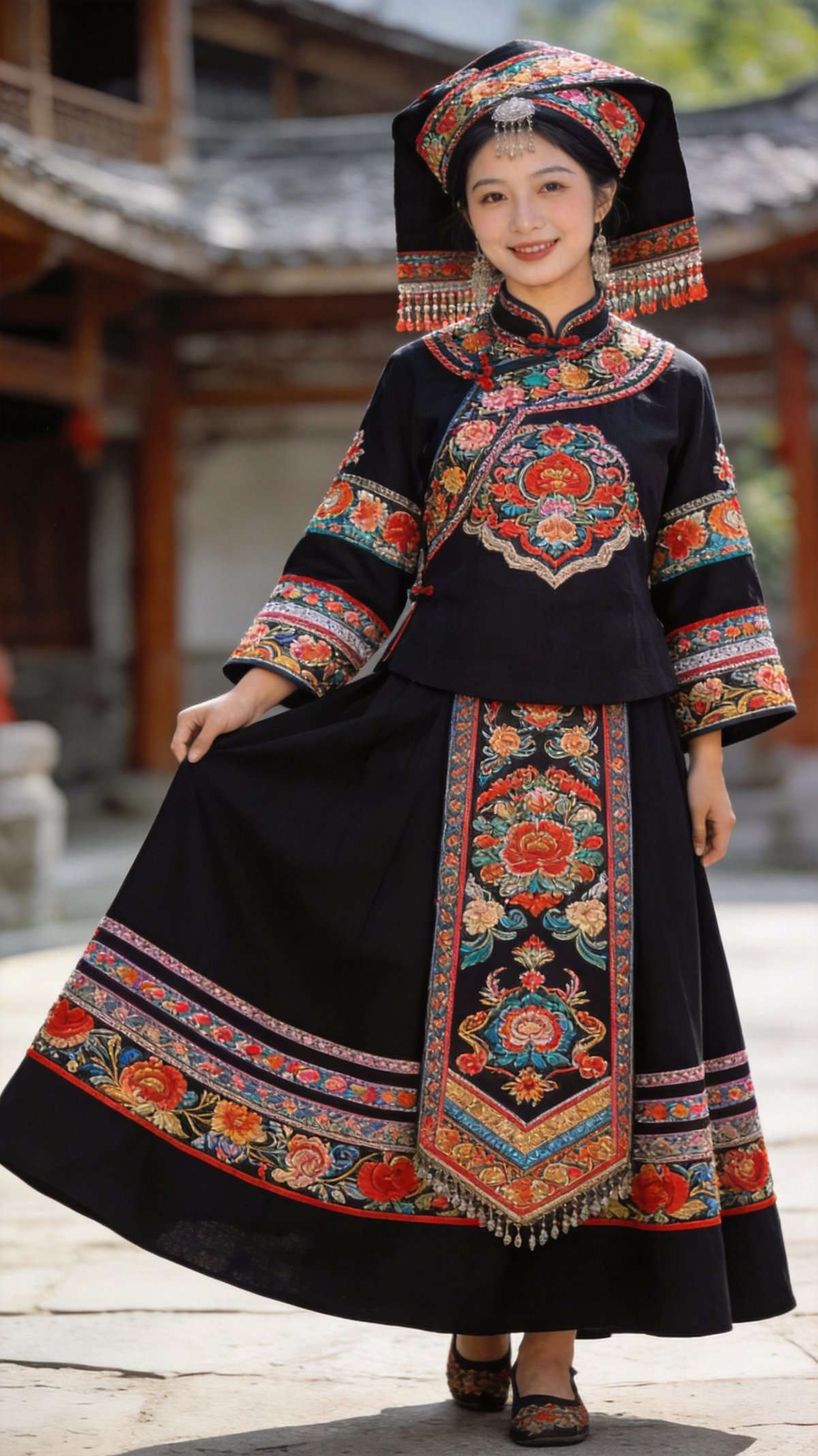
Tujia traditional clothing is distinguished by the iconic eight-bao (eight treasures) embroidered cap for children and finely pleated skirts with rich embroidery for women. Tujia brocade weaving (xilan kapu) is renowned as one of Chinas four most famous ethnic brocades. The Tujia people number approximately 8.4 million, making them one of the largest ethnic minority groups in China, concentrated in the Wuling Mountain range spanning western Hunan, western Hubei, northeastern Guizhou, and southeastern Chongqing.
The Tujia trace their ancestry to the ancient Ba people, a sophisticated Bronze Age civilization that inhabited the Three Gorges region of the Yangtze River over 3,000 years ago. The Ba were known as fierce warriors and skilled bronze casters, and their descendants — the Tujia — maintained a distinct cultural identity through centuries of interaction with Han Chinese, Miao, and other neighboring peoples. The Tujia language belongs to the Tibeto-Burman family, though many Tujia today speak Southwestern Mandarin or Miao dialects. Their name "Tujia" literally means "native family," distinguishing them as original inhabitants rather than later migrants.
Tujia culture is characterized by a rich tradition of oral literature, folk music, and distinctive architectural styles — particularly the diaojiaolou, wooden houses built on stilts along mountain slopes. The Tujia New Year (Gannian Festival) is celebrated one day earlier than the Han Chinese Spring Festival, a custom said to originate from Tujia warriors needing to celebrate before departing for battle. The weeping wedding tradition, in which Tujia brides sing lament songs for up to a month before their wedding, is another distinctive cultural practice. Tujia brocade and embroidery traditions are deeply integrated with these cultural practices, with textile gifts marking major life events.
Key Features of Tujia Attire
- Eight-bao embroidered cap for children with tiger head design
- Handwoven Tujia brocade (xilan kapu) with geometric patterns
- Heavily pleated ankle-length skirts with embroidered waistbands
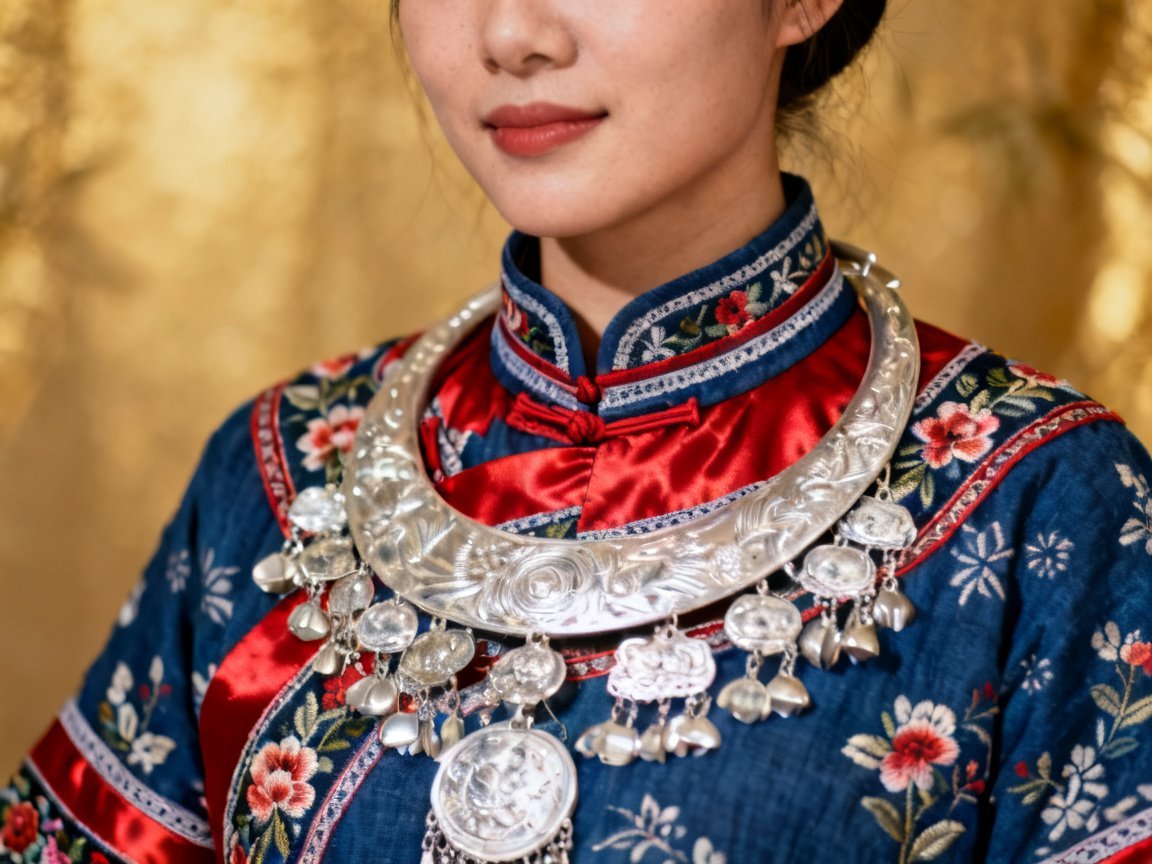
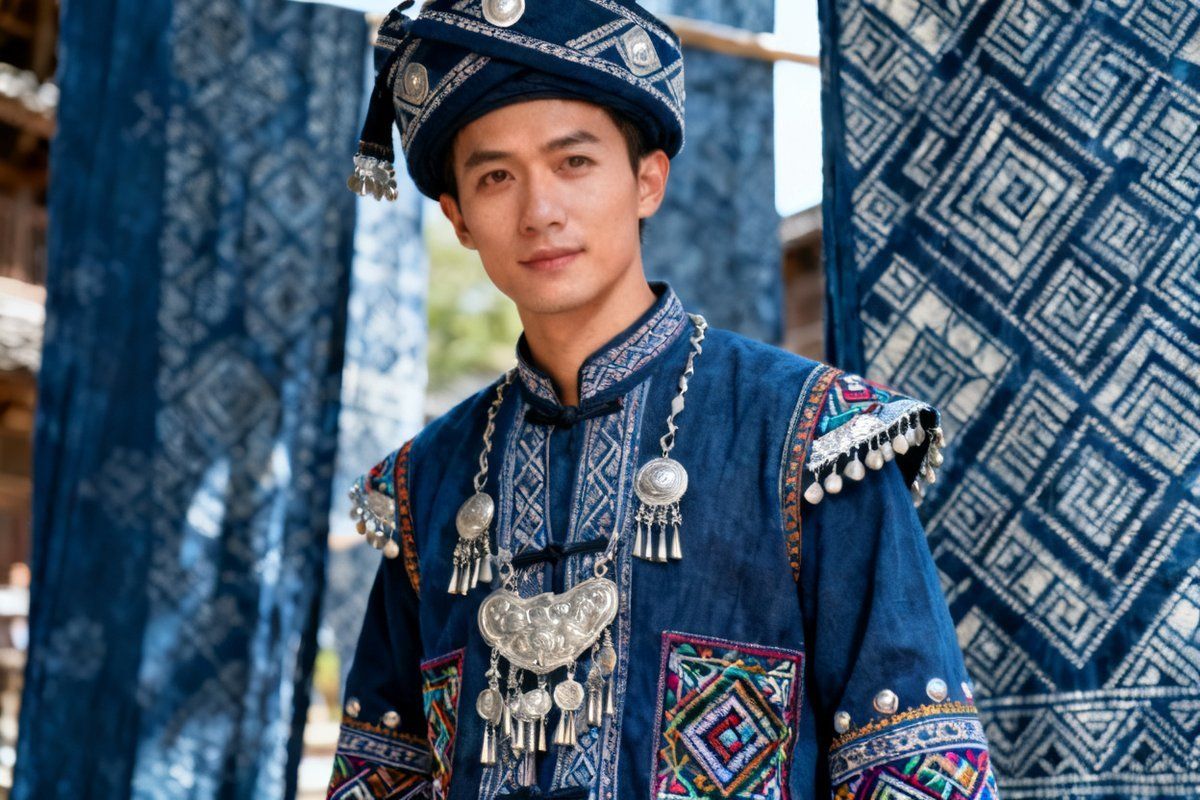
- Large silver neck rings and earrings with filigree work
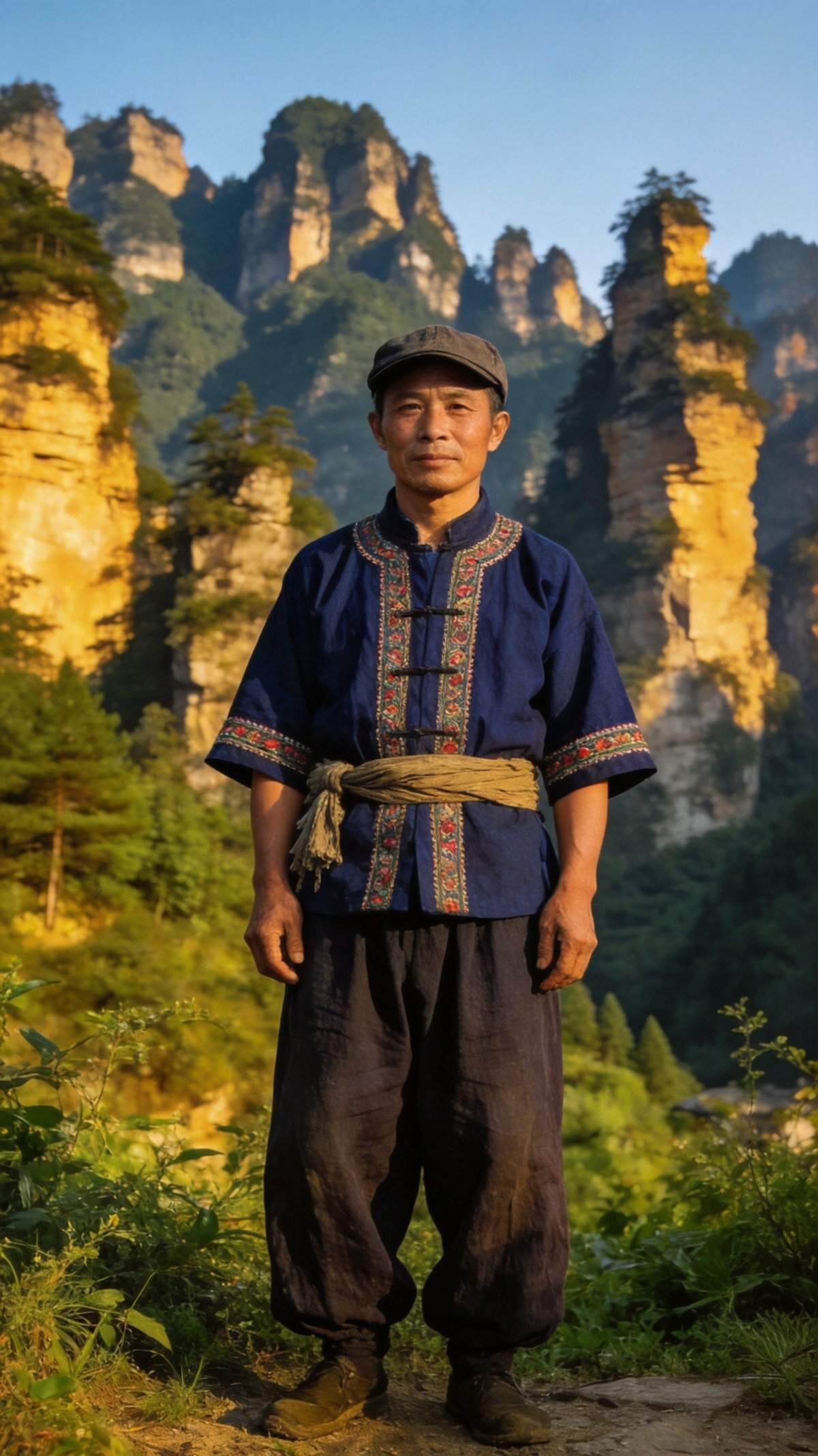
- Men's short front-fastening jackets with embroidered edging
Traditional Garments
Women wear a collarless left-opening or front-fastening jacket in blue or black with embroidered trim at the collar, cuffs, and front, paired with a long pleated skirt reaching the ankle. A brocade waistband or embroidered belt cinches the waist. Men wear short front-fastening jackets with cloth buttons and loose trousers. The women's jacket is typically cut short, ending at the hip, with wide sleeves that allow freedom of movement for agricultural work and household tasks.
The pleated skirt is a masterpiece of Tujia textile engineering, containing up to a hundred fine knife-edge pleats that are hand-set and stitched into place. The waistband is woven with brocade patterns or embroidered with geometric designs in bright colors against the dark fabric of the skirt. This creates a striking visual contrast — the dark, severely pleated fabric below and the vividly colored, ornate waistband above. An embroidered apron, often featuring bird or flower motifs, is worn over the skirt for both decorative and practical purposes.
Headwear and Adornments
The Tujia eight-bao cap (babao mao) for children is distinctive - a padded cap with eight embroidered panels featuring tiger heads, Buddha figures, and auspicious symbols, decorated with silver ornaments and bells. Women wear their hair in a coiled bun with silver hairpins and floral decorations. The babao mao is perhaps the most beloved artifact of Tujia material culture — every Tujia child traditionally receives one, typically crafted by their grandmother or mother, and it serves as both a protective talisman and a declaration of the child's ethnic identity.
The tiger head motif on the babao mao is particularly significant. The Tujia revere the white tiger as their ancestral totem, tracing their lineage to the legendary Ba ruler Lin Jun, who was said to transform into a white tiger upon his death. By embroidering tiger faces on children's caps, Tujia mothers symbolically clothe their children in the protective power of the ancestor. Small silver bells and ornaments attached to the cap serve the practical function of allowing parents to hear a child's movements, while also believed to frighten away malevolent spirits.
Embroidery and Decorative Arts
Tujia brocade (xilan kapu) is a national intangible cultural heritage - a waist-loom woven textile in geometric patterns featuring stylized motifs of flowers, birds, fish, and humans. The technique uses colored silk and cotton threads on dark cotton warp. Xilan kapu is one of China's four most famous ethnic brocades alongside Zhuang, Dai, and Dong brocades. The weaving technique uses a backstrap tension loom where the weaver sits on the ground with the warp stretched between a fixed post and a breast beam secured around her waist — a method that has remained essentially unchanged for over two millennia.
The patterns of xilan kapu are entirely geometric, with natural and human forms reduced to stylized angular shapes that fit the grid of the woven structure. Traditional patterns number over 120 documented designs, each with specific names and meanings: "Forty-Eight Hooks" symbolizes the complexity of family relationships, "Mouse Welcoming the Bride" tells a folk story of humility, and "Sun and Moon" represents cosmic harmony. The weaving process is exceptionally slow — a single brocade piece measuring 50 by 30 centimeters may require a month of daily work by a skilled weaver.
The Tujia eight-bao cap, with its tiger head embroidery and protective silver ornaments, transforms an infant into a tiger cub in the eyes of the community - the tiger being the Tujia peoples ancestral totem.
Color Symbolism
Black and dark blue are the base, representing the rich soil of the Wuling Mountains and the depth of Tujia ancestral heritage. Tujia brocade uses bright red for life and celebration, yellow for harvest and prosperity, green for the forested mountain landscape, blue for rivers and the sky, white for purity and the white tiger totem, and black for the earth. The combination of all colors in brocade creates a visual representation of a complete and balanced world. Embroidery in vibrant multicolors against the dark base fabric follows a principle of "the darker the background, the brighter the thread" — a deliberate aesthetic choice that makes Tujia embroidery remarkably luminous.
Festival Attire
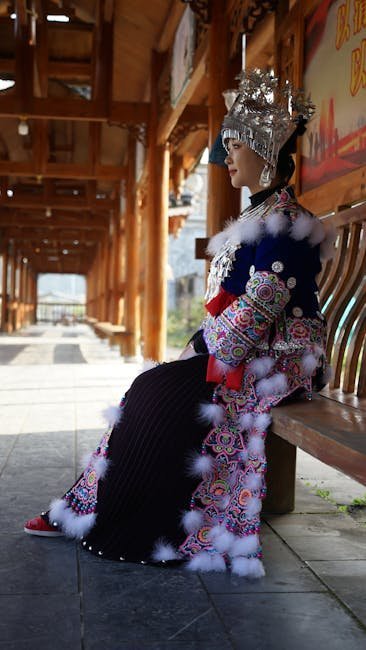
During the Tujia New Year (Gannian Festival) and the Sheba Day, women wear their finest pleated skirts and brocade waistbands, full silver jewelry sets including multiple neck rings. Gannian is celebrated on the 29th day of the twelfth lunar month, one day before the Han Chinese New Year. The festival features the traditional Tujia hand-waving dance (baishou wu), an epic dance form performed by hundreds of participants who move in synchronized patterns while wearing their most beautiful traditional clothing.
Sheba Day, held in the first lunar month, honors the Tujia ancestor gods and features ritual offerings, dramatic performances, and community feasting. During Sheba, women layer multiple pleated skirts and wear their heaviest silver jewelry, with the total weight of ornaments sometimes exceeding several kilograms. The weeping wedding tradition involves the bride dressing in her finest embroidered jacket and pleated skirt, often garments that she has spent years creating for this occasion, while singing lament songs that express gratitude to her parents and sorrow at leaving her childhood home.
Modern Influence and Preservation
Tujia xilan kapu brocade is nationally celebrated and produced for both traditional use and commercial markets. The distinctive eight-bao cap is a popular cultural souvenir in western Hunan. Several national-level intangible cultural heritage inheritors of Tujia brocade have been designated, and training centers in Xiangxi Tujia and Miao Autonomous Prefecture offer systematic instruction in traditional weaving and embroidery techniques.
The integration of Tujia brocade patterns into contemporary fashion, home decor, and accessories has created new economic opportunities for Tujia artisans. Designer collaborations have brought xilan kapu patterns to international attention, while community-based tourism in Tujia villages allows visitors to observe the brocade-weaving process firsthand and purchase directly from artisans. Despite these positive developments, the number of master weavers capable of producing the most complex traditional patterns has declined, making documentation and transmission of pattern repertoires an urgent priority for cultural preservation efforts.
Did You Know?
The Tujia people call themselves Bizika (native dwellers), and their xilan kapu brocade weaving tradition dates back over 2,000 years to the Warring States period.
Did You Know?
The Tujia people call themselves Bizika (native dwellers), and their xilan kapu brocade weaving tradition dates back over 2,000 years to the Warring States period.
Brocade Weaving of the Tujia
The Tujia people of Hunan, Hubei, Guizhou, and Chongqing are recognized for their sophisticated brocade weaving tradition known as xilan kapu, which produces fabric of exceptional density and pattern complexity. Tujia brocade is woven on a traditional floor loom using cotton or silk thread, with the pattern created by inserting colored weft threads that are visible only on the front surface of the fabric. The weaving process is slow and demanding, with an experienced weaver producing only about five centimeters of fabric per day for the most complex patterns.
Tujia women's traditional attire includes a jacket with elaborate brocade or embroidery at the collar, cuffs, and front opening, worn over a long pleated skirt. The jacket is typically in a dark solid color that provides contrast for the bright brocade panels. The pleated skirt is made from handwoven fabric and features narrow stripes in blue, white, and red. For festivals and weddings, Tujia women add layers of silver ornaments including large earrings, multiple necklaces, and a silver headpiece with dangling elements that frame the face.