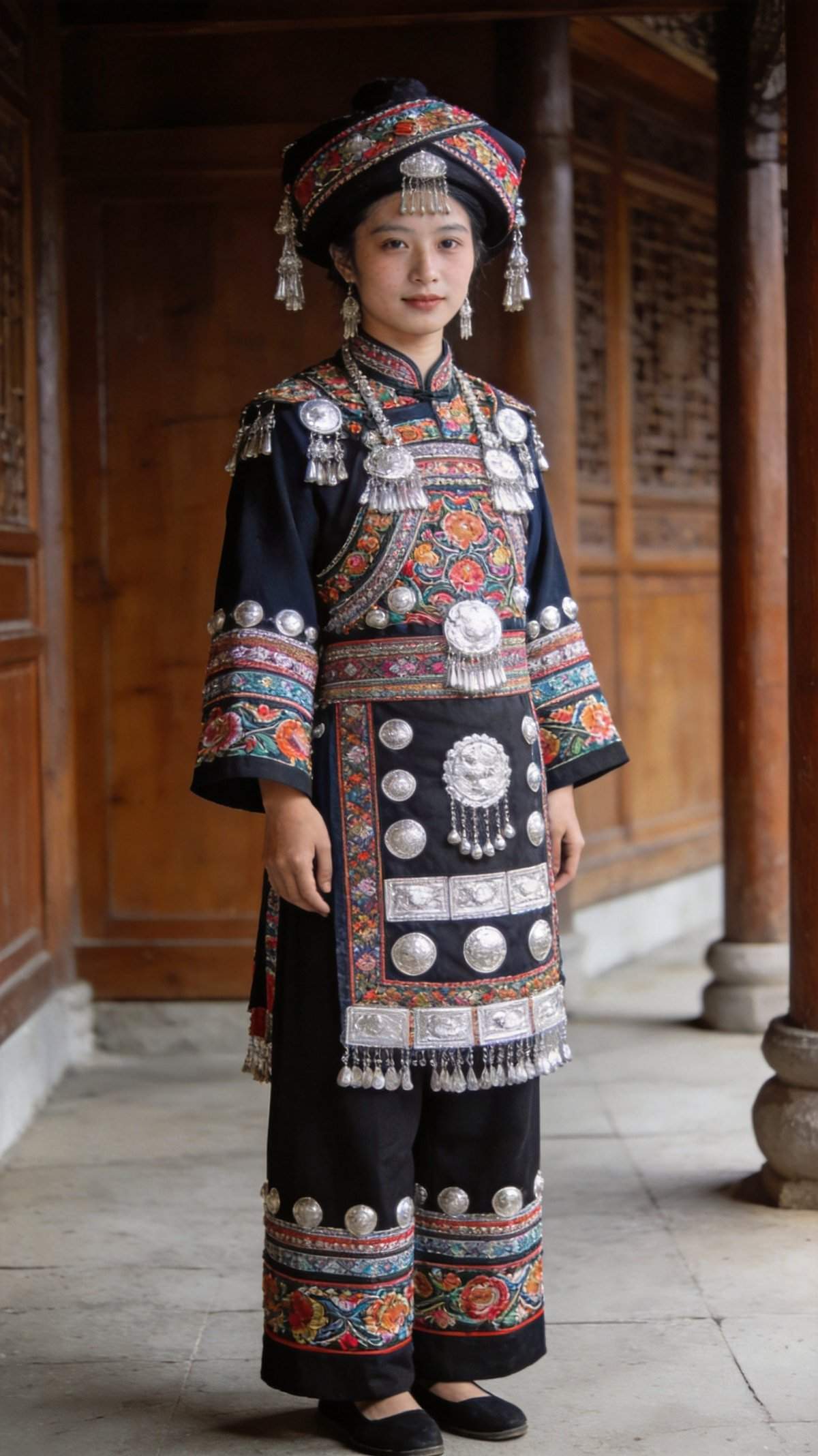
The Buyei people, numbering nearly three million, are among the larger ethnic groups of southwestern China, concentrated in Guizhou Province with communities extending into Yunnan and Sichuan. Their textile tradition is distinguished by some of the most technically sophisticated batik dyeing in existence, using wax-resist techniques applied with copper-tipped pens to create intricate patterns on handwoven cotton before multiple indigo immersions. Buyei clothing is anchored by beautifully pleated batik skirts that may incorporate up to seven separate wax-resist applications, each requiring drying and re-dyeing, resulting in layered patterns of white, light blue, and deep indigo. This labor-intensive process means a single skirt can take months to complete, and mastery of batik was historically considered essential for marriageability, with a common saying holding that a woman without batik skills could not find a husband.
Key Features of Buyei Attire
- Masterful batik (laran) wax-resist dyeing on indigo fabric
- Pleated batik skirts with concentric spiral and floral patterns
- Silver-studded embroidered aprons tied at the waist
- Right-opening jackets with embroidered collar and cuff bands
- Handwoven cotton fabric as the foundation of all garments
Traditional Garments
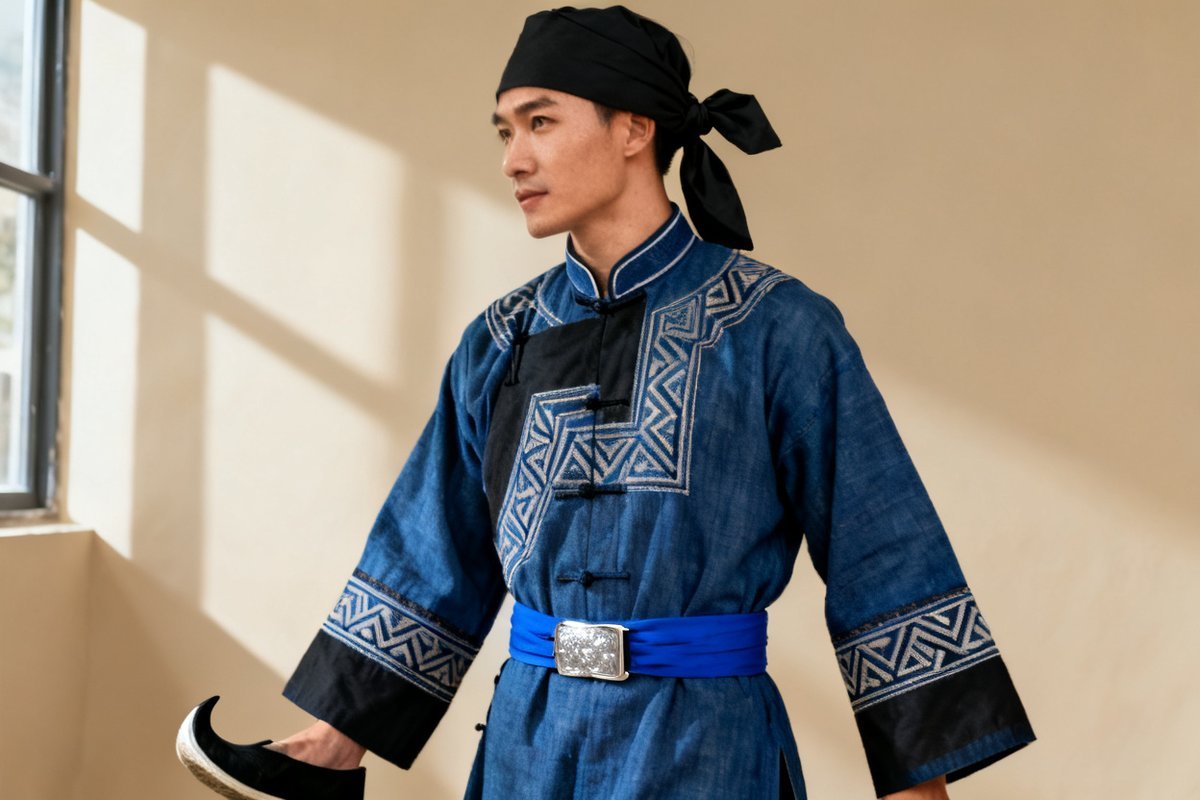
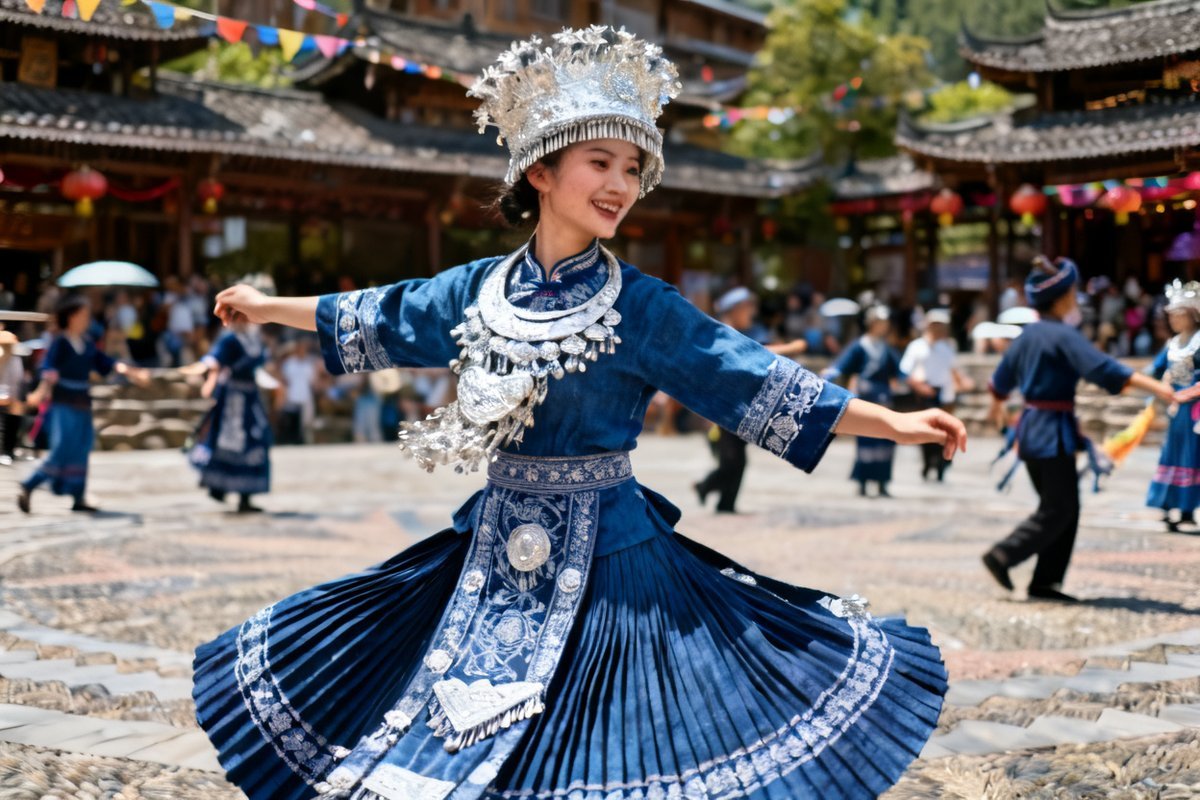
Women wear long-sleeved, right-opening jackets in indigo blue or black with embroidered trim at collar bands and cuffs featuring floral and butterfly motifs in bright silk thread. These jackets are worn over a white inner blouse and paired with a pleated batik skirt reaching below the knee, its surface covered in concentric spiral patterns, geometric diamonds, and stylized floral designs in white and light blue against the deep indigo ground. A heavily embroidered apron studded with small silver discs covers the front, tied with a woven belt from which colorful tassels hang. Men wear blue or black front-fastening short jackets with cloth buttons over white undershirts, with wide-leg trousers gathered at the waist by a woven cotton belt. In colder months, both genders add layers of unbleached hemp undergarments. Regional variations exist: Buyei communities in Qiannan Prefecture favor denser batik patterns with smaller motifs, while those in Qianxinan tend toward larger, more open designs with greater use of embroidered overlay on batik fabric.
Headwear and Adornments
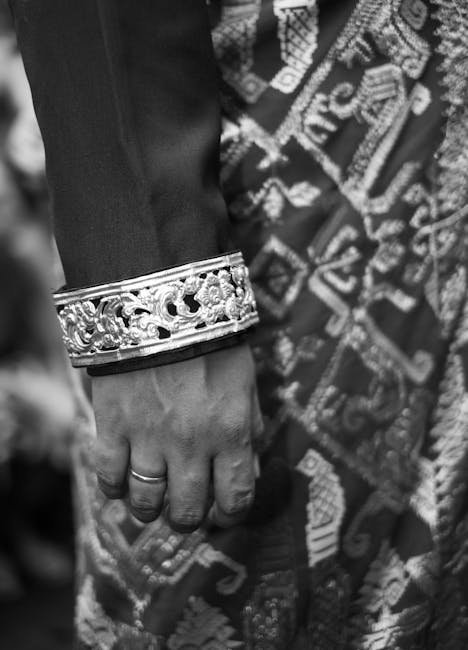
Women wrap their hair in black cloth or wear embroidered headbands, with unmarried women often sporting a distinctive rectangular headscarf that incorporates batik patterns matching those on their skirts, its ends finished with dense embroidery and sometimes small tassels. The headscarf is folded and wrapped in community-specific styles, functioning as a geographic identifier within Buyei territory. Silver ornaments include hairpins with floral finials, hoop earrings, and multiple bracelets worn stacked on both wrists. Young women preparing for marriage accumulate silver jewelry as a form of dowry, with families commissioning pieces from local silversmiths over many years. Men wear simple cloth head wraps in blue or black, with older men sometimes favoring white wraps that signal senior community status.
Embroidery and Decorative Arts
Buyei embroidery features floral and butterfly motifs in bright silk colors on dark fabric grounds, concentrated on aprons, belt ends, headscarf borders, and jacket trim. The butterfly holds special significance as a symbol of the Buyei creation myth in which butterflies gave birth to the first humans, making it the most frequently appearing and carefully rendered motif across all garment types. Embroidery is typically executed in satin stitch and chain stitch, often combined with small silver discs and studs that create a mixed-media surface texture. The batik process itself is the primary decorative art form, with wax applied through copper pens with funnel-shaped tips of varying sizes to produce lines of different widths. After waxing, the fabric undergoes repeated indigo dips with drying periods between each immersion, a process that can stretch across weeks. The final step involves boiling the fabric to remove wax, revealing the white reserved patterns against the indigo ground. Buyei batik is considered among the most technically refined in China, with certain ceremonial pieces requiring dozens of wax applications to achieve the desired multi-tonal effect.
Ethnographers consider Buyei batik among the most technically refined in China, with some patterns requiring up to seven separate wax-resist applications before the final indigo immersion.
Color Symbolism
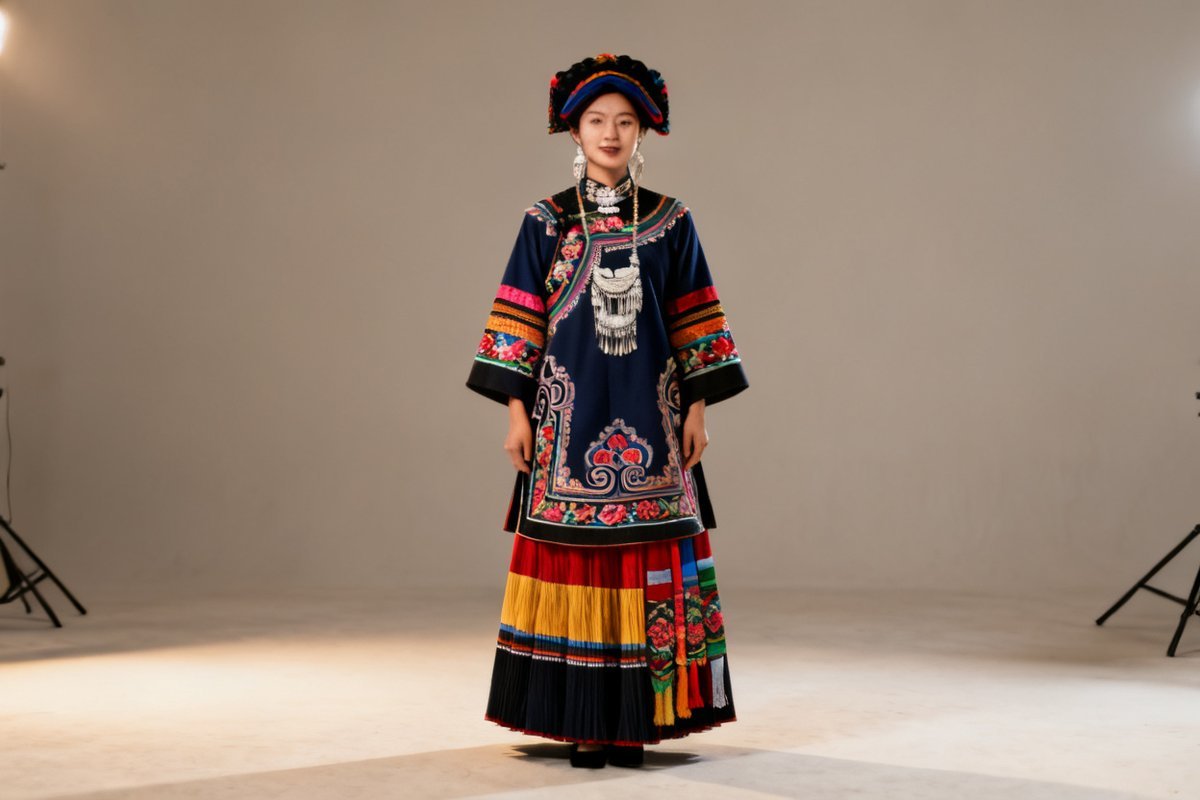
Indigo blue is the foundational color of Buyei clothing, representing the sky, water, and the spiritual realm. The batik process produces a spectrum from pure white through light blue to deepest navy within a single fabric, creating tonal depth that is itself symbolic of the Buyei worldview's emphasis on gradual transformation and layered meaning. Embroidery introduces vibrant red for life force and celebration, yellow for the earth's bounty and rice harvests, green for vegetation and the agricultural landscape of Guizhou, pink for youth and romance, and purple for nobility and spiritual authority. The silver of ornaments represents the moon, purity, and the ancestral connection maintained through inherited jewelry passed across generations. This color system creates visual harmony through the dominant indigo field punctuated by controlled bursts of vivid accent colors, a principle that governs both daily and ceremonial dress.
Festival Attire
During the Sixth Month Festival, the most significant Buyei celebration marking the rice-growing calendar, women wear their finest batik skirts whose indigo has been deepened through extra dye cycles, most elaborately embroidered jackets with freshly polished silver disc ornaments, and complete sets of silver jewelry including Layered neck chains, bracelets, earrings, and hairpins. The Spring Festival similarly calls for full ceremonial dress, with new batik garments often begun months in advance specifically for this occasion. Festival courtship traditions place batik skill at the center of social evaluation, with young women displaying their finest work and young men and their families assessing the quality of wax lines, evenness of indigo saturation, and complexity of pattern as indicators of diligence and artistry. The public nature of these festivals creates intergenerational transmission opportunities, with grandmothers adjusting granddaughters' headscarves and mothers explaining pattern meanings to curious observers, embedding clothing knowledge within celebratory social practice.
Modern Influence and Preservation
Buyei batik has gained national recognition as an intangible cultural heritage, with master practitioners designated at provincial and national levels. The technique has attracted interest beyond Buyei communities, with batik workshops in Guizhou drawing students and tourists who learn basic wax-resist methods. Buyei batik textiles have been incorporated into interior design, with wall hangings, cushion covers, and table linens featuring traditional patterns adapted to contemporary color schemes. Fashion designers have experimented with Buyei batik motifs on modern silhouettes, though the time-intensive nature of authentic handwork limits commercial scaling. Village cooperatives in Qiannan and Qianxinan prefectures now produce batik products for external markets, providing income while incentivizing skill retention. However, the full seven-dip indigo process used for ceremonial skirts remains practiced by a shrinking number of elder women, and whether this most demanding form of Buyei batik will survive another generation remains an open question that community documentation projects are working to answer.
Did You Know?
The Buyei have a saying that a woman without batik skills cannot find a husband - traditionally, mastery of wax-resist dyeing was considered an essential domestic art for every Buyei woman.
Weaving Techniques and Natural Dyes of the Buyei
The Buyei people of Guizhou Province have a sophisticated textile tradition centered on handwoven cotton and indigo dyeing. Buyei women cultivate cotton in small family plots, harvesting and ginning the fibers by hand before spinning them into thread on wooden spinning wheels. The thread is then dyed using indigo derived from locally grown plants, with the dyeing process requiring multiple immersions over several weeks to achieve the deep blue-black color characteristic of Buyei clothing. After dyeing, the fabric is beaten with wooden mallets to create a subtle sheen, a technique that requires considerable skill and physical effort.
Pattern weaving is another hallmark of Buyei textile arts, with geometric motifs woven directly into fabric on backstrap looms. These patterns appear most prominently on the borders of garments and on shoulder bags worn for daily use. Older Buyei women still maintain the knowledge of natural dye plants beyond indigo, including madder for red tones and gardenia for yellow, though these are now used primarily for special ceremonial garments.
Weaving Techniques and Natural Dyes of the Buyei
The Buyei people of Guizhou Province have a sophisticated textile tradition centered on handwoven cotton and indigo dyeing. Buyei women cultivate cotton in small family plots, harvesting and ginning the fibers by hand before spinning them into thread on wooden spinning wheels. The thread is then dyed using indigo derived from locally grown plants, with the dyeing process requiring multiple immersions over several weeks to achieve the deep blue-black color characteristic of Buyei clothing. After dyeing, the fabric is beaten with wooden mallets to create a subtle sheen, a technique that requires considerable skill and physical effort.
Pattern weaving is another hallmark of Buyei textile arts, with geometric motifs woven directly into fabric on backstrap looms. These patterns appear most prominently on the borders of garments and on shoulder bags worn for daily use. Older Buyei women still maintain the knowledge of natural dye plants beyond indigo, including madder for red tones and gardenia for yellow, though these are now used primarily for special ceremonial garments.