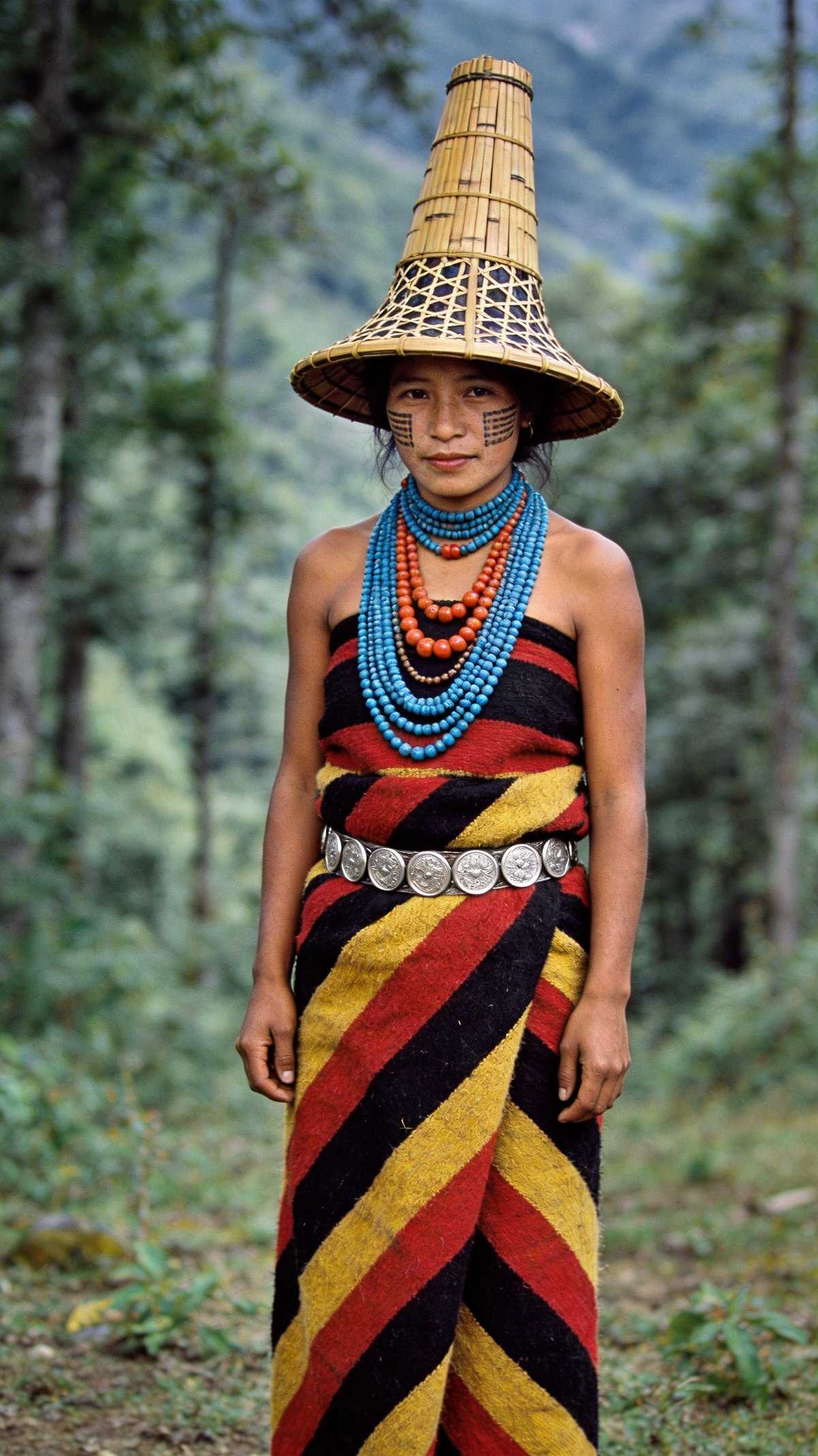
Lhoba traditional clothing is crafted from wild animal hides and handwoven plant fibers, reflecting their deep forest and hunting heritage in southeastern Tibet. The Lhoba are China's smallest officially recognized ethnic group, numbering approximately 3,600 people, scattered across the remote valleys of Mainling, Medog, and Zayu counties where the eastern Himalayas descend into the Brahmaputra canyon. Their extreme isolation -- accessible only by foot trails until the late 20th century -- meant that Lhoba material culture evolved with minimal external influence, making their clothing traditions among the most archaeologically significant in Asia. Both genders wear distinctive cane waistbands and shell-decorated garments.
Historical and Cultural Background
The Lhoba ("southerners" in Tibetan) comprise multiple clans including the Idu, Adi, and Bokar, each with distinct dialects and clothing variations. Before the mid-20th century, the Lhoba practiced a forest-based subsistence economy combining hunting with shifting cultivation. Their clothing system reflects a near-complete reliance on wild resources: bear, deer, and wild ox hides provided the primary materials; plant fibers from nettle, hemp, and tree bark were processed into woven textiles; cowrie shells imported through ancient trade routes from the Indian Ocean served as both decoration and primitive currency. The Lhoba did not practice textile dyeing, so all garments appear in the natural tones of their source materials. The cane waistband is the most diagnostic Lhoba artifact -- worn by men and women alike, it simultaneously functions as garment fastener, tool belt, status marker, and protective amulet. Each successful hunt added a tooth or claw to the belt, transforming it into a wearable biography.
Key Features of Lhoba Attire
- Animal hide (bear, deer, wild ox) jackets and robes
- Distinctive cane or rattan waistbands and armbands
- Cowrie shell and bead decorations on fabrics and belts
- Wild plant fiber handwoven fabrics in natural earth tones
- Large metal or shell earrings and neck ornaments
Traditional Garments
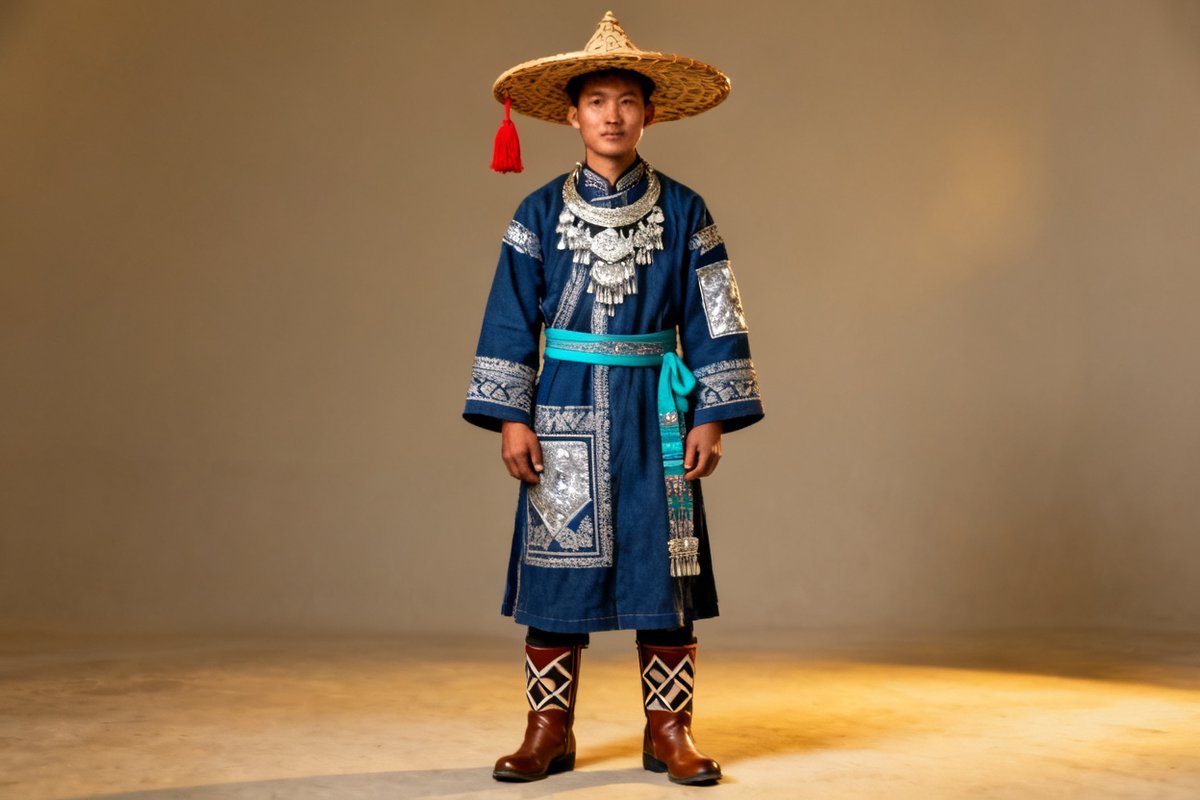
Men wear a bear-hide or deer-hide jacket open at the front, with a handwoven plant-fiber cloth draped or wrapped around the lower body, secured with a distinctive cane belt decorated with cowrie shells and brass ornaments. The hide jacket is typically worn with the fur facing inward for warmth, with the outer surface scraped smooth and occasionally decorated with incised geometric patterns. Women wear a long robe or tunic of woven plant fiber over an inner garment of softer bark cloth, decorated with cowrie shells and beads at the collar and hem. The woven plant fiber is produced on a simple backstrap loom using nettle or hemp threads that are hand-spun into a coarse but durable yarn. Both genders go barefoot or wear simple sandals woven from cane strips, suitable for navigating the steep, muddy forest trails of their homeland.
Headwear and Adornments
Men traditionally wear a round helmet-like hat made from bear skin or woven cane, sometimes decorated with feathers, animal teeth, and boar tusks. The bear-skin helmet is not merely decorative: it provided actual protection during hunting encounters and in the occasional inter-clan conflicts that characterized pre-modern Lhoba life. The most prestigious helmets incorporate the entire scalp of a bear, including the ears, which are believed to transfer the animal's strength and hearing to the wearer. Women wear their hair long, held back by beaded headbands or cloth ties, with the beads made from seeds, animal teeth, and trade glass. Both genders traditionally wore large metal or shell earrings that gradually stretched the earlobes, a practice now maintained primarily by elders. Shell necklaces in multiple graduated strands form the primary female adornment.
Embroidery and Decorative Arts
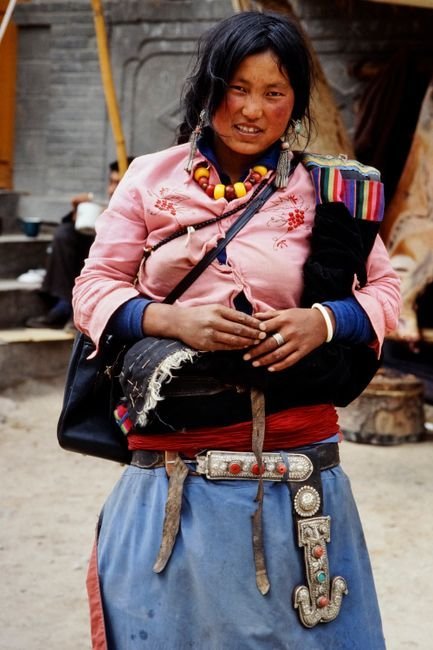
Lhoba decoration relies on shell- and beadwork rather than thread embroidery -- a distinction that reflects both material availability and cultural emphasis. Cowrie shells, seeds, animal teeth, brass discs, and colored beads are sewn onto fabric edges, belts, and necklaces in geometric patterns. The cowrie shell holds particular significance: imported from distant coasts, each shell represented a trade link stretching thousands of kilometers across the Himalayas to the Bay of Bengal, and the quantity of shells on a garment directly indicated the wearer's trade connections and wealth. Cane and rattan weaving represents another decorative skill, with intricate geometric patterns woven into belts, armbands, and leg bands using split cane dyed black and red. Body scarification was traditionally practiced as a parallel form of permanent decoration, with patterns cut into the skin and rubbed with ash to create raised keloid designs.
The Lhoba cane waistbelt, adorned with animal teeth, cowrie shells, and brass discs, is simultaneously garment, amulet, and status marker - each tooth worn represents a successful hunt, each shell a trade journey completed.
Color Symbolism
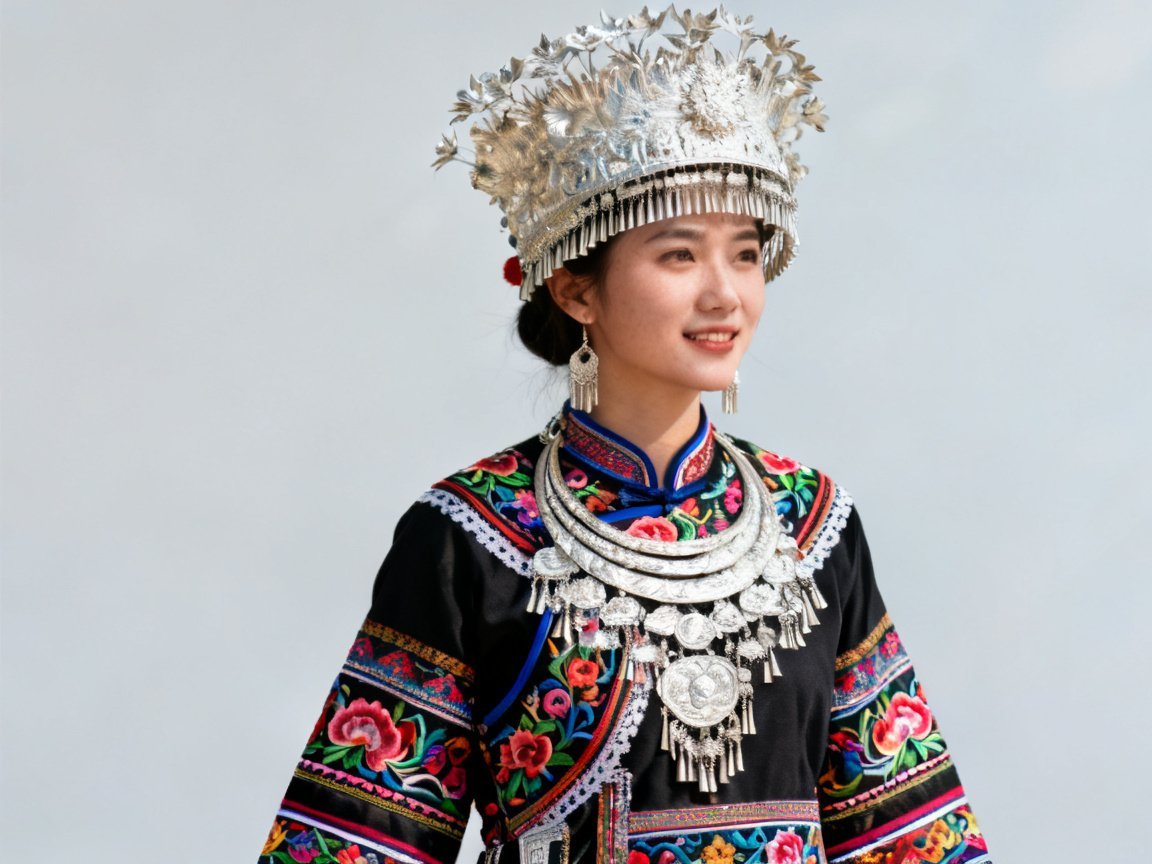
Natural hide browns, blacks, and tans dominate, with no synthetic dyes used in traditional production. Handwoven fabrics appear in dark brown, black, and natural fiber tones. Shells provide pure white, beads add accents in red, blue, white, and yellow (the latter three colors obtained through trade). Brass ornaments in metallic gold create the only reflective surface in Lhoba dress. The overall palette is one of forest camouflage -- entirely derived from the natural environment -- which makes strategic sense for a hunting culture. The lack of bright color is compensated by the extraordinary textural variety: smooth hide against rough bark cloth, glossy shells against matte plant fiber, polished brass against unworked bone. This is clothing as an expression of deep ecological integration.
Festival Attire
During the Lhoba New Year and the Harvest Festival (Reh Festival), the best hide garments and most elaborately decorated cane belts and beaded ornaments are worn. The Reh Festival involves communal feasting on hunted game, with men wearing their most impressive hunting trophies on their belts and hats as visual evidence of prowess. The harvest celebration includes a ritual exchange of shell-decorated textiles between families as a form of alliance reinforcement. Weddings among the Lhoba are multi-stage affairs where the groom's family presents animal hides to the bride's family, and the bride appears in a newly made set of garments whose quality demonstrates her weaving skills. The cane belt given by a father to his son at the first successful hunt marks the transition to adulthood, with each subsequent achievement added as an ornament.
Modern Influence and Preservation
Lhoba textile and hide-working techniques are preserved through cultural heritage programs in the Tibet Autonomous Region, though the tiny population size makes this one of the most vulnerable clothing traditions in China. The construction of roads into previously inaccessible Lhoba areas since the 1990s has brought manufactured clothing that is warmer and more durable than traditional plant fibers and hides, rapidly replacing everyday traditional dress. However, the cultural tourism initiatives in Nyingchi Prefecture have created a niche market for Lhoba crafts, with cane belts and shell-decorated textiles sold as distinctive souvenirs. Museum collections in Lhasa and Beijing preserve pre-modern Lhoba garments, and ethnographic documentation projects have recorded the plant fiber processing and hide tanning techniques from the last generation of master practitioners. The challenge for Lhoba clothing preservation is uniquely acute: with fewer than 4,000 people, the loss of even a few elder artisans can mean the permanent disappearance of irreplaceable knowledge.
Did You Know?
The Lhoba are Chinas least populous officially recognized ethnic group (around 3,600), and their remote location in southeastern Tibet meant their traditional clothing cultures remained largely unchanged until the late 20th century.
Hide Preparation and Bead Adornment of the Lhoba
The Lhoba people of the Tibet Autonomous Region have developed clothing traditions suited to the rugged terrain and cool climate of the Himalayas. Animal hides, particularly from wild goats and deer, are the traditional material for Lhoba outer garments, processed through smoking, scraping, and softening techniques that produce durable leather. The hide garments are typically worn with the fur side against the body in winter for maximum warmth, and with the fur side out during transitional seasons. Men's hide coats are cut full across the shoulders to allow free arm movement for hunting and climbing.
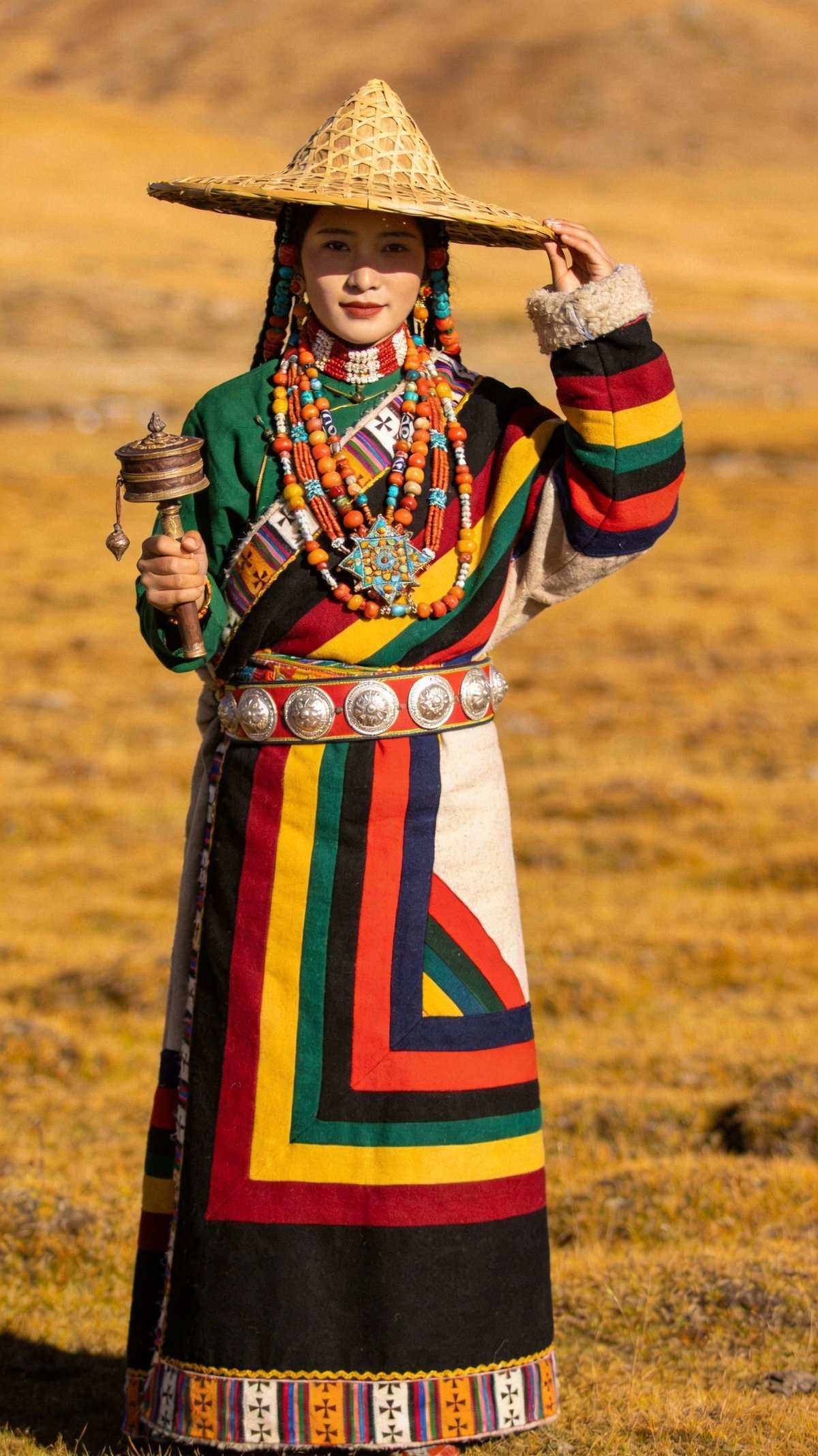
Bead adornment is a central element of Lhoba personal decoration, with strands of small glass and stone beads worn around the neck, wrists, and ankles. The bead colors and arrangement patterns carry specific meanings, with certain combinations indicating clan membership or personal achievements. Red beads are associated with courage, white with purity, and black with protection. Multiple bead strands are layered to create substantial necklaces that cover the upper chest.
Hide Preparation and Bead Adornment of the Lhoba
The Lhoba people of the Tibet Autonomous Region have developed clothing traditions suited to the rugged terrain and cool climate of the Himalayas. Animal hides, particularly from wild goats and deer, are the traditional material for Lhoba outer garments, processed through smoking, scraping, and softening techniques that produce durable leather. The hide garments are typically worn with the fur side against the body in winter for maximum warmth, and with the fur side out during transitional seasons. Men's hide coats are cut full across the shoulders to allow free arm movement for hunting and climbing.
Bead adornment is a central element of Lhoba personal decoration, with strands of small glass and stone beads worn around the neck, wrists, and ankles. The bead colors and arrangement patterns carry specific meanings, with certain combinations indicating clan membership or personal achievements. Red beads are associated with courage, white with purity, and black with protection. Multiple bead strands are layered to create substantial necklaces that cover the upper chest.