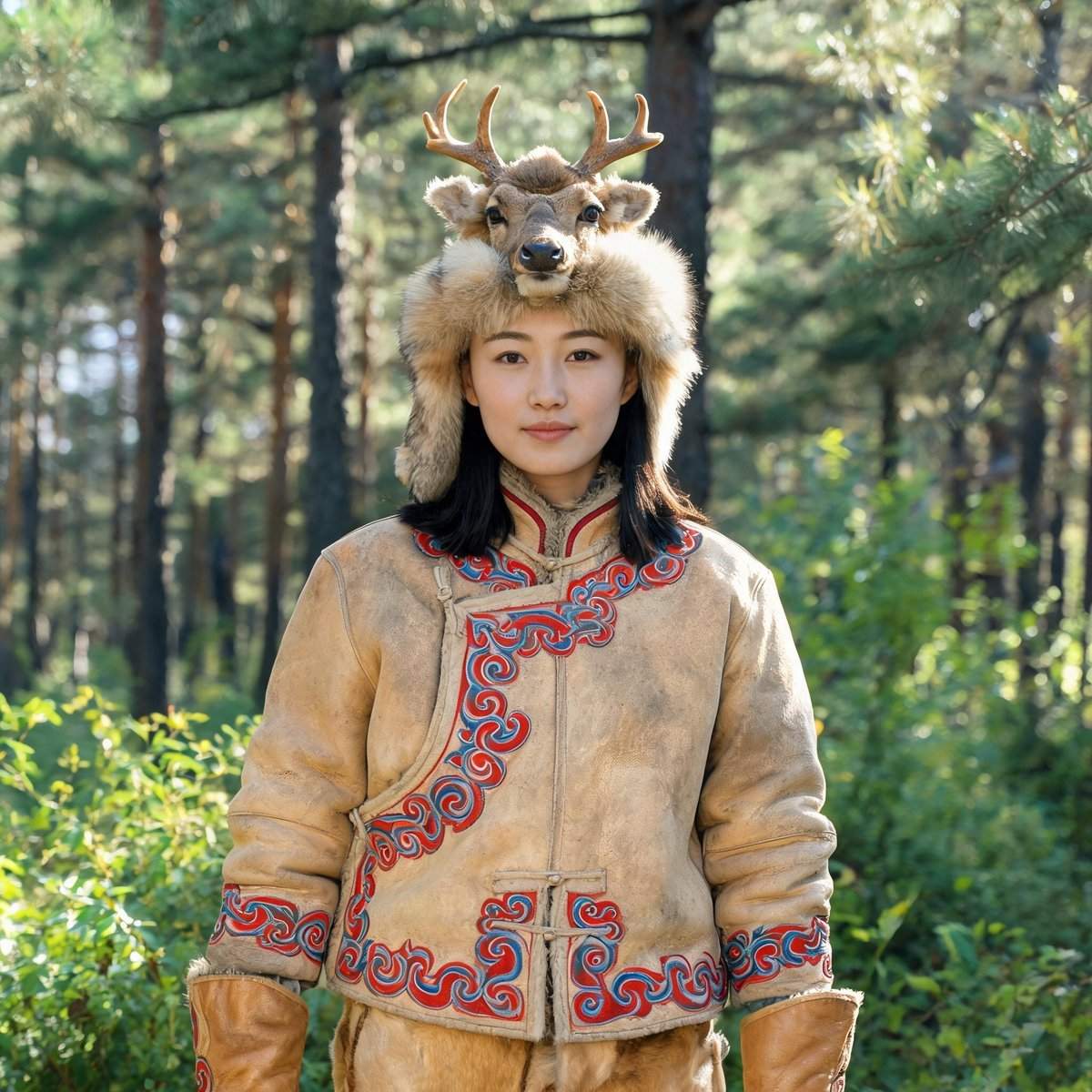
Oroqen traditional clothing is crafted from animal hides, especially deer and roe deer, decorated with intricate geometric beadwork and fur edging. Traditional life as reindeer hunters shaped their distinctive peaked hoods and practical fur garments. The Oroqen are one of China's smallest ethnic groups, numbering only about 8,600 people, living primarily in the Hulunbuir region of Inner Mongolia and along the Heilongjiang River in northeast China. Their name means "people who use reindeer" or "people on the mountain," and until the mid-twentieth century they maintained a fully forest-based hunting lifestyle in the Greater Khingan Mountains.
Key Features of Oroqen Attire
- Deer-hide robes with fur trim and intricate beadwork
- Distinctive peaked fur hoods with ear flaps
- Geometric bead embroidery in diamond and triangle patterns
- Fur-lined gloves and boots for extreme cold
- Colorful applique bands on robe hems and cuffs
Traditional Garments
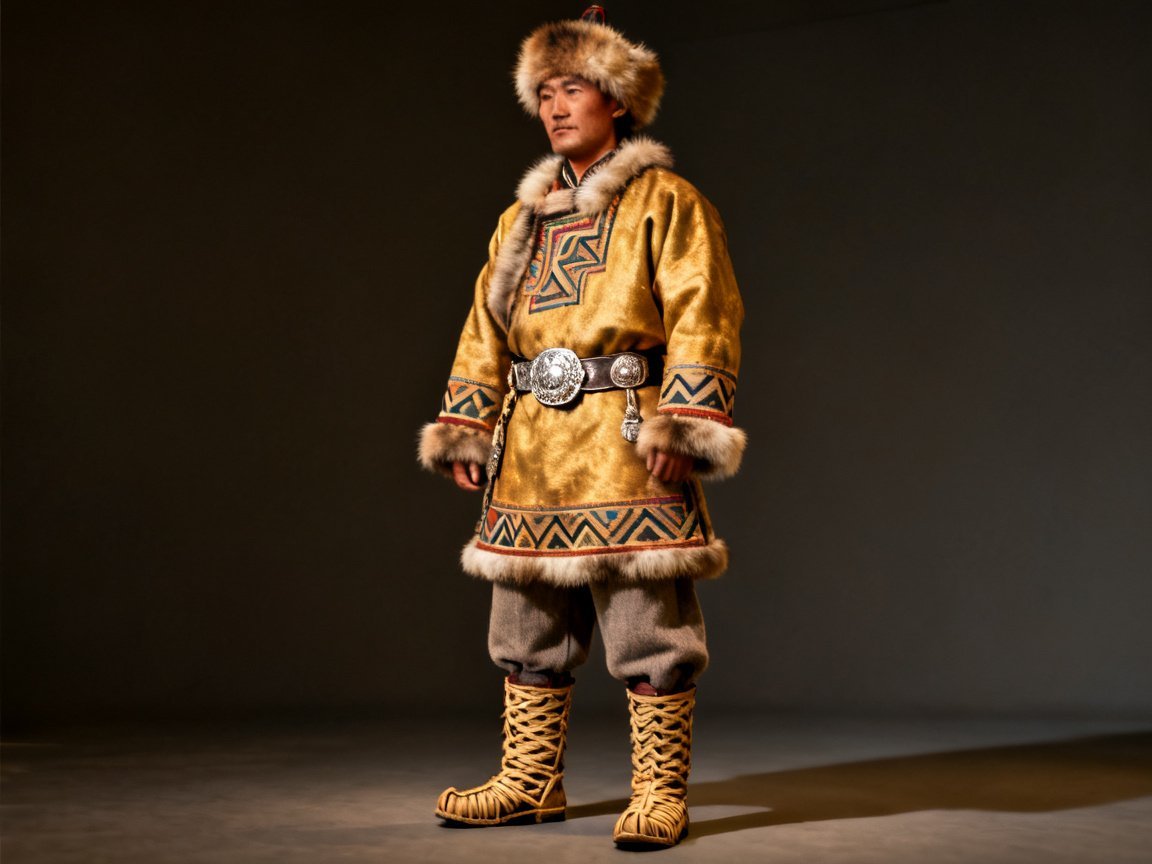
Both men and women wear long deer-hide robes with the fur worn inward for warmth and the smooth hide outward, decorated with beadwork bands at the hem, cuffs, and front opening. The robe, called a su'en, extends to mid-calf and is cut with generous width to allow layers of additional fur garments underneath during the bitterest winter months when temperatures can drop below minus forty degrees. Robes are fastened with a leather belt, often decorated with bone toggles or metal buckles obtained through trade.
Separate leggings and fur-lined boots complete the outfit. The boots, made from deer leg hide (which is naturally tubular), are filled with dried grass for insulation and extend to the knee. The soles are made from tough boar hide or layered deer hide, sewn with sinew thread that swells when wet to seal the stitch holes. A complete winter hunting outfit — robe, leggings, boots, gloves, and hood — can weigh over eight kilograms but provides life-sustaining protection in the extreme cold of the Khingan winter. Summer robes are made from lighter de-haired hide or, more recently, from cotton fabric, though the cut remains the same as the winter version.
Headwear and Adornments
The iconic Oroqen hat is a peaked cap made from deer or roe deer fur, sometimes with the animal's ears still attached as decoration. This practice is not merely ornamental — the Oroqen believe that wearing the animal's ears honors the deer's spirit, ensuring the hunter's continued success. The peaked shape is both practical and symbolic: it sheds snow effectively and creates an insulating air pocket above the head, while the upward-pointing form echoes the mountain peaks that dominate the Oroqen landscape.
Winter hats have fur ear flaps that can be tied up or down depending on temperature, and the interior is lined with the softest fur from young roe deer. Women wear beaded headbands under their fur hoods, visible only when the hood is removed indoors. These headbands feature dense geometric beadwork — diamonds, triangles, and zigzag patterns worked in seed beads on a hide strip that wraps around the forehead. The headband is both decoration and a marker of a woman's beading skill, with young women spending their first years of marriage creating increasingly elaborate headbands to demonstrate their mastery of the craft.
Embroidery and Decorative Arts
Oroqen beadwork is exquisite, featuring geometric patterns including diamonds, triangles, zigzags, and stepped pyramids in colored seed beads on hide. The beads, traded from Chinese and Russian sources, are sewn onto the hide surface using sinew thread, with each bead individually secured. The geometric patterns represent elements of the natural world: layered triangles for the Khingan Mountains, zigzag lines for rivers and streams, diamond grids for the forest canopy seen from above, and concentric circles for the sun and moon.
In addition to beadwork, the Oroqen practice applique using dyed hide or imported cloth cut into decorative shapes and stitched onto the robe surface. Birch bark, an abundant resource in the Khingan forests, is sometimes cut into thin sheets and used as a template for cutting identical applique shapes. The combination of beadwork and applique creates a rich textured surface on what would otherwise be a plain hide garment. Oroqen women begin learning beadwork as children, first practicing on small items like pouches and belt decorations before progressing to the robe borders that require precise counting of bead placements across lengths of over a meter.
The Oroqen practice of leaving the ears on fur caps is not simply decoration - it embodies the hunters belief that wearing the animals likeness honors its spirit and ensures successful future hunts.
Color Symbolism
Natural hide tones of brown and tan dominate Oroqen clothing, colors that directly reference the deer and roe deer that sustain traditional Oroqen life. These natural colors also provide effective camouflage in the forest environment. Beadwork introduces bright blue (the sky over the Khingan range), red (the life force of hunted animals), yellow (sunlight filtering through the forest canopy), green (the summer foliage that briefly transforms the landscape), and white (winter snow that covers the mountains for half the year). Fur trim appears in natural white, brown, and gray, with the white winter fur of the stoat or ermine being the most prized for decorative borders. The contrast between the subdued natural hide tones and the vivid beadwork creates a visual language that reflects the Oroqen experience of the forest — a predominantly brown and green world punctuated by moments of intense color in flowers, berries, and autumn leaves.
Festival Attire
During the Oroqen Spring Festival and the Gathering Festival, communities display their most elaborately beaded hide robes and fur hats. The Spring Festival, celebrated at the lunar New Year, involves several days of feasting, dancing, and ritual offerings to the forest spirits. For this occasion, robes that have been in preparation for months are worn for the first time. The Gathering Festival, held in summer when reindeer herds are brought together and families reunite after the dispersed winter hunting season, is marked by competitive games of archery, wrestling, and horse racing — all performed in fine traditional clothing.
Wedding attire is the most elaborate of all, with the bride and groom both wearing entirely new outfits prepared by their respective families. The bride's robe features the densest beadwork, covering not just the borders but also the shoulder area and the front placket. Her headband is newly made for the occasion and incorporates the widest range of colors and most complex patterns of which she is capable. After the wedding, this robe becomes her most treasured possession and is brought out annually for the Spring Festival. When a woman dies, she is traditionally buried in her wedding robe, returning to the ancestors in the garment that marked the most significant transition of her life.
Modern Influence and Preservation
Oroqen hide-working and beadwork techniques are preserved as intangible cultural heritage in the Oroqen Autonomous Banner in Inner Mongolia. However, the Oroqen population's small size and the rapid shift away from hunting-based lifeways in the late twentieth century mean that very few people now possess the complete skill set required to make traditional hide clothing from start to finish. Cultural heritage programs focus on documenting elder knowledge and training a core group of younger Oroqen in beadwork and basic hide preparation. The Oroqen peaked fur cap has become a recognized symbol of the ethnic group, appearing in cultural exhibitions and museum collections throughout China. While traditional hide clothing is no longer produced for daily use, it remains essential for cultural festivals and identity affirmation, and Oroqen beadwork traditions continue to influence contemporary indigenous art in northeast China.
Did You Know?
The name Oroqen means people who use reindeer or people on the mountain, and they were traditionally one of the only ethnic groups in China whose entire material culture was based on animal products - hide, fur, bone, and antler.
Hide Garments and Bone Ornaments of the Orogen
The Orogen people of Inner Mongolia and Heilongjiang have historically relied on hunting as their primary livelihood, and their traditional clothing reflects this relationship with the forest and its animals. Deer and moose hides are processed into soft, durable leather using traditional methods that involve smoking the hide over a low fire to preserve and waterproof it. The smoked hide has a distinctive golden-brown color and a supple texture that makes it comfortable for active wear. Orogen women are skilled hide workers who can process a complete deer hide into garment-grade leather in about three days of continuous work.
Decorative elements on Orogen garments include beadwork, fur trim, and bone or antler ornaments. Geometric patterns in beadwork appear on collar edges, cuffs, and along the front opening of jackets, using primarily blue and white beads against the brown leather ground. Fur trim from wolverine, fox, or sable edges the hoods and cuffs of winter garments, providing insulation and decorative contrast. Orogen hunters traditionally wore hats made from the complete head skin of an animal, with the ears and antlers still attached.