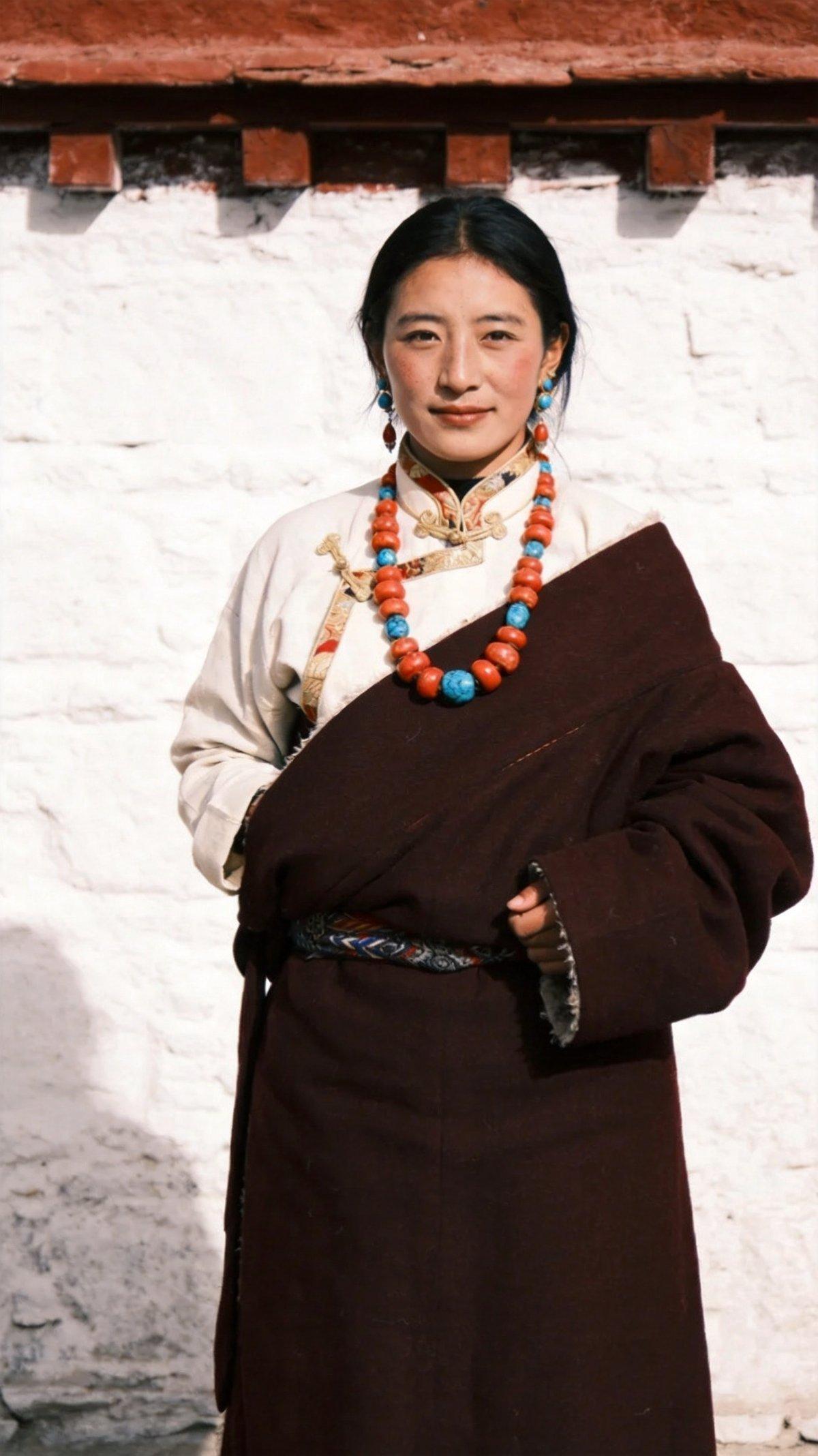
Tibetan traditional clothing is dominated by the distinctive chuba (long woolen robe) and richly decorated with gold brocade, coral, turquoise, and amber. The attire reflects the harsh high-altitude climate and deep Buddhist influence. With a population exceeding 6.2 million, Tibetans are one of China's largest ethnic minorities, inhabiting the vast Qinghai-Tibet Plateau across the Tibet Autonomous Region, Qinghai, Sichuan, Gansu, and Yunnan provinces — a territory spanning approximately 2.5 million square kilometers at an average elevation above 4,000 meters.
Tibetan civilization developed over more than 1,500 years at the roof of the world, with a written language, sophisticated philosophical traditions rooted in Vajrayana Buddhism, and a material culture exquisitely adapted to life on the high plateau. The Silk Road and the Tea Horse Road brought Tibetan culture into contact with India, Persia, China, and Mongolia, enriching Tibetan textile arts with gold brocade techniques from China, gemstone traditions from India, and wool-working methods refined over millennia on the plateau. Tibetan clothing is not merely functional — it is a wearable expression of Buddhist cosmology, social status, and regional identity.
Tibetan society traditionally distinguished between farming communities in the fertile southern valleys and nomadic pastoralists (drokpa) who follow seasonal grazing patterns across the northern plateau. These two ways of life produced distinct clothing traditions: agricultural Tibetans developed heavier, more elaborate garments with gold brocade, while nomads favored practical, lighter-weight wool robes and larger quantities of jewelry that functioned as portable wealth. Regional variations across U-Tsang (central Tibet), Kham (eastern Tibet), and Amdo (northeastern Tibet) add further diversity to Tibetan clothing traditions.
Key Features of Tibetan Attire
- Long woolen robe (chuba) worn with a cloth belt, creating a large pocket at the chest
- Gold brocade (xiezhi) trim on collars, cuffs, and hems in intricate patterns
- Heavy coral, turquoise, and amber necklace sets (gao/amulet box)
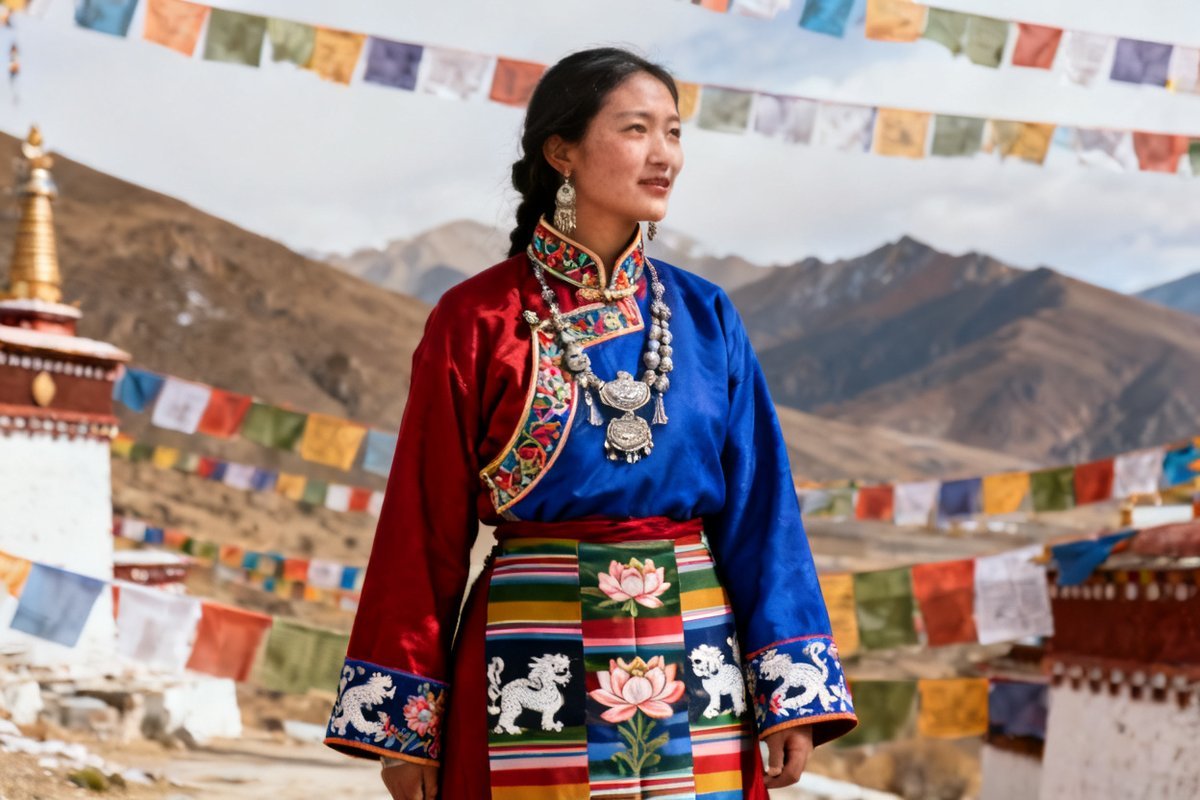
- Distinctive women's striped aprons (bangdian) in multicolor woven wool
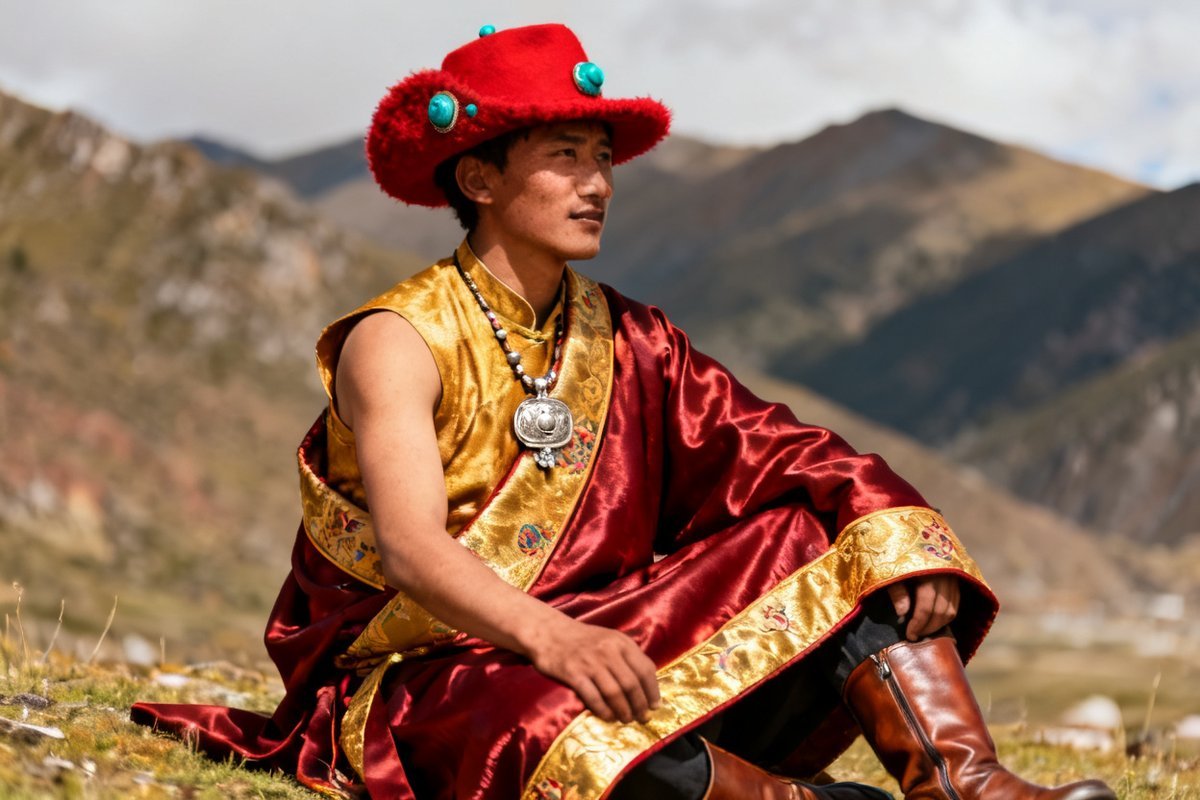
- Tibetan-wide felt hats with upturned brims for summer and fur-lined for winter
Traditional Garments
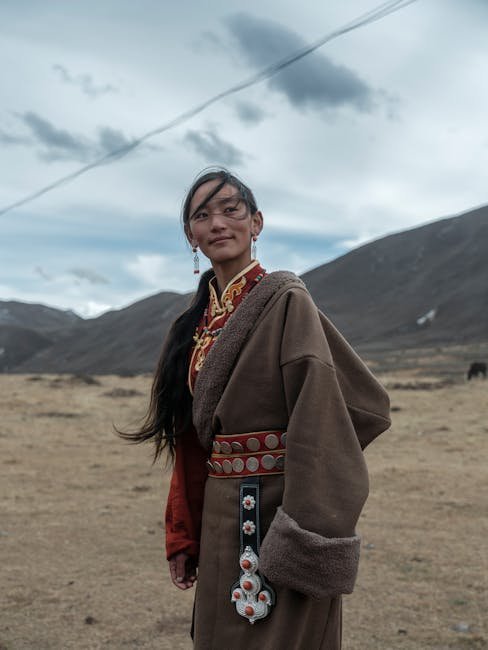
The chuba is a long woolen robe reaching below the knees, with long wide sleeves and a front closure wrapped right-over-left. A long cloth belt is tied around the waist, and the upper portion of the chuba is pulled up to form a large pocket. Women wear a sleeveless chuba over a long-sleeved blouse, with the striped bangdian apron tied at the waist. In warmer weather, one arm is traditionally bared from the chuba. This distinctive one-sleeve style is a practical adaptation to the plateau's extreme diurnal temperature swings — the arm can be covered or exposed instantly without removing the garment as conditions shift from freezing dawn to intense midday sun.
The chuba is traditionally made from pulu, a hand-woven woolen fabric that is felted and brushed to create a dense, windproof textile. Pulu production is a labor-intensive process involving spinning yak or sheep wool, weaving on a backstrap loom, and repeated fulling and brushing to create the characteristic soft yet durable surface. Finer grades of wool from Tibetan sheep produce lighter chubas for summer use, while heavy yak-wool versions provide insulation against winter temperatures that can drop below minus 30 degrees Celsius. Gold brocade (xiezhi) trim, woven with silk and metallic threads, is applied to the collar, front opening, cuffs, and hem to create the formal chuba worn by both men and women for ceremonies and festivals.
Headwear and Adornments
Regional hat styles vary greatly. Central Tibetans favor fox-fur hats in winter and broad-brimmed felt hats in summer. Women in Lhasa wear the colorful striped aprons but no headdress daily, while nomad women wear large turquoise headpieces. Ceremonial headdresses can include coral-and-turquoise-studded headframes across the crown. Tibetan jewelry is among the most substantial of any ethnic group — a single woman's festival ensemble can include several kilograms of silver, coral, turquoise, amber, and dzi beads, representing the family's accumulated wealth worn as adornment.
The gao, a small metal amulet box worn on a cord around the neck or slung across the body, holds religious significance. It typically contains a small image of a Buddhist deity, sacred texts, or relics blessed by a lama, and serves as both spiritual protection and decorative ornament. Coral, prized for its deep red color associated with life force and protection, is the most valued gemstone in Tibetan jewelry tradition. Turquoise, believed to ensure good health and safe travel, is similarly prized. Ancient dzi beads — etched agate beads of uncertain origin — are considered the most precious of all Tibetan ornaments, with individual beads valued at thousands of dollars.
Embroidery and Decorative Arts
Gold brocade (xiezhi) is the most luxurious Tibetan decorative technique, using gold and silver thread in satin stitch to create dragons, clouds, floral scrolls, and Buddhist auspicious symbols on the edges of chubas and formal gowns. The craft of gold brocade weaving reached Tibet from China during the Yuan Dynasty and was elevated to new heights by Tibetan weavers who incorporated distinctive Buddhist iconography. The Eight Auspicious Symbols — the endless knot, lotus, parasol, conch shell, golden fish, victory banner, treasure vase, and Dharma wheel — appear frequently in brocade patterns on ceremonial chubas.
Beyond brocade, Tibetan textile arts include intricate applique work, where colored silk fabrics are cut into elaborate patterns and stitched onto wool backgrounds to create religious hangings (thangka), tent decorations, and garment panels. Felt-making, leather tooling for boots and belts, and silver filigree for jewelry settings are other important decorative traditions. Tibetan women's striped aprons (bangdian), handwoven in horizontal bands of red, blue, green, yellow, and white, combine aesthetic beauty with practical function, protecting the front of the chuba during daily work while serving as a visible marker of marital status.
The Tibetan chuba's design, with one arm always bared from the sleeve, is a pragmatic response to the plateau's extreme diurnal temperature swings - the arm can be covered or exposed instantly without removing the garment.
Color Symbolism
Maroon, dark red, and burgundy dominate Tibetan clothing, colors associated with Buddhist monastic tradition and the earth of the plateau. Gold brocade in yellow, gold, and orange represents spiritual illumination and the radiant wisdom of the Buddha. Coral red symbolizes life force and protection, turquoise blue signifies the sky and healing waters, amber yellow evokes the sun and prosperity, and pearl white represents purity. Women's striped aprons incorporate red for life, blue for sky, green for earth and vegetation, yellow for harvest, and white for purity and snow — the entire Tibetan world compressed into a single garment.
Festival Attire
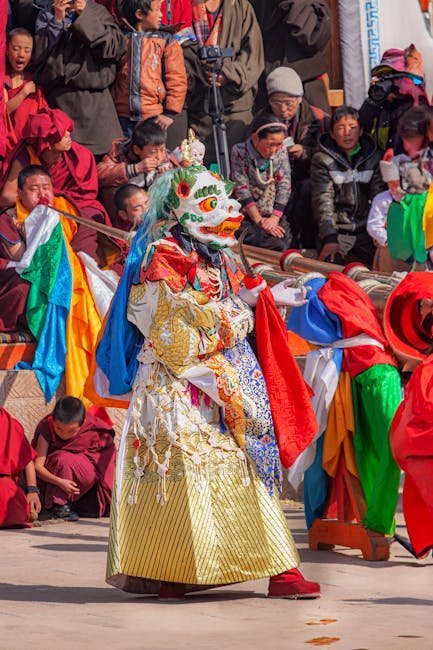
During Losar (Tibetan New Year) and the Shoton Festival, the most magnificent gold brocade chubas are worn, with women wearing full coral-turquoise-amber headdresses and gao amulets, and men in new chubas with gold-trimmed hats. Losar, celebrated over 15 days beginning on the first day of the Tibetan lunar calendar, is the most important festival of the year. Families clean their homes, prepare special foods, and dress in their finest new clothing to welcome the new year with rituals designed to attract good fortune and dispel negativity.
The Shoton Festival, traditionally originating from the monastic custom of offering yogurt to monks completing their summer retreat, has evolved into a major cultural celebration featuring Tibetan opera performances, giant thangka displays, and community picnics. During Shoton, Tibetan families gather in parks and on hillsides around Lhasa, dressed in their most beautiful clothing, to enjoy performances and socialize. Horse racing festivals in nomadic regions showcase the distinctive clothing of the drokpa, with riders competing in heavy chubas and elaborate hats while racing across the high-altitude grasslands.
Modern Influence and Preservation
The Tibetan chuba remains daily wear for many Tibetans, especially in rural areas. Gold brocade textiles are widely produced for both traditional use and the tourist market. Tibetan jewelry has become popular in global bohemian fashion. The preservation of traditional Tibetan clothing faces both opportunities and challenges in the modern era — increased tourism has created new markets for Tibetan textiles, while younger generations increasingly adopt modern clothing for everyday wear.
Cultural preservation programs support master weavers and gold brocade artisans through apprenticeships and cooperative marketing. Tibetan fashion designers are reinterpreting traditional elements for contemporary audiences, creating garments that blend the chuba silhouette with modern fabrics and cuts. International exhibitions of Tibetan art and culture have introduced Tibetan textile traditions to global audiences, fostering appreciation for the sophisticated material culture that developed over centuries on the highest plateau on Earth.
Did You Know?
Tibetan women traditionally wear a multicolored striped apron (bangdian) only after marriage - it serves as a public declaration of marital status, and the number and color of stripes vary by region.
Did You Know?
Tibetan women traditionally wear a multicolored striped apron (bangdian) only after marriage - it serves as a public declaration of marital status, and the number and color of stripes vary by region.