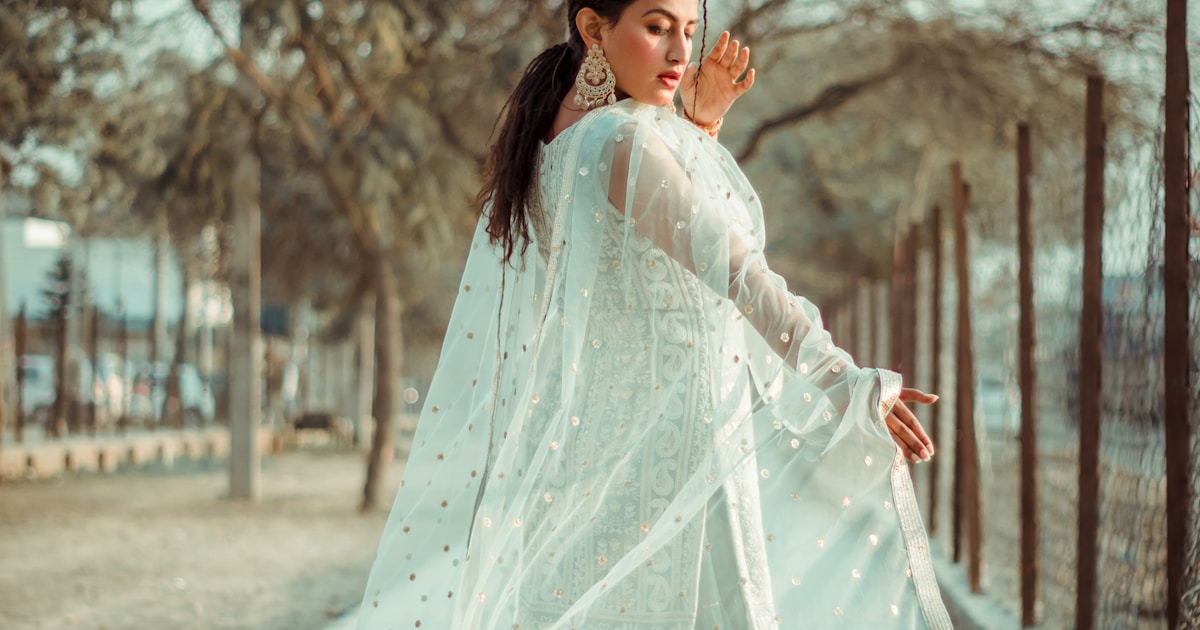
The Bai people, numbering approximately 1.9 million, are one of the larger ethnic minority groups of Yunnan Province, concentrated in the Dali Bai Autonomous Prefecture around the shores of Erhai Lake. The very name Bai means white, and this color choice permeates every aspect of their traditional dress, architecture, and cultural identity. Bai clothing is renowned for its pristine white fabric as the primary color, symbolizing moral purity and virtue in a cultural framework shaped by centuries of interaction with Han, Tibetan, and Southeast Asian influences along the ancient Tea Horse Road. The attire is richly accessorized with intricate embroidery, handcrafted silver ornaments, and the distinctive phoenix-shaped headdress that has become an iconic symbol of Dali tourism and Bai cultural heritage worldwide.
Key Features of Bai Attire
- White as the dominant base color symbolizing purity
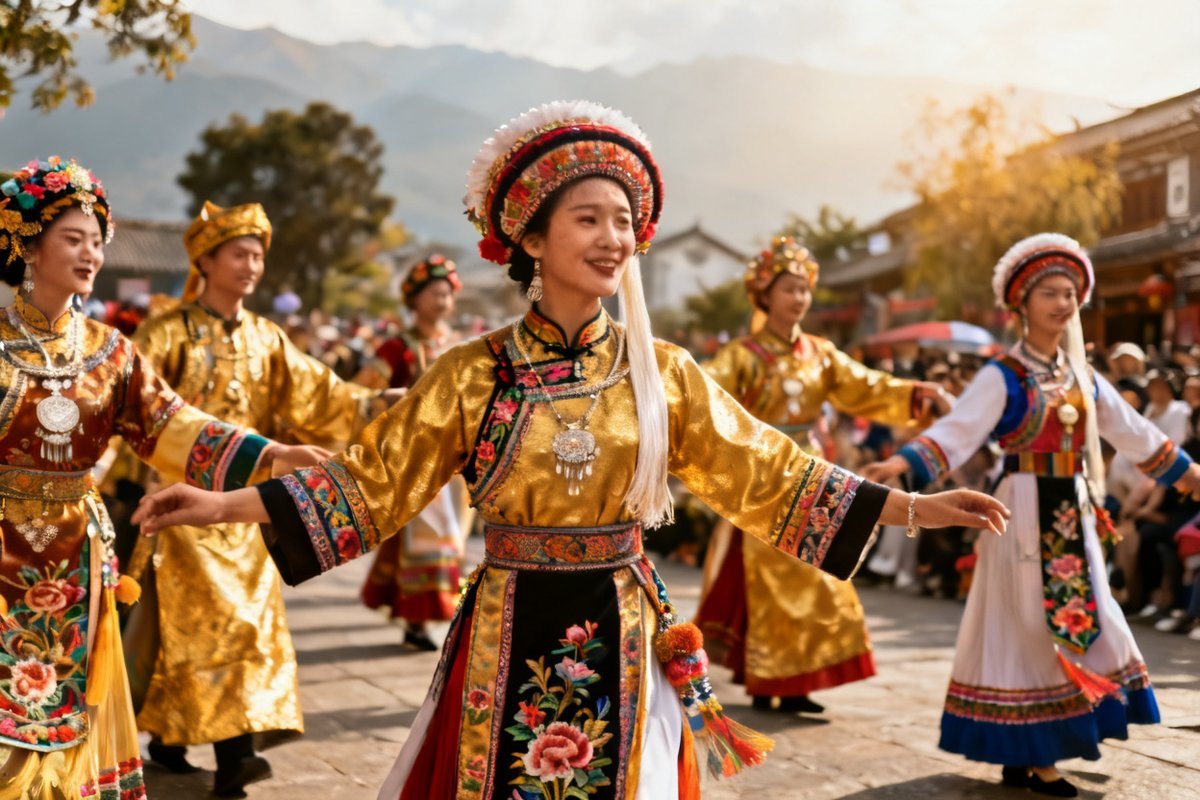
- Phoenix-shaped headdress (fengguan) for women with floral embroidery
- Silver butterfly-shaped clasps on capes and collars
- Embroidered apron with colorful floral patterns
- Seven-streamer waistband (qiyaodai) with intricate tassels
Traditional Garments
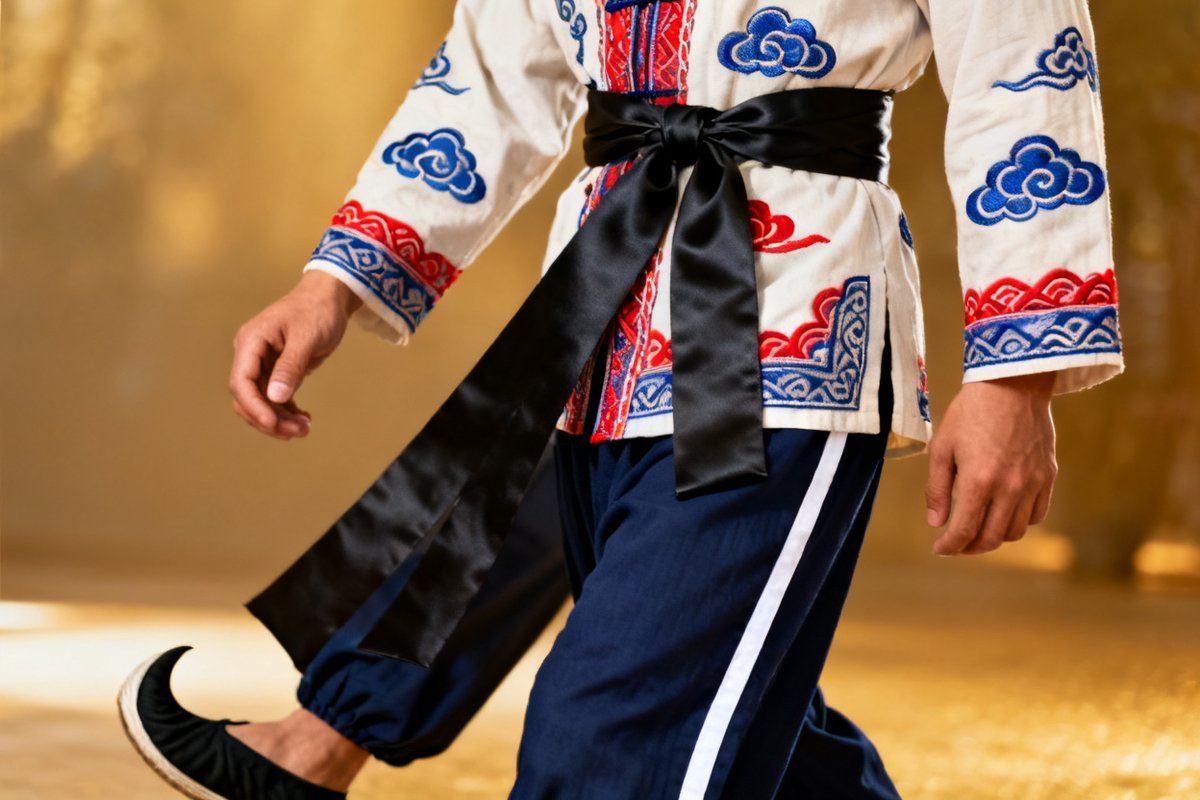
Women wear a white long-sleeved tunic as the innermost layer, covered by a pink, blue, or purple sleeveless jacket that buttons at the front with butterfly-shaped silver clasps. This layered construction creates a visually striking contrast between the pure white base and the vividly colored outer garment. A heavily embroidered apron is tied at the waist with the seven-streamer waistband, each streamer measuring approximately one meter in length and terminating in elaborate tassels worked in multiple colors. The apron fabric is typically dark blue or black to provide a backdrop for dense floral embroidery featuring peonies, lotuses, and plum blossoms executed in satin stitch. Men wear white shirts with black or blue front-fastening jackets, loose trousers tied with a simple cloth belt, and in winter add a padded vest or outer robe. Regional variations exist within the Bai community: women in the Dali plain area favor the classic white-and-embroidered combination, while those in mountain communities such as the Nujiang region wear slightly heavier garments with more black fabric and denser silver ornamentation suited to the cooler climate.
Headwear and Adornments
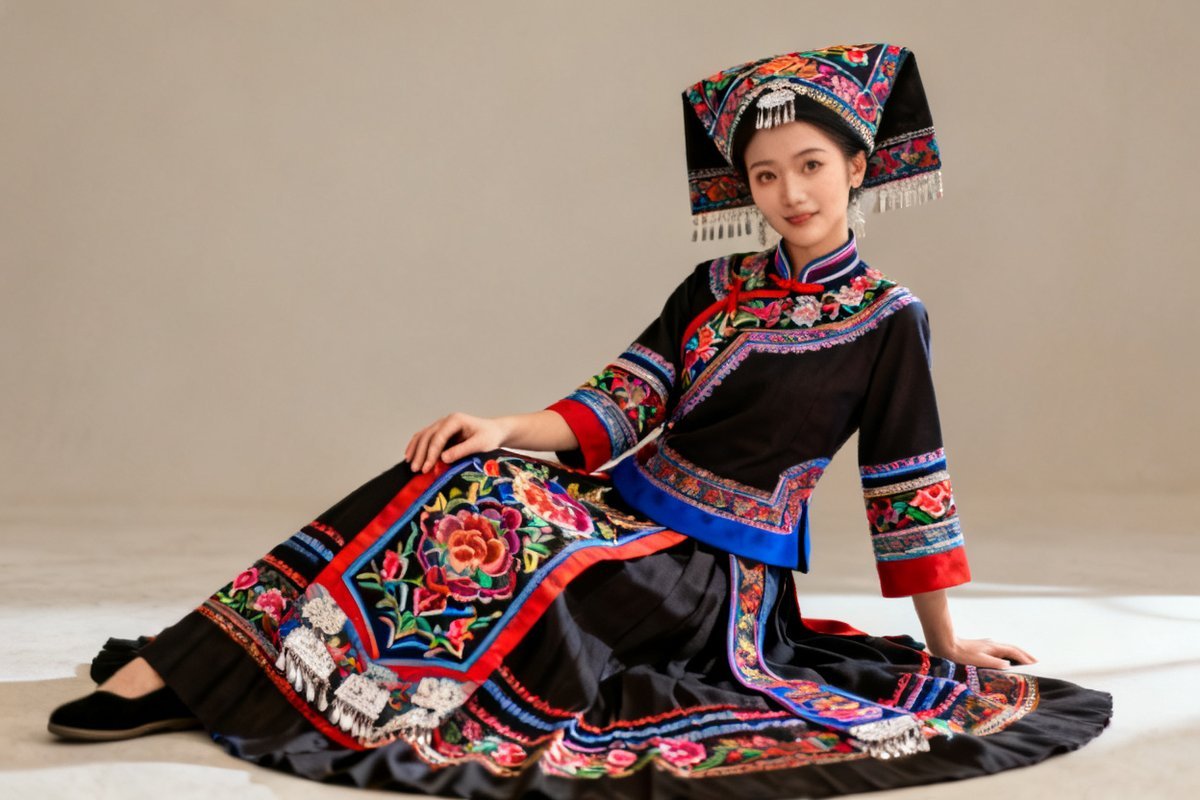
Unmarried Bai women wear the iconic fengguan, a distinctive phoenix-shaped headpiece featuring a crown-like arrangement with upward-curving ends that represent the bird's crest. This headdress is decorated with dense floral embroidery in bright silk thread, small silver ornaments, and sometimes freshwater pearls from Erhai Lake. The fengguan is secured with silver hairpins and may incorporate a red tassel at the back. Married women adopt simpler embroidered headscarves that wrap the hair rather than frame it, marking the transition from maiden to married status through headwear alone, a visual code immediately legible to all community members. Men wear white or blue cloth head wraps, the shade and wrapping style indicating regional origin within the Bai territory. Bai silver jewelry is among the most refined in Yunnan, with silversmiths in Heqing County supplying ornaments throughout the region. Typical pieces include hinged silver bracelets with incised floral patterns, heavy neck chains with lock-shaped pendants, and the distinctive silver butterflies that serve as jacket clasps.
Embroidery and Decorative Arts
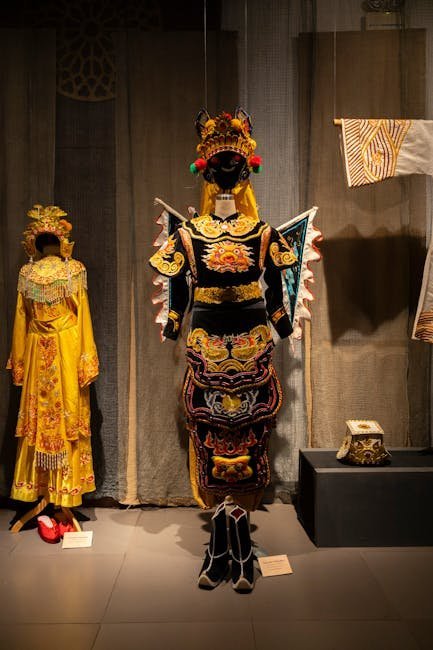
Bai embroidery is among the most technically refined textile arts in Yunnan, characterized by dense coverage, precise stitch placement, and sophisticated color blending. Butterflies appear as a dominant motif, symbolizing marital happiness and transformation, while camellia flowers represent the Dali landscape and cranes signify longevity. These designs are executed in satin stitch, split stitch, and couching techniques that build three-dimensional surfaces with subtle color transitions achieved through shading with threads of gradually changing hue. Embroidery appears most densely on aprons, where a single garment may contain thousands of individual stitches, on collar bands and cuff edges of both women's and men's garments, and on the edges and peaks of the phoenix headdress. Bai embroidery distinguishes itself from neighboring traditions through its preference for pastel color palettes with pink, lavender, sky blue, and pale green silk threads rather than the saturated primary colors favored by Miao or Yi embroiderers. This aesthetic preference aligns with the overall Bai cultural emphasis on refinement, restraint, and harmony, qualities also expressed in their classical architecture and garden design.
Scholars note that the Bai peoples reverence for white extends beyond clothing into their architecture, where whitewashed walls serve as canvases for exquisite ink paintings of landscapes and calligraphy.
Color Symbolism
White dominates as the primary color of Bai clothing, reflecting a cultural value system where moral purity, honesty, and transparency are the highest personal virtues. This reverence for white extends beyond clothing to Bai domestic architecture, where courtyard houses feature whitewashed exterior walls that reflect sunlight and serve as canvases for ink paintings. The vivid accents of red representing celebration, green for growth, blue for the sky and Erhai Lake, pink for femininity, and purple for nobility appear on embroidered elements set against white or black fabric grounds. Silver provides the metallic contrast, its cool tone complementing the overall restrained palette. The Bai color system achieves visual impact through the stark contrast between large fields of white and dense areas of multicolor embroidery, rather than through the all-over color saturation found in many other ethnic costume traditions. This principle of selective emphasis, where white space is as important as decorated space, shows the influence of classical Chinese aesthetic philosophy adapted through a distinctly Bai lens.
Festival Attire
During the Third Month Fair (Sanyuejie), held annually at the foot of Cangshan Mountain in Dali since the Tang Dynasty, Bai women wear their most elaborate festival ensembles. This includes the finest phoenix headdresses with freshly polished silver ornaments, multi-layered embroidered aprons worn one over another to display the full range of a family's textile wealth, and complete silver jewelry sets featuring multiple necklaces of graduated lengths, ornate earrings, and stacked bracelets that produce rhythmic sounds during festival dances. The Raosanling Festival, a spring pilgrimage and communal celebration, similarly calls for full ceremonial dress with women walking in procession while wearing their most impressive garments. These festivals serve as crucial venues for the public display and transmission of clothing traditions, with older women teaching younger relatives the correct arrangement of each garment layer and ornament. Festival dressing follows a prescribed order: inner tunic first, then outer jacket with silver butterfly clasps, apron tied in a specific knot, streamers arranged to fall symmetrically, headdress secured with hairpins, and finally jewelry applied from neck down to wrists. This sequence, repeated and refined across a lifetime, becomes embodied cultural knowledge transferred through practice rather than written instruction.
Modern Influence and Preservation
The distinctive white-and-embroidered aesthetic of Bai clothing has become one of the most recognizable cultural symbols of Dali tourism, with simplified versions worn by performers at cultural shows and available as souvenirs throughout the ancient city. Bai embroidery and silverwork are classified as intangible cultural heritage, with government-supported training programs in villages such as Zhoucheng, historically the epicenter of Bai tie-dye and textile production. Contemporary fashion designers have incorporated Bai elements, particularly the butterfly clasp and the seven-streamer waistband concept, into modern collections that reinterpret rather than replicate traditional forms. However, the Bai face challenges common across ethnic textile traditions: machine embroidery increasingly substitutes for handwork in commercial souvenir production, and young Bai women in urban areas rarely wear full traditional dress in daily life. Community-led preservation efforts focus on maintaining quality standards, documenting older pattern libraries before they disappear, and creating economic incentives for skilled artisans through cooperative marketing. The annual Dali International Photography Festival and other cultural events have also drawn attention to Bai material culture, providing platforms where traditional dress is presented as living heritage rather than as a museum artifact.
Did You Know?
The custom of wearing white among the Bai people is so deeply rooted that their name in Chinese literally means White People, and the color symbolizes their ideal of moral purity and honesty.
For further reading on Bai textile traditions and Chinese ethnic minority clothing, visit the Bai people on Wikipedia and learn about Chinese ethnic minority clothing traditions.
Fabric and Craftsmanship in Bai Attire
The Bai people of Yunnan Province are known for their meticulous approach to textile production, with white fabric serving as the foundation of their distinctive clothing aesthetic. Bai women traditionally spin and weave their own cotton cloth, prized for its even weave and soft handle. The fabric is often left in its natural white state or dyed in pale shades, reflecting the Bai cultural preference for clean, bright appearances. Embroidery work on Bai garments typically features dense satin stitching in vibrant blue, green, and red threads, creating floral and butterfly motifs that frame the edges of collars, sleeves, and aprons. Each stitch is placed with precision, and experienced embroiderers can work for weeks on a single festival garment.
Bai textile arts extend beyond clothing into household items that follow the same design principles. The woven patterns and embroidery techniques used in garments are also applied to bed linens, wall hangings, and baby carriers, creating a cohesive visual language across all textile domains. The famed Bai tie-dye technique, though more commonly associated with decorative fabrics, occasionally appears on garment trims and accessories, adding subtle pattern variation to otherwise solid-colored clothing pieces.