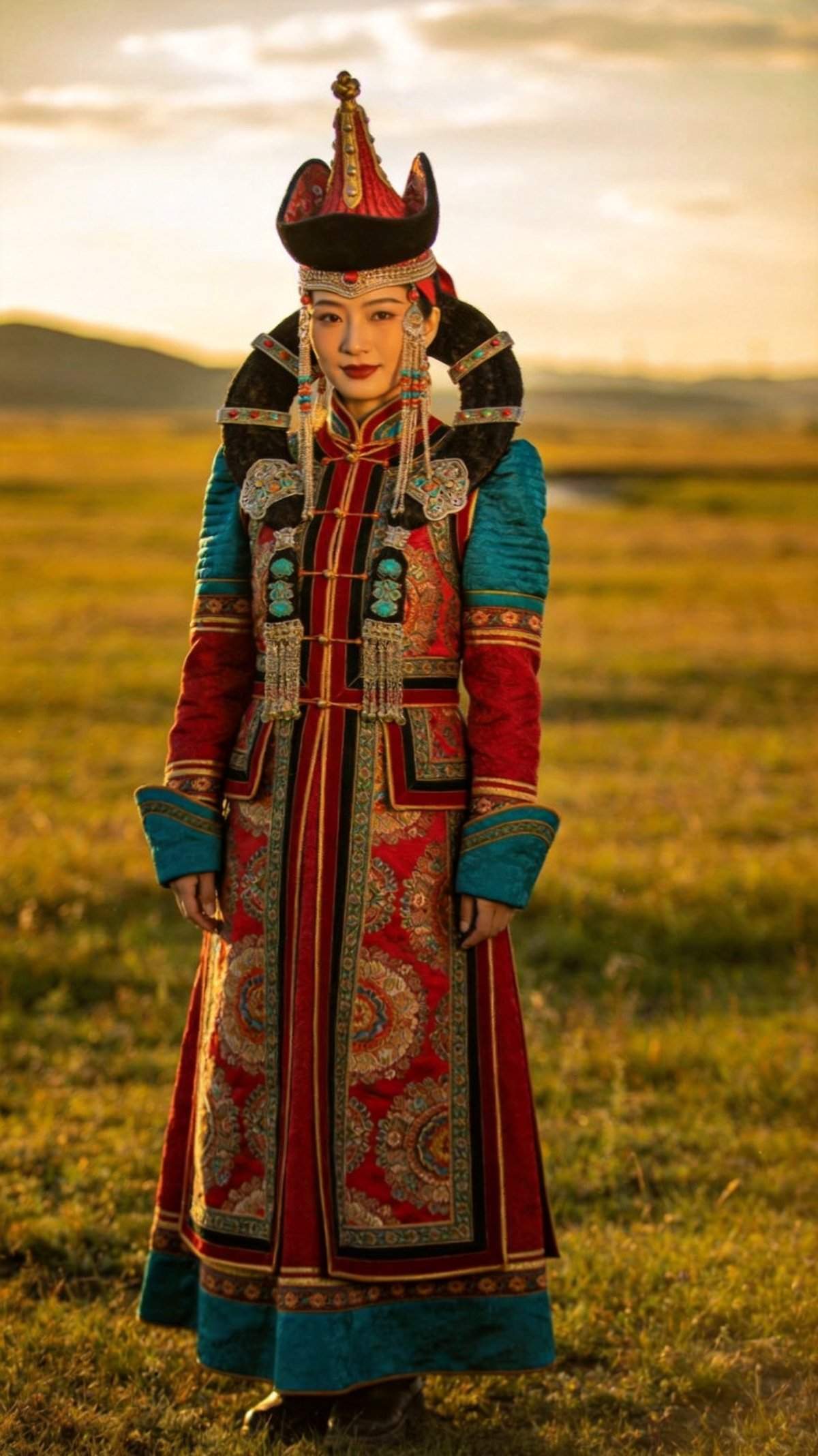
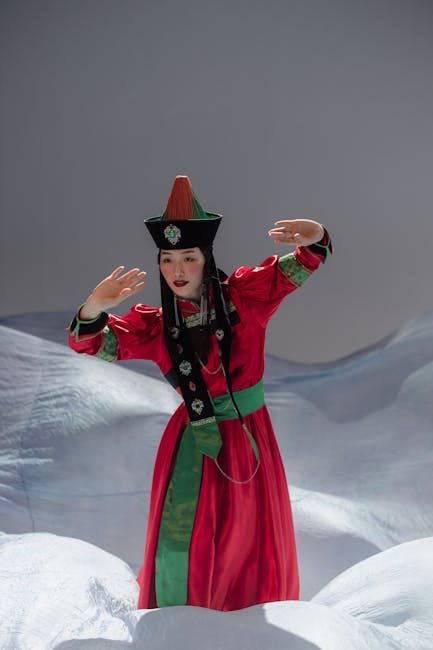
Mongolian traditional clothing (deel) is designed for the nomadic steppe lifestyle, featuring a distinctive long robe with diagonal front closure worn with a colorful sash. The attire is decorated with gold-thread embroidery and fur trims. With a population exceeding six million, the Mongolian people of China primarily inhabit the Inner Mongolia Autonomous Region, with significant communities in Xinjiang, Qinghai, Gansu, and Heilongjiang provinces. Their clothing tradition reflects over a thousand years of adaptation to the vast grasslands, where temperatures range from extreme summer heat to winter cold that can drop below minus forty degrees Celsius.
Key Features of Mongolian Attire
- Long wrap-around robe with right-side diagonal closure
- Brightly colored silk or wool sash tied at the waist
- Gold-thread embroidery on collars, cuffs, and front panels
- Distinctive pointed or rounded hats with fur or bead decorations
- High leather riding boots with upturned toes and decorative stitching
Traditional Garments
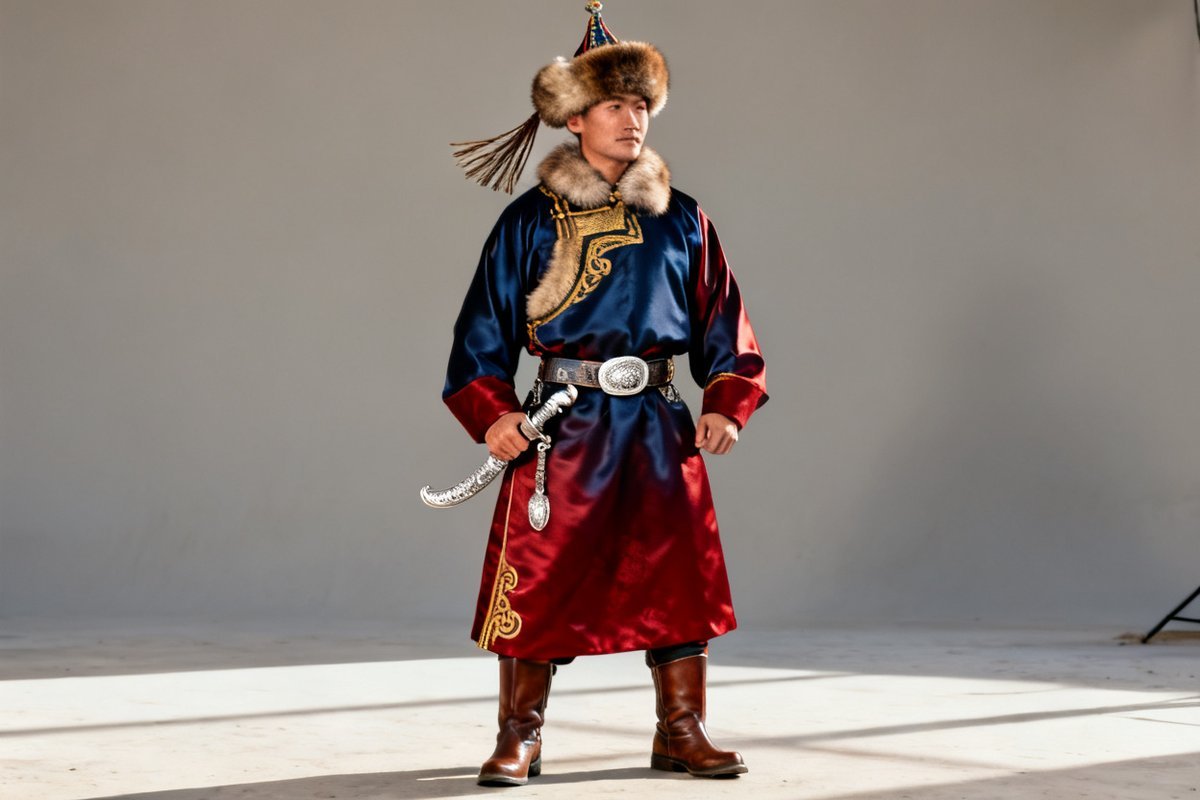
The deel is a long one-piece robe reaching below the knee, with long sleeves and a diagonal front closure that wraps from the left shoulder across the chest to the right side. This right-side fastening is universally observed among Mongolian communities and distinguishes the deel from Central Asian robes that fasten on the opposite side. The robe is secured with a cloth belt called a buse, tightly wrapped around the waist, which creates a characteristic gathered silhouette. The belt is typically five to seven meters long and requires several wraps to secure properly.
An embroidered vest is worn over the deel for formal occasions, often in contrasting colors with elaborate gold-thread designs on the front panels. Summer deels are made from lightweight cotton or silk in bright colors, while winter versions use thick sheepskin or lambskin with the wool facing inward for maximum insulation. The deel's voluminous front panel naturally forms a large pocket above the belt — a design element that evolved from the practical needs of nomadic life, where riders needed to carry food, tobacco, tools, and personal items without saddlebags. The sleeves are deliberately long, extending past the fingertips, to protect hands from the cold and to serve as a gesture of respect when covering the hands in the presence of elders.
Headwear and Adornments
Men wear pointed fur hats in winter, typically made from fox, sable, or sheep fur with the crown fabric in matching or contrasting colors. The pointed shape is functional as well as decorative — it allows wind to flow over the head more efficiently and provides a pocket of warm air above the crown. Summer hats for men are lighter, made from felt or cotton with a wider brim to shield against the intense steppe sun.
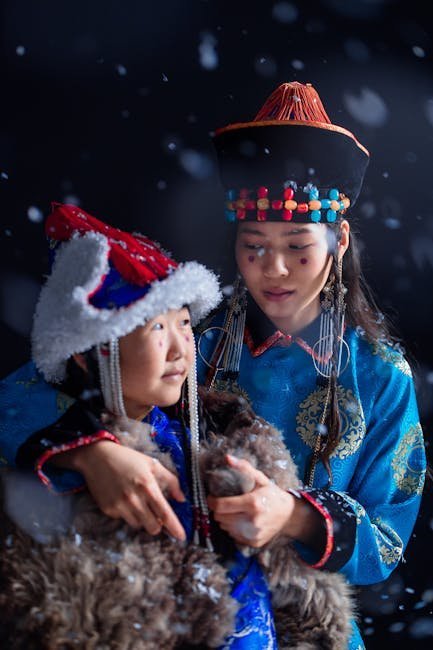
Young unmarried women wear small caps with bead tassels that frame the face, often in bright red or pink silk. Married noble women wear the distinctive tall, broad headdress adorned with silver, coral, turquoise, and peacock feathers. This elaborate headpiece, known as a gu gu guan in historical records, can stand over thirty centimeters tall and features silver filigree panels, coral cabochons set in silver, and strings of turquoise beads that hang to the shoulders. The weight of a fully adorned noble woman's headdress could exceed several kilograms. Silver hair ornaments, earrings with dangling coral and turquoise drops, and heavy silver bracelets complete the formal jewelry ensemble, with the total weight of silver worn by a married woman during festivals sometimes reaching five kilograms.
Embroidery and Decorative Arts
Mongolian embroidery features floral scrolls, cloud patterns, and ram's horn motifs in gold and silver thread, reflecting the influence of both Tibetan Buddhist and traditional shamanic imagery. The ulzii pattern — an endless knot symbolizing eternity and long life — appears frequently on deel collars and cuffs. Cloud motifs called yun wen represent the eternal blue sky (Tengri), the supreme deity in traditional Mongolian belief. Embroidery appears on deel collars, cuffs, the front placket where the robe overlaps, and the upper sections of riding boots.
Gold-thread embroidery is the most prestigious technique, reserved for nobles and festival garments. The thread is made by wrapping thin gold foil around a silk core, creating a flexible metallic strand that catches light with every movement. Women begin learning embroidery as young children, and the quality of a bride's embroidered trousseau was historically a measure of her family's status. In addition to embroidery, Mongolian clothing incorporates applique — cut fabric shapes stitched onto the base garment — particularly for larger decorative motifs on the back panels of festival deels. Leather tooling on boots and belts adds another decorative dimension, with geometric stamps creating repeating patterns on saddles, belts, and boot uppers.
The Mongolian deel is designed so that everything needed for steppe survival can be carried in its voluminous front - the robe is simultaneously garment, pocket, blanket, and shelter.
Color Symbolism
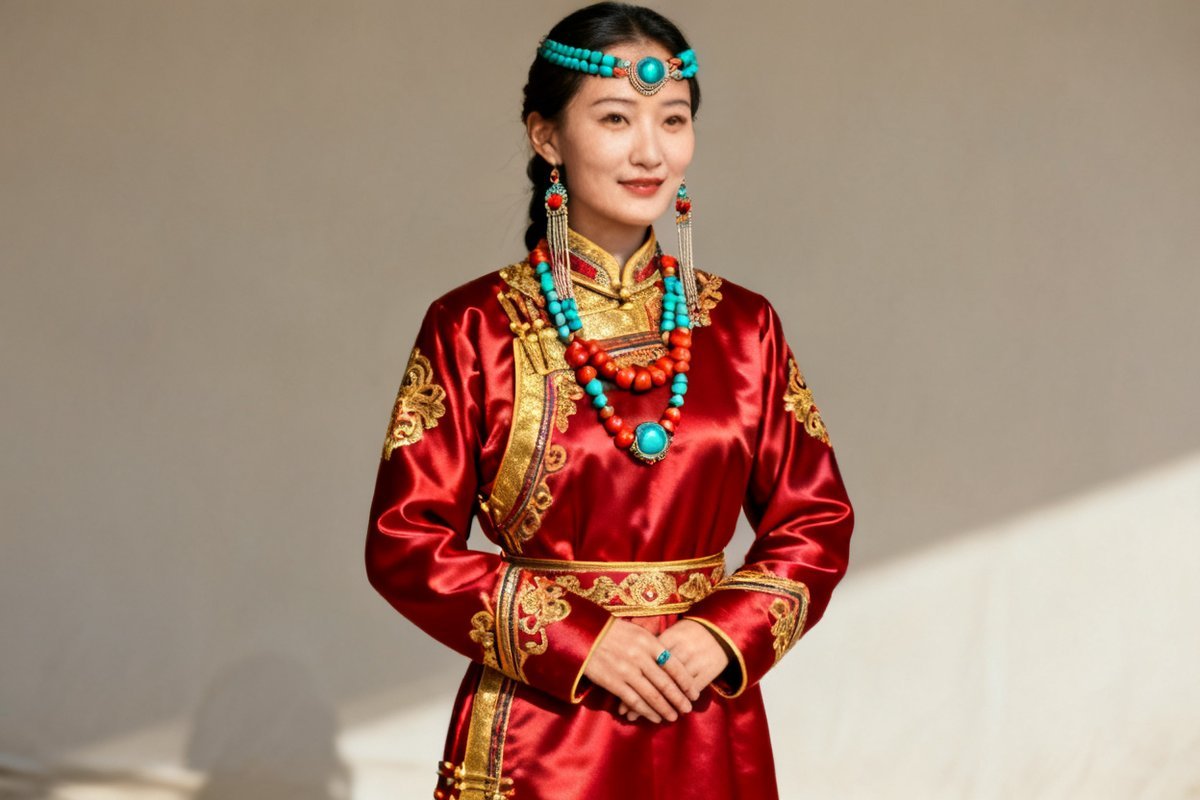
Blue, representing the eternal sky (Tengri), is the most important color in Mongolian dress and is the preferred color for the deel worn during important ceremonies. Red symbolizes fire, vitality, and the life force — it is a popular choice for women's deels and for sash colors. Yellow represents the earth and is associated with Buddhist religious authority, while green symbolizes the vast pastures that sustain nomadic life. White is the color of purity, milk, and good fortune — white deels are worn during the Tsagaan Sar (White Month) New Year celebration.
Black and dark brown are reserved for everyday practical wear, as they show less dirt during herding work. Gold and silver embroidery add brilliance and signal wealth and status. The color of the sash communicates specific meanings: a red sash indicates a married woman of childbearing age, a blue sash suggests a young unmarried man, and a yellow sash is worn by respected elders and religious practitioners. The Mongolian color system is highly codified, and wearing the wrong color combination to a formal event can cause significant social offense.
Festival Attire
During the Naadam Festival, held each July across Inner Mongolia, participants wear their finest deels. The Naadam is Mongolia's most important traditional festival, featuring the "three manly sports" of wrestling, horse racing, and archery. Wrestlers wear a distinctive costume called zodog — a brief, open-fronted leather or embroidered vest that exposes the chest, combined with tight shorts called shuudag and high leather boots. The open-chest design originates from a legend in which a female warrior disguised herself as a man to compete; since then, wrestlers have exposed their chests to prove their gender.
During Tsagaan Sar, the lunar New Year, families dress in their most elaborate deels and visit relatives in strict order of seniority. The first day of Tsagaan Sar requires an entirely new set of clothing, from undergarments to the outer deel, symbolizing renewal and the casting off of the previous year's troubles. Wedding attire for Mongolian brides includes a red deel with extensive gold embroidery, the full silver and coral headdress, and multiple layers of jewelry. A traditional Mongolian wedding may involve the bride changing her deel three or more times throughout the multi-day celebration, each change displaying a different aspect of her family's textile wealth.
Modern Influence and Preservation
The Mongolian deel is worn daily by many in Inner Mongolia, particularly in rural areas and among older generations. It has influenced Chinese and Central Asian fashion through its distinctive cut, the diagonal front closure, and the widespread adoption of its decorative motifs. Contemporary Mongolian designers in Hohhot and other cities are adapting traditional embroidery patterns and the deel silhouette for modern fashion, creating garments that work in urban settings while maintaining cultural continuity. Mongolian embroidery techniques are formally recognized as intangible cultural heritage, and training programs in Inner Mongolia's art institutes ensure that gold-thread embroidery and applique techniques continue to be passed down. The deel remains a powerful symbol of Mongolian identity, worn with pride during festivals, family gatherings, and increasingly by young urban Mongolians as an expression of cultural heritage in modern China.
Did You Know?
The Mongolian deel has no buttons - it is secured entirely by the sash (buse) wrapped around the waist, and the upper front panel forms a large pocket traditionally used to carry food, tobacco, and personal items.
Nomadic Adaptation and Ceremonial Splendor of Mongolian Dress
Mongolian traditional clothing represents a remarkable adaptation to the extreme climate and nomadic lifestyle of the steppes. The deel, a long caftan-like garment worn by both men and women, is designed for horseback travel with its side closures that protect against wind while allowing freedom of leg movement. The deel is made from different materials depending on the season: lightweight cotton or silk for summer, quilted cotton for autumn and spring, and sheepskin or fur for winter. The waist is wrapped with a silk or cotton sash that supports the lower back during long hours in the saddle, demonstrating how every element of Mongolian dress serves a practical purpose rooted in nomadic life.
Mongolian ceremonial attire reaches its highest expression in the traditional bridal headdress, which varies dramatically between different Mongolian subgroups. The Ordos headdress is among the most elaborate, consisting of a framework covered in silver ornaments, coral beads, turquoise, and pearls that cascade over the bride's shoulders and down her back. These headdresses are family heirlooms that may contain hundreds of individual pieces and can weigh up to five kilograms.