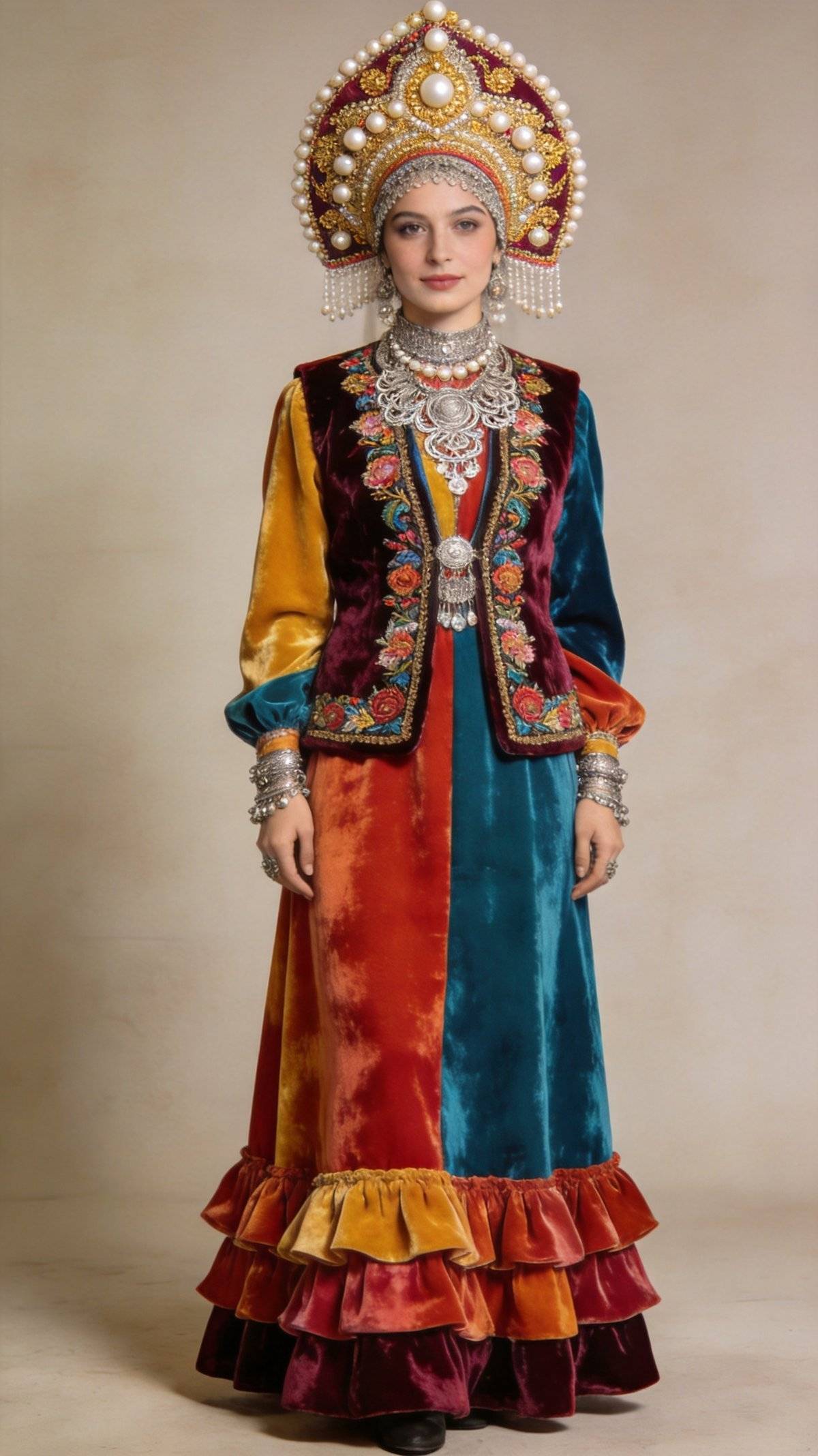
Tatar traditional clothing reflects their Turkic and Islamic heritage with embroidered skullcaps, long dresses, and fitted vests. As one of Chinas smallest ethnic groups, their distinctive clothing is carefully preserved. The Tatar population in China numbers approximately 3,500, concentrated in the cities of Yining, Tacheng, Urumqi, and Altay in northern Xinjiang. Despite their small numbers, the Tatar maintain a rich cultural identity shaped by centuries of interaction along the Silk Road trade routes.
The Tatar people trace their origins to the Volga-Ural region of present-day Russia, with ancestors who were part of the broader Tatar diaspora that spread across Eurasia. Their migration to what is now Xinjiang occurred primarily during the 19th and early 20th centuries, driven by trade opportunities and political changes in the Russian Empire. The Chinese Tatar community maintains close cultural ties with Tatar populations in Tatarstan and other regions of the former Soviet Union, and their language belongs to the Kipchak branch of the Turkic language family.
Tatar cultural life centers on education, commerce, and the preservation of Islamic traditions. Historically, Tatar merchants and intellectuals played a significant role in introducing modern education and printing to Xinjiang. The Tatar community in China is predominantly Sunni Muslim, and their clothing reflects Islamic principles of modesty combined with a Central Asian appreciation for rich colors, fine fabrics, and detailed embroidery. Tatar cuisine, music, and the annual Sabantuy harvest festival are other important expressions of their cultural heritage.
Key Features of Tatar Attire
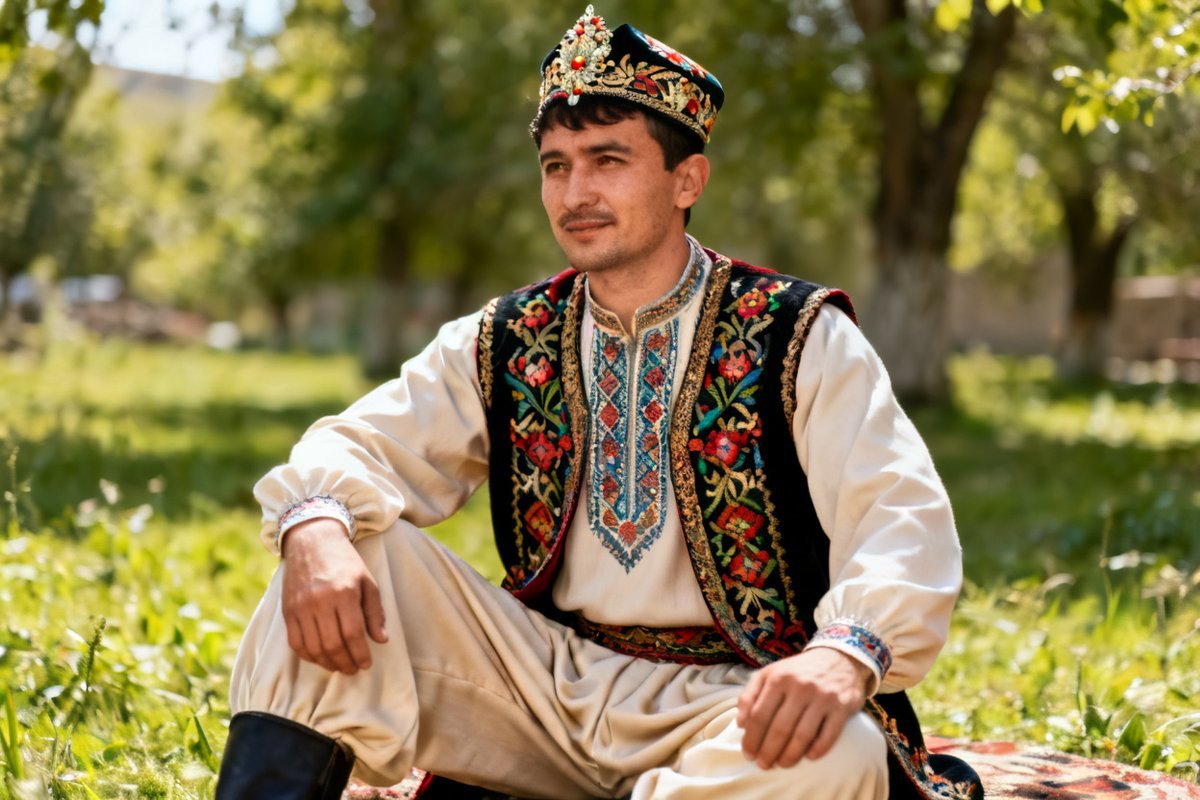
- Mens embroidered skullcaps (tubetey) with floral patterns
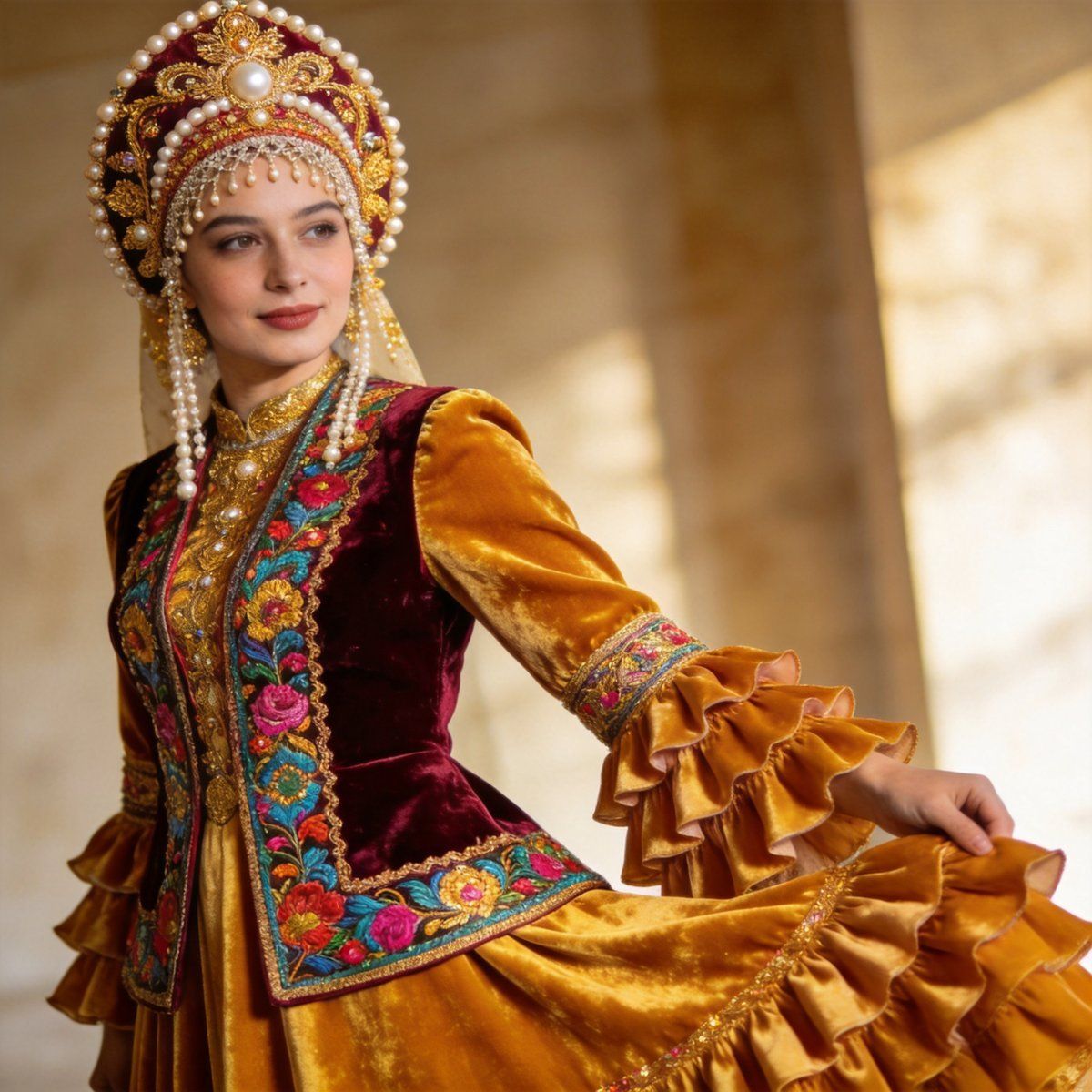
- Womens long dresses with ruffled hems and fitted velvet vests
- Floral embroidery on collars, cuffs, and vest edges
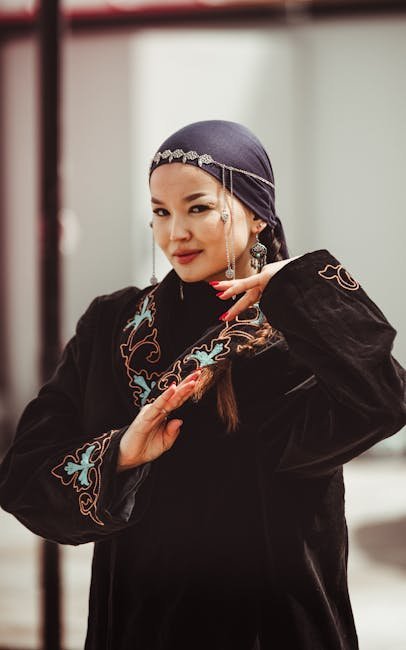
- White or light-colored headscarves for women
- Leather boots with decorative stitching for both genders
Traditional Garments
Women wear a long dress with a fitted bodice and flared skirt, often with ruffled hem, covered by a fitted velvet vest with embroidery. Men wear a white shirt under a short jacket or vest, with dark trousers and boots. The women's dress is typically fashioned from silk, satin, or fine cotton in solid colors or subtle floral prints, with the bodice fitted closely and the sleeves long and tapered. The multiple tiers of ruffles at the hem — sometimes two or three layers — create a graceful silhouette that emphasizes fluid movement when walking or dancing.
The velvet vest worn over the dress is perhaps the most visually striking element of Tatar women's clothing. Cut to fit closely at the waist and flare slightly over the hips, the vest features dense floral embroidery along the front opening, hem, and armholes. The embroidery is executed in silk thread whose glossy finish contrasts beautifully with the matte surface of the velvet. Men's traditional attire emphasizes clean lines and fine materials — the white shirt is typically linen or fine cotton, while the short jacket or vest is made of dark wool or velvet with subtle decorative stitching at the edges.
Headwear and Adornments
Women wear white or light-colored headscarves tied at the chin, sometimes with embroidered edges. Men wear the tubetey - a round or pointed skullcap with colorful floral embroidery in silk thread. The tubetey is the defining item of Tatar men's traditional dress, and its embroidery patterns can indicate regional origin and family traditions. The skullcap is typically made from velvet in black, dark blue, or dark green, with the crown filled with floral medallions worked in silk threads of red, yellow, green, and gold.
For women, the headscarf serves both religious and aesthetic functions. Married women traditionally cover their hair in accordance with Islamic practice, but the scarves themselves are objects of beauty — often made from fine silk with hand-embroidered borders or delicate lace edging. On festive occasions, women may wear a small embroidered cap similar to the tubetey beneath their scarf, with the cap's embroidered edge visible at the forehead. Silver and gold jewelry, including earrings, brooches, and necklaces with semi-precious stones, complements the ensemble for special occasions.
Embroidery and Decorative Arts
Tatar embroidery features floral motifs in bright colors on skullcaps, vest edges, headscarf borders, and dress collars. Silk thread on velvet or fine cotton creates a rich texture. The floral patterns draw from a repertoire of stylized tulips, carnations, roses, and scrolling vines — motifs shared across Turkic and Islamic textile traditions from Anatolia to Central Asia. Chain stitch, satin stitch, and couching techniques are employed to create raised, dimensional surfaces that catch and reflect light.
Beyond embroidery, Tatar decorative arts include leather tooling for boots, metalwork for jewelry and belt buckles, and the production of fine textiles. Tatar women traditionally learned embroidery from their mothers and grandmothers, with each family developing distinctive pattern variations passed down through the female line. A young woman's embroidery skill was historically considered an important aspect of her preparation for marriage, and embroidered items formed a significant portion of a bride's trousseau.
The Tatar tubetey skullcap, with its luminous silk embroidery on dark velvet, concentrates an entire cultural aesthetic into a few square inches of fabric - a miniature masterpiece of Turkic needlework.
Color Symbolism
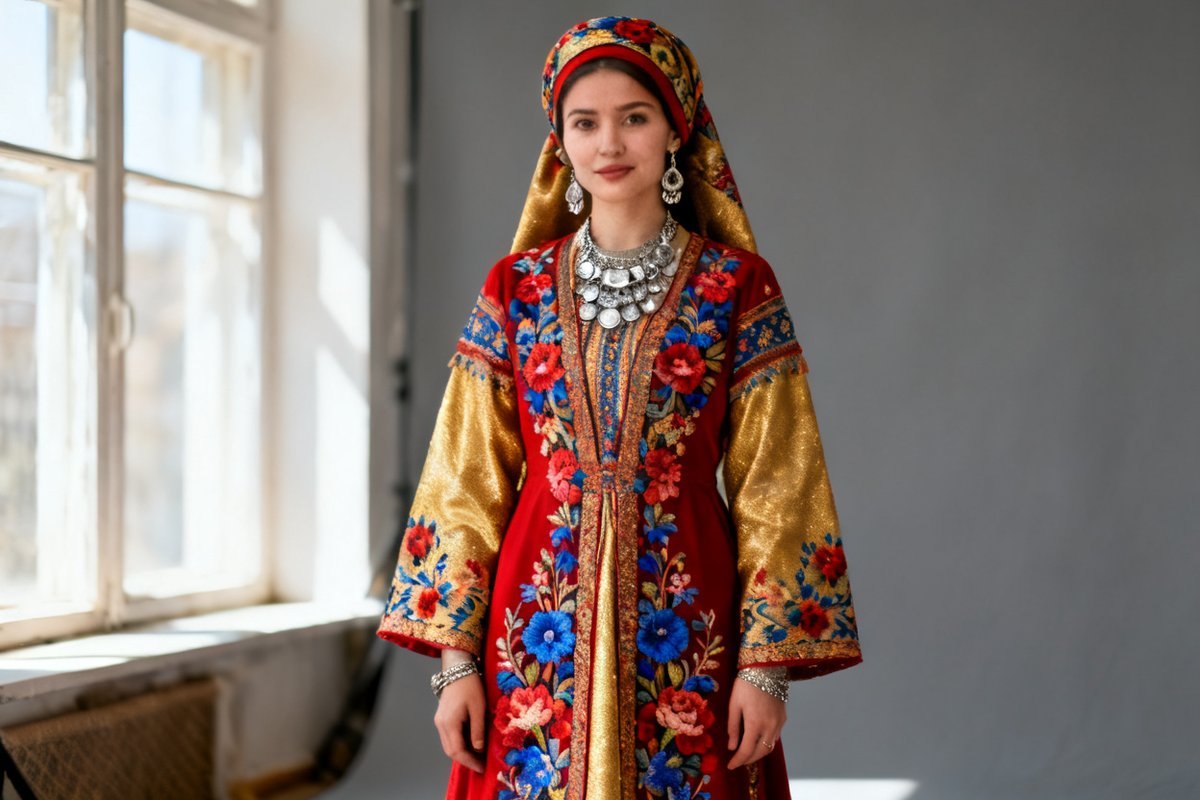
Dark velvet in black, dark blue, or green for vests conveys elegance and formality while providing a dramatic backdrop for colorful embroidery. Dresses favor lighter tones and subtle prints that contrast with the dark vest. Embroidery uses bright red for life and celebration, yellow for prosperity and sunlight, pink for femininity and youth, green for paradise and spiritual renewal (an important color in Islamic tradition), and gold for divine light and refinement. White headscarves symbolize purity and modesty.
Festival Attire
During Sabantuy (Tatar harvest festival) and Eid al-Fitr, women wear their finest embroidered vests over new dresses, men wear new tubetey skullcaps. Sabantuy is the most important Tatar cultural celebration, marking the end of spring planting with a day of sports competitions, music, dancing, and feasting. The festival typically features horse racing, wrestling, and the distinctive Tatar sport of sack racing. For Sabantuy, every family member dresses in their best traditional clothing, with particular attention given to the tubetey and embroidered vests.
Eid al-Fitr and Eid al-Adha, the two major Islamic festivals, are also occasions for wearing the finest traditional dress. After morning prayers at the mosque, families visit relatives and exchange gifts while wearing their most beautiful clothing. Wedding celebrations among the Tatar community are elaborate multi-day events during which traditional clothing plays a central role — brides may wear several different embroidered dresses and vests over the course of the ceremonies.
Modern Influence and Preservation
Tatar embroidery traditions are maintained through community cultural events in the Tatar settlements of Xinjiang. Given their extremely small population, every Tatar family plays a crucial role in cultural transmission. Community centers in Yining and Urumqi host embroidery workshops where elder women teach younger generations the distinctive floral patterns that define Tatar needlework. The Tatar Cultural Association organizes annual Sabantuy celebrations that bring the community together and showcase traditional clothing to wider audiences.
Cross-border cultural exchanges with Tatarstan have strengthened preservation efforts, with scholars and artisans traveling between Kazan and Xinjiang to share textile traditions. Tatar embroidery has been documented in academic publications and museum collections, ensuring that even as the community modernizes, the techniques and patterns of their textile heritage are recorded for future generations. The distinctive tubetey skullcap remains the most visible symbol of Tatar identity in China, worn with pride at cultural events and increasingly appreciated by collectors of ethnic minority art.
Did You Know?
The Tatar are Chinas smallest officially recognized ethnic minority by population (around 3,500), and their vibrant Sabantuy harvest festival features traditional clothing, horse racing, and wrestling.
Did You Know?
The Tatar are Chinas smallest officially recognized ethnic minority by population (around 3,500), and their vibrant Sabantuy harvest festival features traditional clothing, horse racing, and wrestling.
Embroidery and Needle Arts of the Tatar Minority
The Tatar people of Xinjiang maintain embroidery traditions that reflect their Central Asian heritage and Islamic cultural context. Tatar women's embroidery is characterized by fine, dense stitching with silk threads in floral and vine patterns, typically executed on velvet or fine cotton fabric. The most common motifs include tulips, roses, and grapevines, drawn from the gardens and orchards of the Xinjiang oases where Tatar communities have historically settled. The embroidery appears primarily on the collar, cuffs, and front opening of women's dresses, as well as on the headscarves that are essential to Tatar women's attire.
Tatar women's traditional dress includes a long, fitted dress with long sleeves and a full skirt, typically in a solid rich color such as deep red, emerald green, or royal blue. The dress is worn with an embroidered velvet or brocade vest that adds warmth and decoration. The head is covered with a scarf that is tied at the nape of the neck or pinned under the chin, with the scarf fabric and knot style varying by occasion and personal preference.