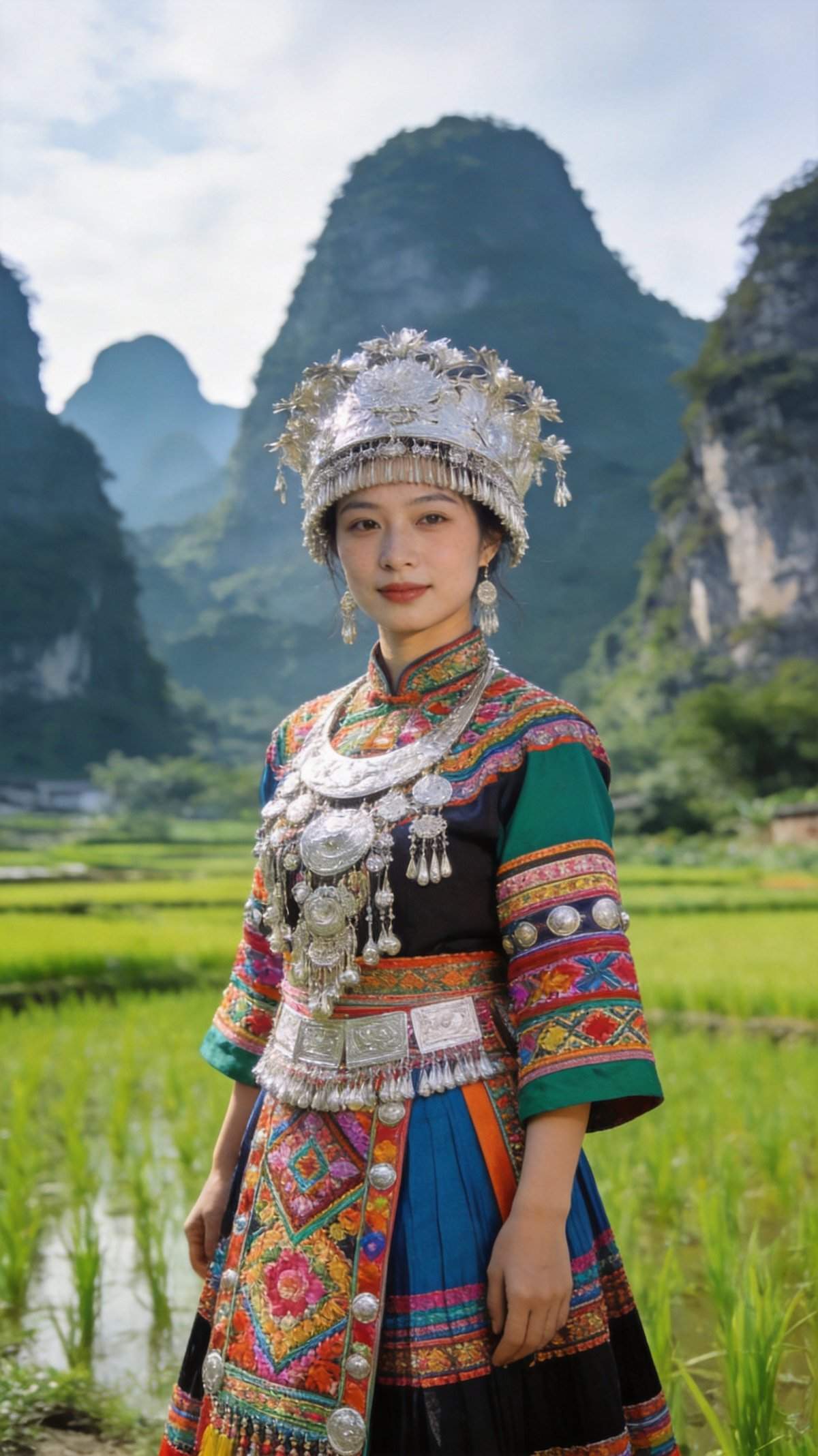
Zhuang traditional clothing is characterized by elegant black or dark blue handwoven cotton garments with exquisite embroidered edges. Zhuang brocade (zhuangjin), with its dense geometric patterns in silk and cotton, is one of China's most famous ethnic textiles.
Historical and Cultural Background
The Zhuang are China's largest ethnic minority, with over 16.4 million people primarily concentrated in the Guangxi Zhuang Autonomous Region, with significant populations also in Yunnan, Guangdong, Guizhou, and Hunan provinces. The Zhuang have inhabited southern China for millennia, developing one of the region's most sophisticated textile traditions. Archaeological evidence suggests that Zhuang ancestors were weaving complex patterned textiles as early as the Han Dynasty, and historical records from the Tang Dynasty describe Zhuang brocade being sent as tribute to the imperial court. The Zhuang also developed their own writing system, which influenced the embroidery patterns found on traditional garments.
Traditional Zhuang society was organized around rice agriculture in the fertile valleys of Guangxi, and their clothing reflects both the practical needs of farming communities and a deep aesthetic appreciation for textile arts. The March Third Festival (Sanyuesan) is the most important Zhuang holiday, celebrated with singing competitions, feasting, and the wearing of the finest traditional clothing. During this festival, Zhuang communities display their most elaborate brocade and embroidery, with young women often spending months preparing special festival garments.
Key Features of Zhuang Attire
- Zhuang brocade (zhuangjin) with intricate geometric and floral patterns
- Black or dark blue front-fastening jackets with embroidered trim
- Womens wrap-around skirts with brocade waistbands
- Embroidered cloth shoes with upturned hooked toes
- Silver head ornaments with floral designs and dangling elements
Traditional Garments
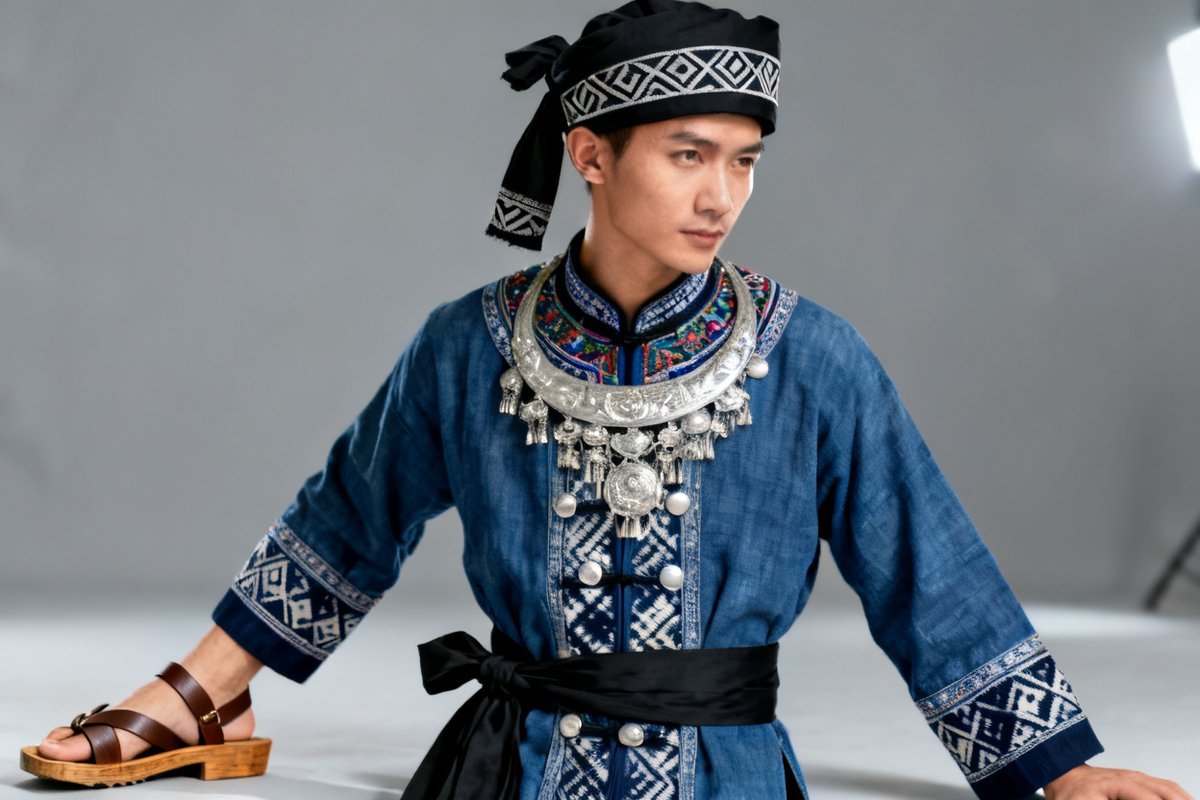
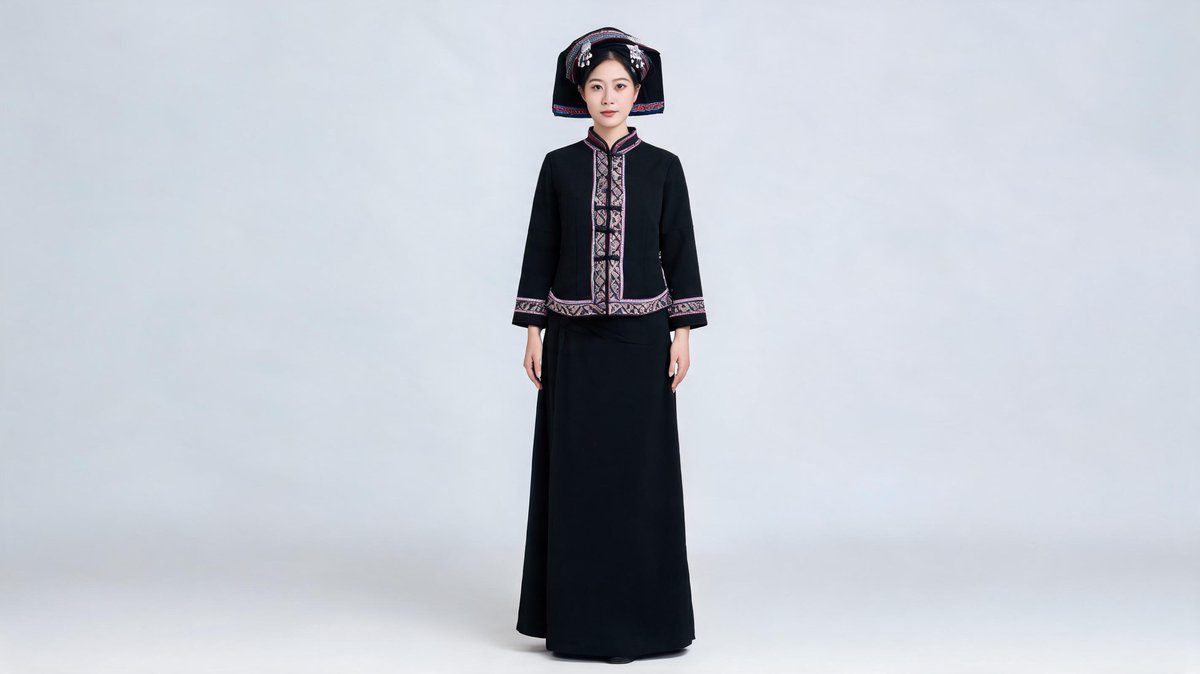
Women wear a front-fastening jacket in black or dark blue with embroidered trim on the collar, cuffs, and front opening, paired with a long wrap-around skirt with a brocade or embroidered waistband. The jacket is typically collarless with a V-shaped neckline, fastened with cloth buttons and loops along the right side. A brocade apron, often the most elaborate textile in the ensemble, covers the front of the skirt and serves as a canvas for the weaver's finest work. The apron designs incorporate geometric patterns that some scholars believe encode elements of the ancient Zhuang writing system. Men wear similar jackets in dark tones with loose trousers and a cloth belt. Both men's and women's garments favor natural cotton, hand-spun and hand-woven on traditional looms, dyed with indigo in multiple immersion cycles to achieve the characteristic blue-black color prized by Zhuang weavers.
Headwear and Adornments
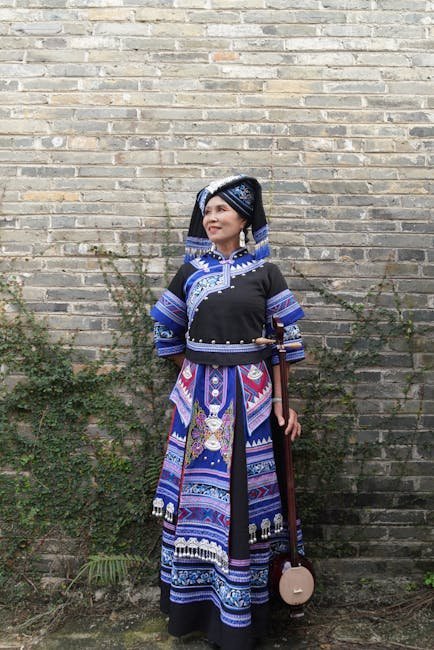
Women wear their hair coiled in a bun decorated with silver hairpins, combs, and floral ornaments. The silver hairpins are often crafted with butterfly or flower motifs, echoing the embroidery patterns found on Zhuang garments. Some Zhuang subgroups wear distinctive black cloth headwraps with embroidered edges, the wrapping style and embroidery patterns varying by region and marital status. In the Hechi region, women wear a white or black embroidered headscarf tied with long hanging ends that sway gracefully when walking. Married women traditionally favor more subdued silver ornaments and darker headwraps, while unmarried women wear brighter embroidery and more elaborate hair decorations. Silver earrings in elongated drop or hoop styles are standard accessories, and during festivals, women may wear multiple pairs of earrings along with silver necklaces and bangles that create a distinctive chiming sound as they move.
Embroidery and Decorative Arts
Zhuang brocade uses silk and cotton threads on a cotton warp in geometric patterns including squares, zigzags, clouds, and stylized flowers and birds. Patterns are symmetrical and rhythmically repeated. Embroidery on garments features butterflies, phoenixes, and peonies. The production of a single piece of fine Zhuang brocade can take months of labor, with the weaver working on a traditional waist-loom that has remained essentially unchanged for over a thousand years. The loom allows for the creation of complex multi-color patterns through a supplementary weft technique, where additional colored threads are inserted into the base fabric to create the design. This technique was historically a closely guarded craft secret, with patterns and methods passed from mother to daughter. Today, Zhuang brocade is recognized as a national intangible cultural heritage, and several government-supported workshops in Guangxi train new generations of weavers to ensure the craft's survival.
Zhuang brocade, woven on waist-looms unchanged for over a thousand years, produces a textile so distinctive that along the ancient Silk Road, traders could identify a Zhuang fabric by the rhythm of its repeating diamond motifs.
Color Symbolism
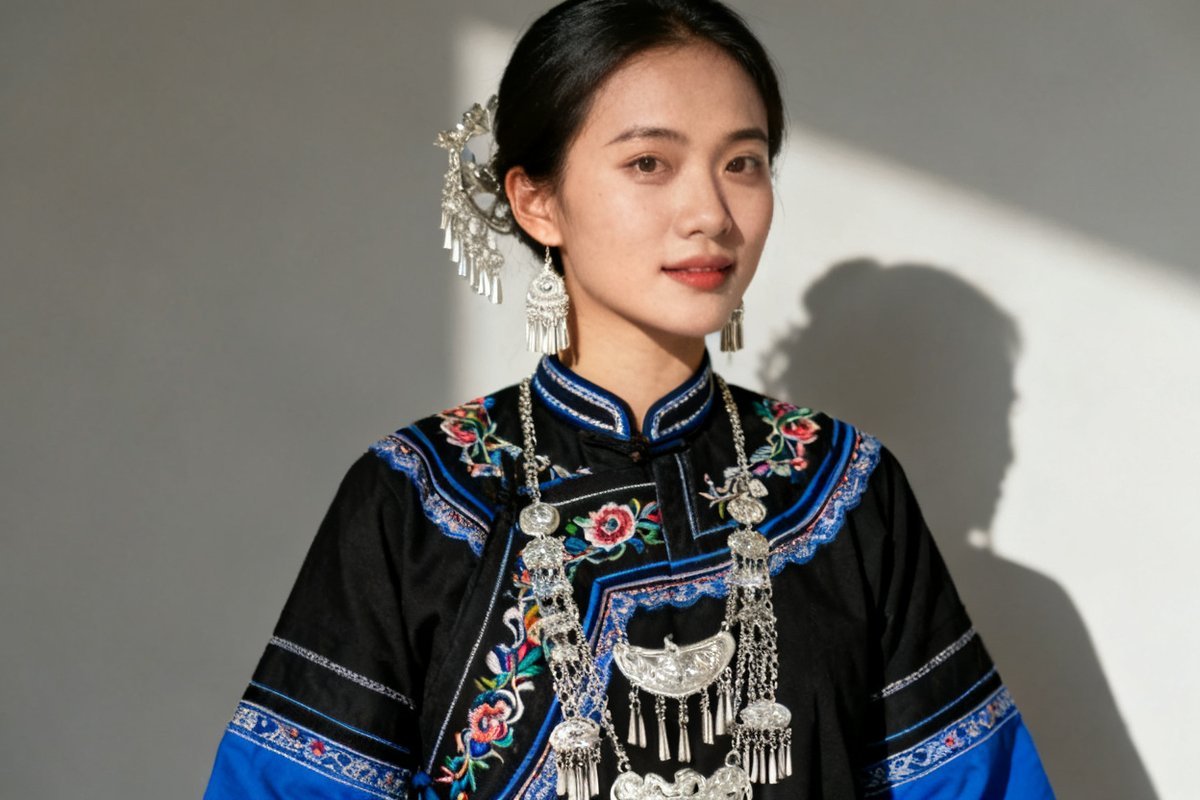
Black and dark blue are the dominant base colors. Zhuang brocade uses bright red, yellow, green, blue, white, and purple in contrasting bands. Embroidery in multicolored silk threads.
Festival Attire
During the March Third Festival (Sanyuesan), women wear their finest black embroidered jackets with the most elaborate brocade waistbands, full silver jewelry sets, and decorated headpieces.
Modern Influence and Preservation
Zhuang brocade is recognized as a national intangible cultural heritage and is produced commercially for both traditional use and the fashion industry. Modern Zhuang designers have begun incorporating traditional brocade patterns into contemporary clothing, accessories, and home textiles, creating a bridge between ancient craft and modern consumer markets. The March Third Festival costume has become a symbol of Guangxi culture, recognized throughout China and increasingly abroad. Several Zhuang brocade cooperatives in Guangxi employ hundreds of women weavers, providing sustainable income while preserving traditional skills. The brocade's dense geometric patterns have also attracted interest from international fashion designers seeking authentic ethnic textile influences. Despite these positive developments, the craft faces challenges from machine-made imitations and declining numbers of master weavers who can produce the most complex traditional patterns. Government and academic partnerships are working to document and archive traditional designs while supporting the next generation of Zhuang weavers through apprenticeship programs and design education.
Did You Know?
The Zhuang are Chinas largest ethnic minority (over 16 million people), and their brocade weaving tradition dates back to the Han dynasty - some historical records mention Zhuang brocade being sent as tribute to the Tang imperial court.
Brocade Heritage of the Zhuang
The Zhuang people of Guangxi Zhuang Autonomous Region, China's largest ethnic minority by population, have a textile tradition centered on the production of Zhuang brocade, recognized as one of China's four great brocade traditions alongside those of Sichuan, Suzhou, and Nanjing. Zhuang brocade is characterized by its bold use of color, geometric patterns, and the distinctive technique of using silk warp and cotton weft threads. The patterns are woven directly into the fabric, creating a raised texture that distinguishes brocade from embroidered or printed fabrics.
Zhuang women's traditional attire includes a dark blue or black jacket with a standing collar, fastened at the right side with fabric buttons, worn over a long pleated skirt or loose trousers. The jacket collar and cuffs are decorated with narrow bands of brocade or embroidery in bright colors that contrast with the dark ground. For festivals and weddings, women wear a brocade apron over the front of the jacket, with the apron being the most decorated element of the entire ensemble. Zhuang textile arts have seen a significant revival since the early 2000s, with training programs ensuring that traditional techniques are transmitted to younger generations.
Brocade Heritage of the Zhuang
The Zhuang people of Guangxi Zhuang Autonomous Region, China's largest ethnic minority by population, have a textile tradition centered on the production of Zhuang brocade, recognized as one of China's four great brocade traditions alongside those of Sichuan, Suzhou, and Nanjing. Zhuang brocade is characterized by its bold use of color, geometric patterns, and the distinctive technique of using silk warp and cotton weft threads. The patterns are woven directly into the fabric, creating a raised texture that distinguishes brocade from embroidered or printed fabrics.
Zhuang women's traditional attire includes a dark blue or black jacket with a standing collar, fastened at the right side with fabric buttons, worn over a long pleated skirt or loose trousers. The jacket collar and cuffs are decorated with narrow bands of brocade or embroidery in bright colors that contrast with the dark ground. For festivals and weddings, women wear a brocade apron over the front of the jacket, with the apron being the most decorated element of the entire ensemble. Zhuang textile arts have seen a significant revival since the early 2000s, with training programs ensuring that traditional techniques are transmitted to younger generations.
Regional Variations in Zhuang Brocade
Zhuang brocade traditions vary significantly across the vast territory of Guangxi, with each region developing distinctive pattern repertoires and color preferences. The brocade of the northwest, centered on the cities of Baise and Nanning, favors bold geometric patterns in primary colors with red as the dominant tone. Eastern Zhuang brocade, from areas near Wuzhou and Guilin, uses more restrained color combinations with greater emphasis on blue and green tones. Southern Zhuang communities near the Vietnamese border incorporate motifs and techniques from Southeast Asian textile traditions that are not seen in northern Zhuang brocade. These regional variations enrich the overall Zhuang textile tradition while providing local identity markers.
Zhuang brocade weaving has experienced a significant revival since the early 2000s, supported by government cultural preservation programs and growing market demand. Training centers in several Guangxi cities teach traditional brocade techniques to young women, combining instruction in historical patterns with design training for contemporary applications. Successful graduates often establish their own workshops, producing both traditional brocade for ceremonial use and modern designs for the fashion market. The revival has been particularly strong in Jingxi County, where brocade weaving never fully declined and where there remains a pool of elderly master weavers who can transmit their knowledge to the next generation.