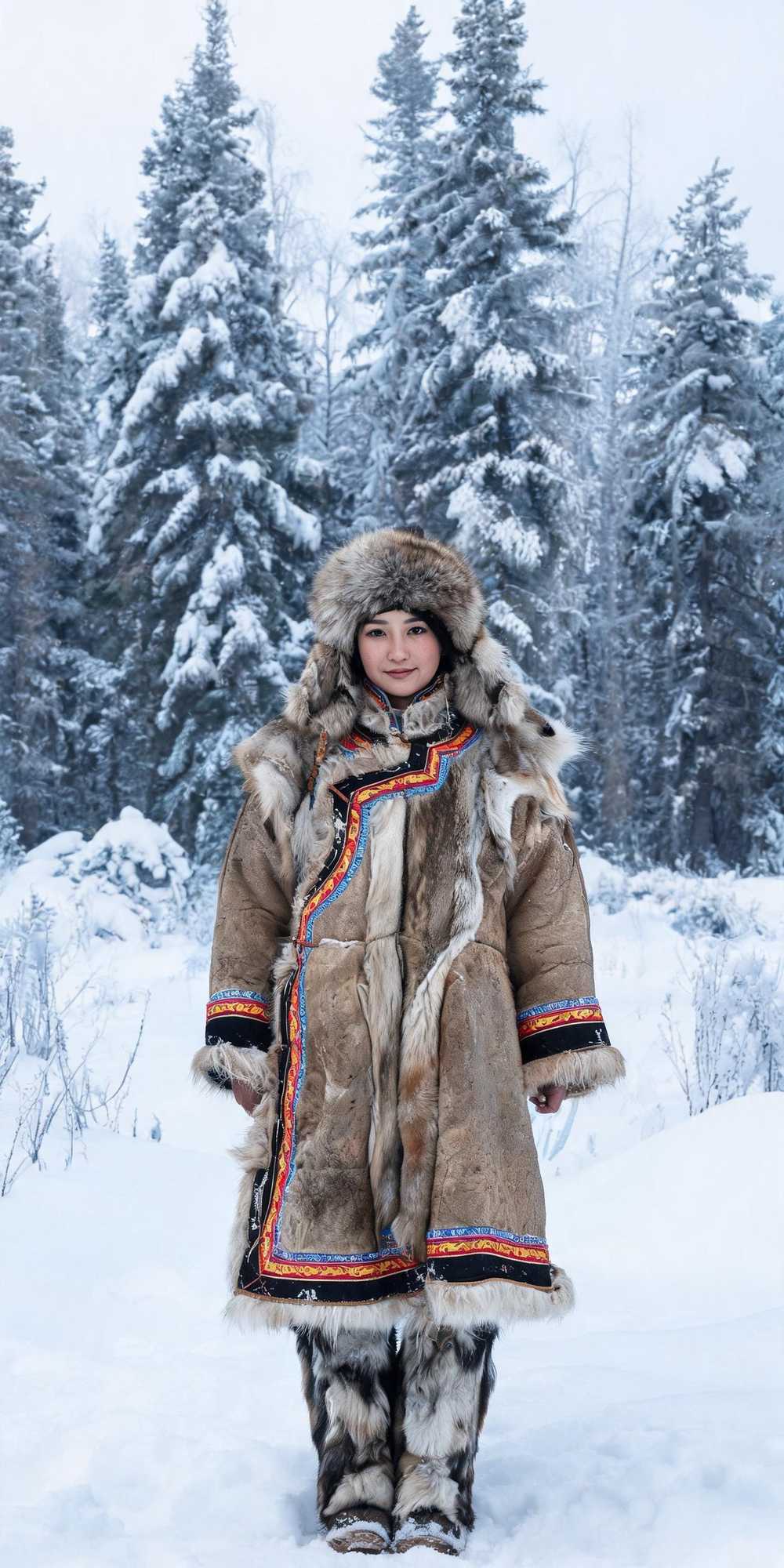
Evenki traditional clothing is adapted for life in the frigid forests of northeast China, with reindeer-hide garments and distinctive conical hats. Rich beadwork and metallic ornaments reflect shamanistic and nomadic aesthetics. The Evenki, a Tungusic-speaking people, are renowned as one of the last reindeer-herding cultures in Asia, with a history stretching back millennia across the taiga forests of Siberia and northern China.
Historical and Cultural Background
The Evenki people, also known as Ewenki or Owenk, have inhabited the vast boreal forests stretching from the Yenisei River in Siberia to the Greater Khingan Mountains in northeast China for thousands of years. Their traditional economy centered on reindeer herding, hunting, and fishing, with reindeer providing not only transportation across the frozen taiga but also the raw materials for clothing, shelter, and tools. Every part of the reindeer was utilized — the hide for garments, sinew for thread, bone for needles, and antler for tool handles.
The Evenki in China number approximately 30,000 and are primarily concentrated in the Hulunbuir region of Inner Mongolia and along the Heilongjiang River basin. A particularly well-known community resides in Aoluguya, often called the "last reindeer tribe" of China, where traditional reindeer-herding practices continue despite modernization pressures. Shamanistic beliefs historically permeated Evenki culture, with shamans serving as intermediaries between the human world and the spirit realm. This cosmology is embedded in their clothing — decorative motifs, bead colors, and garment construction all carry spiritual significance.
The Evenki language belongs to the Tungusic branch of the Altaic language family and has three distinct dialects in China. Oral traditions including epic songs, hunting tales, and shamanic chants preserve the historical memory of the Evenki people, recounting migrations across the taiga and encounters with neighboring groups such as the Mongol, Daur, and Russian populations.
Key Features of Evenki Attire
- Reindeer-hide robes with fur trim for extreme cold protection
- Distinctive conical hats with fur brims and beadwork
- Extensive bead embroidery on chest panels and boot tops
- Colorful applique patterns in geometric designs
- Separate chest apron panels heavily decorated with silver and beads
Traditional Garments
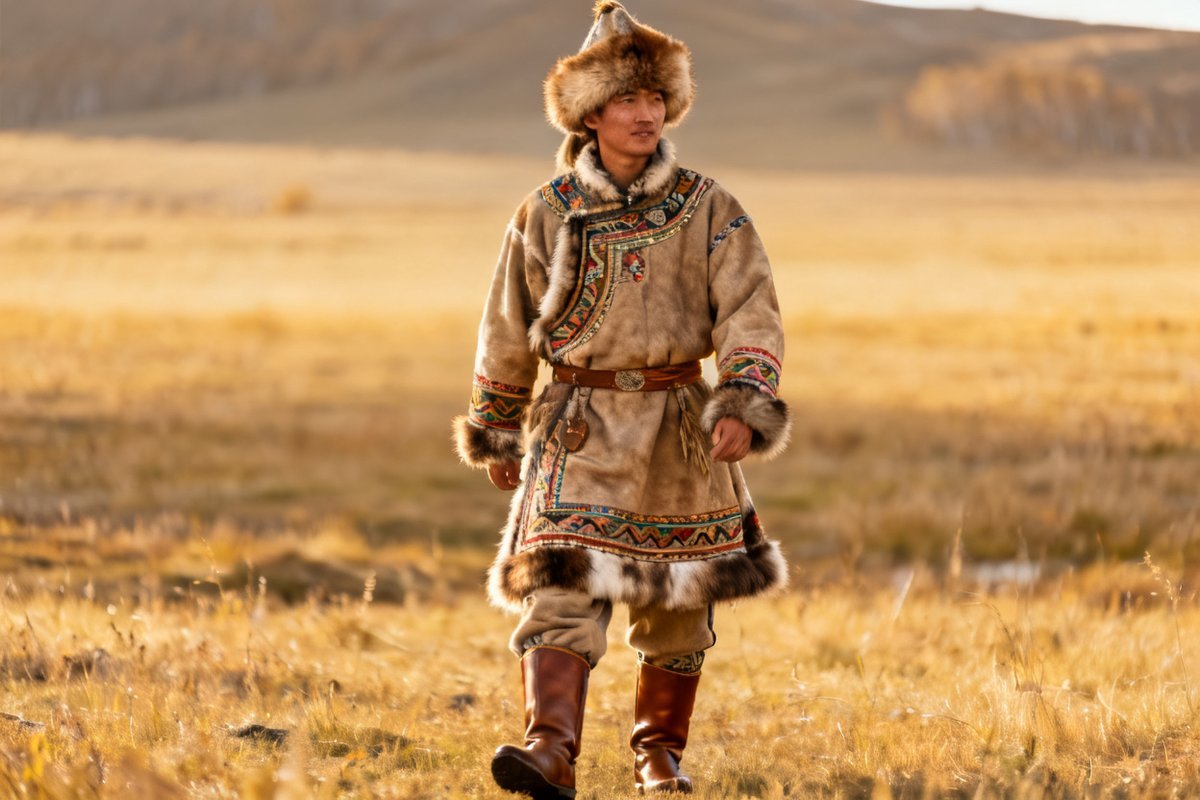
Both men and women wear long robes of reindeer or sheep hide, fastened with a leather belt, with a decorated chest apron worn over the robe. The traditional winter robe is crafted from reindeer hide with the fur facing inward for insulation, while the outer surface is smoked over a fire to increase water resistance. The robe is cut in a straight, loose silhouette that allows for the layering of multiple garments underneath — essential for survival in temperatures that regularly drop below minus 40 degrees Celsius. Fur-lined boots reach mid-calf, made from reindeer leg hide which is naturally shaped to fit the contours of human feet and ankles.
Summer garments are made from tanned hides with the fur removed or from trade cloth obtained from Russian and Chinese merchants. These lighter robes retain the same basic cut as winter garments but are decorated more extensively with beadwork and applique. Womens robes typically feature more elaborate decoration than mens, with the chest apron serving as the primary canvas for artistic expression through bead embroidery and silver ornamentation.
Headwear and Adornments
The iconic Evenki hat is made from reindeer or fox fur, conical in shape with a rounded top, decorated with colored beadwork and metal ornaments. This distinctive silhouette is thought to mimic the shape of sacred mountains or the antlers of the reindeer itself. Womens hats tend to be more ornate, with bands of intricate beadwork encircling the crown and silver pendants suspended around the brim that catch the light and produce a gentle tinkling sound with head movement. Men favor simpler hats with fur ear flaps for practical warmth. Both genders wear decorative belts of leather tooled with geometric patterns and fitted with silver or brass buckles, from which utility pouches and knives are suspended.
Embroidery and Decorative Arts
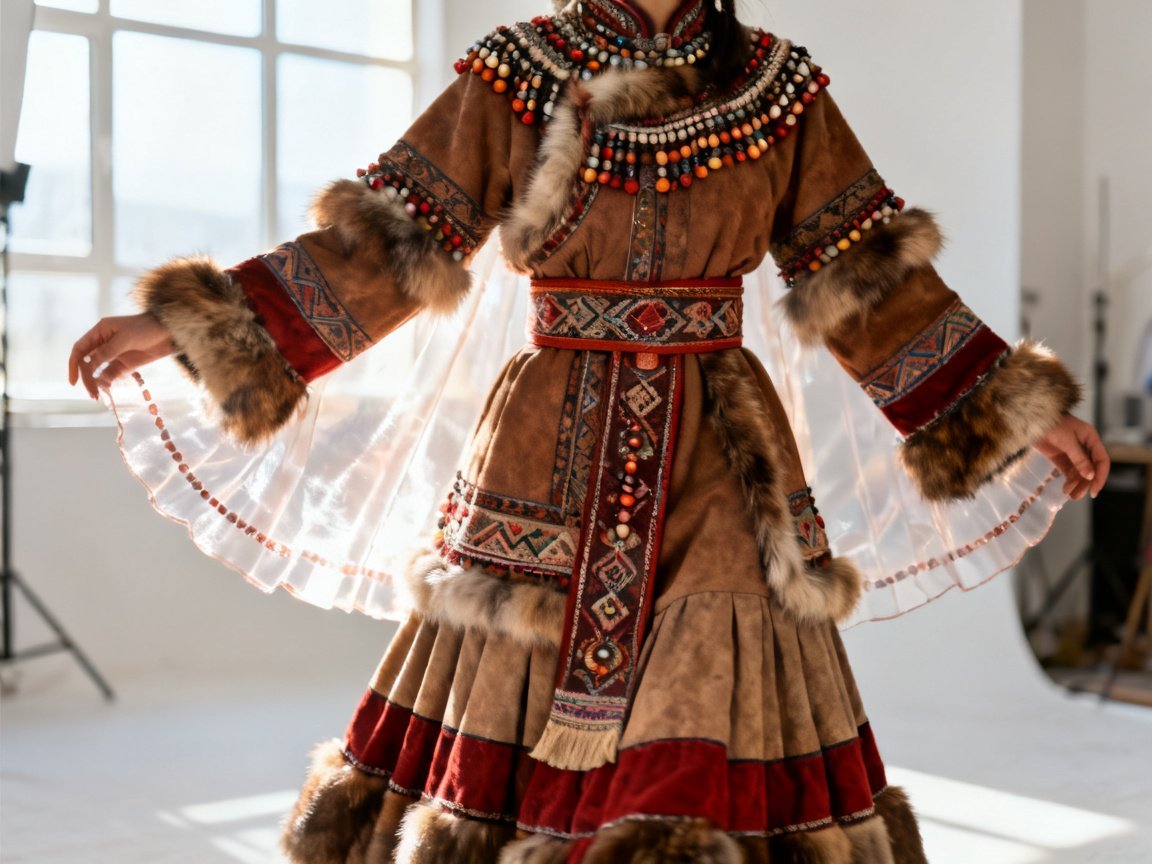
Evenki beadwork is exceptional — tiny colored seed beads sewn into geometric patterns, floral motifs, and stylized animal forms on chest panels, boot tops, and hat bands. Bead colors carry symbolic meaning rooted in the natural environment: blue represents the sky and rivers, green symbolizes the taiga forest, red evokes fire and the sun, yellow signifies the autumn tundra, and white represents snow and spiritual purity. The bead embroidery technique involves stitching each bead individually onto leather or cloth backing, a labor-intensive process that can require months to complete a single ceremonial chest panel.
Metalwork is equally important in Evenki decorative arts. Silversmiths craft ornamental discs, pendants, and chain elements that are sewn onto garments, producing a visual and auditory display — the sound of metal ornaments jingling during movement is believed to ward off malevolent spirits. Copper and brass pieces are also used, with the warm tones of these metals complementing the natural brown palette of the hide garments.
The conical Evenki hat is said to mimic the sacred reindeer antlers that connect the earthly and spiritual realms in Evenki shamanic cosmology.
Color Symbolism
Leathers natural brown and tan tones dominate. Beadwork introduces bright blue, red, yellow, green, and white. The combination of natural hide tones with vivid bead colors creates a visual language that reflects the Evenki worldview — the organic earth tones of the taiga punctuated by the brilliant hues of wildflowers, berries, and the northern lights that illuminate the winter sky.
Festival Attire
During the Saurun Festival, Evenki wear their most elaborately beaded chest panels, finest fur robes, and full bead jewelry sets. The Saurun Festival, held annually in late spring, celebrates the reindeer and the renewal of life after the long winter. Participants dress in garments that may have taken years to prepare, with beadwork patterns specific to family lineages. Other important gatherings include the Reindeer Culture Festival in Aoluguya, where Evenki from different communities gather to showcase traditional dress, compete in reindeer-related games, and perform circle dances around sacred fires. Weddings are another occasion for exceptional attire — brides wear layered chest aprons with the most intricate beadwork, silver headpieces with dangling ornaments, and robes decorated with ermine fur trim as symbols of purity and prosperity.
Modern Influence and Preservation
Evenki reindeer-hide craft and beadwork are maintained as cultural industries in the Aoluguya Evenki township. The Aoluguya community has become a focal point for cultural tourism, with visitors coming to experience Evenki lifeways including traditional dress demonstrations. However, the number of artisans who possess the full range of traditional hide-processing and beadwork skills has declined significantly among younger generations. Preservation efforts include government-supported training workshops, museum documentation of historical garments and techniques, and cultural centers that provide workspace and materials for practicing artisans. Several Evenki beadwork masters have been recognized as national-level intangible cultural heritage inheritors, charged with transmitting their knowledge to apprentices. Contemporary Evenki designers are also exploring ways to incorporate traditional beadwork motifs into modern fashion accessories, creating new markets for this ancient craft.
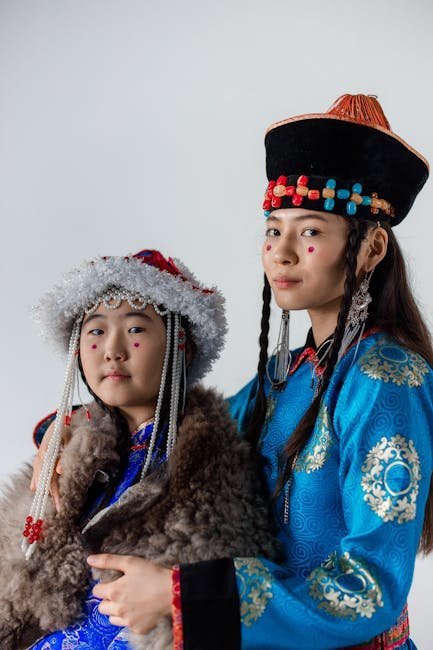
Modern Influence and Preservation
Evenki reindeer-hide craft and beadwork are maintained as cultural industries in the Aoluguya Evenki township.
Did You Know?
The Evenki are one of the last reindeer-herding peoples in China, and every part of a reindeer is used in making their clothing.
Reindeer Hide Craft and Fur Mosaic of the Evenki
The Evenki people of Inner Mongolia and Heilongjiang maintain clothing traditions rooted in their historical reindeer herding and hunting lifestyle. Reindeer hide is the primary material for traditional Evenki garments, prized for its warmth, durability, and light weight. The hide processing involves scraping, softening, and smoking the leather to produce supple material that remains flexible even in subzero temperatures. Evenki women are expert hide tanners, using traditional methods that combine animal brains, smoke, and extended hand-working to achieve the desired quality. A well-prepared reindeer hide garment can last for decades with proper care.
Fur mosaic is a distinctive Evenki decorative technique, where small pieces of light and dark fur are stitched together in geometric patterns to create contrast designs on the surface of coats and hats. The technique requires careful selection of fur pieces for color and texture consistency, with reindeer leg fur being preferred for its dense, short pile. Evenki winter hoods are edged with long-haired fur from wolverine or wolf, which prevents frost buildup from breath moisture and provides additional face protection against wind.
Reindeer Hide Craft and Fur Mosaic of the Evenki
The Evenki people of Inner Mongolia and Heilongjiang maintain clothing traditions rooted in their historical reindeer herding and hunting lifestyle. Reindeer hide is the primary material for traditional Evenki garments, prized for its warmth, durability, and light weight. The hide processing involves scraping, softening, and smoking the leather to produce supple material that remains flexible even in subzero temperatures. Evenki women are expert hide tanners, using traditional methods that combine animal brains, smoke, and extended hand-working to achieve the desired quality. A well-prepared reindeer hide garment can last for decades with proper care.
Fur mosaic is a distinctive Evenki decorative technique, where small pieces of light and dark fur are stitched together in geometric patterns to create contrast designs on the surface of coats and hats. The technique requires careful selection of fur pieces for color and texture consistency, with reindeer leg fur being preferred for its dense, short pile. Evenki winter hoods are edged with long-haired fur from wolverine or wolf, which prevents frost buildup from breath moisture and provides additional face protection against wind.