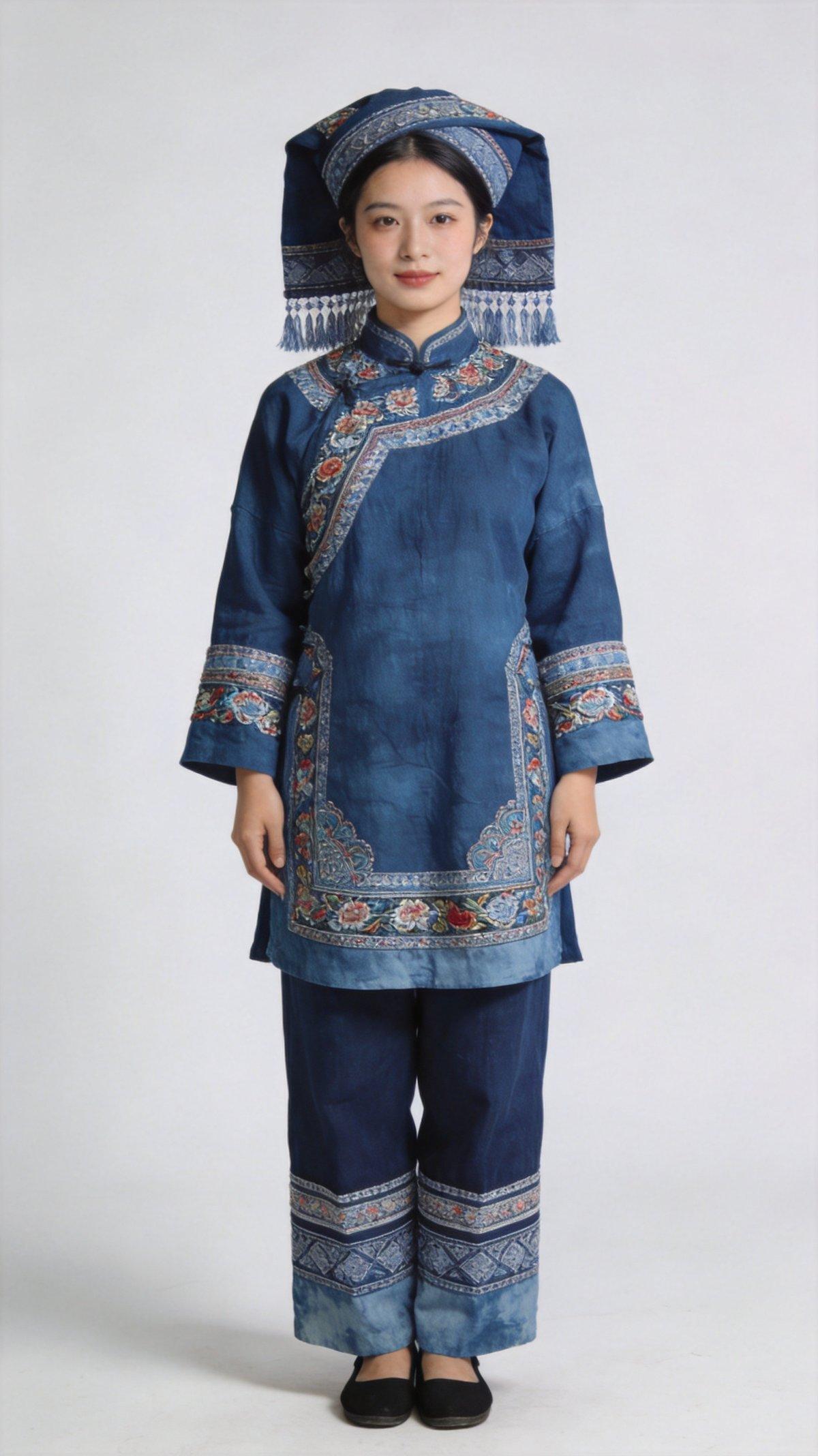
Shui traditional clothing is characterized by exquisite cross-stitch embroidery and indigo fabrics with distinctive spiral and geometric patterns. The Shui are known for their ancient writing system and distinctive embroidery techniques, particularly the unique spiral horse-tail embroidery. The Shui people number approximately 410,000 and primarily inhabit the Sandu Shui Autonomous County in southern Guizhou province, with smaller communities in surrounding areas of Guangxi and Yunnan.
The Shui hold the distinction of being one of the few ethnic groups in China that developed their own independent writing system. Known as Shui Script (le sui), this pictographic script contains over 400 distinct characters and is used primarily for divination, ritual purposes, and recording folk literature. The script is preserved in handwritten manuscripts passed down through generations of Shui priests and scholars. The spiraling geometric patterns found in Shui horse-tail embroidery are said to echo the shapes of characters in their ancient script, creating a visual link between textile art and written language.
Shui society traditionally organized around clan-based villages in the mountainous river valleys of Guizhou. Agriculture, particularly rice cultivation on terraced fields, forms the economic foundation of Shui communities. The Shui language belongs to the Kam-Sui branch of the Tai-Kadai language family. Their cultural calendar revolves around the Duan Festival, which serves as their New Year celebration and falls in the ninth lunar month, lasting up to 49 days in some communities with different villages celebrating on staggered dates.
Key Features of Shui Attire
- Horse-tail embroidery using silk wrapped around horsehair for raised spiral patterns
- Deep indigo blue jackets with embroidered collar and cuff bands
- Womens long pleated skirts with embroidered waistbands
- Silver hair ornaments with intricate spiral designs
- Bamboo hats with distinctive pointed conical shapes
Traditional Garments
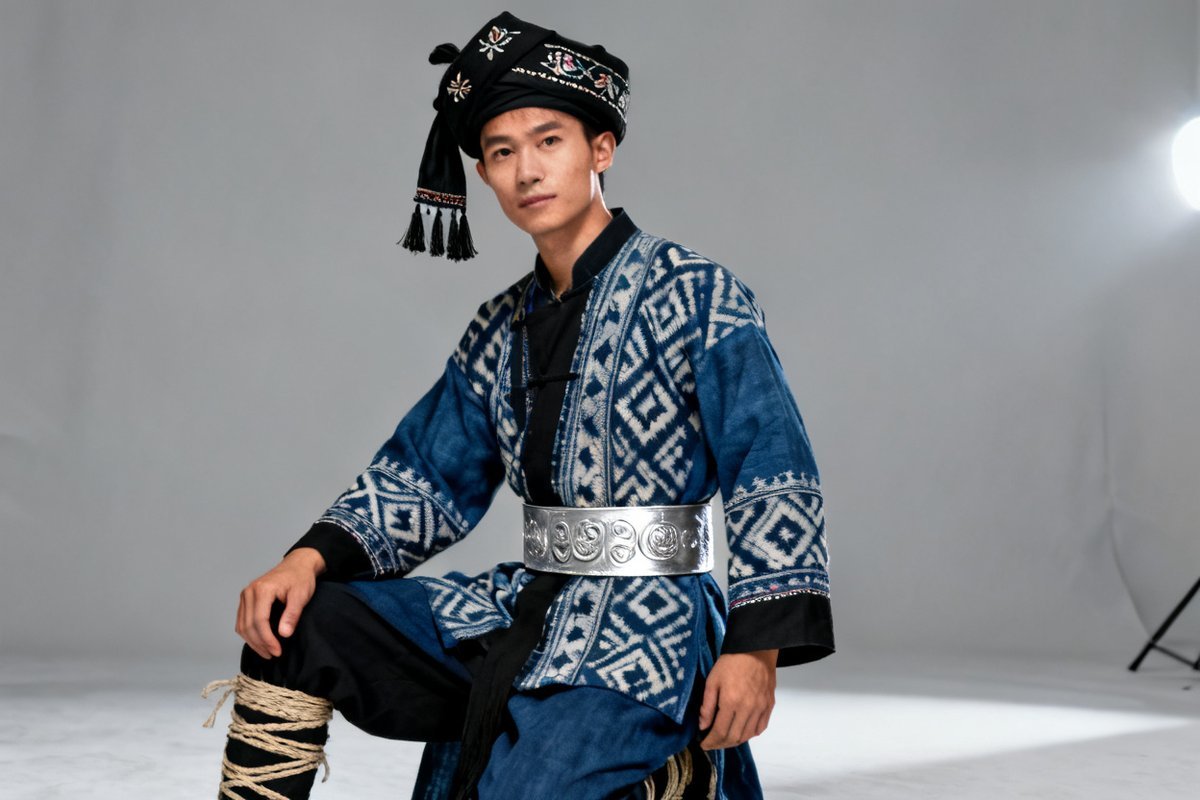
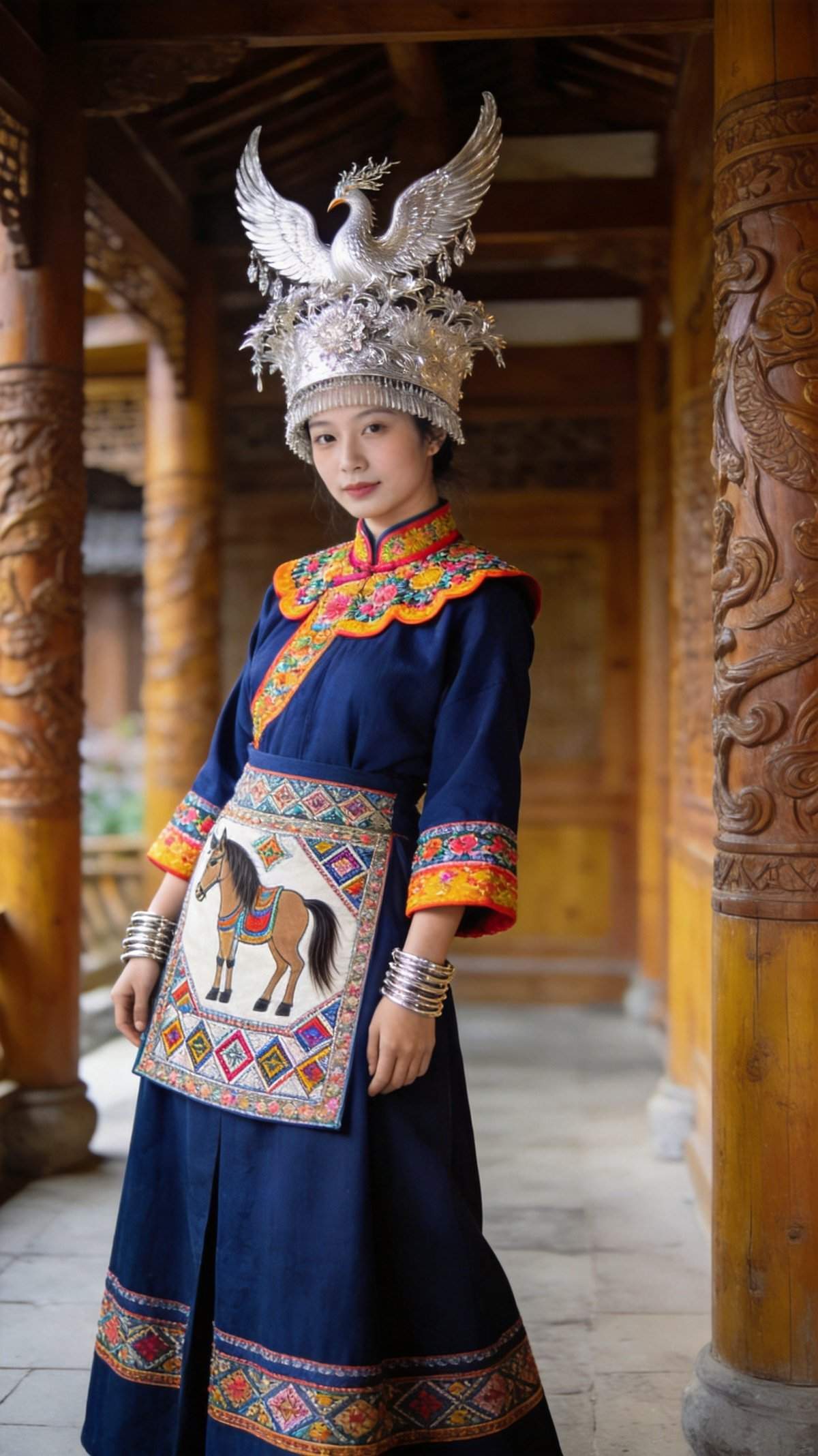
Women wear a long-sleeved jacket in deep indigo with embroidered trim at the collar, cuffs, and front opening, over a long pleated skirt. A embroidered apron with intricate spiral patterns covers the front. Men wear front-fastening jackets in indigo blue or black with loose trousers. The fabrics are traditionally woven from cotton and dyed with natural indigo through repeated immersion in fermented dye vats, a process that can take weeks to achieve the characteristically deep blue-black hue.
Women's jackets feature a distinctive standing collar and cloth knot buttons along the right side. The pleated skirt, which can contain dozens of fine pleats, is secured with an embroidered waistband and falls below the knee. For everyday work in the rice paddies and tea plantations, Shui women may wear a simpler version of the traditional outfit with fewer embroidered panels, reserving their most elaborately decorated garments for festivals, weddings, and important community gatherings. Girls begin learning to sew and embroider from their mothers as young as seven or eight years old.
Headwear and Adornments
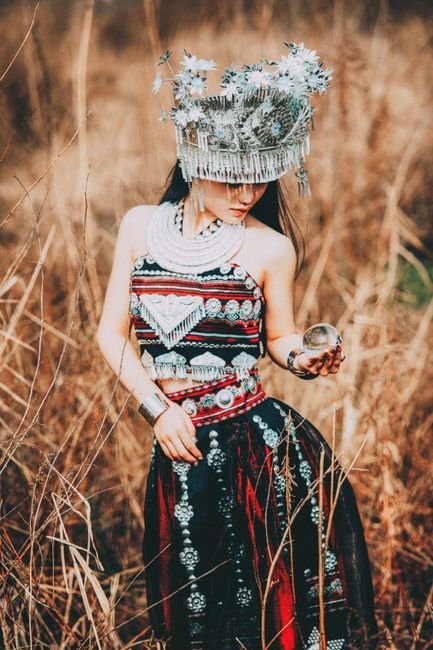
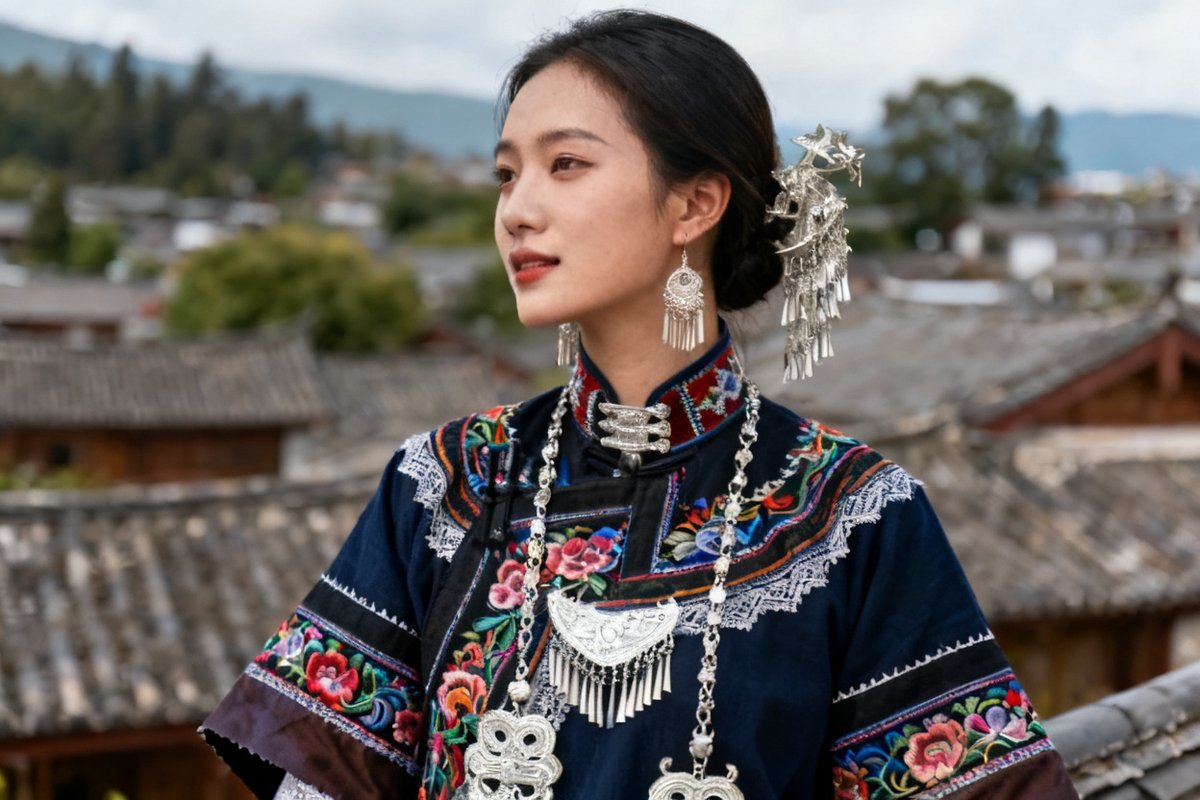
Women wrap their hair in black cloth turbans or wear embroidered headbands, sometimes with silver hair ornaments featuring spiral motifs. Unmarried women may wear colorful headscarves. Men wear black or blue cloth head wraps. Silver jewelry forms an essential part of Shui women's adornment, including hairpins, earrings, neck rings, and bracelets. Silver is valued not only for its beauty but also as a traditional store of wealth that can be passed down through generations.
On ceremonial occasions, women arrange their hair in a coiled bun secured with multiple silver hairpins, some featuring dangling ornaments that sway with movement. The distinctive conical bamboo hat worn in rainy weather is both practical and culturally significant, its pointed shape allowing water to run off while working in the fields. Some hats feature painted or woven decorative patterns around the brim.
Embroidery and Decorative Arts
The Shui are famous for horse-tail embroidery - silk thread is wrapped around horsehair to create raised, spiral-like patterns in silver and white on dark fabric. This technique produces unique three-dimensional designs found nowhere else in China. The process requires exceptional skill: horsehair is carefully selected, cleaned, and straightened, then silk thread is wound tightly around each strand. The wrapped horsehair is then sewn onto the fabric surface in predetermined patterns, creating durable raised relief designs that catch the light.
In addition to horse-tail embroidery, Shui women practice cross-stitch, satin stitch, and applique techniques. Common motifs include spirals representing water currents and the continuity of life, geometric diamonds symbolizing the mountains and fields of their homeland, and stylized flowers and fish patterns associated with prosperity. The embroidery is concentrated on the collar, cuffs, apron, and waistband — the areas most visible during daily activities and social interactions.
The Shui peoples horse-tail embroidery, which creates unbroken spiral patterns using silk-wrapped horsetail fibers, represents what textile conservators consider one of the most technically demanding embroidery techniques ever developed.
Color Symbolism
Deep indigo blue and black dominate Shui clothing, representing the fertile soil and water that sustain their rice-farming communities. The horse-tail embroidery stands out in silvery-white and light blue against the dark fabric, evoking moonlight on water — a significant image in Shui cosmology. Red, yellow, and green accents appear in festival garments and children's clothing, symbolizing happiness, harvest, and growth respectively. The interplay between dark base fabrics and bright embroidery creates a visual balance that mirrors the Shui worldview of harmony between the earthly and spiritual realms.
Festival Attire
During the Duan Festival (Shui New Year) and the Maox Festival, women wear their finest indigo jackets with horse-tail embroidery, most elaborate silver ornaments, and new pleated skirts. The Duan Festival, celebrated in the ninth lunar month, is the most significant event on the Shui calendar and involves horse racing, singing, and ancestor worship ceremonies. Families prepare special glutinous rice dishes and dress in their most beautiful clothing to welcome the new year.
The Maox Festival, held in the sixth lunar month, honors the water gods and features rituals related to Shui agricultural traditions. During this festival, women wear blue jackets with specific water-themed embroidery patterns, and communities gather near rivers and streams to make offerings. Wedding ceremonies also showcase the finest Shui textiles, with brides wearing layered embroidered garments and full silver jewelry sets that may include up to a dozen separate pieces.
Modern Influence and Preservation
Shui horse-tail embroidery has been inscribed on Chinas national intangible cultural heritage list and is recognized as a unique textile art form with no parallel in other ethnic traditions. In Sandu Shui Autonomous County, cultural centers offer apprenticeships where master embroiderers transmit their skills to younger generations. The distinctive spiral patterns of Shui embroidery have attracted interest from contemporary fashion designers and textile researchers internationally.
Efforts to preserve Shui Script run parallel to textile preservation, with museums and research institutes documenting both the written characters and the embroidered patterns they inspired. Cultural tourism initiatives in Guizhou allow visitors to learn about Shui traditions firsthand, providing economic incentives for communities to maintain their distinctive clothing traditions. While modern clothing is now common for daily wear, traditional Shui attire remains a powerful symbol of ethnic identity and cultural pride.
Did You Know?
The Shui are one of the few ethnic groups in China with their own ancient pictographic script, called Shui Script, which is used for divination and ritual purposes - their horse-tail embroidery spirals are said to echo the shapes of these ancient characters.
Did You Know?
The Shui are one of the few ethnic groups in China with their own ancient pictographic script, called Shui Script, which is used for divination and ritual purposes - their horse-tail embroidery spirals are said to echo the shapes of these ancient characters.
Water Script and Textile Patterns of the Shui
The Shui people of Guizhou Province are one of China's few ethnic groups with a native written script, and their textile patterns draw inspiration from the same symbolic vocabulary found in their writing. The Shui script, used primarily by ritual specialists, contains pictographic characters that appear transformed into geometric embroidery motifs on Shui clothing. Spiral patterns representing water flow are particularly common, reflecting the importance of water in Shui identity and livelihood. The spiral motifs appear on collar panels, cuff bands, and apron edges, embroidered in fine chain stitch using silk threads in contrasting colors.
Shui women's traditional attire features a blue or black jacket with a distinctive stand-up collar, decorated with embroidered panels at the collar, front opening, and hem. The jacket is worn over a long skirt that reaches the ankle, with the skirt fabric being either solid indigo blue or featuring narrow woven stripes. A waist apron in a lighter color is worn over the skirt, providing a canvas for the most elaborate embroidery. Shui women also wear embroidered shoes with upturned toes, a style shared with some neighboring groups.
Water Script and Textile Patterns of the Shui
The Shui people of Guizhou Province are one of China's few ethnic groups with a native written script, and their textile patterns draw inspiration from the same symbolic vocabulary found in their writing. The Shui script, used primarily by ritual specialists, contains pictographic characters that appear transformed into geometric embroidery motifs on Shui clothing. Spiral patterns representing water flow are particularly common, reflecting the importance of water in Shui identity and livelihood. The spiral motifs appear on collar panels, cuff bands, and apron edges, embroidered in fine chain stitch using silk threads in contrasting colors.
Shui women's traditional attire features a blue or black jacket with a distinctive stand-up collar, decorated with embroidered panels at the collar, front opening, and hem. The jacket is worn over a long skirt that reaches the ankle, with the skirt fabric being either solid indigo blue or featuring narrow woven stripes. A waist apron in a lighter color is worn over the skirt, providing a canvas for the most elaborate embroidery. Shui women also wear embroidered shoes with upturned toes, a style shared with some neighboring groups.