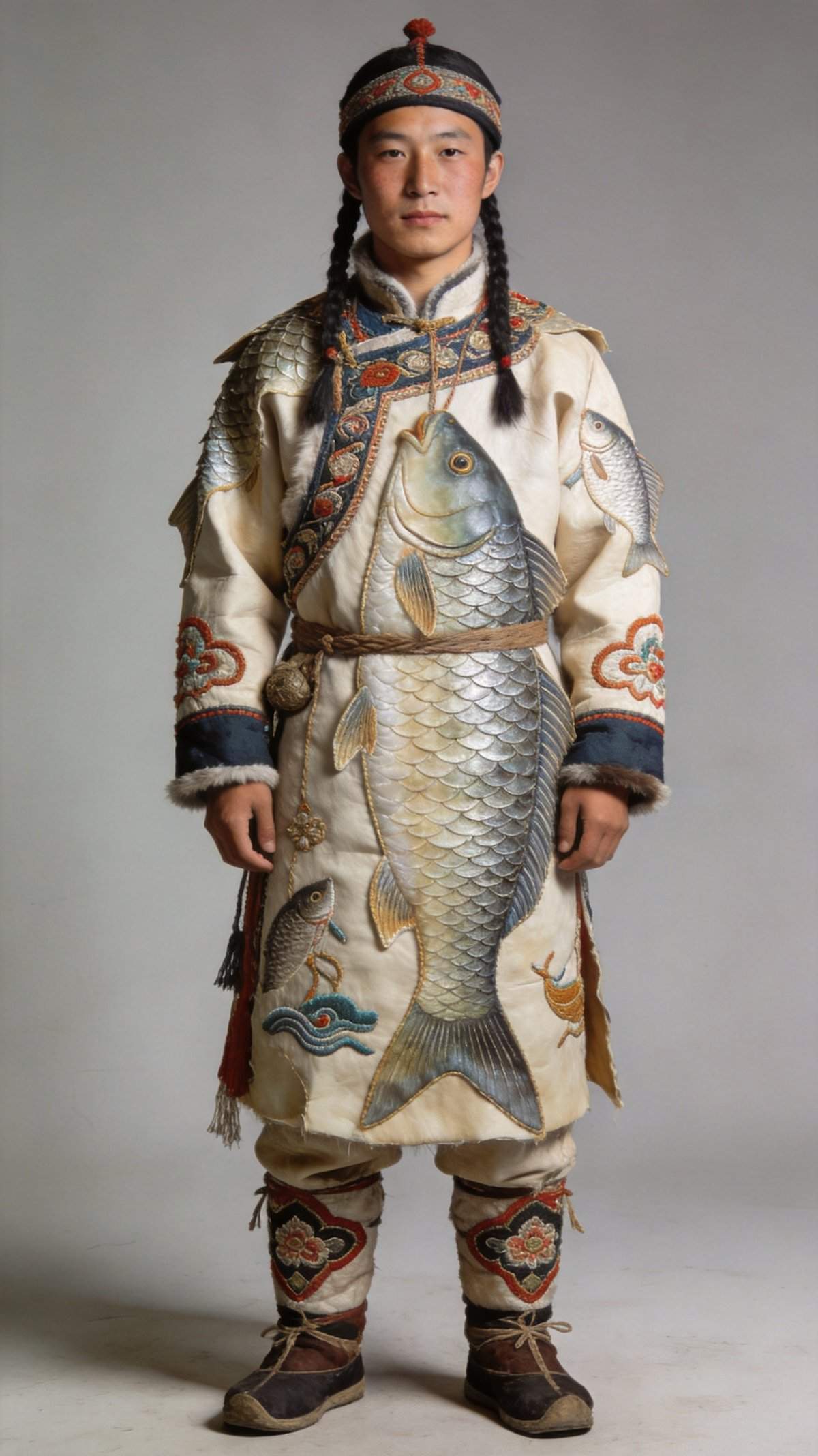
Hezhen traditional clothing is uniquely crafted from fish skin, earning them the historical name Fish Skin Tribe. Their garments are decorated with dyed fish-skin applique and cloud-scroll patterns. The Hezhen are one of the smallest ethnic groups in China and the only one in the world whose traditional clothing technology centers on processing fish skin into a wearable textile.
Historical and Cultural Background
The Hezhen people, also known as the Nanai or Hezhe, inhabit the river basins where the Heilongjiang (Amur), Songhua, and Ussuri rivers converge in northeast China, with related populations across the border in Russia. For countless generations, the Hezhen lived as fishermen and hunters along these rich waterways, developing an intimate knowledge of the river ecosystems that sustained them. The annual salmon run was the central event of the Hezhen economic calendar, providing not only food but the raw material for their most remarkable cultural achievement — fish-skin clothing.
With a current population of just over 5,000 in China, the Hezhen are concentrated in Tongjiang, Raohe, and Fuyuan counties of Heilongjiang Province. Their small population belies their cultural significance as bearers of a textile tradition found nowhere else on earth. The Hezhen language, belonging to the Tungusic family, is critically endangered with fewer than a dozen elderly native speakers remaining in China, though revitalization efforts including language classes and documentation projects are underway.
Traditional Hezhen society was organized around village communities governed by councils of male elders, with shamanism as the dominant religious framework. Hezhen shamans, who could be male or female, served as healers, diviners, and intermediaries with the spirit world. Shamanic costumes, distinct from everyday dress, incorporated metal mirrors, iron pendants representing spirit helpers, and elaborate headdresses — a separate clothing tradition parallel to the fish-skin garments worn by ordinary people.
Key Features of Hezhen Attire
- Fish-skin processed into wearable leather
- Fish-skin trousers and boots waterproof for fishing
- Dyed fish-skin applique in cloud scroll and geometric patterns
- Dog-fur trim on winter parka hoods and cuffs
- Hempen cloth robes for summer wear as alternative
Traditional Garments
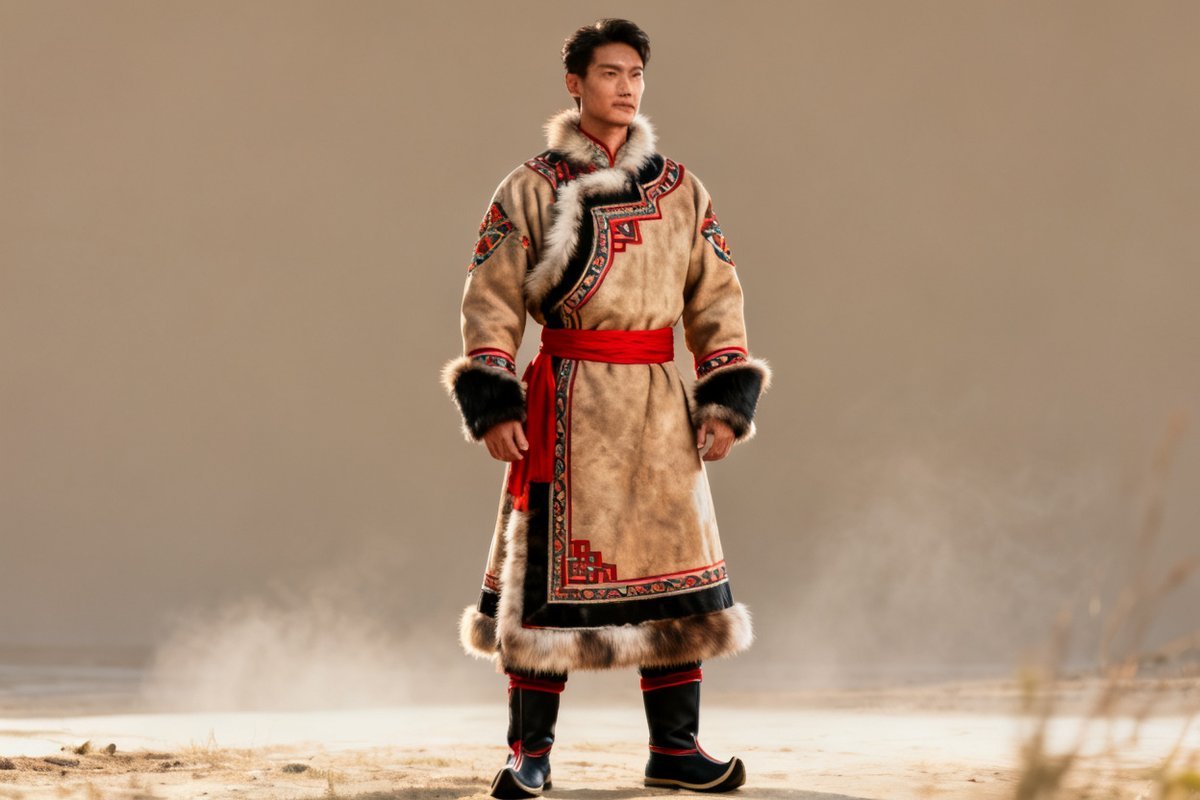
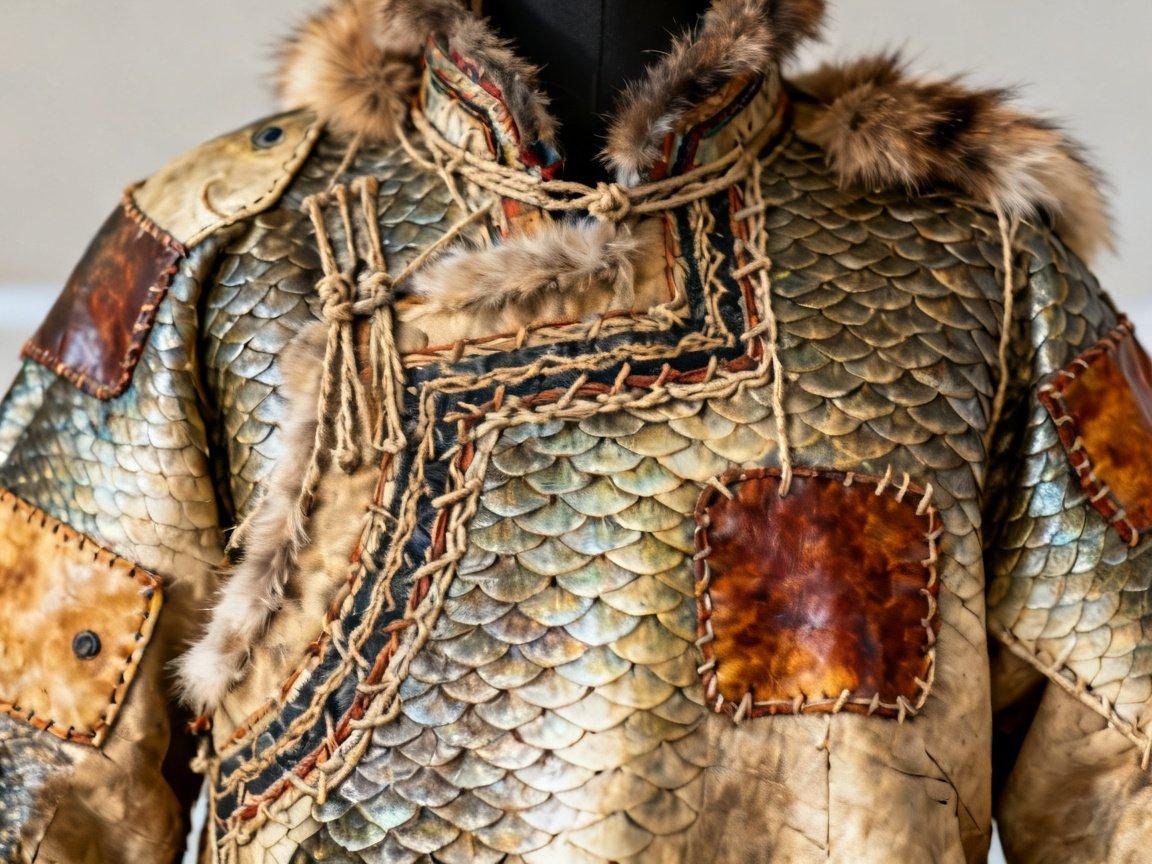
Men and women traditionally wore robes from salmon or pike skin, with the scales removed and skin softened through repeated pounding. The fish-skin robe is knee-length with wide sleeves, decorated with dyed fish-skin applique at hem, collar, and cuffs. The process of transforming raw fish skin into wearable fabric is labor-intensive and requires specialized knowledge: the skin must be removed intact from the fish, scraped clean of flesh, stretched on a frame, and repeatedly pounded with a wooden mallet until it becomes soft and pliable. The prepared skins are then sewn together using thread made from fish sinew or deer tendon.
The complete fish-skin ensemble includes trousers and boots worn by fishermen wading in rivers — the natural oils remaining in the processed skin provide a degree of water resistance superior to cloth. A full set of fish-skin clothing requires skins from approximately fifty large salmon or carp, representing the catch of an entire fishing season. During summer months when fish skins were less readily available, the Hezhen wore robes of hemp cloth, often decorated with embroidered bands in geometric and swirling water-wave patterns.
Headwear and Adornments
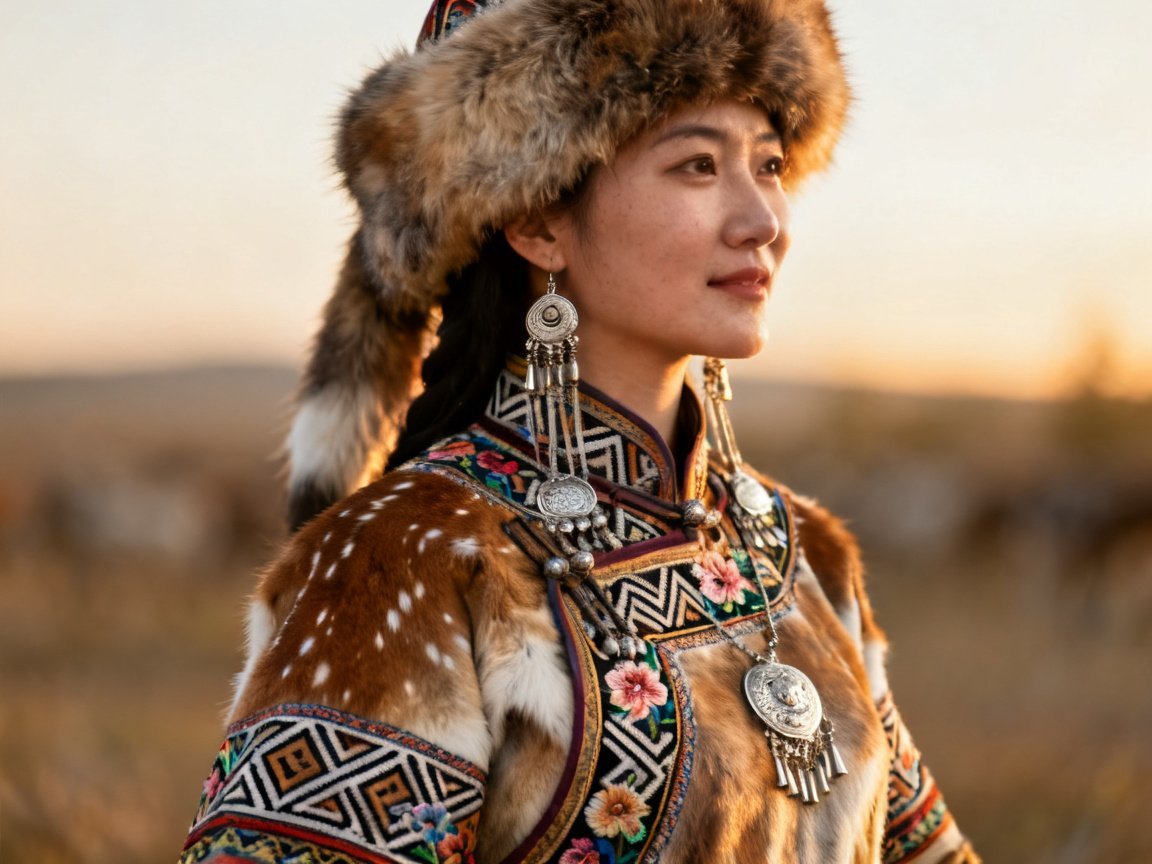
Winter hats were made from dog or fox fur with ear flaps. Summer hats were simple cloth caps or headbands. Hezhen hunters and fishermen also wore distinctive birch-bark hats — conical or rounded caps constructed from layers of birch bark stitched together, lightweight and providing excellent protection against both rain and sun. These hats were often decorated with incised patterns depicting fish, waves, and hunting scenes, created by scraping away layers of the bark to reveal contrasting tones.
Embroidery and Decorative Arts
Rather than thread embroidery, the Hezhen specialize in fish-skin applique — pieces of fish skin dyed with natural pigments cut into scroll patterns and sewn onto garments. The cloud-scroll motif, known as the "Hezhen spiral," is the most characteristic decorative element, appearing on the hem, collar, sleeve bands, and back panel of robes. This pattern is believed to represent river eddies and the swirling movement of water — a visual language drawn from the environment that defined Hezhen life.
Natural dyes extracted from local plants produce the colors used in fish-skin applique: blue from indigo, red from madder root, yellow from sophora flowers, brown from walnut husks, and black from charcoal mixed with fish glue. The dyed fish-skin pieces are cut into precise shapes using scissors or knives and stitched onto the garment with sinew thread. Unlike textile embroidery which penetrates the fabric, applique sits on the surface, creating a subtle relief effect that becomes more pronounced as the garment ages and the base material darkens with wear.
The Hezhen mastery of fish-skin garment-making represents one of the worlds most specialized textile technologies - a complete set of clothing requires skins from approximately fifty large salmon.
Color Symbolism
Natural fish-skin tones from cream to light brown. Dyed applique adds blue, red, yellow, brown, and black. The color palette of Hezhen clothing mirrors the riverside landscape: the cream and brown of fish skin evokes sandbars and driftwood, while the dyed applique colors capture the blue of the sky reflected in water, the red of autumn leaves, and the yellow of reeds along the riverbank.
Festival Attire
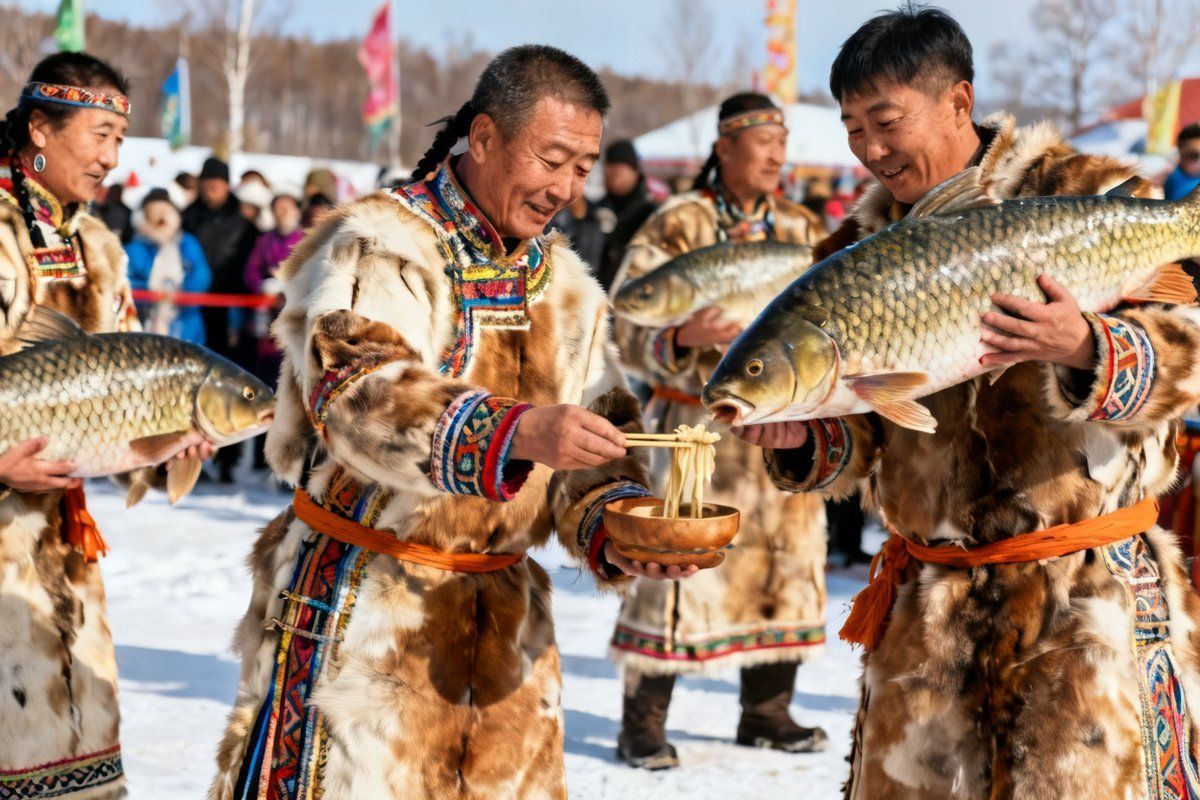
During the Wurigong Festival, the most elaborately decorated fish-skin robes with full applique coverage are worn. The Wurigong Festival, held during the fishing season, is the most important Hezhen celebration, featuring boat races, fishing competitions, and the performance of the Yimakan — a form of oral storytelling that combines speech and song to narrate heroic epics. Festival participants dress in their finest fish-skin garments, some of which are family heirlooms passed down through generations. Beyond formal festivals, weddings are the primary occasion for displaying the full artistry of Hezhen clothing. A traditional Hezhen bride would wear a complete fish-skin ensemble — robe, apron, trousers, and boots — all decorated with the finest applique work, often accompanied by a birch-bark hat painted with wedding symbols.
Modern Influence and Preservation
Hezhen fish-skin clothing craftsmanship is recognized as a national intangible cultural heritage. As fish-skin processing was on the verge of extinction by the late 20th century — with only a handful of elderly women retaining the knowledge — emergency preservation measures were implemented that have successfully revived the tradition. Master artisan You Wenfeng became the first nationally designated inheritor of Hezhen fish-skin craft, training a new generation of practitioners. The Hezhen Fish-Skin Culture Museum in Tongjiang displays historical garments and demonstrates the production process for visitors. Contemporary fish-skin products now include not only traditional clothing but also paintings, accessories, and decorative items that adapt the ancient technique to modern markets, providing economic sustainability for the craft.
Modern Influence and Preservation
Hezhen fish-skin clothing craftsmanship is recognized as a national intangible cultural heritage.
Did You Know?
The Hezhen are one of the smallest ethnic minorities in China and the only one traditionally known for making clothing from fish skin.
Fish Leather Craft of the Hezhen
The Hezhen people of Heilongjiang Province have developed one of the most distinctive clothing traditions in China: the use of fish leather for garments and accessories. Historically reliant on fishing along the Amur River, Hezhen women developed sophisticated techniques for processing fish skins into supple, water-resistant leather suitable for clothing. The skins of large fish species, particularly carp and pike, are carefully removed, scraped clean, stretched, and softened through repeated kneading with stone tools. The resulting material is lightweight, durable, and naturally waterproof, making it ideal for the wet and cold conditions of the northeastern river valleys.
Fish leather garments are assembled using sinew thread, with seams positioned to shed water rather than trap it against the wearer's body. Decorative elements include appliqued patterns cut from dyed fish skin or fabric, creating geometric designs that follow the natural grain of the base material. While fish leather clothing is rarely produced for daily wear today, the technique is preserved through cultural heritage programs and demonstrated at festivals.
Fish Leather Craft of the Hezhen
The Hezhen people of Heilongjiang Province have developed one of the most distinctive clothing traditions in China: the use of fish leather for garments and accessories. Historically reliant on fishing along the Amur River, Hezhen women developed sophisticated techniques for processing fish skins into supple, water-resistant leather suitable for clothing. The skins of large fish species, particularly carp and pike, are carefully removed, scraped clean, stretched, and softened through repeated kneading with stone tools. The resulting material is lightweight, durable, and naturally waterproof, making it ideal for the wet and cold conditions of the northeastern river valleys.
Fish leather garments are assembled using sinew thread, with seams positioned to shed water rather than trap it against the wearer's body. Decorative elements include appliqued patterns cut from dyed fish skin or fabric, creating geometric designs that follow the natural grain of the base material. While fish leather clothing is rarely produced for daily wear today, the technique is preserved through cultural heritage programs and demonstrated at festivals.