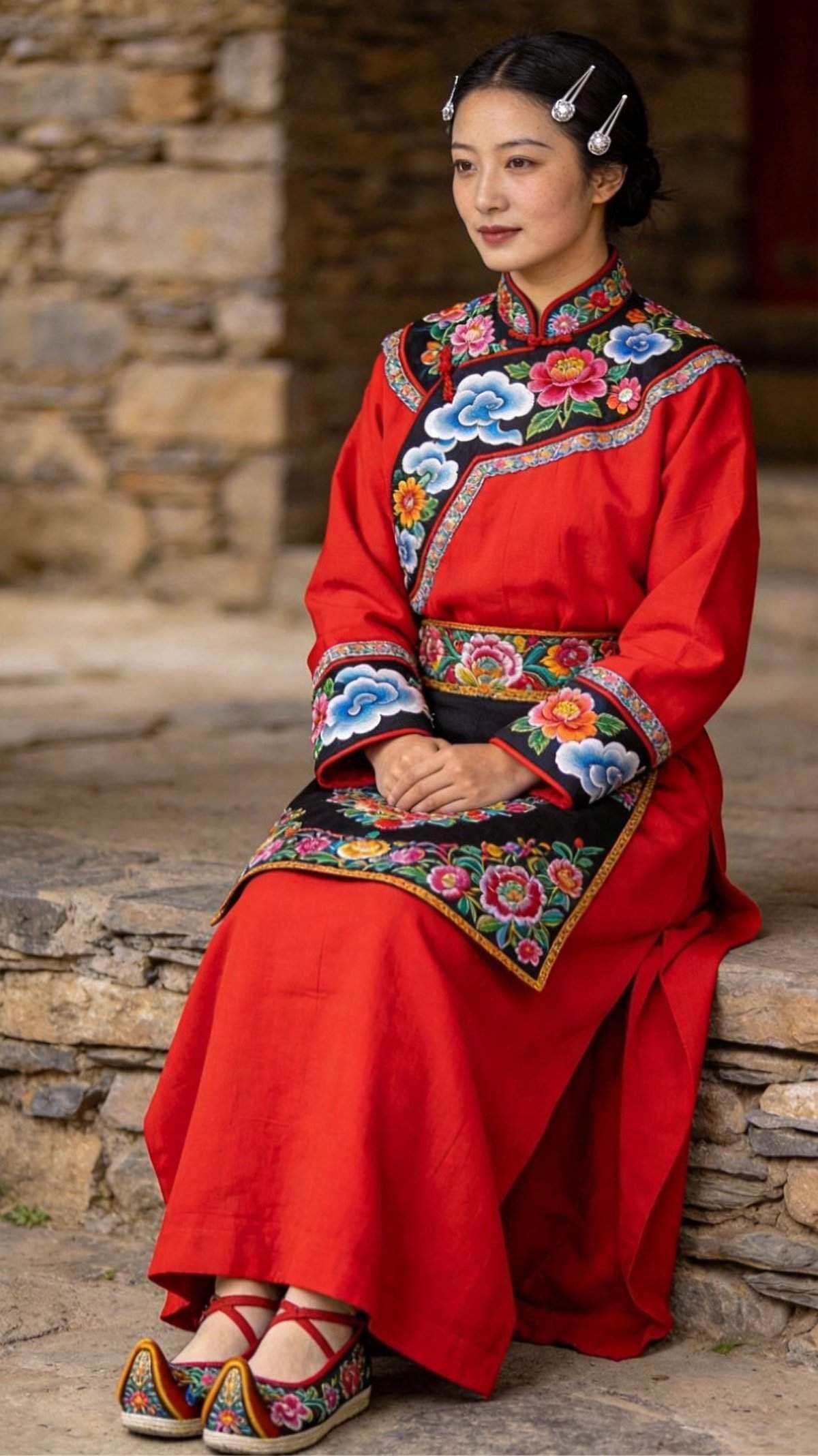
Qiang traditional clothing is distinguished by exquisite cross-stitch embroidery, long white headscarves for women, and sheepskin vests for men. The Qiang are famous for their masterful embroidery tradition, recognized as national intangible cultural heritage. With a population of approximately 310,000, the Qiang are one of China's most ancient ethnic groups, mentioned in Shang dynasty oracle bone inscriptions over 3,000 years ago. They live primarily in the Aba Tibetan and Qiang Autonomous Prefecture and Beichuan Qiang Autonomous County in Sichuan Province, a mountainous region that straddles the eastern edge of the Tibetan Plateau.
Key Features of Qiang Attire
- Exquisite cross-stitch embroidery in geometric and floral patterns
- Long flowing white or blue headscarves for women
- Mens sheepskin or goat-hide front-fastening vests
- Womens long blue or black gowns with embroidered waistbands
- Embroidered cloth shoes (yunyun xie) with cloud-shaped toe caps
Traditional Garments
Women wear a long gown in blue or black, with the collar, cuffs, hem, and waistband heavily embroidered in colorful cross-stitch patterns. The gown reaches the ankles and is cut with a slight A-line silhouette that widens from the waist to the hem. A sheepskin vest is worn over the gown for warmth — the vest is sleeveless, fastens at the front, and the wool faces inward against the body while the smooth hide surface faces outward. The vest is not heavily decorated, its beauty coming from the natural texture of the sheepskin and the simple leather thongs that serve as fasteners.
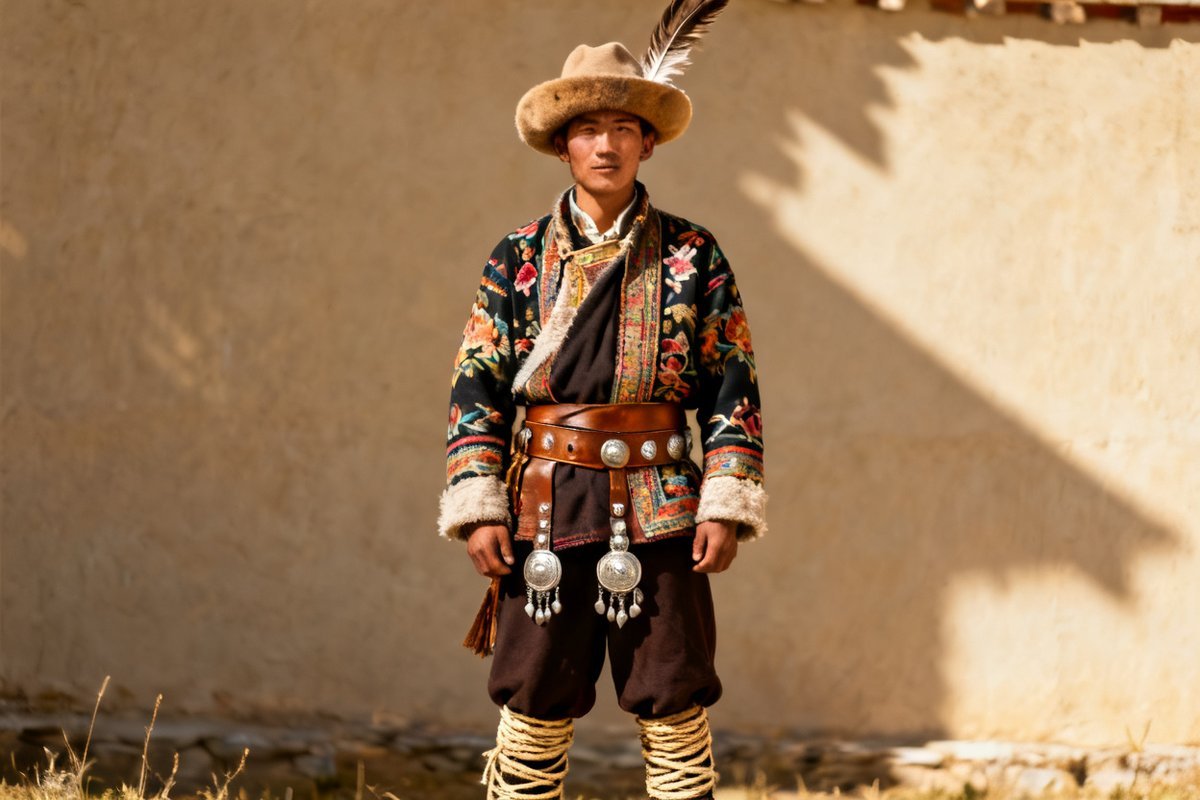
Men wear a dark front-fastening jacket over a white shirt, with a sheepskin or goat-hide vest, loose trousers, and embroidered cloth shoes with distinctive cloud-pattern toes. The men's jacket is simpler than the women's gown, with embroidery limited to narrow bands at the collar and cuffs. The white shirt underneath provides contrast and is usually visible at the collar and cuffs. Loose trousers are gathered at the ankle or tucked into cloth leggings, a style suited to walking the steep mountain paths of the Qiang homeland. The yunyun xie — cloud shoes — are worn by both genders and are named for their distinctive upturned toe caps embroidered with swirling cloud patterns in bright silk threads.
Headwear and Adornments
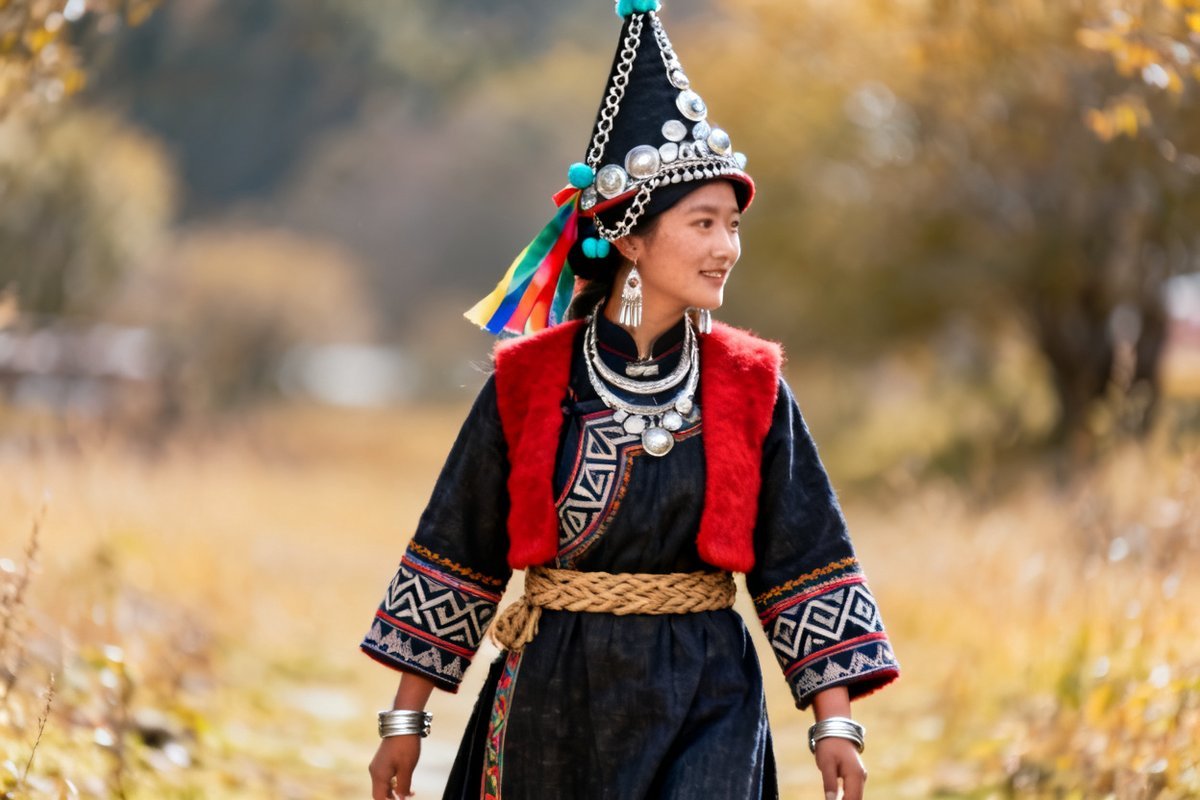
Women wear a long white or blue cloth headscarf that wraps around the head and flows down the back, sometimes reaching below the waist. The scarf is the most visually dramatic element of Qiang women's dress, creating a vertical line that elongates the silhouette and moves with the wearer's every step. The ends of the scarf are often the most embroidered part, featuring dense cross-stitch patterns and sometimes beaded fringe. The headscarf is secured with silver hairpins that pass through the wrapped layers, and some styles incorporate a stiff inner band that helps the scarf maintain its shape throughout the day.
Men wear simple black or white head wraps, and some wear fur-trimmed caps in winter. Silver earrings are worn by Qiang men more commonly than among many neighboring groups, signaling the Qiang tradition of male personal adornment. Women's jewelry includes silver necklaces with ornate pendants, heavy silver bracelets engraved with geometric patterns, and silver finger rings set with turquoise or coral. Silver hairpins are often the most decorated items, featuring repousse floral designs and fine filigree work that demonstrates the silversmith's mastery.
Embroidery and Decorative Arts
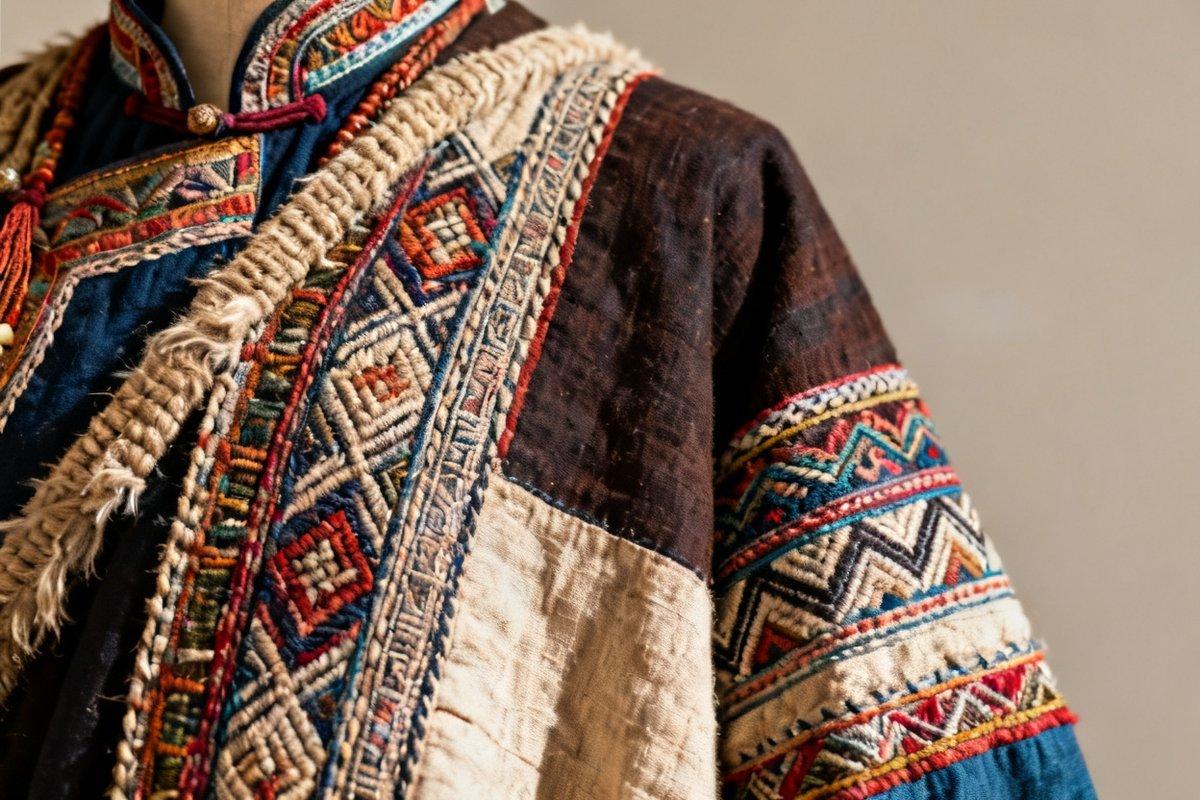
Qiang embroidery is nationally famous and represents one of the most sophisticated needlework traditions in China. Using masterful cross-stitch and chain-stitch techniques, Qiang embroiderers create geometric patterns — diamonds, zigzags, swastikas, and stepped pyramids — alongside stylized floral, bird, and butterfly motifs. Cross-stitch is the foundational technique, worked on counted-thread principles where the embroiderer follows the weave of the fabric rather than a pre-drawn pattern. This requires extraordinary precision: a single mistake in counting threads will throw off the entire geometric composition, and the embroiderer must either unstitch back to the error or incorporate it into a modified design.
Embroidery covers collars, cuffs, trouser cuffs, aprons, and the distinctive cloud-toed shoes. A fully embroidered festival outfit may involve tens of thousands of individual cross-stitches, representing many months of accumulated evening work. The waistband is the most important embroidered element — Qiang women's waistbands can be fifteen to twenty centimeters wide and wrap completely around the waist, creating a horizontal band of dense, colorful embroidery that contrasts with the dark gown. Each embroiderer develops her own compositional style within the shared vocabulary of Qiang motifs, so an experienced Qiang woman can often identify the maker of a particular waistband by its stitch density, color preferences, and the specific arrangement of pattern elements.
Qiang embroidery has been described by textile scholars as writing without words - each geometric motif and floral pattern carries specific meanings that have been passed down through seventy generations of Qiang women.
Color Symbolism
Blue and black dominate base garments, colors associated with the earth, the sky at dusk, and the practical demands of mountain life where darker fabrics hide stains and absorb solar warmth. Embroidery uses bright red (the primary color, representing life, celebration, and feminine energy), pink (youth and romance), green (the mountain forests), yellow (prosperity and the sun), blue (the sky), and white (purity, particularly meaningful for the white headscarf). Sheepskin vests remain in natural tan, valued for the quality of the hide rather than applied color. The white headscarf provides essential contrast against the dark gown, its brightness symbolizing the purity of intention with which a Qiang woman approaches her daily responsibilities. The combination of dark ground fabric and intensely colorful embroidery creates the characteristic Qiang visual experience — a dark, restrained silhouette enlivened by concentrated bursts of pattern and color at the edges.
Festival Attire
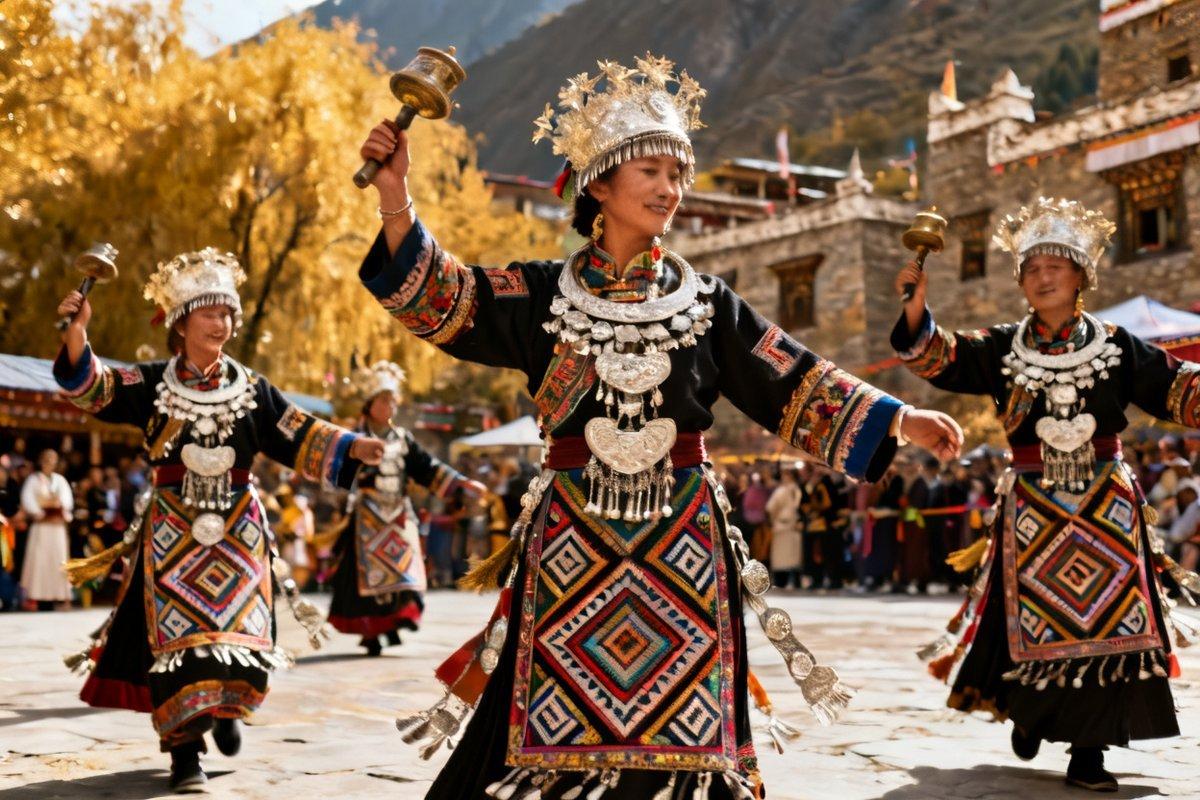
During the Qiang New Year, celebrated on the first day of the tenth lunar month, and the Mountain Sacrifice Festival honoring the deities of the peaks that tower over Qiang villages, women wear their most heavily embroidered gowns and the widest embroidered waistbands with full sets of silver jewelry. The Qiang New Year is the most important celebration in the Qiang calendar, marked by ritual offerings to ancestors, the shibi (Qiang priest) performing blessings in the Qiang language, and community feasting that extends over multiple days. For this occasion, the embroidery on display represents years of accumulated work — some women wear waistbands that incorporate embroidery begun by their mothers or grandmothers, the pattern continuing across generations.
The Mountain Sacrifice Festival involves processions to sacred sites, where the white headscarves of the women create a flowing line of brightness as the community climbs mountain paths to the ritual grounds. Qiang weddings feature the most elaborate embroidery of all — the bride's gown, headscarf, and shoes are worked with the densest stitch patterns, and she may wear multiple embroidered aprons layered for maximum visual impact. The cloud shoes worn by both bride and groom symbolize the couple's ascent together through life, their upturned toes pointing toward a shared future. After the 2008 Wenchuan earthquake, which devastated the Qiang heartland, the preservation of Qiang embroidery became not just a cultural but a humanitarian priority, with embroidery training programs providing economic recovery for displaced Qiang women.
Modern Influence and Preservation
Qiang embroidery is recognized as national intangible cultural heritage and is actively taught in Qiang communities through training centers and apprenticeship programs. The post-earthquake reconstruction effort brought significant attention and resources to Qiang embroidery preservation, with embroidery cooperatives established in resettlement communities to provide income and cultural continuity. Qiang cross-stitch patterns influence contemporary Chinese textile and fashion design, with designers incorporating the distinctive geometric vocabulary into modern clothing and accessories. Qiang embroidery has been exhibited internationally, introducing this ancient needlework tradition to global audiences. While the number of women who can execute the full range of traditional stitches has declined, a core group of recognized master embroiderers maintains the complete knowledge, and younger Qiang are increasingly taking up embroidery as a source of cultural pride and supplementary income. The cloud shoes, with their distinctive upturned embroidered toes, have become an iconic Qiang product, produced by cooperatives and sold as cultural souvenirs that directly support the continuation of the embroidery tradition.
Did You Know?
The Qiang are one of Chinas oldest ethnic groups, descended from the ancient Qiang people mentioned in oracle bone scripts from the Shang dynasty over 3,000 years ago.
Ancient Embroidery Motifs of the Qiang
The Qiang people of Sichuan Province, one of China's oldest recorded ethnic groups with a history tracing back to the Shang Dynasty, maintain embroidery traditions that preserve motifs from deep antiquity. Qiang embroidery uses predominantly geometric patterns including swastikas, concentric circles, and stepped diamonds, motifs that archaeological evidence suggests have been continuous in the region for over three thousand years. The patterns are executed in cross-stitch and chain stitch on dark blue or black cotton fabric, using brightly colored silk threads in red, green, yellow, and blue.
Qiang women's traditional attire includes a long cotton gown in indigo blue or black, worn with a sleeveless sheepskin vest over it in cooler weather. The gown features embroidered panels at the collar, cuffs, and hem, with the density of embroidery indicating the garment's formality. A woven apron covers the front of the gown from waist to hem, adding another layer of embroidered decoration. Qiang men wear a similar but simpler version, with less embroidery and a shorter length suited for physical labor.