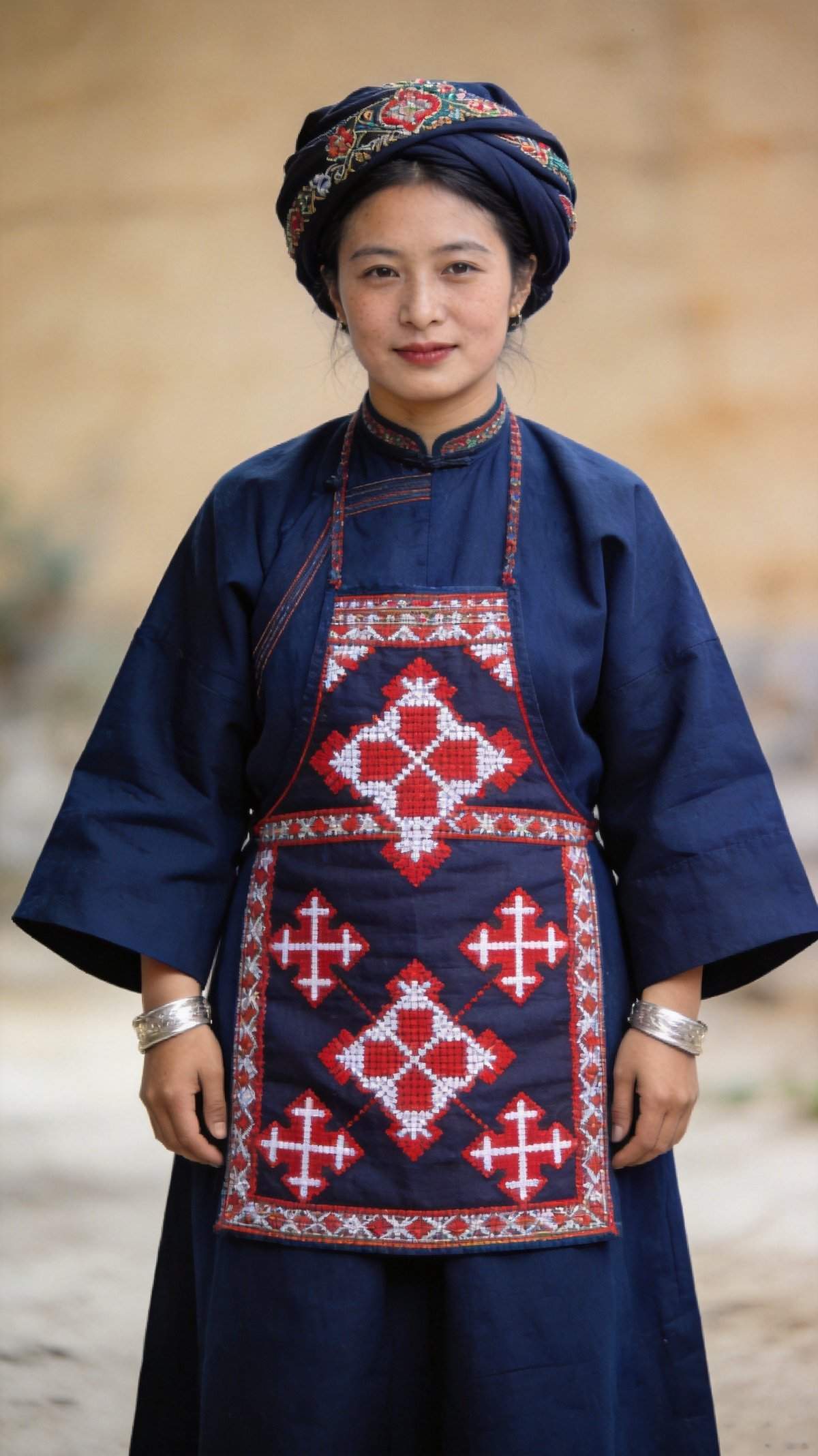
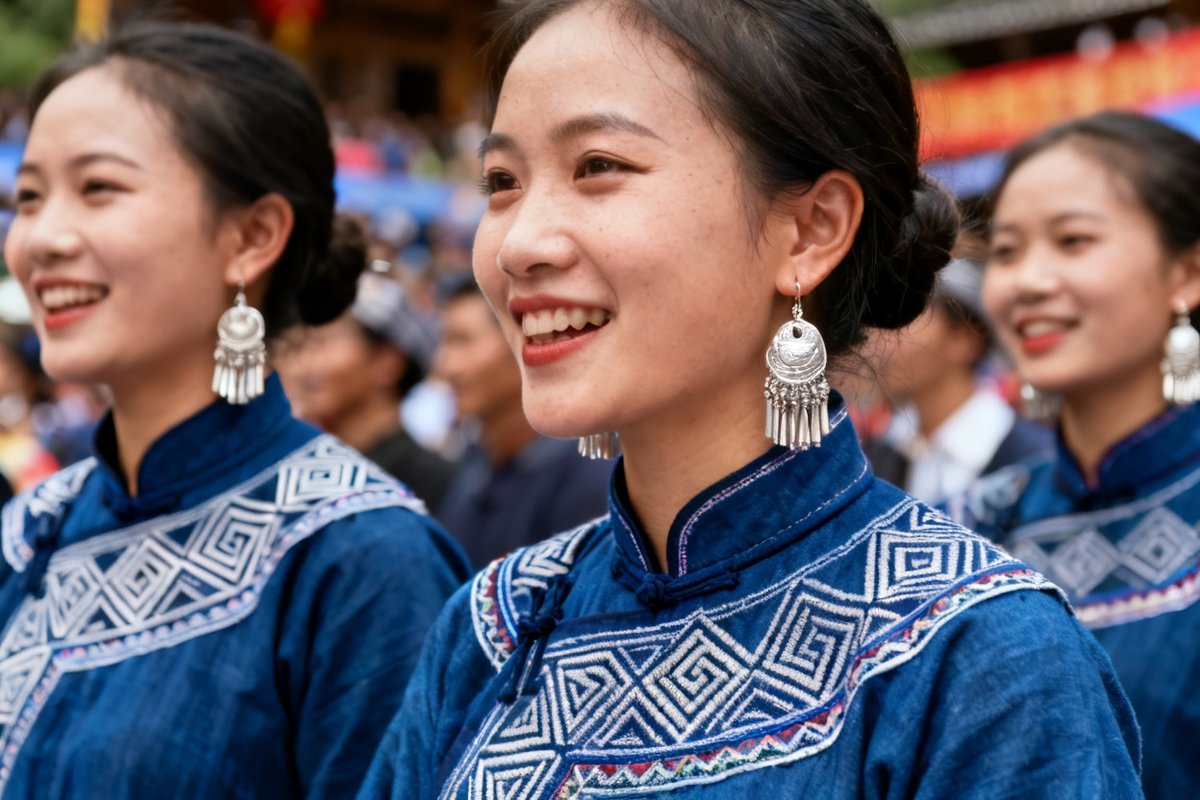
Gelao traditional clothing is known for its distinctive handwoven indigo fabric and unique collarless designs. Womens jackets feature wide sleeves and decorative side slits with intricate geometric embroidery. The Gelao are one of the oldest known inhabitants of Guizhou Province, with archaeological and historical records tracing their presence in the region back over two thousand years.
Historical and Cultural Background
The Gelao people, known in Chinese historical texts as the Liao, are widely considered the original aboriginal inhabitants of the Guizhou plateau. Chinese chronicles from the Han dynasty describe them as skilled agriculturalists who cultivated rice in elaborately engineered terraced fields carved into the steep mountain slopes. Over centuries of migration and cultural exchange with neighboring groups including the Miao, Buyei, and Han Chinese, the Gelao developed a distinctive culture that nonetheless preserved elements of their ancient heritage — most notably in their language, religious practices, and clothing traditions.
The Gelao population of approximately 550,000 is concentrated in Guizhou Province, particularly in Wuchuan Gelao and Miao Autonomous County and Daozhen Gelao and Miao Autonomous County, with smaller communities in Guangxi, Yunnan, and Sichuan provinces. Gelao communities historically organized themselves into subgroups distinguished by clothing color — the Red Gelao, White Gelao, Green Gelao, and Blue Gelao — each with distinct dialects and customs. These color-based subdivisions are recorded in Ming and Qing dynasty gazetteers and remain a source of cultural identity today, though the distinctions have blurred over time.
The Gelao language belongs to the Kra-Dai language family, though it is now critically endangered with fewer than 6,000 speakers, most of whom are elderly. Language revitalization efforts in recent years include community language classes and the publication of Gelao dictionaries, recognizing that the loss of language would sever a vital link to the traditional knowledge encoded in oral histories, ritual chants, and textile terminology.
Key Features of Gelao Attire
- Collarless front-fastening jackets with wide sleeves and side slits
- Handwoven indigo-dyed hemp and cotton fabric
- Geometric embroidery on collar panels, cuffs, and apron edges
- Large solid silver earrings as a distinctive ornament
- Mens collarless short jackets with cloth buttons and wide-leg trousers
Traditional Garments
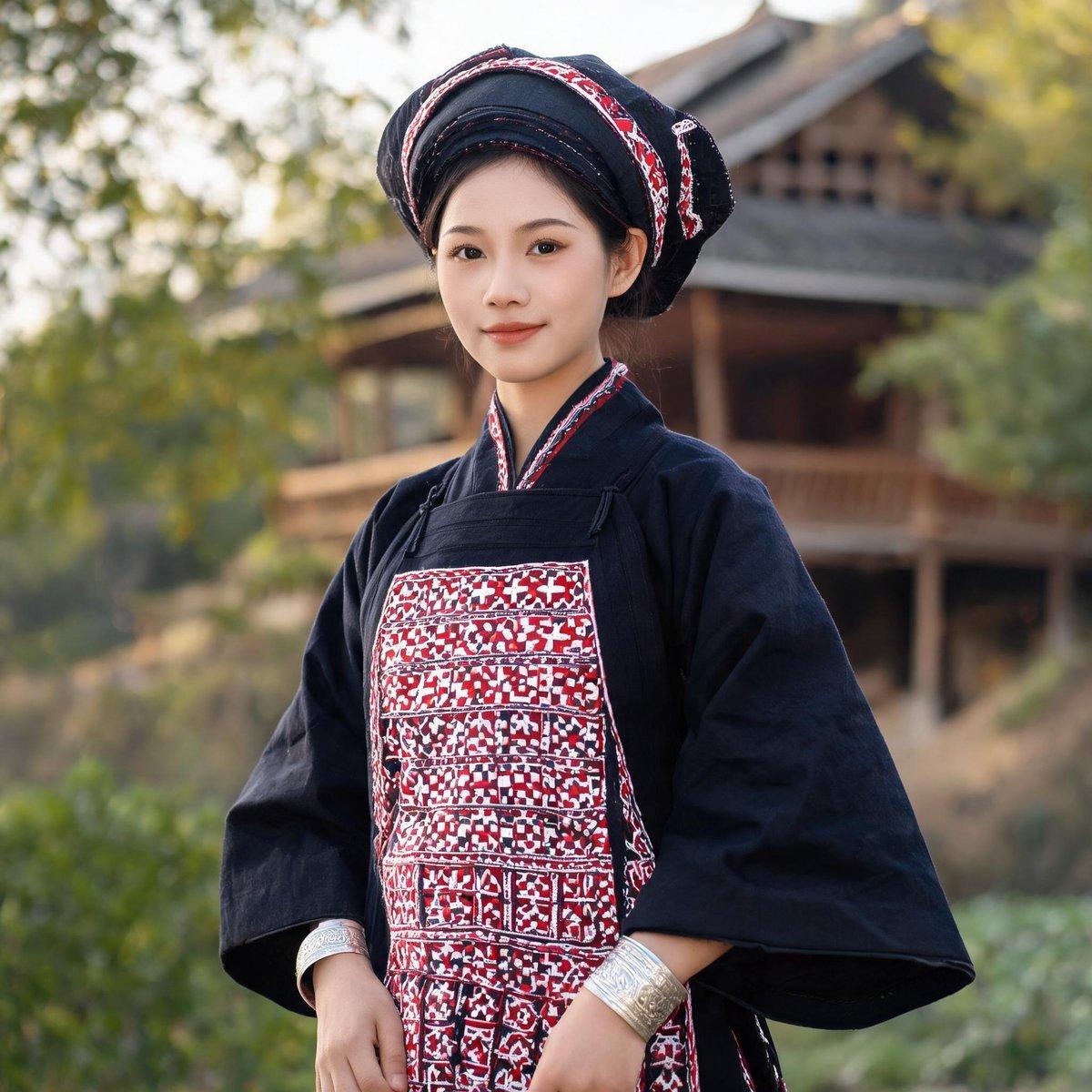
Women wear collarless jackets in dark indigo or black, with wide sleeves and deep side slits, paired with loose trousers and a heavily embroidered apron. The side-slit jacket design is particularly significant — it allows unrestricted leg movement necessary for working in the steep terraced rice paddies that characterize the Guizhou landscape. The apron, worn over the jacket, serves as both practical protection and decorative display, with the bib portion featuring the most concentrated embroidery. Men wear simple collarless jackets and wide-leg trousers tied at the waist with a cloth sash.
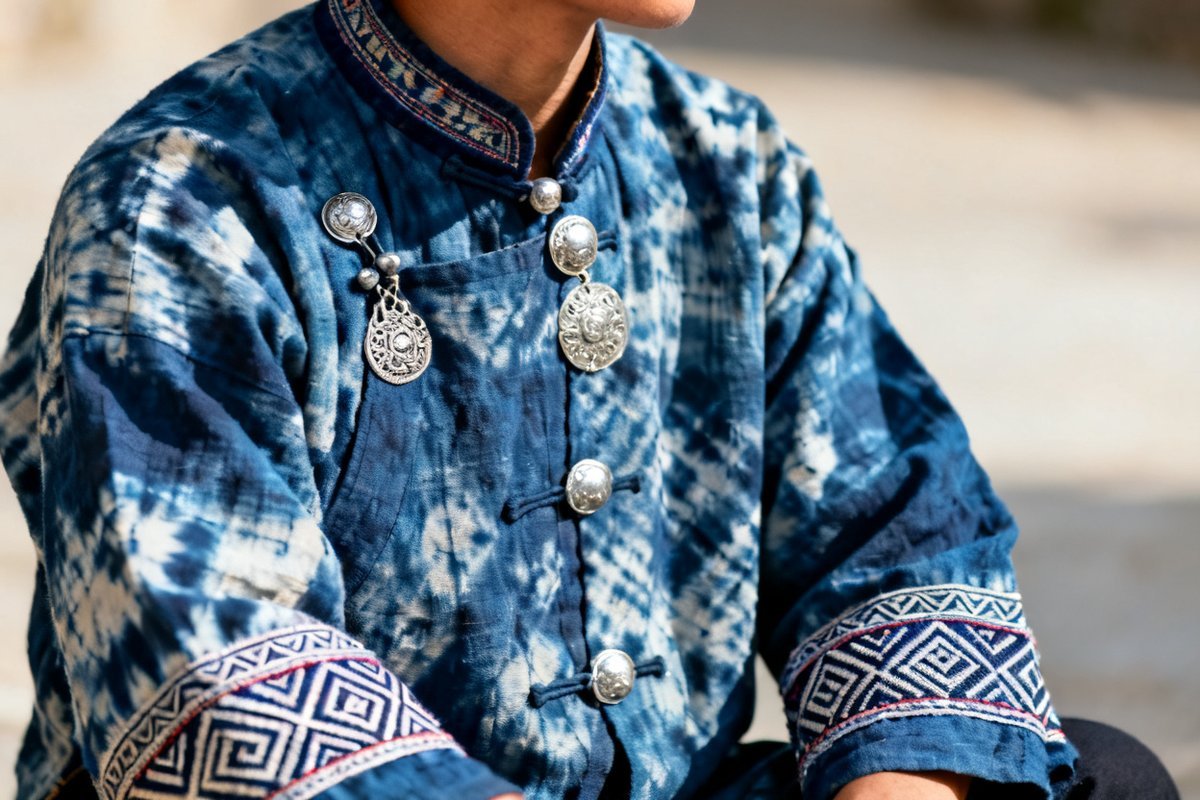
The indigo dyeing process among the Gelao involves repeated immersions of handwoven hemp or cotton cloth in fermented indigo vats, with each dip deepening the blue-black color. Master dyers can produce subtle variations in shade that distinguish everyday work garments from those intended for festivals and ceremonial occasions. The resulting fabric possesses a distinctive sheen and slight stiffness that holds the crisp lines of traditional tailoring.
Headwear and Adornments
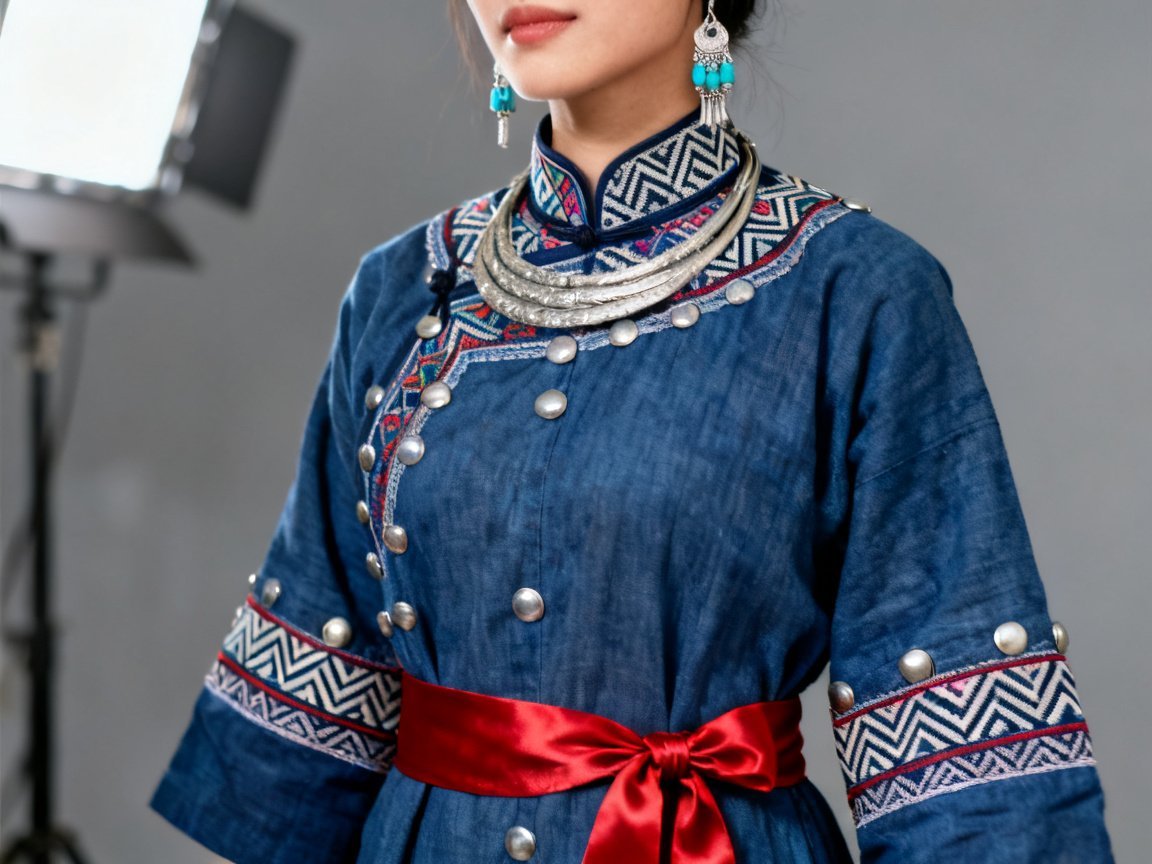
Women wrap their hair in cloth turbans in indigo, black, or white depending on local tradition. Some Gelao groups are named by their historical headwrap colors. The turban, typically several meters of handwoven cloth, is wrapped in elaborate configurations that vary by community — some styles create a flat disc shape, others a tall cylindrical form. Large solid silver earrings are a distinctive Gelao ornament, with some traditional designs featuring earrings so heavy they require the weight to be distributed by a chain passing behind the head. Silver neck rings, bracelets, and hairpins complete the traditional adornment set, with the quantity and quality of silver indicating family wealth and status.
Embroidery and Decorative Arts
Gelao embroidery features geometric patterns — diamonds, zigzags, and stepped pyramids — in bright threads on dark fabric, concentrated on collar panels and apron bibs. Despite the absence of a collar on the garment itself, the upper chest area of womens jackets receives detailed decorative treatment, with embroidered collar bands sewn around the neckline opening. The stepped pyramid motif is particularly characteristic of Gelao work and is interpreted by some scholars as a representation of the terraced rice fields that sustain Gelao communities.
Gelao weaving traditions are equally important. Handwoven hemp cloth forms the foundation of traditional garments, with the natural texture of the hemp fiber providing a pleasing contrast to the smooth silk embroidery threads. The indigo dyeing process, which can involve up to twenty separate dye baths to achieve the deepest black-blue, is a specialized skill passed from mother to daughter. Some communities also practice wax-resist dyeing to create patterned fabrics for special garments.
The Gelao are known as one of the oldest inhabitants of Guizhou, and their side-slit jacket design reflects an ancient ergonomic wisdom for working in terraced rice paddies.
Color Symbolism
Indigo blue and black are predominant. Embroidery uses bright red, yellow, white, and green. The deep indigo of Gelao garments represents the fertile soil of the Guizhou mountains, while the vivid embroidery colors evoke the wildflowers and crops that flourish on the terraced slopes. The historical subgroup names — Red, White, Green, and Blue Gelao — attest to the profound cultural significance of color as a marker of identity.
Festival Attire
During the Gelao New Year and Ox King Festival, the most elaborately embroidered jackets and aprons are worn. The Gelao New Year, celebrated on the third day of the third lunar month, features community feasts, ancestral worship, and group dances. For this occasion, women present themselves in their finest attire — newly embroidered jackets, crisp indigo aprons, polished silver earrings, and carefully wrapped turbans. The Ox King Festival honors the water buffalo essential to rice cultivation, with ceremonial offerings and the decoration of oxen with red cloth and embroidered harnesses. Weddings remain the most important occasion for displaying the full range of Gelao textile arts, with brides wearing complete ensembles that may incorporate pieces made by several generations of women in their family.
Modern Influence and Preservation
Gelao indigo textile techniques are preserved through intangible cultural heritage programs in Wuchuan County. The Daozhen Gelao and Miao Autonomous County has established the Gelao Cultural Museum, which houses a significant collection of historical garments and provides documentation of traditional dyeing and weaving techniques. Indigo cultivation and natural dyeing workshops have been revived as part of eco-tourism initiatives, offering visitors hands-on experience with traditional textile production while generating income for local communities. Several Gelao embroidery masters have been designated as county and provincial-level intangible cultural heritage inheritors, with government stipends supporting their work and apprenticeship training programs.
Modern Influence and Preservation
Gelao indigo textile techniques are preserved through intangible cultural heritage programs in Wuchuan County.
Did You Know?
The Gelao were traditionally subdivided into groups named by clothing color - the Red Gelao, White Gelao, Green Gelao, and Blue Gelao.
Textile Heritage and Symbolic Patterns of the Gelao
The Gelao people of Guizhou Province maintain weaving traditions that reflect their ancient agricultural roots in southwestern China. Cotton is the primary textile fiber, grown in small mountain plots and processed through traditional ginning, spinning, and weaving techniques. Gelao fabric is characterized by its dense weave and durability, qualities achieved through tight thread tension on backstrap looms. The natural cream or tan color of undyed cotton is often retained for daily garments, while ceremonial clothing features fabric dyed with indigo to achieve deep blue and black tones.
Gelao embroidery uses bright threads in geometric patterns that draw from the natural environment of the Guizhou karst landscape. Mountain ranges appear as zigzag bands, terraced fields as stepped diamond patterns, and rivers as flowing curved lines. These patterns are applied primarily to collar edges, sleeve cuffs, and the front opening of women's jackets. The embroidery stitches are executed with precision, and experienced embroiderers can identify the village of origin from the pattern style.
Textile Heritage and Symbolic Patterns of the Gelao
The Gelao people of Guizhou Province maintain weaving traditions that reflect their ancient agricultural roots in southwestern China. Cotton is the primary textile fiber, grown in small mountain plots and processed through traditional ginning, spinning, and weaving techniques. Gelao fabric is characterized by its dense weave and durability, qualities achieved through tight thread tension on backstrap looms. The natural cream or tan color of undyed cotton is often retained for daily garments, while ceremonial clothing features fabric dyed with indigo to achieve deep blue and black tones.
Gelao embroidery uses bright threads in geometric patterns that draw from the natural environment of the Guizhou karst landscape. Mountain ranges appear as zigzag bands, terraced fields as stepped diamond patterns, and rivers as flowing curved lines. These patterns are applied primarily to collar edges, sleeve cuffs, and the front opening of women's jackets. The embroidery stitches are executed with precision, and experienced embroiderers can identify the village of origin from the pattern style.