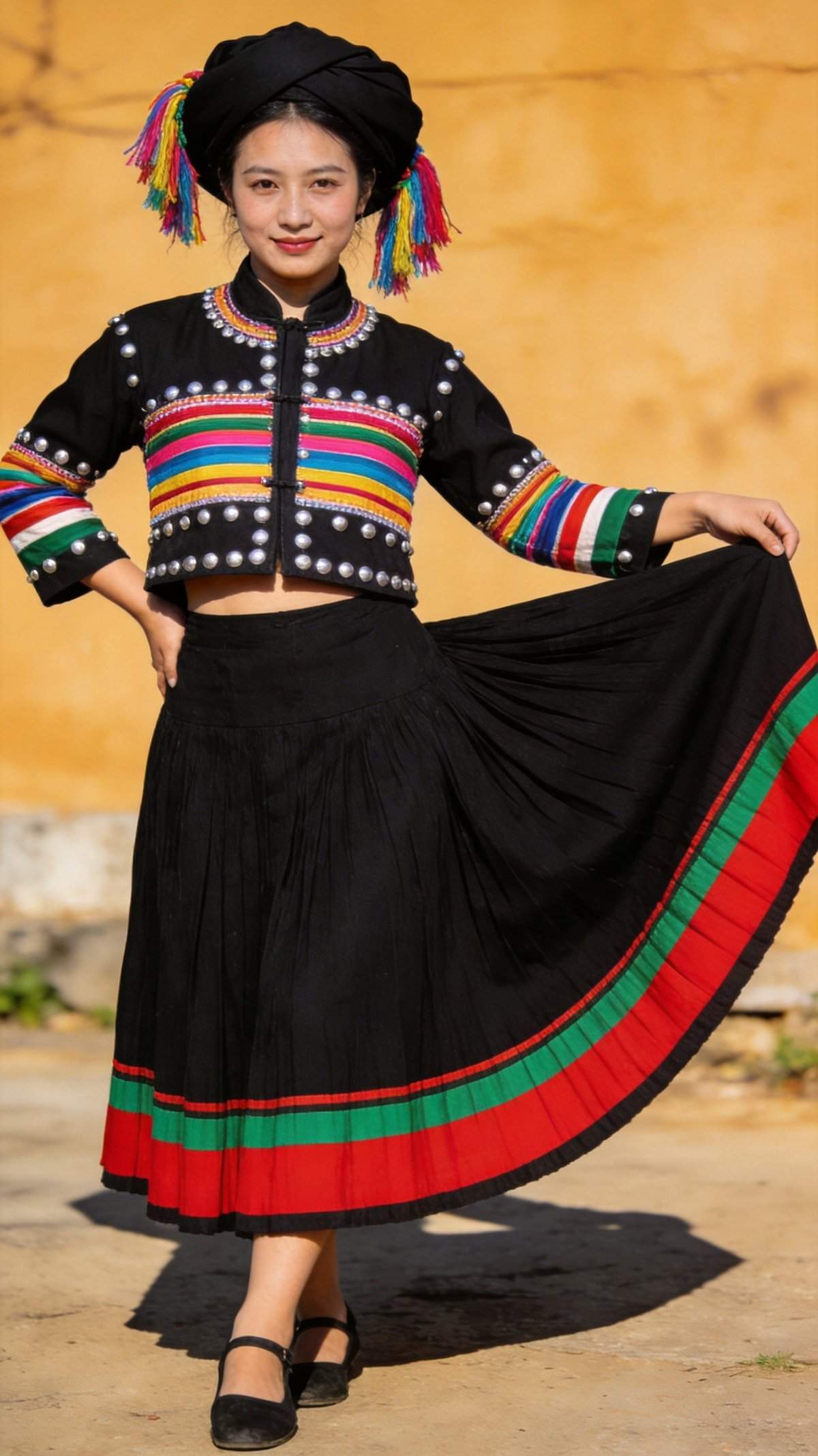
The Deang people, numbering approximately 20,000, inhabit the western border regions of Yunnan Province, primarily in Luxi, Zhenkang, and Longchuan counties near the Myanmar border. They are among the oldest tea-cultivating peoples in the world, with a history of tea production extending back over two millennia, and their material culture, including clothing, reflects deep integration with the mountain forest environment. Deang traditional attire is distinguished by its bold use of black, red, and white horizontal stripes woven directly into women's tubular skirts, creating a graphic visual impact that is immediately recognizable even at a distance. The iconic large cylindrical silver earrings worn by Deang women are among the heaviest traditional ear ornaments of any ethnic group, and the lacquered waist hoops worn in multiples around women's waists constitute a unique sartorial practice that encodes information about family wealth and social standing.
Key Features of Deang Attire
- Horizontal red, black, and white striped tubular skirts
- Large cylindrical silver earrings as a signature accessory
- Multiple lacquered or silver waist hoops as a beauty marker
- Collarless short jackets in dark blue with silver ornaments
- Womens colorful beaded necklaces worn in multiple strands
Traditional Garments
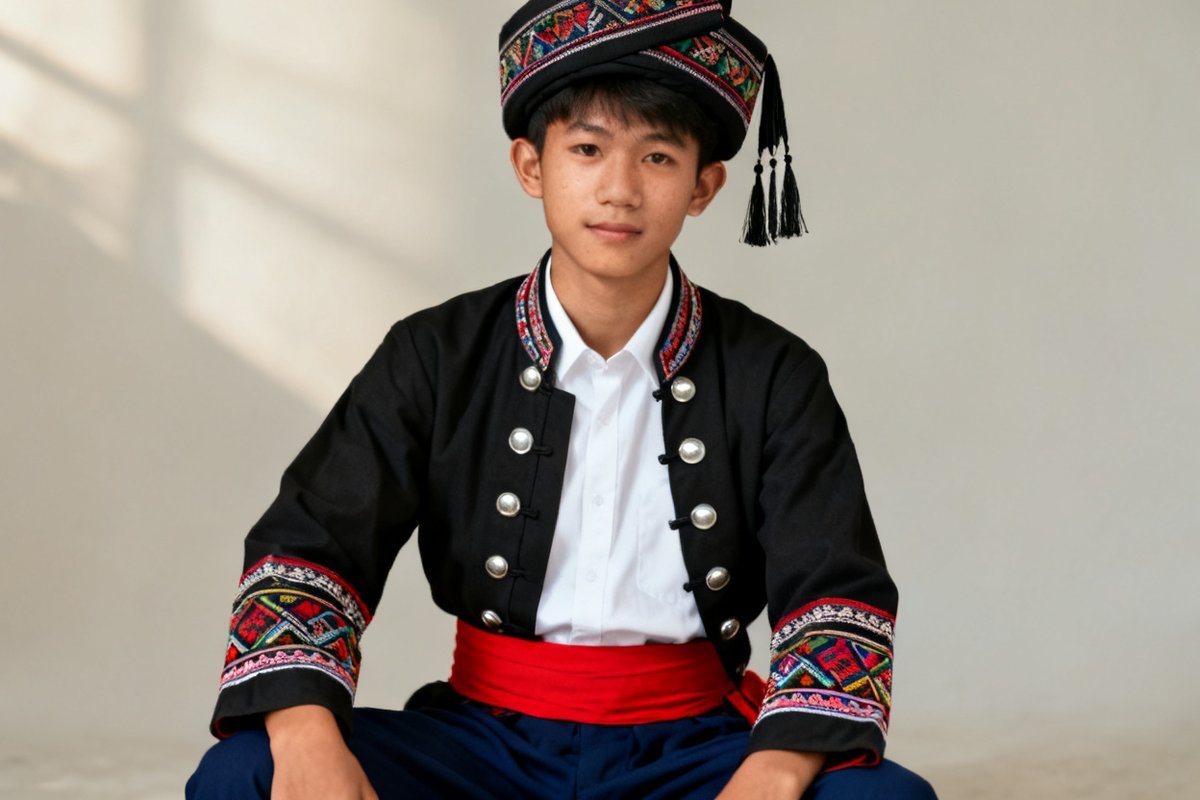
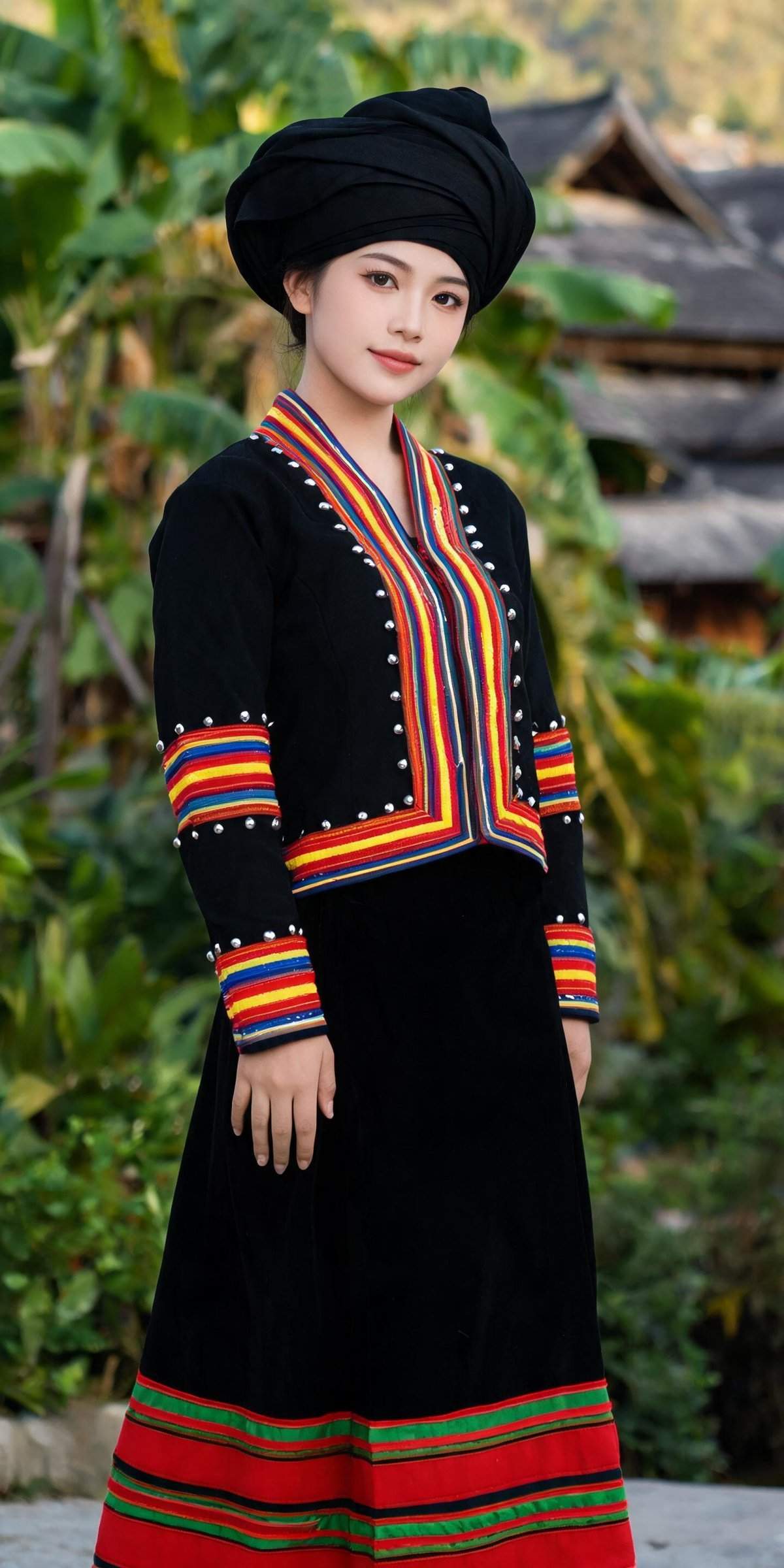
Women wear a collarless, tight-fitting short jacket in black or dark blue, fastened at the front with silver beads rather than buttons, creating a luminous vertical line against the dark fabric. The jacket is paired with a distinctive tubular skirt woven with horizontal stripes in alternating bands of black, red, and white, with the pattern varying between Deang subgroups. Multiple waist hoops made from rattan lacquered in deep red or wrapped in silver are worn daily around the waist, the number and material of hoops historically indicating family wealth, with prosperous women wearing as many as twenty or thirty lacquered rings. These hoops are not removed for sleeping or bathing, becoming a permanent part of a woman's physical presentation. Men wear collarless front-fastening jackets in black or dark blue with minimal decoration, paired with wide-legged trousers. Men may also wear simple waist hoops or belts of rattan as a marker of Deang identity, though fewer and plainer than women's versions. The use of rattan, a forest product harvested sustainably from the Deang's mountain environment, reflects the deep material connection between Deang culture and the natural resources of their homeland.
Headwear and Adornments
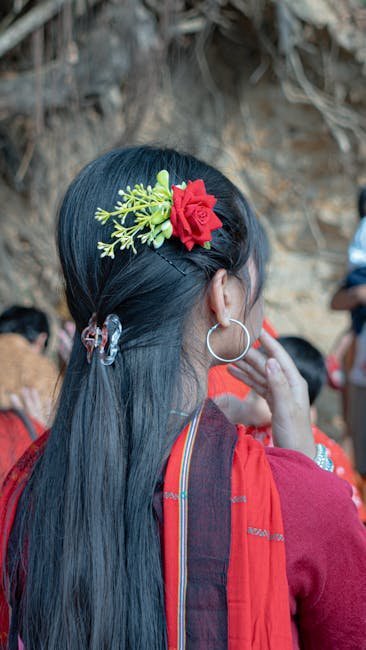
Women wrap their hair in black or dark blue cloth turbans, the wrapping style producing a compact rounded shape, with small fresh flowers or bright beads inserted at the temples as daily decoration. The large cylindrical silver earrings worn by Deang women are the most visually striking adornment, with some examples measuring over ten centimeters in length and weighing more than a hundred grams each. These earrings are inserted through stretched earlobe piercings created during childhood and gradually enlarged over years. The weight of the earrings elongates the earlobes, and the stretched piercing itself is considered a mark of beauty. Women also wear multiple strands of beaded necklaces in red, white, yellow, and blue, arranged in graduated lengths. Men wear red or black cloth head wraps, with red wraps favored by younger men and associated with vitality and courtship, while black wraps are worn by older married men.
Embroidery and Decorative Arts
Deang decorative arts emphasize weaving and metalwork over thread embroidery. The striped patterns on women's skirts are created through the warp-faced weaving process itself, with colored threads integrated into the warp before weaving begins, making the pattern intrinsic to the fabric structure rather than applied afterward. Silverwork is the primary decorative medium, with beads, studs, and buttons applied to jacket surfaces in geometric arrangements, and the large earrings and waist hoops functioning as both ornament and identity marker. Rattan work bridges craft and clothing, with waist hoops requiring careful selection, splitting, and lacquering of rattan strips before being shaped into rings. The minimal use of embroidery distinguishes Deang clothing from the heavily embroidered traditions of groups like the Miao or Bai, with the visual impact achieved instead through bold woven stripes and the sculptural quality of silver and rattan ornamentation worn directly on the body.
Ethnologists observe that the Deang womans waist hoops are not merely decorative - the number and material of hoops historically indicated her familys wealth and social standing.
Color Symbolism
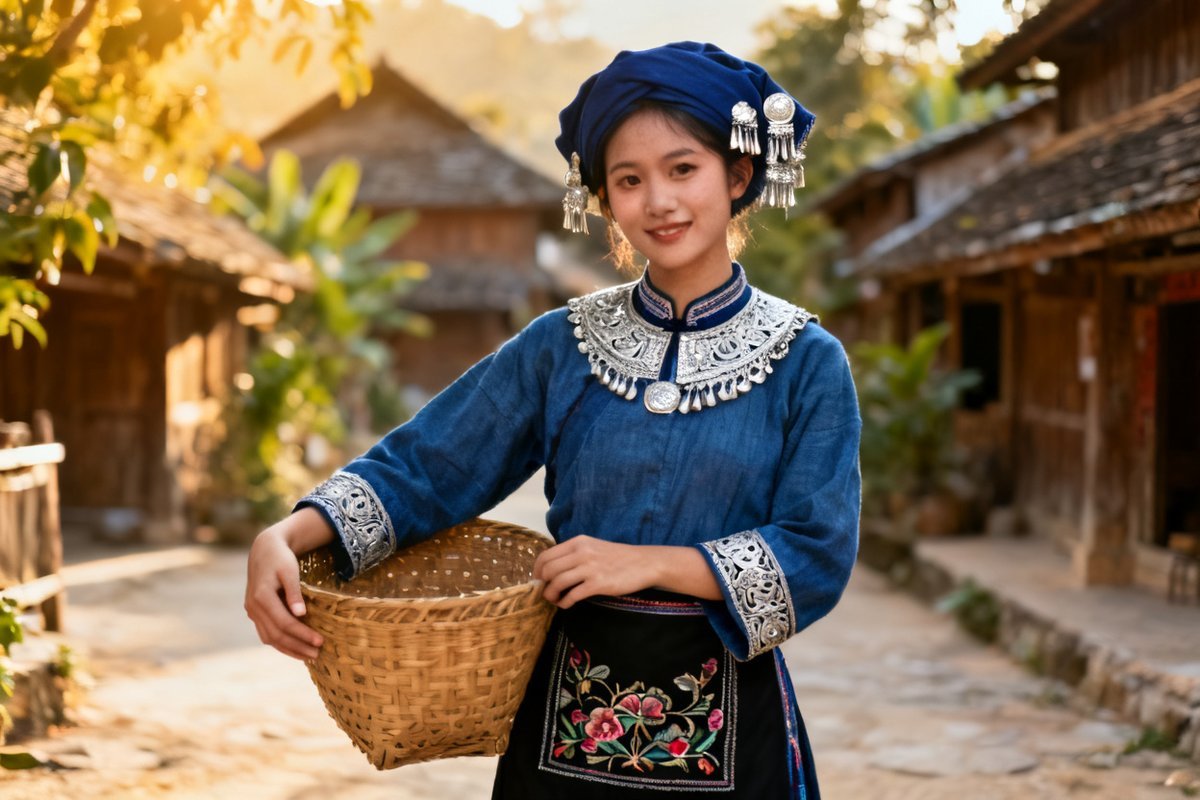
Black and dark indigo dominate Deang clothing, representing the deep forest and the fertile soil of the mountain homeland. These dark grounds are essential to the visual impact of Deang dress, providing the field against which the vivid red stripes representing life force and ancestral blood, white stripes representing purity and spiritual protection, and occasional green stripes representing the tea gardens that sustain Deang communities create their dramatic contrast. The red of lacquered rattan waist hoops adds a further dimension of color symbolism, the deep oxblood shade achieved through natural lacquer associated with maturity, prosperity, and female power. Silver's bright white luminosity against the dark fabrics creates a dynamic interplay of light and dark that animates the wearer's movement, with earrings swinging and hoop surfaces catching light as women walk.
Festival Attire
During the Water Splashing Festival, shared with Dai and other neighboring groups, Deang women wear their complete set of lacquered waist hoops, the largest silver earrings, the most vividly colored striped skirts, and multiple strands of beaded necklaces arranged in precise color order. The festival's water-throwing tradition presents a practical challenge for the rattan hoops, which can be damaged by excessive water exposure, so women may wear older sets for the most active water-throwing phases and reserve their finest hoops for drier ceremonial moments. Deang weddings are the most elaborate clothing occasions, with brides wearing the full complement of hoops, earrings, beaded necklaces, and a new striped skirt that may incorporate small variations in the stripe pattern that signify the transition to married status. The rhythmic sound of waist hoops clicking together as women move during festival dances is as characteristic of Deang celebrations as any musical accompaniment, a sonic dimension of dress that few other clothing traditions produce.
Modern Influence and Preservation
The distinctive Deang striped skirt pattern has attracted attention from contemporary textile designers and ethnographers interested in the bold graphic vocabulary of traditional weaving. However, the extremely small Deang population means that commercial adaptation has been limited. The waist hoop tradition faces particular preservation challenges, as the practice requires sustained wearing from a young age and the knowledge of rattan harvesting, preparation, and lacquering is held by a dwindling number of elder artisans. Community museums and documentation projects have recorded the different stripe patterns associated with Deang subgroups to preserve this visual language for future generations. The silver earring tradition has proven more resilient, with some young Deang women continuing to wear smaller versions of traditional earrings integrated with modern clothing, maintaining a visible link to heritage while adapting to contemporary life. Tea tourism in Deang areas has created limited economic incentives for textile production, with striped fabric sold as souvenirs to visitors interested in the Deang's dual identity as both skilled weavers and among the world's oldest tea cultivators.
Did You Know?
Deang women traditionally believe the waist hoops originated when the first Deang woman wore rattan rings to protect herself from being captured by an evil spirit.
Natural Materials and Red Accents of the Deang
The Deang people, living in the mountainous border region of Yunnan, are known for their distinctive use of red accents against dark indigo or black fabric. The red coloration comes from natural dyes derived from local plants and minerals, with the specific shade and method varying between Deang villages. Women's jackets feature red trim at the collar, cuffs, and front opening, with the width of the red band indicating the wearer's age and marital status. Unmarried women wear broader red bands, while married women and elders use narrower accents. This color coding system allows community members to immediately identify basic social information about any woman they encounter.
The Deang also practice traditional batik, applying wax to fabric before dyeing to create resist patterns in white or light blue against the dark ground. The motifs are primarily geometric, including spirals, zigzags, and cross-hatched patterns that carry specific meanings within Deang cosmology. Spiral patterns represent the continuity of life, zigzags symbolize mountain paths, and cross-hatching evokes the weaving of bamboo, a material central to Deang daily life.
Natural Materials and Red Accents of the Deang
The Deang people, living in the mountainous border region of Yunnan, are known for their distinctive use of red accents against dark indigo or black fabric. The red coloration comes from natural dyes derived from local plants and minerals, with the specific shade and method varying between Deang villages. Women's jackets feature red trim at the collar, cuffs, and front opening, with the width of the red band indicating the wearer's age and marital status. Unmarried women wear broader red bands, while married women and elders use narrower accents. This color coding system allows community members to immediately identify basic social information about any woman they encounter.
The Deang also practice traditional batik, applying wax to fabric before dyeing to create resist patterns in white or light blue against the dark ground. The motifs are primarily geometric, including spirals, zigzags, and cross-hatched patterns that carry specific meanings within Deang cosmology. Spiral patterns represent the continuity of life, zigzags symbolize mountain paths, and cross-hatching evokes the weaving of bamboo, a material central to Deang daily life.