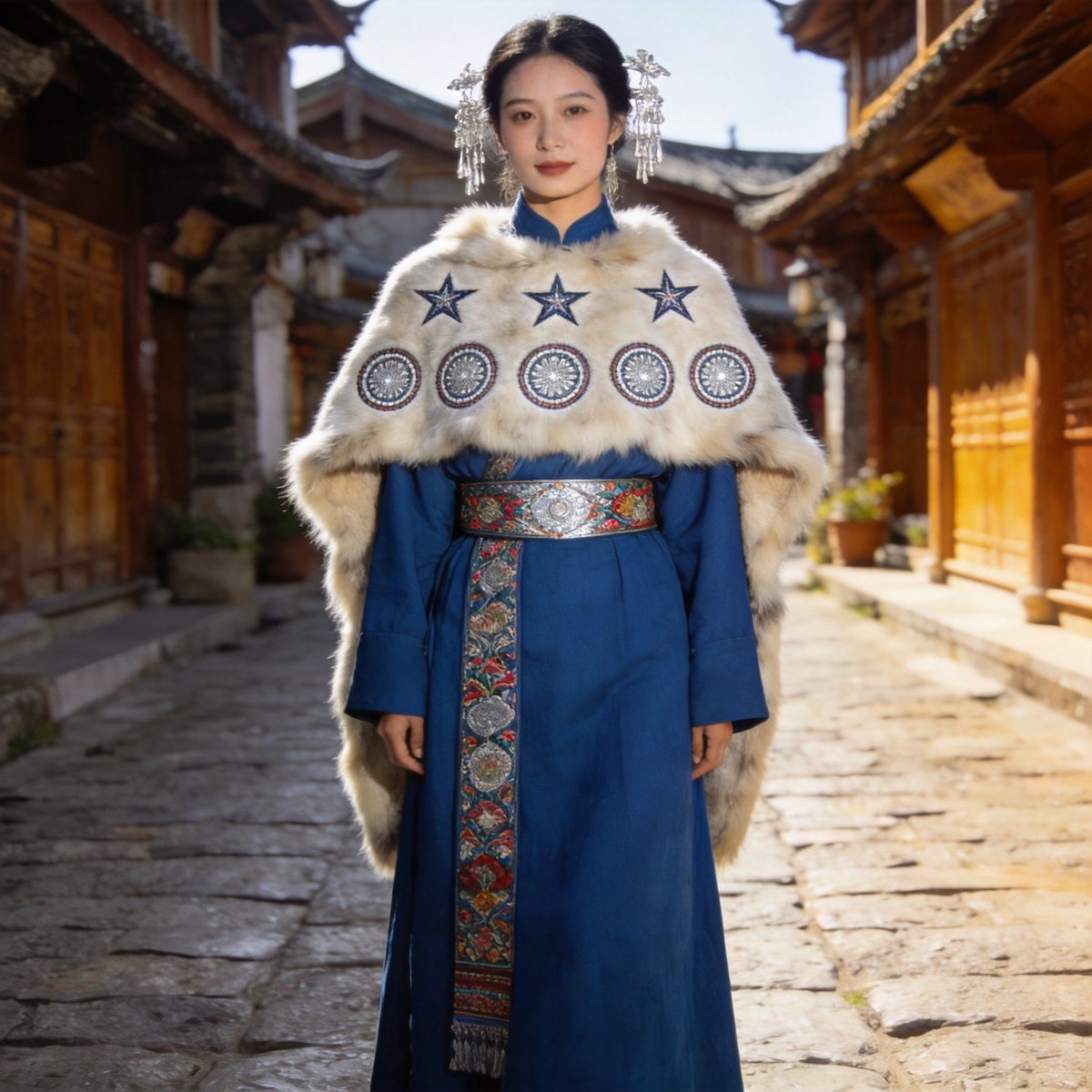
Naxi traditional clothing is one of the most recognizable in China due to the distinctive sheepskin cape with seven circular embroidered ornaments that women wear, representing the moon and stars. The cape, called xingyue bajian (Seven Stars Cape), is a cultural icon. The Naxi people, numbering approximately 320,000, live primarily in and around Lijiang in northwestern Yunnan Province, a region of remarkable cultural and biological diversity. Their textile traditions merge influences from Tibetan, Bai, and Han cultures with unique Naxi innovations, creating a clothing system that is both visually striking and rich with cosmological symbolism.
Key Features of Naxi Attire
- Seven Stars sheepskin cape with seven circular embroidered ornaments
- Long wide-sleeved robe with a belt tied at the back
- Embroidered collar and cuff bands in geometric Dongba-inspired patterns
- Blue or purple gown with a cream or white front panel
- Woven cloth headpiece with decorative beaded tassels for married women
Traditional Garments
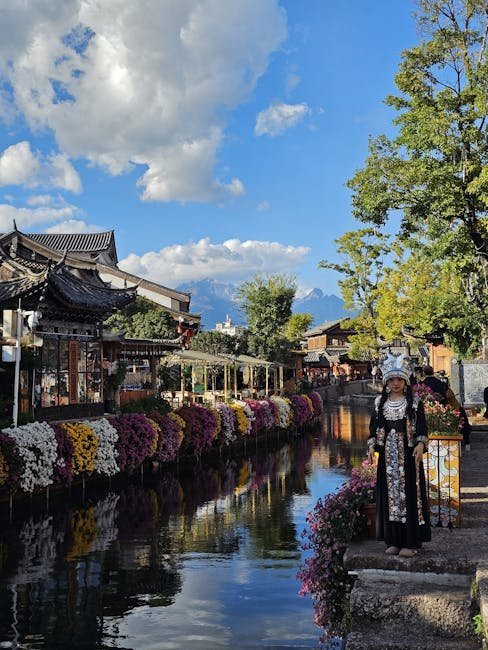
Women wear a full-length gown in blue, purple, or black, with a contrasting cream or white front panel that creates a distinctive two-tone appearance. The gown is wide-sleeved and reaches the ankles, with a cloth belt tied at the back in a decorative knot. Over the gown, they wear the iconic sheepskin cape — a whole sheepskin draped over the shoulders with the wool facing outward or inward depending on the season, featuring seven embroidered circles resembling stars connected by decorative bands. Two larger embroidered discs above the stars represent the sun and moon, completing a wearable map of the Naxi cosmos.
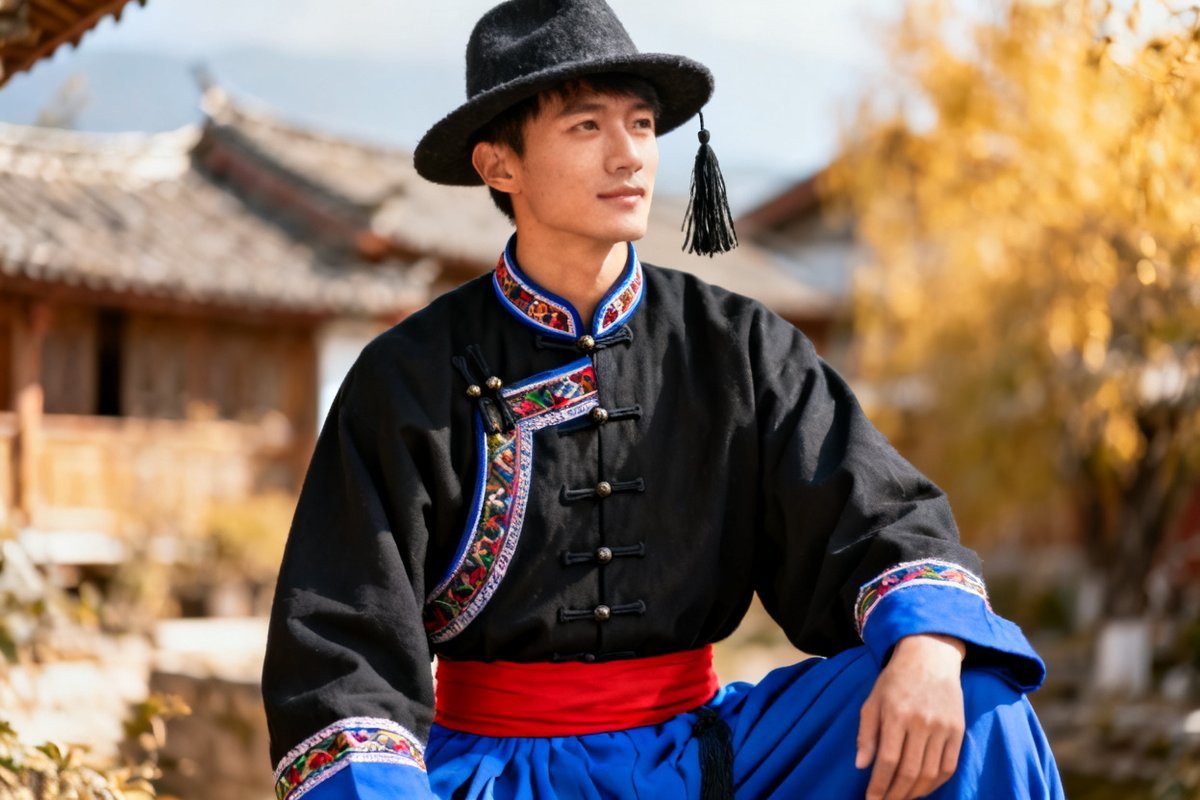
Men wear front-fastening jackets over white shirts with loose trousers and a cloth belt. Their clothing is simpler than women's, typically in dark blue or black, and lacks the sheepskin cape. However, during festivals and important occasions, men add embroidered vests and decorative belts that display Dongba pictographic motifs. Both men and women wear cloth shoes with embroidered toe caps, though women's shoes are more elaborately decorated. The entire ensemble is designed for the moderate climate of the Lijiang plateau, at approximately 2,400 meters elevation, where cool mornings give way to warm afternoons and evenings require an extra layer.
Headwear and Adornments
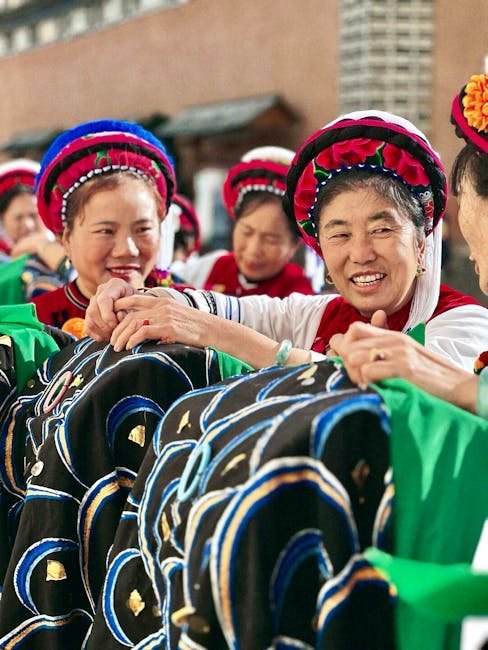
Married women wear a distinctive headdress made of black or blue fabric shaped like a pagoda or coil, decorated with silver beads and red tassels at the sides. This headpiece, constructed by wrapping layers of fabric over a lightweight frame, can stand fifteen to twenty centimeters tall. The pagoda shape is said to echo the peaks of the Jade Dragon Snow Mountain that dominates the Lijiang skyline. Unmarried women wear simpler headbands or weave colorful threads into their hair as a visible marker of their availability for courtship.
Men wear white or blue head wraps, simple turbans wrapped directly around the head without a frame. Silver earrings are worn by both genders, with women favoring larger, more elaborate styles featuring dangling elements and inlaid turquoise or coral. Necklaces of silver chains, coral beads, and jade pendants complete the jewelry, with the finest pieces passed down as heirlooms. The Naxi share with their Tibetan and Bai neighbors a strong appreciation for silverwork, and Lijiang was historically a major center for silversmithing, with Naxi craftsmen supplying jewelry to communities throughout northwestern Yunnan.
Embroidery and Decorative Arts
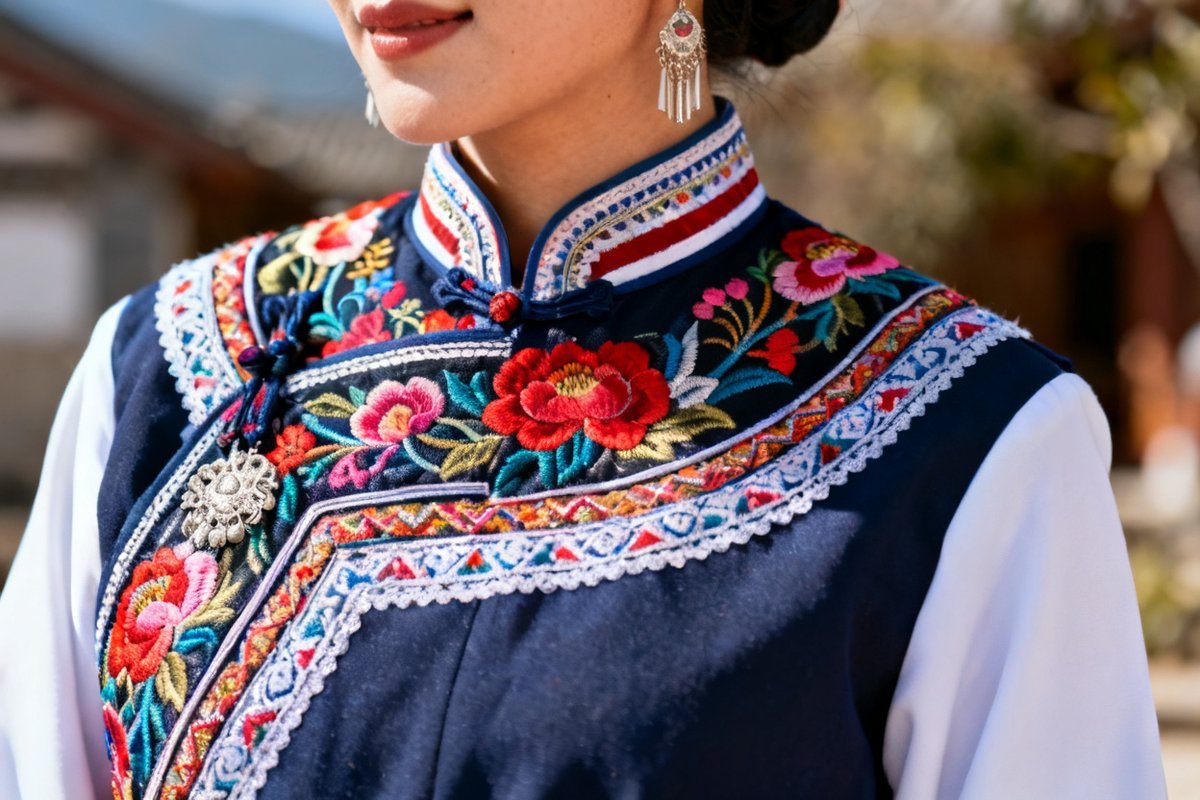
Naxi embroidery features patterns inspired by the ancient Dongba pictographic script — the world's last living hieroglyphic writing system — including stylized birds, flowers, clouds, and geometric symbols on collars, cuffs, and the edges of the Seven Stars Cape. Dongba script contains over 1,400 distinct characters, and Naxi embroiderers have adapted approximately two hundred of the most visually appealing and symbolically significant characters into textile designs. Common Dongba motifs in embroidery include the sacred frog (symbol of fertility), the golden rooster (herald of dawn), and stylized cloud patterns that represent the breath of life.
The seven star circles on the cape are embroidered with silk thread using satin stitch, creating raised, glossy surfaces that catch the light. The connecting bands between the stars use chain stitch in contrasting colors to create lattice-like decorative bands. The cape edges are reinforced with a wide embroidered border that combines geometric patterns with stylized floral forms, protecting the sheepskin from fraying while adding visual weight to the garment's lower edge. Naxi embroidery is notable for its integration of text and image — some capes include embroidered Dongba characters that literally spell out blessings for the wearer, making each cape simultaneously a garment and a wearable prayer.
The seven embroidered stars on the Naxi cape are said to represent the Pleiades constellation, guiding the wearer through darkness, while the two larger discs symbolize the moon and sun watching over the people.
Color Symbolism
Dark blue, purple, black, and brown form the foundation palette for main garments, colors associated with the earth and stability in Naxi cosmology. The sheepskin cape is natural tan and white, providing dramatic contrast against the dark gown. Embroidery on the cape uses bright red (life force), yellow (earth's generosity), green (the forests of the Lijiang basin), and white (purity of spirit). Silver jewelry and coral beads add warmth and reflect the Naxi appreciation for precious materials that catch the ever-changing light of the high plateau. The white front panel of the women's gown is specifically associated with femininity and, in Naxi tradition, represents the pure heart of the wearer — a woman's character was historically judged by how well she maintained the whiteness of this panel despite daily chores.
Festival Attire
During the Sanduo Festival, the Naxi people's most important celebration honoring their guardian deity, women wear their finest seven-star capes with the most elaborate embroidery and full silver jewelry sets. The Sanduo Festival falls on the eighth day of the second lunar month and draws Naxi from all surrounding villages to Lijiang's Beiyue Temple, creating a spectacular display of traditional clothing. For this day, capes that have been stored for a year are brought out, aired, and inspected — any necessary repairs to the star embroidery are completed in the days before the festival.
The Torch Festival, celebrated in the sixth lunar month, features slightly different attire — women may wear lighter, cooler versions of their gowns without the sheepskin cape, as the summer heat makes the heavy wool uncomfortable. Instead, embroidered shoulder cloths and lighter shawls substitute for the cape. Wedding attire is the most elaborate of all, with the bride's cape featuring additional embroidered elements beyond the standard seven stars — some wedding capes incorporate up to twelve embroidered medallions, adding symbols of marriage, fertility, and household prosperity. The wedding cape is made specifically for the occasion and thereafter becomes the woman's most treasured garment, worn only for the most important occasions throughout her life and eventually passed to a daughter or daughter-in-law.
Modern Influence and Preservation
The Naxi seven-star cape has become a symbol of Lijiang and is frequently worn by performers and tourism workers throughout the city. The cape is recognized as part of national intangible cultural heritage, with master embroiderers officially designated to preserve and transmit the craft. Naxi Dongba patterns appear in contemporary textile design worldwide, with fashion designers in China and beyond adapting the distinctive star motif and Dongba pictographic elements into modern clothing, scarves, and accessories. In Lijiang, cultural heritage workshops teach both Naxi youth and interested visitors the basics of cape embroidery, ensuring the technical knowledge does not remain only with the elderly. While daily wear of traditional clothing has declined among younger generations, the seven-star cape remains a powerful symbol of Naxi identity — its image appears on everything from restaurant signs to city logos, making it one of the most commercially recognized ethnic textile symbols in China.
Did You Know?
The Naxi are the only ethnic group in the world that still uses the Dongba pictographic script, the worlds last living hieroglyphic writing system - their embroidery often incorporates these ancient symbols.
Dongba Script and Textile Symbolism of the Naxi
The Naxi people of Yunnan Province are unique among China's ethnic minorities for maintaining the Dongba pictographic writing system, the only living pictographic script in the world. This rich symbolic tradition extends into Naxi textile arts, where motifs drawn from Dongba pictographs appear as embroidery patterns on clothing. The sun, moon, stars, and mountains depicted in Dongba script are translated into embroidered designs on collar panels, sleeve bands, and apron fronts, creating garments that literally carry written meaning. A Naxi woman wearing festival attire is effectively displaying passages of Dongba poetry on her clothing.
Naxi women's traditional wear includes the distinctive seven-star cape or pikang, a sheepskin cape worn over the shoulders with seven circular embroidered patches arranged in a pattern representing the Pleiades constellation. Each star patch is connected to others by embroidered threads suggesting star trails across the night sky. The cape symbolizes the Naxi cultural value of hard work, with the seven stars representing women rising before dawn and working until after dark.