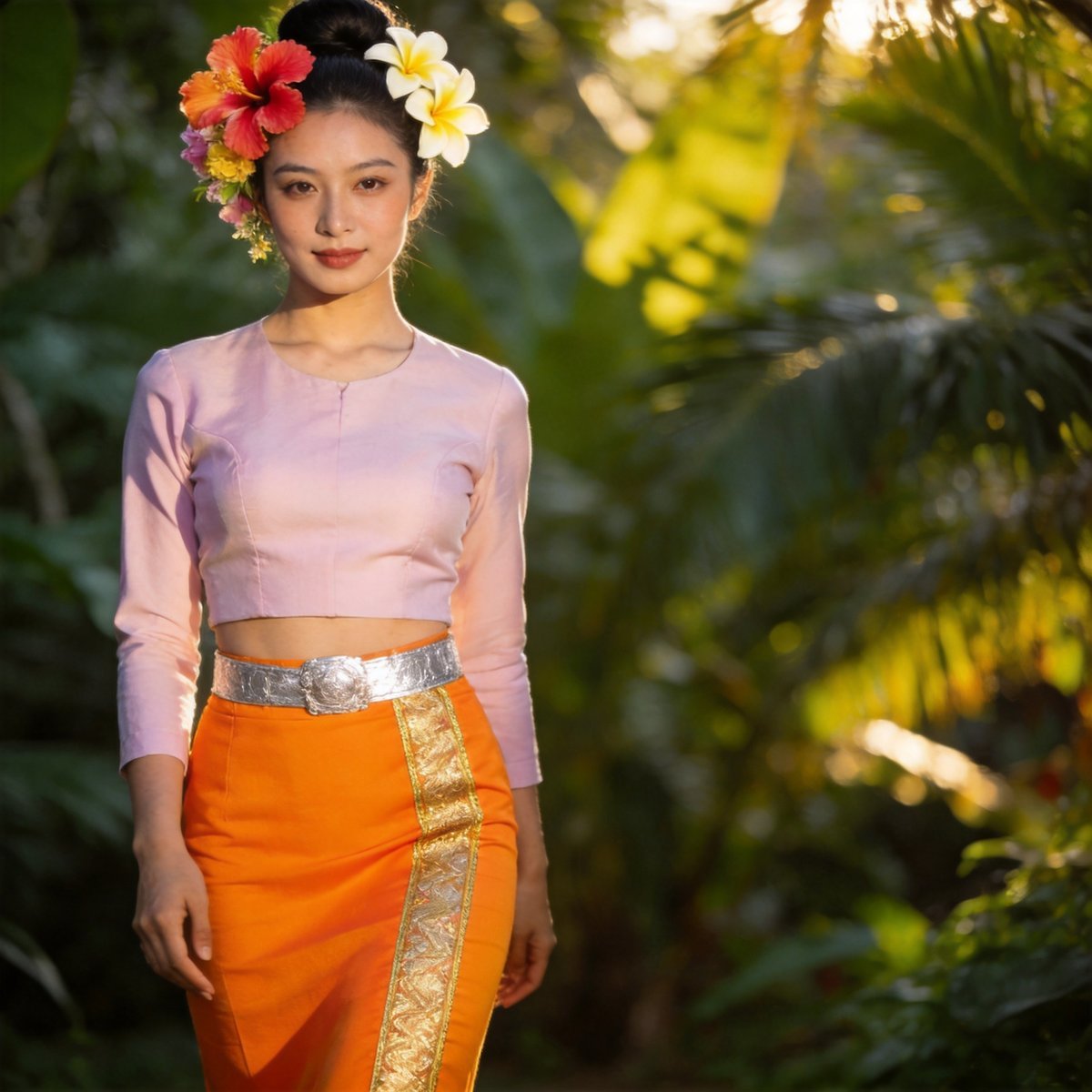
The Dai people, numbering approximately 1.2 million, inhabit the tropical river valleys of Yunnan Province, primarily in the Xishuangbanna Dai Autonomous Prefecture and the Dehong Dai and Jingpo Autonomous Prefecture. As practitioners of Theravada Buddhism with cultural ties extending into Southeast Asia, their clothing tradition reflects a distinct aesthetic shaped by tropical climate, Buddhist values, and the natural environment of the Lancang-Mekong river system. Dai traditional clothing is renowned for its graceful, figure-hugging silhouettes that celebrate the human form and vibrant peacock-inspired color palettes that reference the bird most sacred in Dai culture. Women wear form-fitting tubular skirts and fitted blouses in jewel tones of peacock blue, jade green, golden yellow, and magenta, while men favor collarless jackets with cloth buttons paired with sarong-style trousers, both genders achieving a elegance that has made Dai dress among the most visually recognizable of all ethnic traditions.
Key Features of Dai Attire
- Figure-hugging tubular skirts with narrow hem for walking
- Short tight-fitting blouses with puffed sleeves in jewel tones
- Silver waist belts with ornamental buckles in floral designs
- Peacock-inspired color palette reflecting Buddhist aesthetics
- Mens collarless jackets paired with sarong-like trousers
Traditional Garments
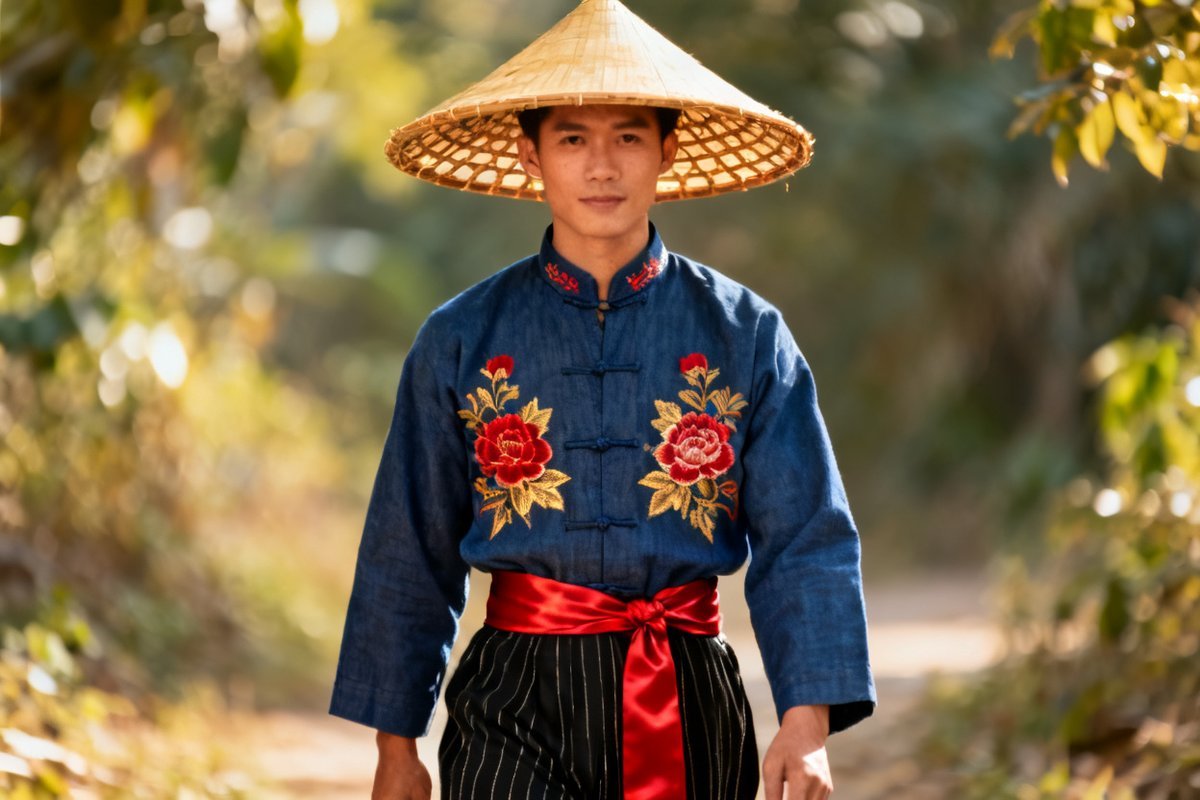
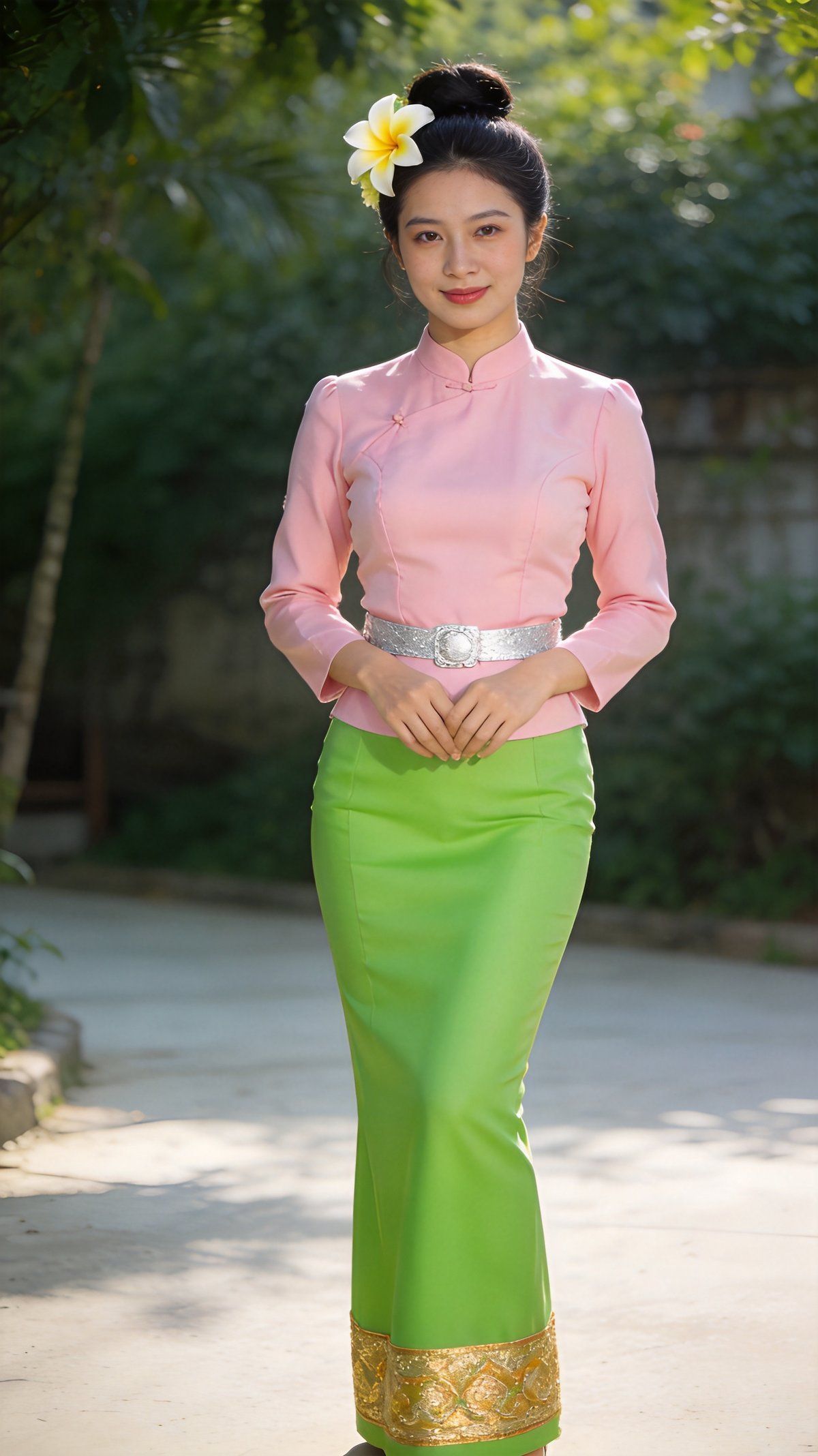
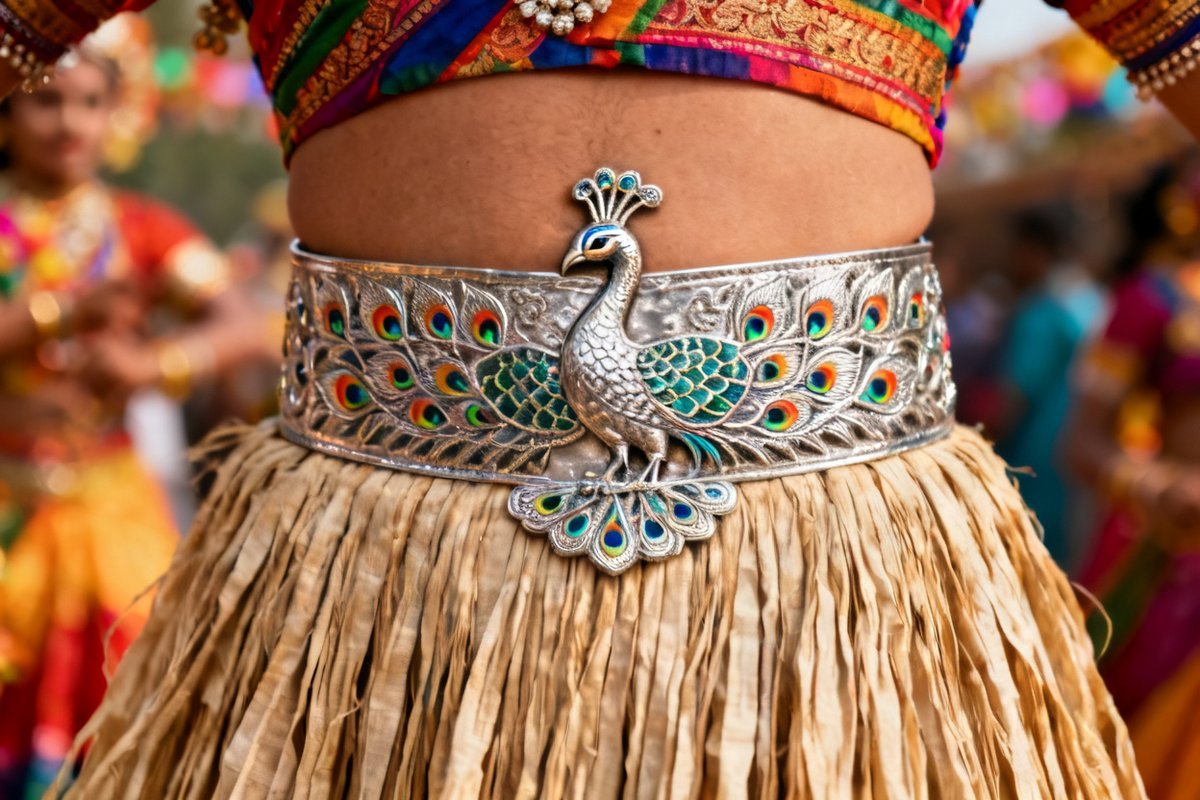
Women wear a short, tight-fitting blouse with a round or V-shaped collar and fitted sleeves ending at the elbow or wrist depending on region and occasion, constructed from cotton or silk in solid jewel tones. This blouse is paired with the xin, a long tubular skirt that wraps around the body and falls to the ankle with a narrowly tapered hem that creates the characteristic elegant hobble. The skirt is secured with a silver belt featuring an ornamental buckle worked in floral or peacock designs. The silhouette achieved by this combination, narrow from shoulder to ankle with a defined waist, is one of the most form-conscious in ethnic dress and requires precise fit to achieve the intended line. Men wear a collarless short jacket with cloth buttons, typically in white, blue, or black, paired with loose sarong-style trousers that wrap and fold rather than using zippers or elastic. In Dehong Prefecture, women's jackets feature more embroidery and a slightly looser cut than the closely fitted Xishuangbanna style. Daily fabrics are typically cotton, while silk is reserved for ceremonial occasions and warmer months when its breathability is advantageous in the tropical climate.
Headwear and Adornments
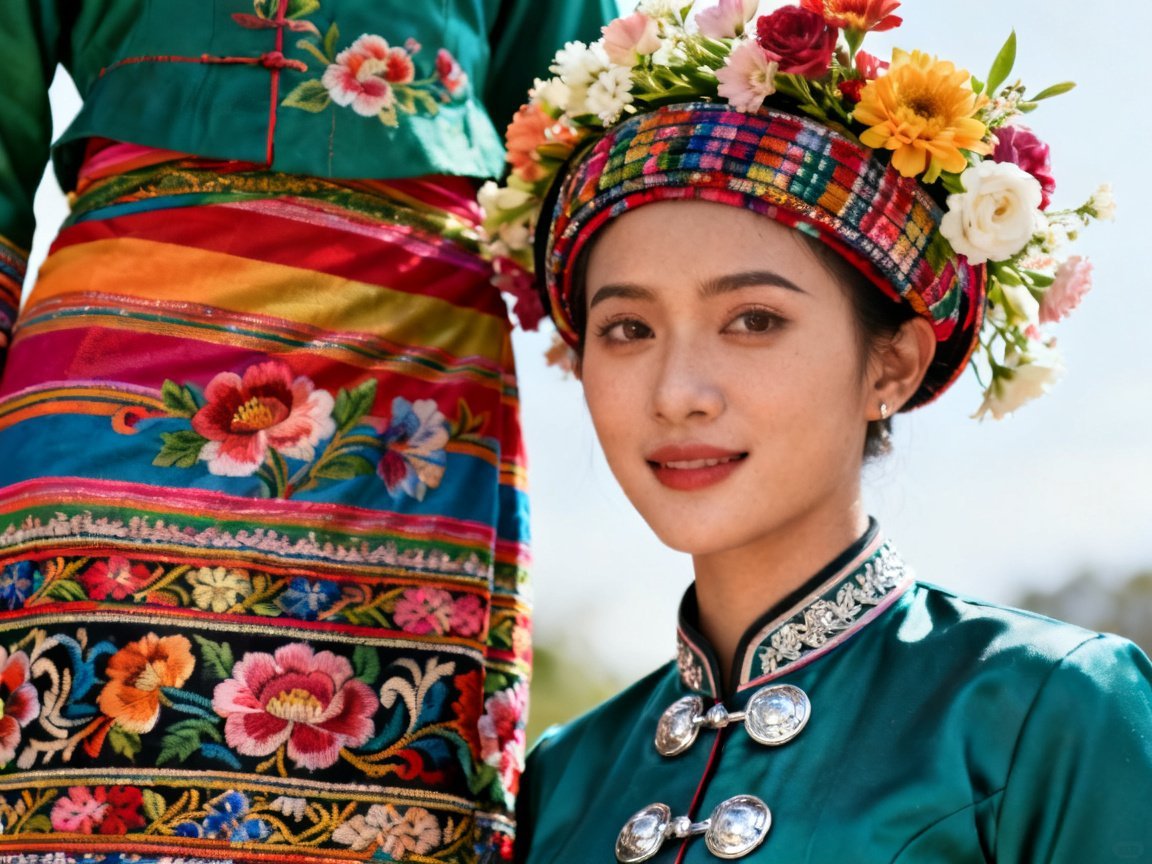
Headwear distinguishes Dai regional identity: women in Dehong wear a distinctive tall turban-style headdress wrapped from dark cloth, while in Xishuangbanna the preference is for fresh flowers, particularly frangipani and orchids, tucked into hair buns worn at the nape of the neck. The flower tradition reflects the tropical abundance of Xishuangbanna and Buddhist values of appreciating natural beauty without material attachment, as flowers are replaced daily. Women in both regions wear gold and silver hairpins, hoop earrings, and multiple bracelets. The silver belt at the waist is the most important single ornament, its buckle design often indicating the wearer's home village. Men wear simple cloth head wraps in white or checked patterns, with older men sometimes favoring more elaborate wrapping styles that have become less common among younger generations. Gold jewelry has gained popularity in recent decades, complementing traditional silver with its warmer tones against jewel-colored fabrics.
Embroidery and Decorative Arts
Dai embroidery features peacock motifs as the dominant theme, with the bird appearing in various postures from full display to stylized profile, reflecting its sacred status in Dai culture where the peacock dance is a central performance tradition. Floral patterns draw from the lush tropical flora of Xishuangbanna, and Buddhist-inspired designs including lotus flowers and geometric mandala-like compositions appear on ceremonial garments. Embroidery is most prominent in the Dehong regional style, where metallic gold and silver threads create shimmering patterns on blouse fronts, collar bands, and skirt hems that catch light during festival dances. The Xishuangbanna style incorporates less embroidery, relying instead on the color and drape of silk fabric for visual impact. Supplementary decorative techniques include applied silver bosses, sequin-like metal discs, and in some communities, small mirrors sewn onto dance costumes to create flashes of reflected light during performance.
The Dai peoples veneration of the peacock manifests in their clothing as a living art form, with each garments color gradient and flowing silhouette echoing the birds iridescent plumage.
Color Symbolism
Jewel tones dominate Dai clothing, with peacock blue and jade green drawing directly from the colors of the bird that symbolizes beauty and dignity in Dai culture. Golden yellow references both Buddhist monastic robes and the prosperity of the tropical landscape, magenta expresses feminine vitality in its most saturated form, and vermilion red signals celebration and auspicious occasions. Daily wear incorporates cooler blue, black, and brown for practical reasons in the tropical climate where darker colors better conceal the marks of agricultural labor. White holds special religious significance and is worn when visiting Buddhist temples, for ordination ceremonies, and during periods of mourning. The Dai color system achieves its dramatic effect through the contrast between solid colored fields, with each garment typically rendered in a single hue rather than patterned, allowing the silhouette and the wearer's movement to carry the visual statement. This monochrome-garment approach, unusual among ethnic costume traditions, reflects a design philosophy that values simplicity, elegance, and the natural beauty of the human form over decorative complexity.
Festival Attire
During the Water Splashing Festival, the Dai New Year celebration that involves joyful water-throwing across entire communities, women wear their finest peacock-colored silk skirts and blouses, often choosing bright shades that will look dramatic when wet, as getting soaked during the festival is considered a blessing that washes away misfortune. Full silver belt and jewelry sets are polished to high shine, and fresh flowers are tucked into hair moments before joining the celebration. The practical consideration of water exposure actually shapes festival clothing choices, with silk preferred over cotton for its faster drying time and the way it clings dramatically to the body in wet conditions, a visual effect that is entirely intentional within the festival's playful atmosphere. Temple visits during religious festivals call for more subdued attire, with white blouses and darker skirts worn to demonstrate respect. Peacock dance performances feature specialized costumes that exaggerate the bird's plumage through layered fabrics, metallic embroidery, and extended sleeve panels that function as wings during the dance movements, creating a visual spectacle that is among the most photographed expressions of Dai cultural heritage.
Modern Influence and Preservation
The Dai silhouette has strongly influenced fashion in Yunnan's tourism industry, with adapted Dai-style skirts and form-fitting blouses marketed as resort wear in Dali, Lijiang, and Jinghong boutiques. This commercial adaptation has created both opportunities and tensions: it sustains demand for Dai textile skills and provides income for artisans, but also produces simplified versions that strip away cultural meaning in favor of generic tropical aesthetics. Within Dai communities, daily wear has largely shifted to modern clothing, with traditional dress reserved for festivals, temple visits, weddings, and cultural performances. Village weaving cooperatives in Xishuangbanna produce silk and cotton fabric using traditional looms, supplying both local ceremonial needs and the tourism market. The younger generation's relationship with traditional dress is increasingly performative rather than daily, yet festivals and the cultural tourism economy provide sufficient incentive for skills to be passed on, and Dai dress remains among the most visibly maintained ethnic clothing traditions in Yunnan.
Did You Know?
The Dai Water Splashing Festival is celebrated by throwing water - getting completely soaked in new clothes is considered auspicious, as water washes away bad luck from the previous year.
Daily and Ceremonial Distinctions in Dai Clothing
Among the Dai people of Yunnan, the distinction between daily and ceremonial clothing is clearly marked through fabric quality, ornamentation, and color choices. Everyday attire for women consists of lightweight cotton or linen blouses paired with wrap skirts in solid colors, practical for the warm, humid climate of the Xishuangbanna region. The fabric is locally woven and dyed in muted tones such as indigo blue, dark green, or brown. For festivals and religious ceremonies, women change into silk garments with elaborate brocade patterns woven on traditional looms. The ceremonial blouse features metallic thread embroidery at the collar and cuffs, and the skirt incorporates bands of patterned silk between solid-colored panels.
Men's attire follows a similar everyday-to-ceremonial distinction, with practical cotton shirts and loose trousers for daily wear giving way to embroidered jackets and turbans for special occasions. The turban-wrapping technique differs between everyday and ceremonial settings, with ceremonial turbans featuring more layers and a neater finish. Dai men also wear a distinctive sleeveless embroidered vest over their shirt during festivals, with bright geometric patterns in silk threads.
Daily and Ceremonial Distinctions in Dai Clothing
Among the Dai people of Yunnan, the distinction between daily and ceremonial clothing is clearly marked through fabric quality, ornamentation, and color choices. Everyday attire for women consists of lightweight cotton or linen blouses paired with wrap skirts in solid colors, practical for the warm, humid climate of the Xishuangbanna region. The fabric is locally woven and dyed in muted tones such as indigo blue, dark green, or brown. For festivals and religious ceremonies, women change into silk garments with elaborate brocade patterns woven on traditional looms. The ceremonial blouse features metallic thread embroidery at the collar and cuffs, and the skirt incorporates bands of patterned silk between solid-colored panels.
Men's attire follows a similar everyday-to-ceremonial distinction, with practical cotton shirts and loose trousers for daily wear giving way to embroidered jackets and turbans for special occasions. The turban-wrapping technique differs between everyday and ceremonial settings, with ceremonial turbans featuring more layers and a neater finish. Dai men also wear a distinctive sleeveless embroidered vest over their shirt during festivals, with bright geometric patterns in silk threads.