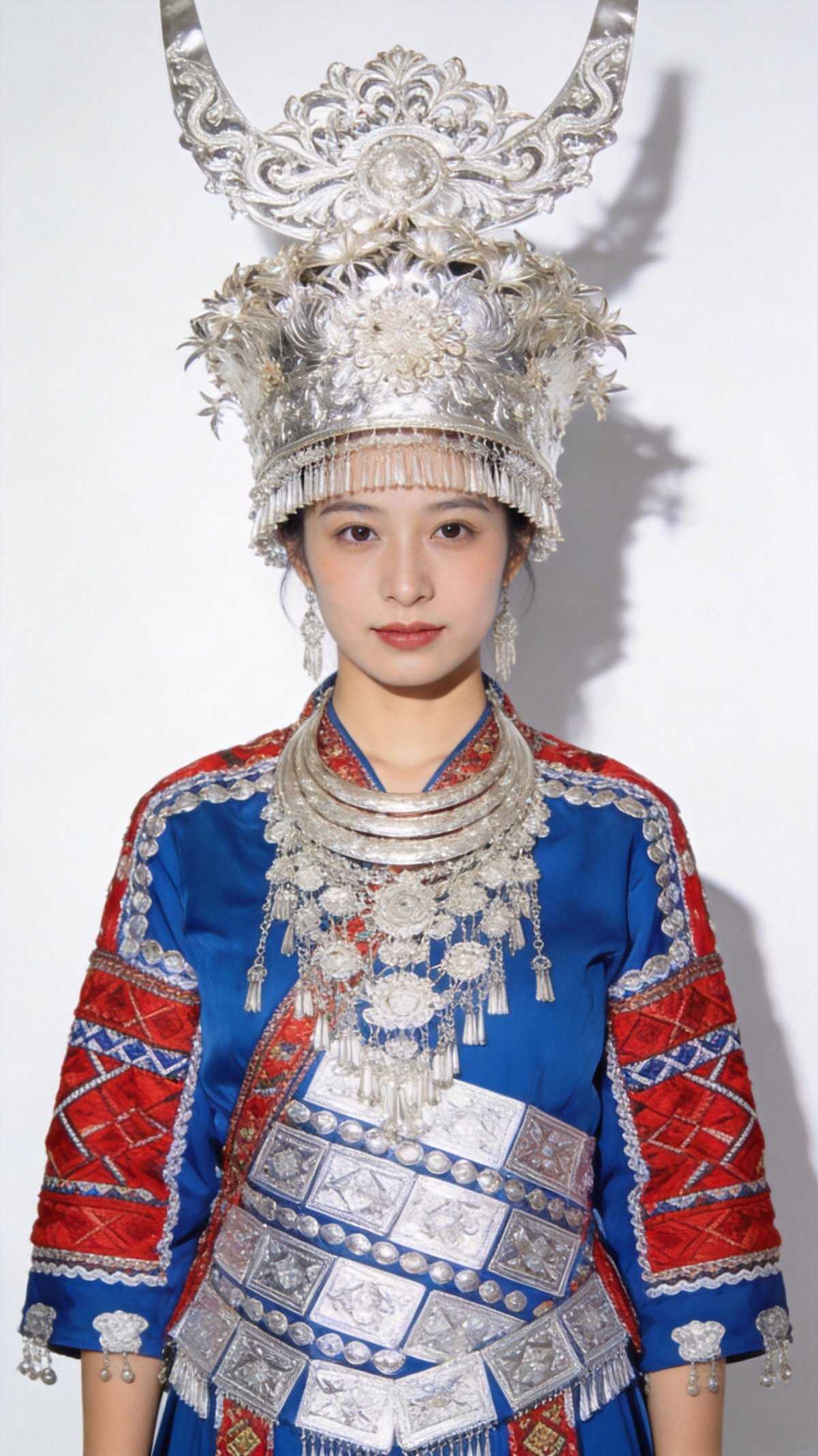
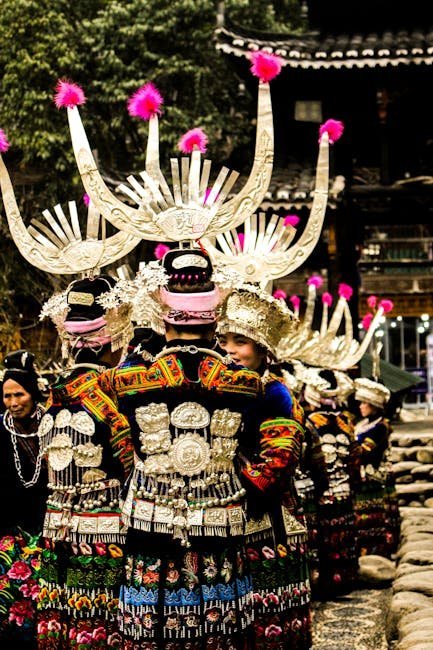
Miao traditional clothing is among the most visually spectacular of all China's ethnic groups, renowned for extraordinary silver jewelry and intensely embroidered garments. The Miao (known internationally as Hmong) number approximately 9 million in China, making them the fourth-largest ethnic group, with populations spread across Guizhou, Hunan, Yunnan, Sichuan, Guangxi, and Hubei. They are divided into dozens of subgroups -- Long-horn Miao, Batik Miao, Flowery Miao, Black Miao, White Miao, and many more -- each distinguished by distinctive clothing, silver work, and embroidery styles. Festival attire can include hundreds of silver ornaments weighing up to 15 kilograms.
Historical and Cultural Background
The Miao are an ancient people with roots in the Yangtze River basin who were gradually pushed southward and into the mountains by Han Chinese expansion over 4,000 years. Their clothing traditions evolved as portable archives of cultural memory: lacking a written language until the 20th century, Miao women encoded history, genealogy, and cosmology into embroidery patterns and silver designs. Each garment is a wearable text. The pleated skirt is the most historically significant garment -- the number of pleats and the patterns woven into them are said to represent the rivers crossed and mountains climbed during the centuries-long migration. Silver became the primary form of wealth storage because it could be melted down and reformed as needed, worn for display in times of peace, and quickly converted to currency in times of crisis. A Miao family's silver collection represents its entire economic history, accumulated across generations and displayed collectively during festivals.
Key Features of Miao Attire
- Massive silver headdresses with horn-shaped extensions
- Intricate pleated skirts with batik, embroidery, and applique layers
- Heavy silver neck rings in graduated sets covering the chest
- Exquisite embroidery in cross-stitch, satin stitch, and couching
- Distinctive subgroup styles: Long-horn Miao, Batik Miao, Flowery Miao
Traditional Garments
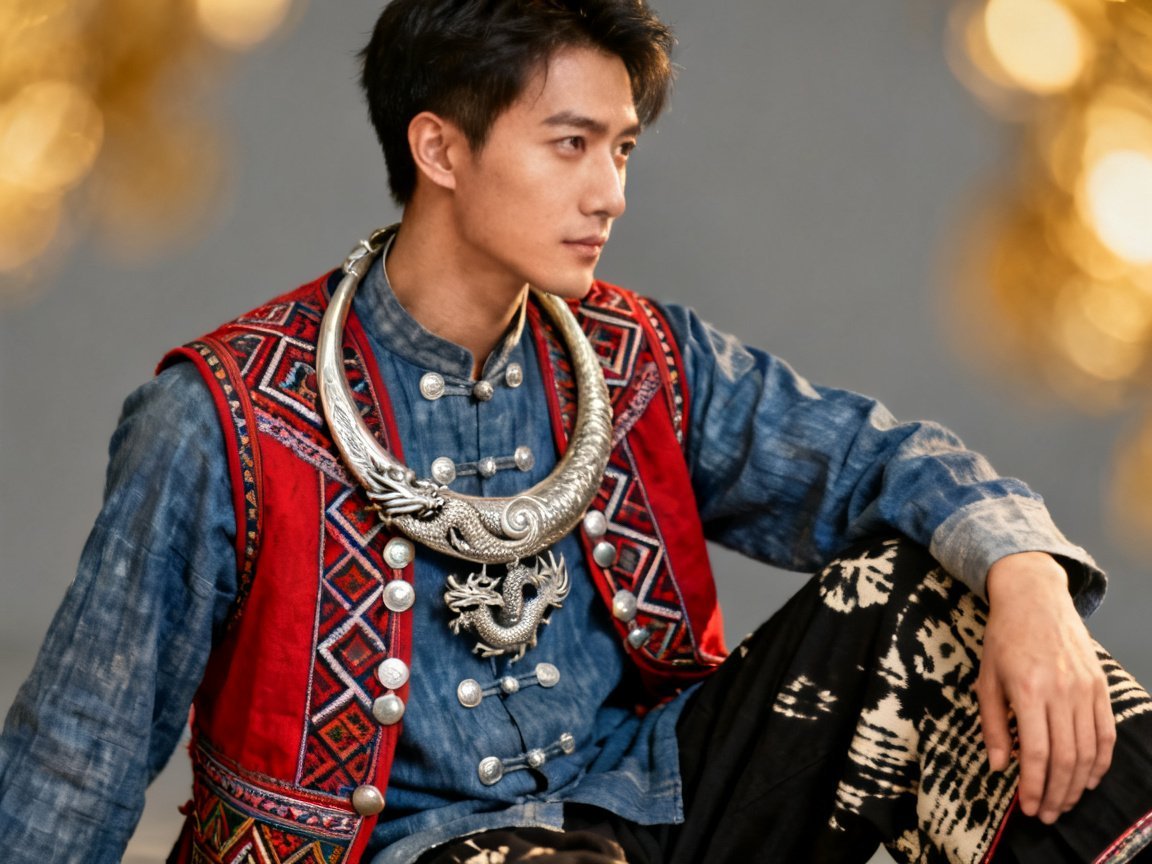
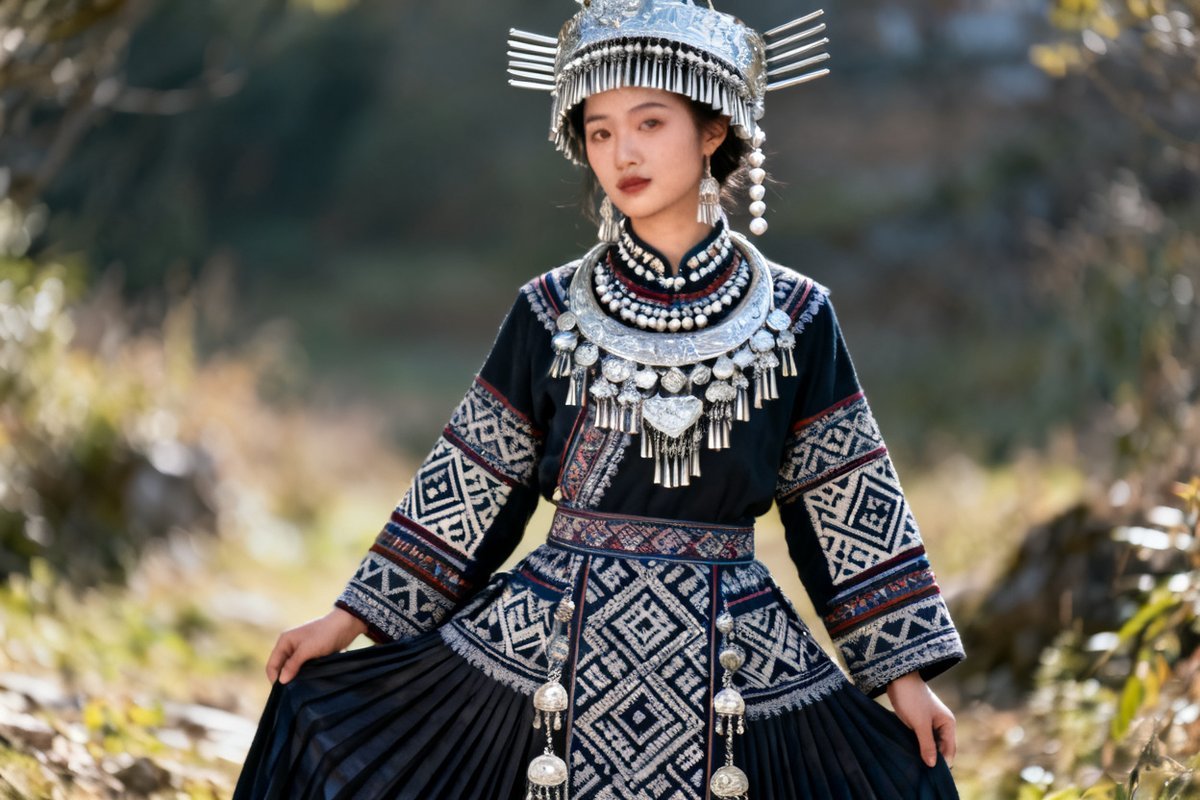
Women wear a collarless jacket in dark blue or black with dense embroidery on the opening, sleeves, and back panel, over a stunning pleated skirt combining batik, embroidered bands, and applique panels with up to 500 individual pleats. The skirt alone can take over a year to complete: the cotton is hand-spun, woven, dyed with indigo, pleated by hand using a needle and thread to hold each fold, and then decorated with batik (wax-resist dyeing), embroidery, and applique in horizontal bands. Different subgroups are identifiable by skirt characteristics: the Long-horn Miao of Guizhou favor extremely fine pleats and minimal decoration on the skirt itself, concentrating visual impact on the enormous horn-shaped silver headdress. The Batik Miao create intricate blue-and-white patterns through wax-resist before dyeing. Men wear simpler dark jackets with embroidered bands at the collar and cuffs, loose trousers, and embroidered sashes, their clothing deliberately less ornate to not compete with the visual spectacle of the women's festival dress.
Headwear and Adornments
The silver crown-like headdress is the most spectacular element of Miao festival dress -- a large tiara with raised horn-like extensions, floral filigree, and dangling ornaments that chime with every movement. The Long-horn Miao of Liuzhi, Guizhou, create the most dramatic version: a massive U-shaped headdress formed by wrapping ancestral hair around a wooden form nearly a meter wide, covered with a white cloth and decorated with silver ornaments along the horns. This headdress, combined with their embroidered jacket and pleated skirt, creates one of the most photographed traditional costumes in the world. Silver neck rings are worn in graduated sets that can number 20 or more individual rings, completely covering the neck and upper chest. The total weight of a complete festival silver set -- headdress, neck rings, breastplate, back ornament, bracelets, and rings -- ranges from 8 to 15 kilograms. The Miao saying that "silver is the mirror of the Miao soul" reflects the belief that silver repels evil spirits and reflects the wearer's inner purity.
Embroidery and Decorative Arts
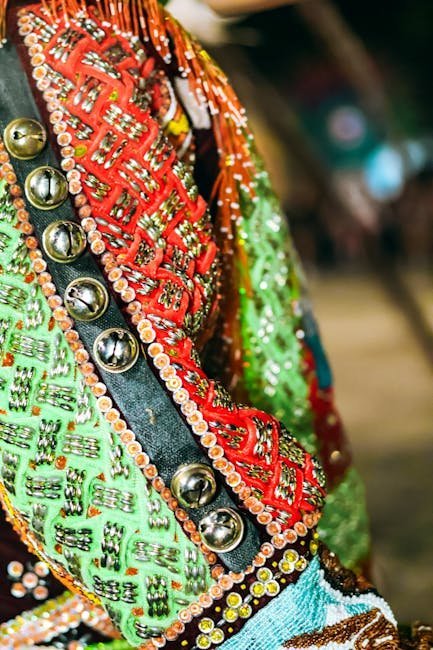
Miao embroidery is globally recognized as among the finest textile arts in the world, employing over 40 distinct stitch techniques. The most important are cross-stitch, satin stitch, chain stitch, couching (where thick threads are laid on the surface and stitched down), and the uniquely Miao "broken thread" stitch where silk threads are deliberately snipped to create a velvet-like textured surface. Motifs include dragons (the Miao dragon is benevolent, unlike the fearsome Han dragon, and is associated with water and fertility), phoenixes, butterflies (the Mother Butterfly, Mais Bangx, is the Miao creator goddess from whom all living things descended), fish, birds, and geometric patterns that encode migration routes. A single festival jacket may contain over 20 distinct embroidery patterns, each with a specific meaning known to the women who created and maintained the design vocabulary across centuries without written records. The embroidery on a girl's festival jacket is begun by her mother when the child is born, added to by grandmothers and aunts, and finally completed by the girl herself as she reaches marriageable age.
A Miao woman in full festival silver is described by ethnographers as a walking treasury - her ornaments represent not only aesthetic mastery but the accumulated wealth of generations, worn publicly as both protection and pride.
Color Symbolism
Dark indigo, black, and navy form the base for all Miao subgroups, providing the essential dark background against which embroidery and silver achieve maximum visual impact. Embroidery uses red (life, celebration, protection), yellow (the earth and harvest), green (forests and growth), blue (sky and water), white (purity and the spirit world), pink, and purple. Different subgroups favor different dominant embroidery colors: the Flowery Miao emphasize red and pink, while others lean toward blue and green. Silver provides the dominant metallic accent, its reflective surface serving as both ornament and spiritual protection. The combination of dark indigo ground, polychrome silk embroidery, and brilliant silver is unique to the Miao among the world's textile traditions, representing one of the most sophisticated color systems developed by any non-literate culture.
Festival Attire
During the Lusheng Festival and Miao New Year (celebrated at varying dates by different subgroups, typically after the harvest), women wear complete silver sets weighing up to 15 kilograms -- headdress, neck rings, breastplate, earrings, and bracelets. The festival centers on the lusheng (a reed pipe instrument) dance, where unmarried women in full silver finery form circles around male musicians, the synchronized chiming of hundreds of silver ornaments creating a mesmerizing metallic soundtrack. The Miao Sisters' Meal Festival in Guizhou is the largest courtship gathering, where unmarried women present elaborately embroidered and silver-decorated costumes that represent their families' wealth and their own embroidery skills. Weddings involve a procession of the bride's silver as part of the dowry display, with the bride wearing the heaviest silver set of her life. The silver worn at a Miao festival is collectively owned by the extended family and village: a woman's festival outfit represents not personal wealth but the accumulated prosperity and craftsmanship of her entire kinship network.
Modern Influence and Preservation
Miao embroidery and silver craftsmanship have been celebrated internationally through museum exhibitions and fashion collaborations. The Guizhou Provincial Museum and the Miao Ethnic Museum in Kaili house important collections of Miao textiles and silver. In 2018, Dior incorporated Miao embroidery techniques into its haute couture collection, bringing Miao artisans to Paris to demonstrate their work, a collaboration that sparked both celebration and debate about cultural appropriation and fair compensation. Miao embroidery and batik are listed as national intangible cultural heritage, and training programs in Guizhou villages pair aging master embroiderers with younger Miao women to ensure techniques are transmitted. The tourism economy of Xijiang Qianhu Miao Village -- the largest Miao settlement in the world -- now supports hundreds of families through the sale of embroidered textiles and silver jewelry. However, the tension between preserving museum-quality traditional techniques and meeting tourism demand with simplified, faster production methods remains a central challenge for Miao craft sustainability.
Did You Know?
A full Miao festival outfit can include 200-300 pieces of silver jewelry weighing up to 15 kilograms, making it one of the heaviest traditional costumes in the world.
Silver Heirlooms and Ancient Embroidery of the Miao
The Miao people, distributed across Guizhou, Yunnan, Hunan, and Guangxi, possess one of the most elaborate silver adornment traditions among China's ethnic minorities. Miao silversmiths produce spectacular headdresses, neck rings, breastplates, and earrings using techniques that include casting, hammering, filigree, and granulation. A complete set of Miao festival silver can weigh over ten kilograms and represent the accumulated wealth of several generations. The silver pieces are decorated with motifs drawn from Miao cosmology including dragons, phoenixes, butterflies, and floral patterns.
Miao embroidery is equally renowned, with techniques including cross-stitch, satin stitch, chain stitch, and distinctive applique where small fabric pieces are layered to create raised patterns. The embroidery patterns preserve ancient Miao history, with certain geometric arrangements believed to represent ancestral migration routes from the Yellow River valley to the mountainous regions where Miao communities now live. The patterns are passed down through generations without written documentation, with each embroiderer memorizing the motifs from observing her mother and grandmother at work.