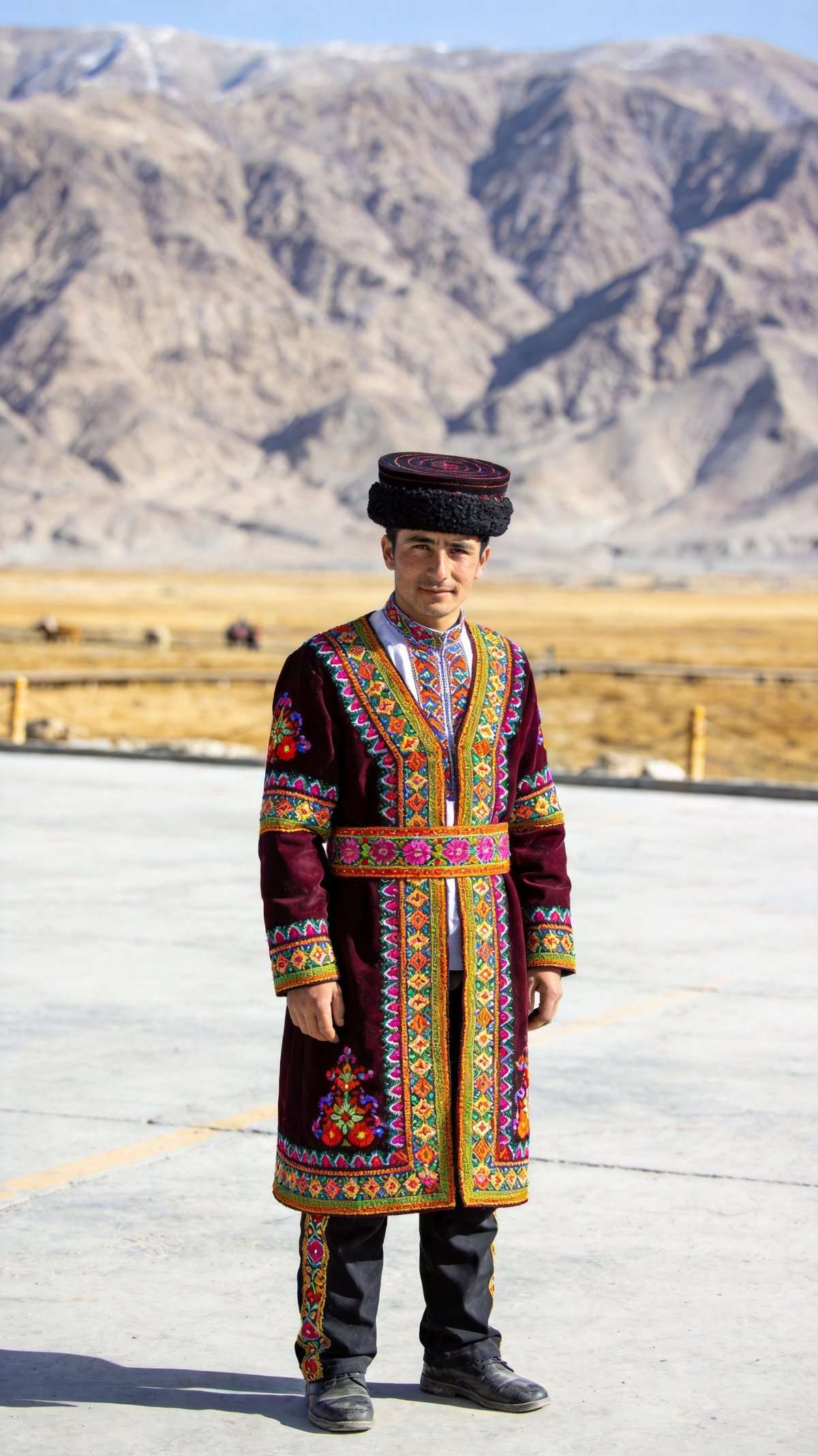
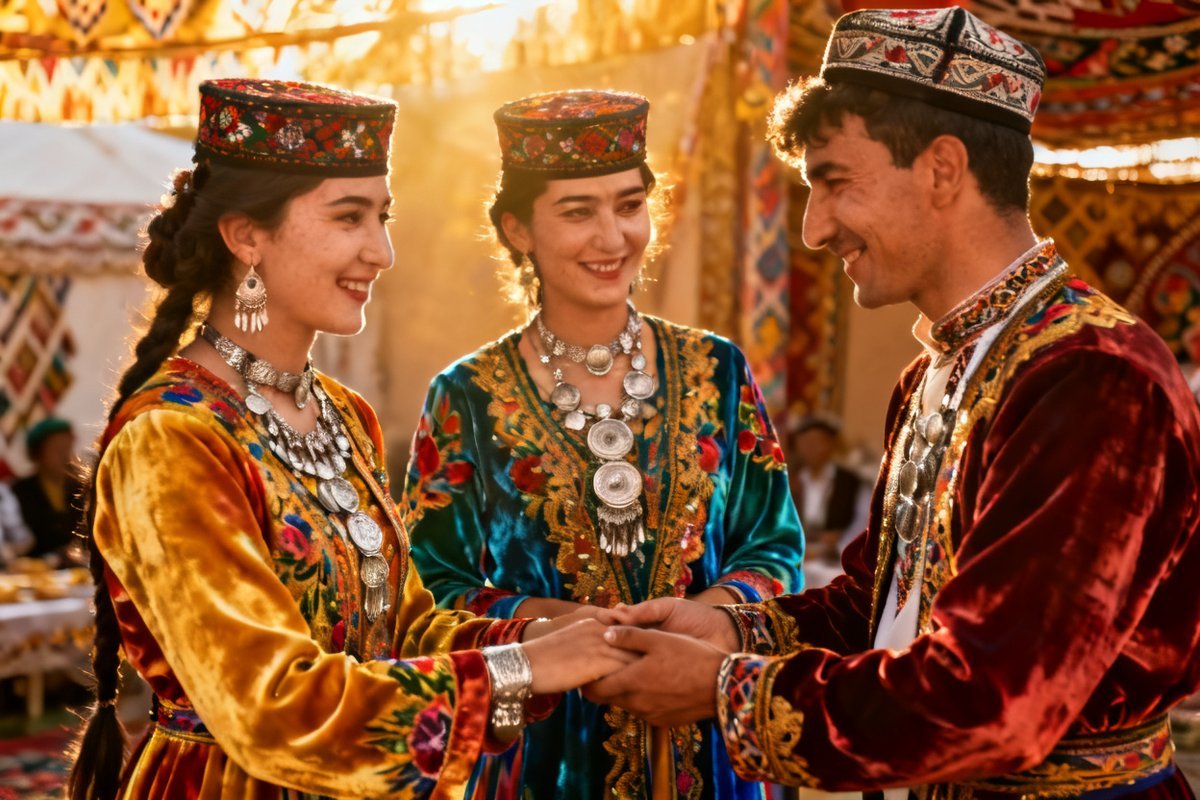
Tajik traditional clothing is among the most colorful in China, set against the backdrop of the high Pamir Mountains. Women wear vibrant embroidered dresses with distinctive round caps, while men wear warm wool coats and unique black pointed-crown hats. The Tajik community in China numbers approximately 50,000 and resides almost exclusively in the Taxkorgan Tajik Autonomous County of Xinjiang, situated at elevations exceeding 4,000 meters where the Pamir, Karakoram, and Kunlun mountain ranges converge.
The Tajik people of China share ethnic and linguistic roots with the Persian-speaking populations of Tajikistan and Afghanistan, making them the only Iranian-language ethnic group among China's 56 recognized minorities. Their language, Sarikoli, belongs to the Eastern Iranian branch of the Indo-European language family. For over two millennia, the Pamir Tajik have served as guardians of the ancient Silk Road passes connecting China to Central Asia, Persia, and beyond. This strategic position as crossroads gatekeepers profoundly shaped their material culture, including their richly ornamented clothing traditions that blend Chinese, Persian, and Central Asian influences.
Life at extreme altitude has shaped every aspect of Tajik clothing design. The high plateau environment features intense ultraviolet radiation, extreme diurnal temperature swings of 20 degrees Celsius or more, and fierce winds. Tajik garments must provide warmth without restricting movement, protection from the sun's glare, and insulation against cold nights — all while allowing the wearer to tend livestock and work the sparse mountain pastures. Their clothing embodies an elegant solution to one of Earth's most challenging inhabited environments.
Key Features of Tajik Attire
- Womens round embroidered caps (kuyo) with colorful geometric patterns
- Mens black pointed-rim sheepskin hats (kuyo) with a distinctive crown shape
- Vibrantly embroidered women's dresses in red, purple, and green
- Heavy silver and turquoise jewelry including large earrings and brooches
- Men's warm wool overcoats (chapan) with decorative striped fabric
Traditional Garments
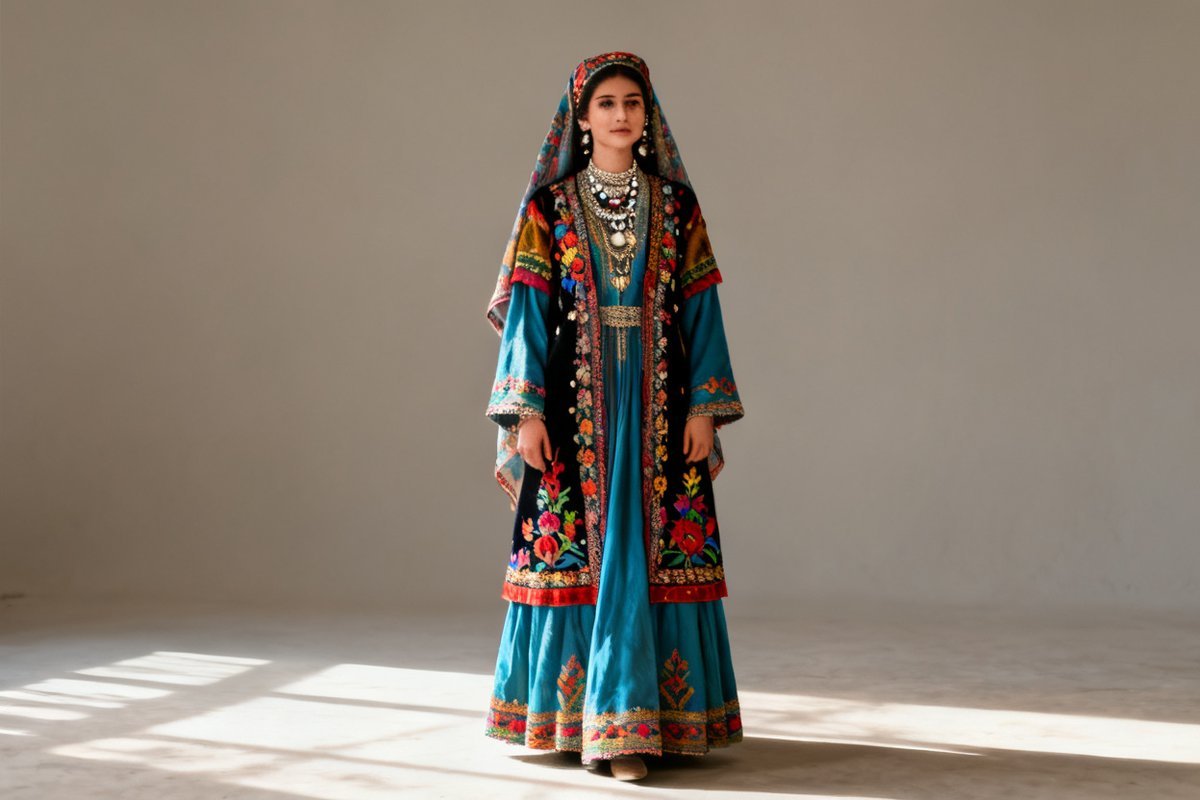
Women wear a long brightly colored dress in red or purple, with elaborate embroidery on the collar, cuffs, and hem, covered with a short fitted vest also heavily embroidered. Men wear a white shirt under a dark jacket or wool overcoat, with loose trousers tucked into leather boots. The women's dress is typically constructed from silk or fine cotton and features a fitted bodice with a full gathered skirt that allows freedom of movement while walking across uneven mountain terrain. Multiple layers are worn for warmth, with the embroidered vest serving as both insulation and the primary decorative element.
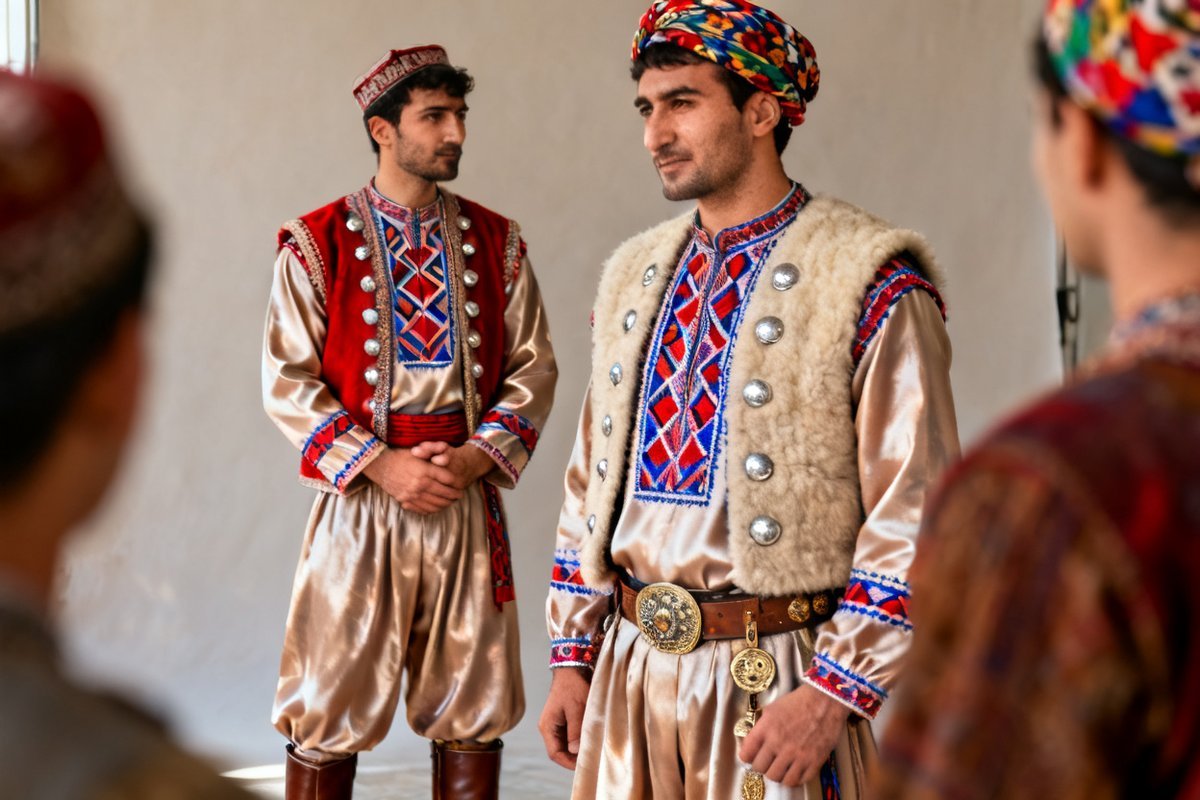
Men's clothing emphasizes practicality and warmth. The wool overcoat (chapan) is made from locally produced wool felt or woven wool fabric, often featuring striped patterns in muted earth tones. Under the overcoat, men wear a white cotton shirt and a waistcoat, with wide-legged trousers that can be easily tucked into knee-high leather boots for protection against snow and rocky ground. A long cloth belt, typically in red or another bright color, is wrapped multiple times around the waist, providing back support for heavy lifting and a place to secure tools and personal items.
Headwear and Adornments
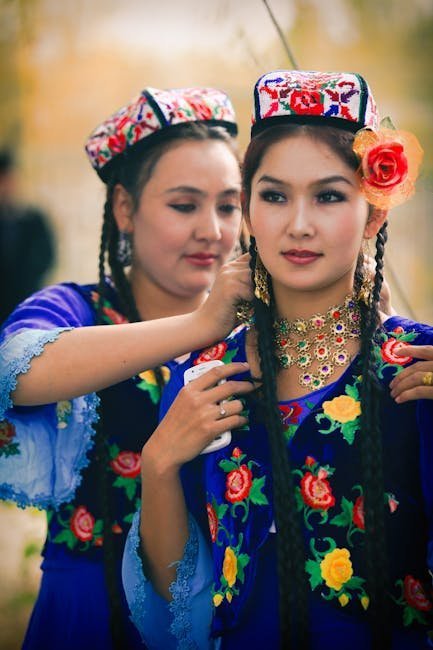
The Tajik womens cap (kuyo) is a round, close-fitting cap with colorful geometric and floral embroidery in red, yellow, and green. Over the cap, women traditionally drape a large white or red shawl. Mens hat is a distinctive black sheepskin hat with a pointed crown and wide brim that can be folded up or down. The folded brim can be adjusted according to weather conditions — turned down to shield the face from sun and wind, or folded up in milder conditions.
Silver and turquoise jewelry carries deep cultural significance among the Tajik. Women wear large silver earrings, heavy necklaces with turquoise beads, brooches, and decorative headpieces. The turquoise is believed to offer protection against the harsh mountain environment, while the silver represents purity and the moon — a significant celestial body in Tajik cosmology. Traditionally, a woman's jewelry constituted her personal wealth and was accumulated from childhood through gifts at major life events such as births, coming-of-age ceremonies, and weddings.
Embroidery and Decorative Arts
Tajik embroidery is exceptionally vibrant, featuring geometric patterns, stylized flowers, and bird motifs in bold colors on caps, dress collars, cuffs, and vests. Chain stitch and satin stitch create dense, patterned surfaces. The embroidery designs draw from a rich visual vocabulary shaped by Silk Road cultural exchange: Persian floral arabesques, Chinese cloud patterns, and Central Asian geometric medallions all appear in Tajik needlework. Women begin mastering embroidery techniques from childhood, with a girl's first completed cap often marking an important milestone in her development.
Beyond thread embroidery, Tajik decorative arts include intricate silver filigree work, bead weaving, and the creation of decorative tassels and fringe. The combination of embroidered fabric, silver ornamentation, and colorful beadwork creates a layered visual richness that stands out dramatically against the stark gray-brown landscape of the Pamir plateau. This contrast between vibrant human-made color and the monochromatic natural environment is central to the Tajik aesthetic philosophy.
Living at altitudes above 4,000 meters in the Pamir Mountains, the Tajik people have developed embroidery so vivid that travelers from the ancient Silk Road described their garments as gardens blooming on cloth against the worlds highest monochrome landscape.
Color Symbolism
Red is the dominant color for womens dresses, symbolizing life, vitality, and the warmth of the hearth in the cold mountain environment. Purple represents nobility and spiritual depth, while green signifies the precious vegetation of the high-altitude pastures. Embroidery uses red, yellow, green, white, blue, and pink in combination. Black for mens outerwear provides practical warmth absorption from sunlight and communicates strength and resilience. White for shawls and inner garments represents purity and the snow that blankets the Pamir peaks year-round.
Festival Attire
During Nowruz (Persian New Year) and the Tajik Spring Festival, women wear their most vibrantly embroidered dresses and caps with complete silver and turquoise jewelry sets. Nowruz, celebrated on the spring equinox, marks the beginning of the new year according to the Persian solar calendar and represents the most important festival in Tajik culture. The celebration involves house cleaning, preparation of special foods, and the wearing of new or freshly cleaned traditional clothing to welcome renewal.
Weddings represent the ultimate display of Tajik textile artistry, with brides wearing layered dresses, multiple embroidered vests, full jewelry sets including heirloom pieces, and elaborately decorated headpieces. Wedding preparations can extend for months as families commission embroidered garments and silver jewelry for the bride's trousseau. Eagle dancing and falconry demonstrations, accompanied by traditional Pamiri music, complete the celebration, with participants dressed in their finest regional attire.
Modern Influence and Preservation
Tajik embroidery and hat-making traditions are preserved in Taxkorgan, and their distinctive colorful aesthetic is promoted through cultural performances and tourism. Local government programs support master artisans in training apprentices, ensuring that traditional embroidery techniques and hat-making skills continue to be passed to younger generations. Tajik clothing has gained recognition in Chinese ethnic minority fashion exhibitions, with the vivid colors and geometric patterns of Tajik embroidery inspiring contemporary textile designers.
The remote location of Tajik communities in the Pamir Mountains has paradoxically aided cultural preservation — geographic isolation has meant that traditional clothing practices remain more intact than in many more accessible regions. However, increased road connectivity and tourism are bringing both opportunities and challenges. Cultural heritage programs now focus on documenting traditional designs, supporting artisan cooperatives, and creating sustainable markets for authentic Tajik textile products that provide income while maintaining cultural integrity.
Did You Know?
The Tajik are the only ethnic group in China with Persian linguistic roots, and their clothing shares more commonality with Iranian and Afghan traditions than with other Chinese ethnic groups.
Did You Know?
The Tajik are the only ethnic group in China with Persian linguistic roots, and their clothing shares more commonality with Iranian and Afghan traditions than with other Chinese ethnic groups.
High Mountain Textiles of the Tajik Minority
The Tajik people of Xinjiang, inhabiting the Pamir Mountains at elevations exceeding four thousand meters, have developed clothing traditions uniquely adapted to high-altitude life. Wool from local sheep is the primary textile material, processed into thick, warm fabric that provides insulation against the cold that persists even during summer months at high elevation. The wool is hand-spun and woven on horizontal looms into fabric with distinctive geometric patterns woven directly into the cloth. Tajik women's dresses feature long sleeves and full skirts that provide warmth coverage while allowing freedom of movement for the physically demanding tasks of highland pastoral life.
Tajik women's headwear is particularly elaborate, consisting of a round embroidered cap worn close to the head with a large scarf or shawl draped over it. The cap is densely embroidered in brightly colored silk threads, with geometric patterns that often include eight-pointed stars and stepped diamonds. A long white or light-colored veil is worn over the cap for modesty, pulled forward over the forehead and secured at the neck. Silver jewelry, including intricate earrings and bracelets, completes the Tajik women's attire.