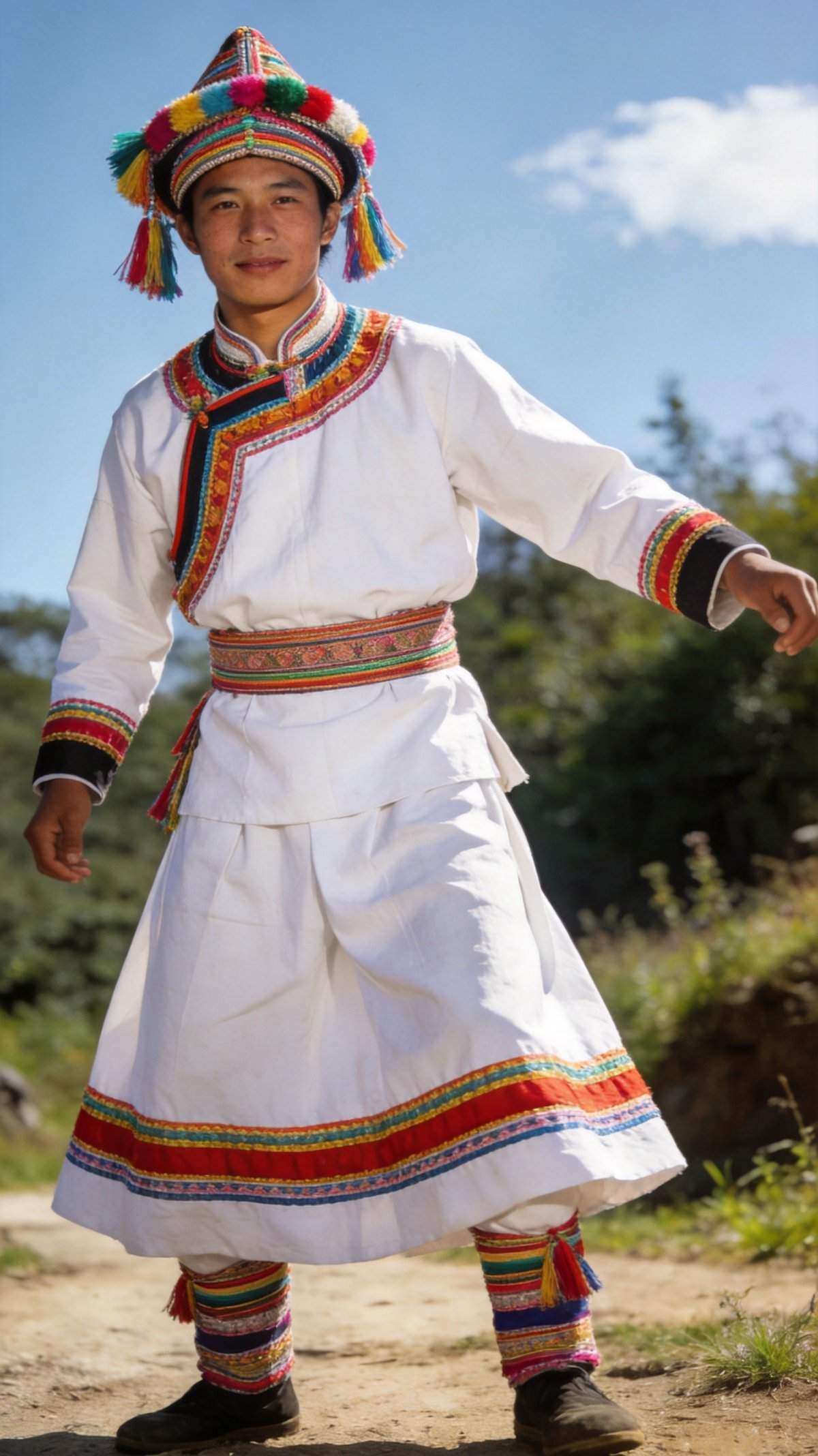
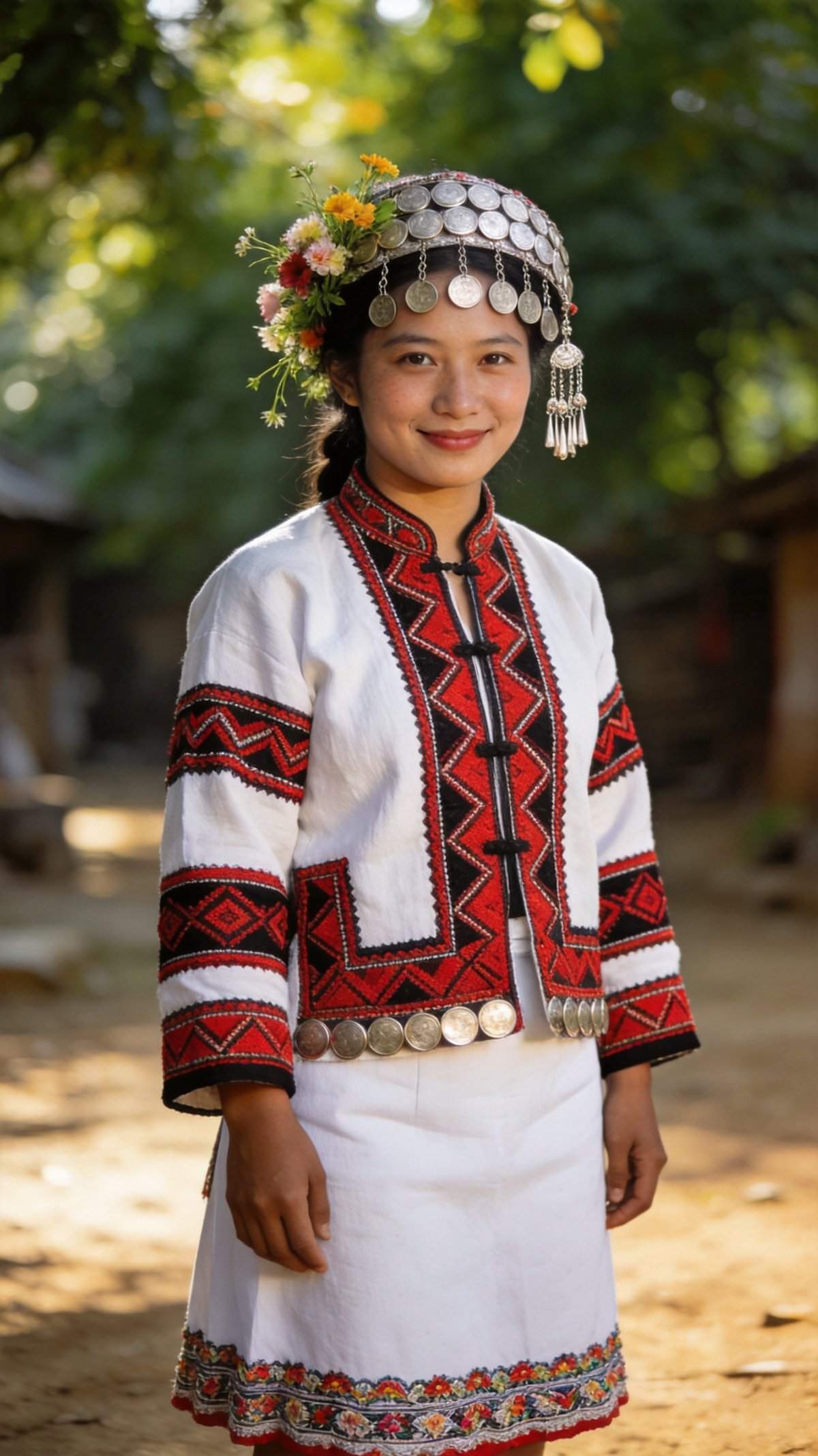
Jino traditional clothing is characterized by distinctive white conical caps, dark indigo fabric, and striking geometric embroidery in bold colors. The Jino are one of Chinas smallest ethnic minorities and hold the distinction of being the fifty-sixth and final ethnic group to receive official recognition, formally identified in 1979 after years of ethnographic study.
Historical and Cultural Background
The Jino people, numbering approximately 23,000, inhabit the Jino Mountain area of Xishuangbanna Dai Autonomous Prefecture in southern Yunnan Province, near the borders with Laos and Myanmar. According to Jino creation mythology, all humanity originated from a great drum — a narrative that places the Jino at the center of cosmic history and explains the profound cultural significance of the drum in Jino ritual life. Their origin myth tells of the first ancestors emerging from a sacred gourd after a great flood, a story commemorated in the Temaoke Festival and encoded in the patterns of their textiles.
Jino language belongs to the Tibeto-Burman family and lacks a traditional writing system, meaning that oral tradition, material culture including clothing, and ritual practice serve as the primary vehicles for transmitting cultural knowledge across generations. Until the mid-20th century, Jino society practiced slash-and-burn agriculture, rotating cultivation sites through the forested slopes of Jino Mountain. This close relationship with the forest environment is reflected in their textile arts — the deep indigo of their clothing evokes the shadows of the subtropical rainforest, while the bold embroidery colors echo the tropical flowers and birds of their homeland.
The late official recognition of the Jino as a distinct ethnic group (1979) is a significant aspect of their modern history. Prior to this, they were sometimes classified as a subgroup of the Dai people. The recognition catalyzed cultural preservation efforts, as the Jino gained autonomous township status and resources for documenting and maintaining their distinct traditions. The white peaked cap, which has no parallel among neighboring ethnic groups, was one of the key cultural markers that supported the case for distinct Jino identity.
Key Features of Jino Attire
- Distinctive white peaked conical caps worn by both genders
- Dark indigo sleeveless jackets with color-blocked front panels
- Bold geometric embroidery in red, yellow, blue on chest and back
- Womens short pleated skirts with embroidered hem bands
- Mens embroidered front-fastening jackets with decorative back panels
Traditional Garments
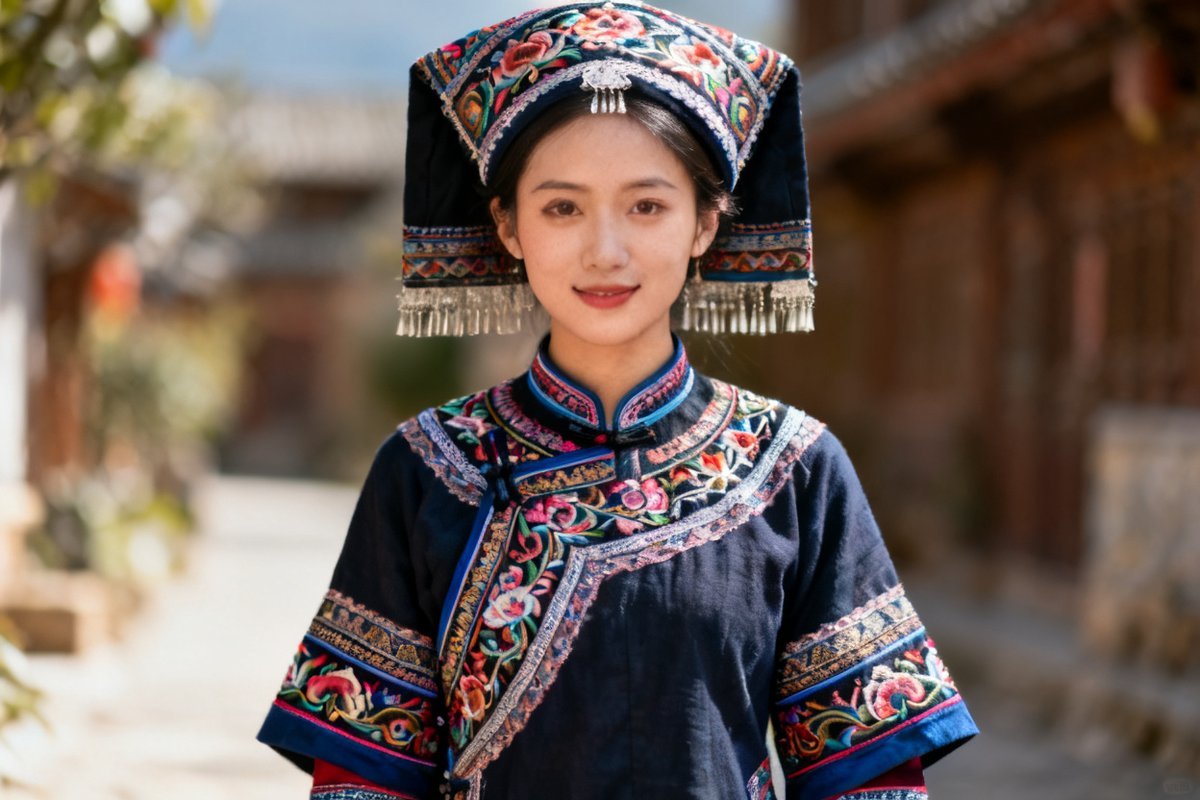
Women wear a dark indigo sleeveless jacket with heavily embroidered front, over a dark inner blouse, paired with a short pleated skirt. The sleeveless jacket features color-blocked front panels divided into rectangular sections, each filled with different embroidery patterns creating a striking mosaic effect. The back of the jacket is equally decorated, often featuring a large central sun-motif executed in thick embroidery that radiates outward in concentric bands of color. The short skirt has an embroidered hem band and is worn with leg bindings decorated with geometric cross-stitch patterns.
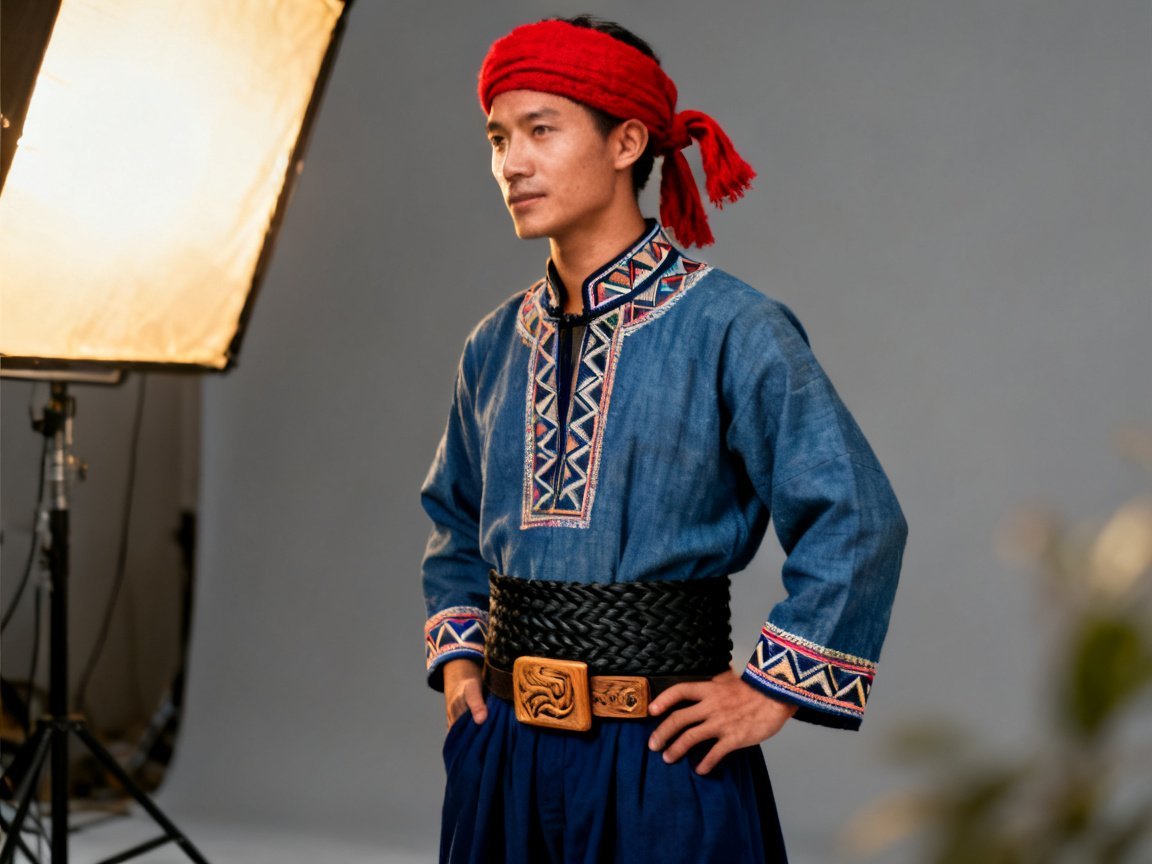
Men wear a dark jacket with cloth buttons, embroidered front panels, and loose trousers. The mens jacket features a distinctive decorative back panel — a rectangular field of embroidery positioned between the shoulder blades — that may represent the sacred drum of Jino mythology. This back panel, known as the "sun-moon flower," is the most recognizable element of mens formal dress and identifies the wearer as Jino from any angle. Mens wear also includes an embroidered shoulder bag, worn cross-body, that serves both practical and decorative functions.
Headwear and Adornments
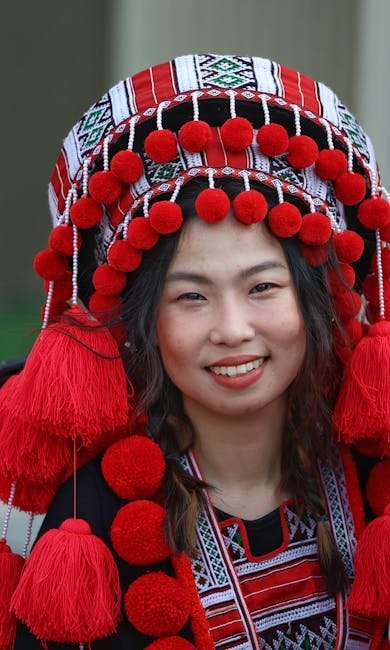
The iconic Jino headpiece is a white peaked conical cap decorated with horizontal bands of dark blue or black fabric, worn by both genders. This cap is often interpreted as a representation of Jino Mountain itself — the peak pointing skyward like the mountain summit, the horizontal bands suggesting the terraced slopes. Some accounts link it to the mythic gourd of creation, with the cap symbolizing the gourd from which the first Jino ancestors emerged. The cap is constructed from a framework of bamboo strips covered with white cotton cloth, with the dark fabric bands applied in precise horizontal stripes.
Embroidery and Decorative Arts
Jino embroidery is bold and angular, featuring diamonds, zigzags, and stepped pyramids in thick bright threads on jacket chest panels, armholes, and skirt hems. The embroidery uses thick cotton or silk threads, often doubled or tripled for maximum visual impact, creating a raised, tactile surface that stands out dramatically against the dark indigo fabric. The technique relies primarily on satin stitch and cross-stitch, with patterns outlined in contrasting colors to enhance clarity and definition.
The sun motif is the most important symbolic element in Jino embroidery — a large circular design with radiating rays that appears on the back of mens jackets and on the chest panels of womens sleeveless vests. This sun symbol connects to the Jino creation narrative in which the sun played a crucial role in nurturing the first human beings. Alongside solar imagery, the embroidery incorporates stylized representations of local flora including ferns, bamboo shoots, and the blossoms of the cotton tree, as well as abstract patterns whose specific meanings are known only to the embroiderers and the elders of each village community.
To the Jino people who call themselves descendants of the mothers womb, the peaked white cap symbolizes the sacred mountain from which their ancestors emerged at the dawn of creation.
Color Symbolism
Dark indigo, black, and natural white form the base. Embroidery uses intense red, yellow, blue, green, and white. The white of the peaked cap is perhaps the most significant color in Jino visual culture — it represents the sacred mountain of Jino creation myth, the purity of ancestral origins, and the distinctiveness of Jino identity. Red embroidery symbolizes the life-giving power of the sun, while green represents the forest that sustained Jino communities for countless generations. The dark indigo ground represents the fertile soil of Jino Mountain, anchoring the bright embroidery colors like crops anchored in the earth.
Festival Attire
During the Temaoke Festival (Jino New Year), the most elaborately embroidered jackets and caps are worn with full sets of bead necklaces. The Temaoke Festival, celebrated in the first lunar month, is the Jino equivalent of New Year and the most important annual event. It commemorates the creation myth of the Jino people emerging from the sacred drum, and the highlight of the festival is the beating of a large wooden drum by the village elder while the community dances around it. Participants dress in their finest traditional clothing — women in newly embroidered sleeveless jackets and pleated skirts, men in jackets with the full sun-moon back panel decoration, and everyone wearing the white peaked cap. Multiple strands of colorful bead necklaces and silver ear ornaments complete the festive ensemble. Weddings and the coming-of-age ceremony for young men are other important occasions for displaying the full range of Jino textile artistry.
Modern Influence and Preservation
Jino textile techniques are maintained through intangible heritage programs in Xishuangbanna. The Jino Mountain Township government has established a cultural heritage center that documents traditional embroidery patterns, collects historical garments, and offers training workshops for young Jino interested in learning textile arts. Tourism development in Xishuangbanna has created new markets for Jino handicrafts, with embroidered bags, caps, and decorative panels produced for visitors. Community-based tourism initiatives allow visitors to observe traditional textile production and participate in embroidery workshops, generating income for artisans while promoting cultural exchange. Despite these efforts, the number of Jino women who possess complete knowledge of traditional patterns and techniques has declined, making documentation and transmission programs vital for the long-term survival of this distinctive textile heritage.
Modern Influence and Preservation
Jino textile techniques are maintained through intangible heritage programs in Xishuangbanna.
Did You Know?
The Jino were the last ethnic group officially recognized by the Chinese government (in 1979), and their unique pointed white caps are a marker of their distinct identity.
Bamboo and Nature in Jino Clothing
The Jino people of Yunnan Province maintain a close relationship with the bamboo forests surrounding their villages, and this connection is reflected in their clothing traditions. Bamboo hats woven from fine strips of split bamboo are worn by both men and women for sun and rain protection, with the hat shape and weave pattern indicating the wearer's home village. The hats are lightweight, breathable, and remarkably durable, with a well-made example lasting several years of daily use. Jino women also use bamboo to produce weaving tools, including shuttles and heddles for their backstrap looms, creating a direct link between the forest and the textile production process.
Jino women's traditional attire consists of a short, fitted jacket worn open at the front, revealing a decorated undergarment or breast covering. The skirt is a short wrap style ending above the knee, a length that distinguishes Jino women from neighboring groups where ankle-length skirts are the norm. Embroidery appears primarily on the jacket collar and the skirt hem, with geometric patterns in red, yellow, and green threads against a dark ground.