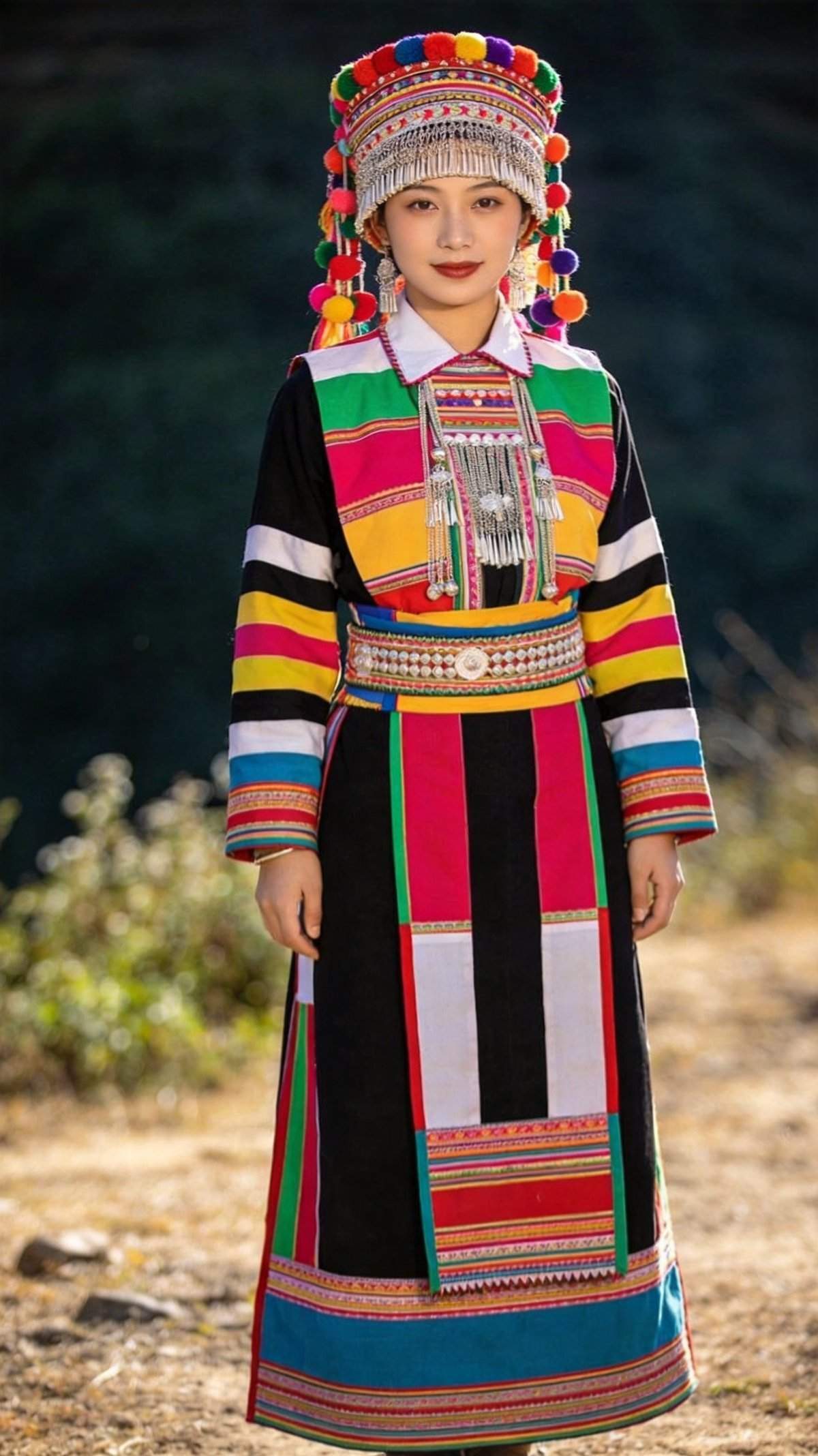
Lisu traditional clothing is renowned for its vibrant colors, especially among the Flowery Lisu who wear boldly striped woven skirts and elaborately decorated jackets. The Lisu number approximately 700,000 in China, concentrated in the Nujiang Lisu Autonomous Prefecture of northwestern Yunnan, with additional populations in Sichuan and across the border in Myanmar. The Lisu are traditionally divided into three subgroups by clothing color: the Black Lisu, White Lisu, and Flowery Lisu -- a system of self-identification where dress literally defines ethnic sub-identity. Their clothing traditions reflect a highland Southeast Asian aesthetic that values visual exuberance and maximalist decoration.
Historical and Cultural Background
The Lisu are a Tibeto-Burman people whose ancestors migrated from the eastern Tibetan Plateau into the Salween River canyon system over the past thousand years. Their mountainous homeland along the Nujiang (Salween) River is one of the most biodiverse regions on Earth, and Lisu material culture reflects an intimate relationship with this environment. The Lisu developed no tradition of silver-smithing -- their ornaments are primarily organic (shell, bone, seed, bamboo) or imported (coral, agate, glass beads). Their most important technological achievement was the backstrap loom, which enabled the production of the brightly striped skirts that define Flowery Lisu identity. Historically, Lisu society was organized around autonomous village clusters with no central authority, and clothing served as the primary marker of group affiliation. The color-based subgroup names (Black/White/Flowery) represent a rare example of clothing taxonomy functioning as ethnic self-classification.
Key Features of Lisu Attire
- Brightly striped woven skirts in multicolor horizontal bands
- Embroidered front-fastening jackets with colored trim and shell decorations
- Coral and agate bead necklaces worn in overlapping multiple strands
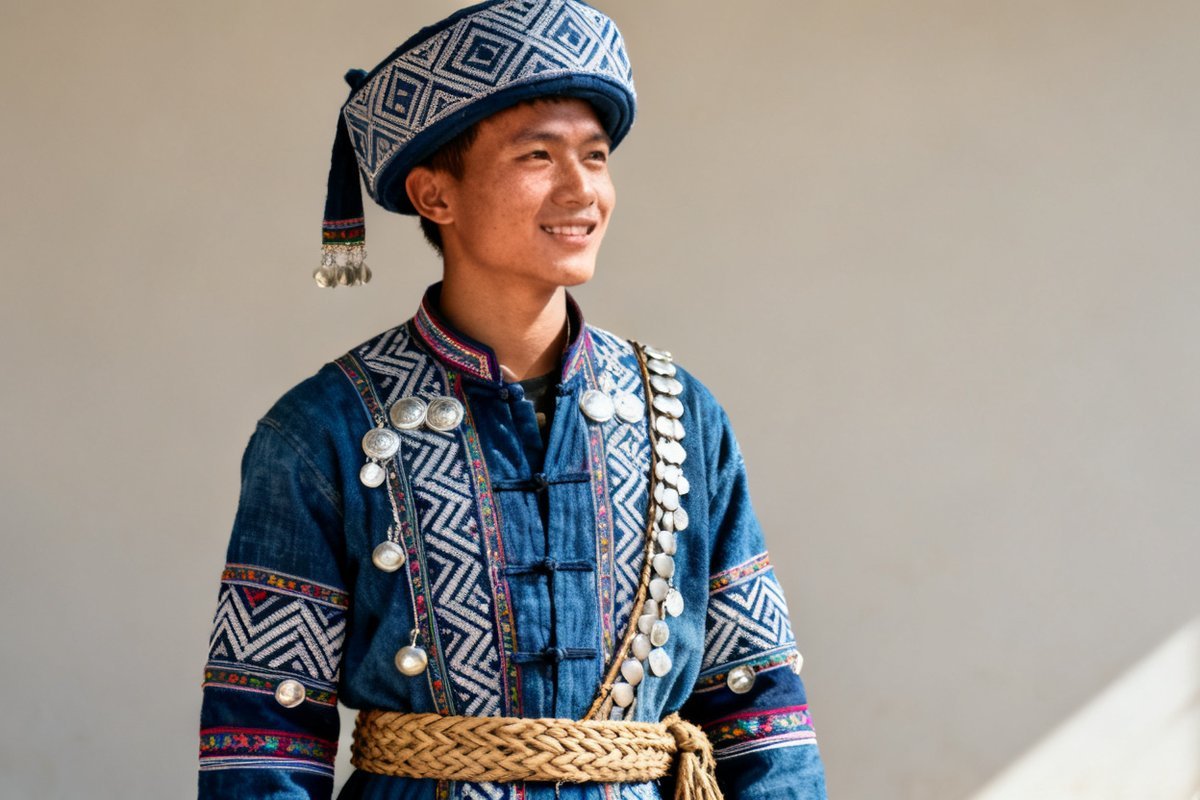
- Mens white or blue jackets with embroidered collar bands
- Distinctive bamboo or rattan waistbands worn by some subgroups
Traditional Garments
Women wear a long-sleeved collarless jacket with wide embroidered trim at the lapels, cuffs, and hem, over a long striped skirt woven with horizontal bands of red, blue, green, white, and black. The Flowery Lisu skirt is the most recognizable garment: typically a wrap-around design reaching mid-calf to ankle, with each horizontal band representing a different dye lot, creating a rhythmic sequence of colors that can include 20 or more distinct stripes. The jacket front is decorated with rows of small silver-colored buttons and shell discs. The Black Lisu subgroup wears predominantly black or dark indigo garments with minimal colored trim, while the White Lisu favors undyed hemp or cotton in natural cream tones with discrete embroidery. Men wear white or dark short jackets with embroidered edges and loose trousers, with the Flowery Lisu men incorporating colored sashes and decorated shoulder bags that complement the women's attire.
Headwear and Adornments
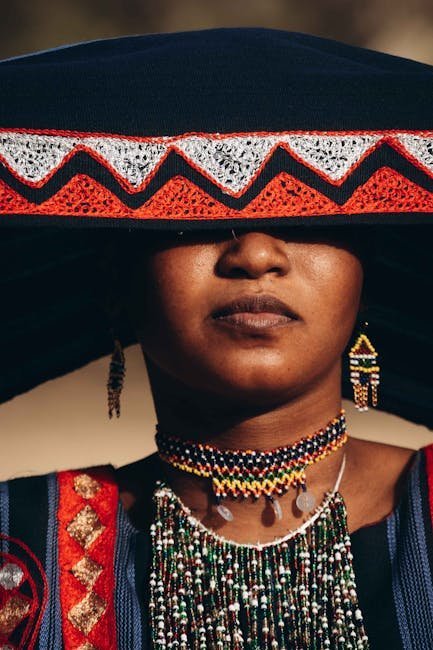
Women wrap their hair in colorful turbans decorated with bead tassels and seashells, with Flowery Lisu headwraps incorporating the same horizontal stripe pattern as their skirts. The headwrap is wrapped in a distinctive spiral that can incorporate strings of coral, agate, and glass beads, as well as silver-colored coin pendants that chime as the wearer moves. Men wear simple black or white headwraps. Coral and agate bead necklaces are the most important Lisu ornaments, worn in multiple overlapping strands that can cover the entire chest. Unlike neighboring groups who invest heavily in silver, the Lisu preference for organic and imported beads reflects both their historical trade patterns (coral from Tibet, agate from Myanmar) and their cultural emphasis on color over metal. Large circular earrings of silver or shell are worn by married women, while unmarried girls wear smaller studs.
Embroidery and Decorative Arts
Lisu embroidery concentrates on jacket collars, cuffs, and headwrap edges, with geometric patterns in bright colors. The most common motifs include diamonds, triangles, and zigzag lines, executed in cross-stitch and chain stitch. These geometric patterns are not merely decorative: the diamond represents the protective eye, the zigzag represents the mountain path of the ancestors' migration, and repeated triangles symbolize the peaks surrounding the Nujiang valley. Applique is used to apply pre-woven strips of striped fabric to jacket edges, creating a layered collage effect. Unlike the Miao, whose embroidery covers entire garments, Lisu embroidery is strategically placed at edges and openings, framing the wearer's face and hands. The shoulder bag (niza) is woven with supplementary weft patterns in geometric designs that complement the clothing trim.
To the Lisu, the breadth and brightness of a womans striped skirt is an unspoken announcement - the wider the band, the more prosperous her family, the richer the colors, the more skilled her weaving.
Color Symbolism
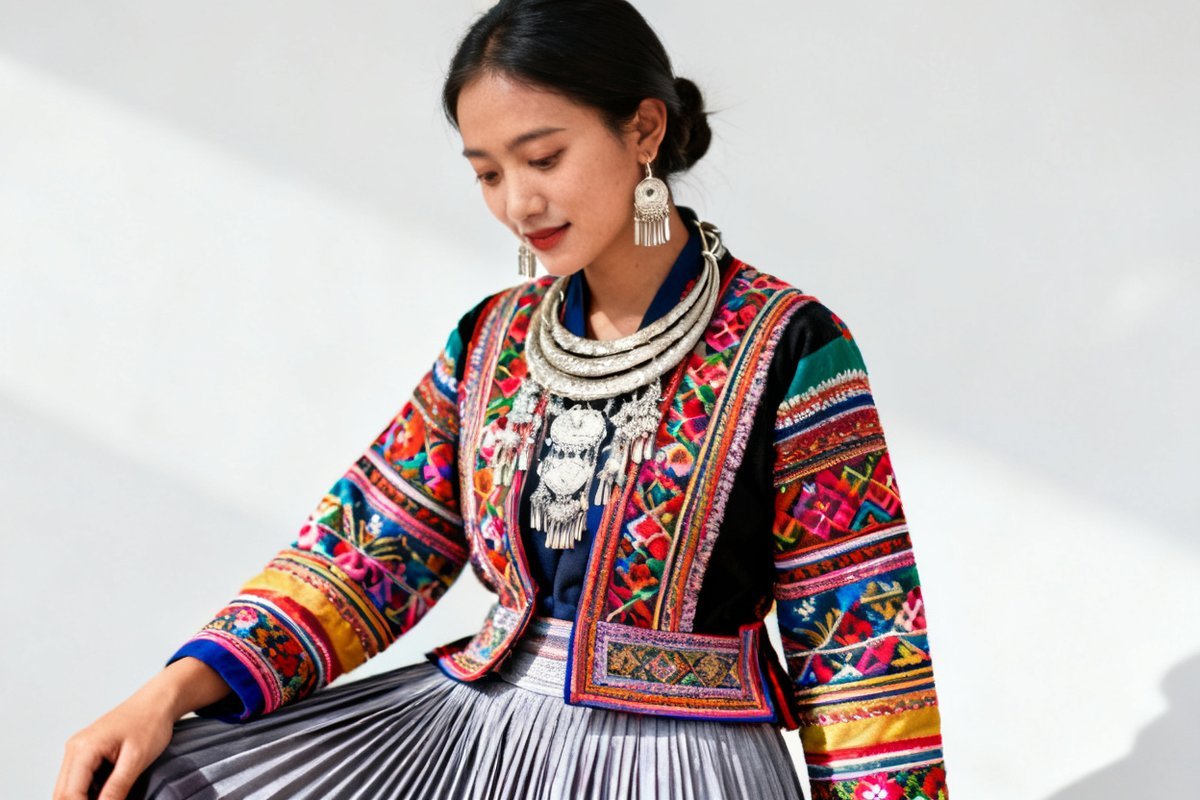
Bold multicolor stripes on skirts are the visual signature of the Flowery Lisu, with the number of colors and the width of each stripe reflecting regional and individual preference. Jackets in black, navy, or white provide a neutral frame. Embroidery uses bright red, yellow, green, blue, and pink, with red predominating as it symbolizes life, courage, and the sun. The Black Lisu aesthetic is restrained to black with small accents of red, while the White Lisu uses undyed hemp with blue or black embroidery for contrast. Coral beads in deep red-orange provide warmth against all color schemes. The overall Lisu approach to color represents one of the most saturated palettes among China's ethnic groups, reflecting a cultural preference for high-visibility clothing in the misty mountain environment of the Nujiang canyon.
Festival Attire
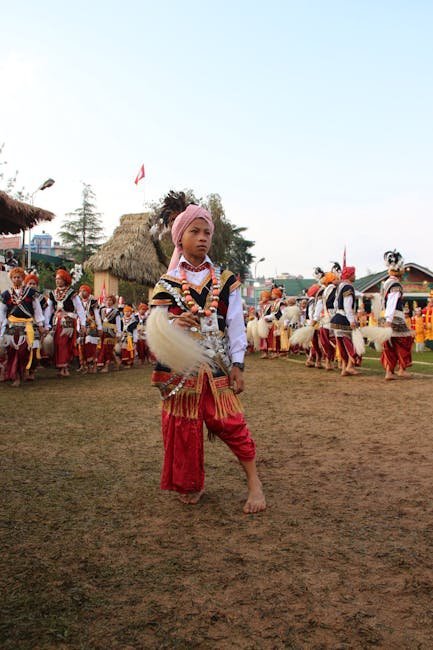
During the Kuoshi Festival (Lisu New Year, typically in the 12th lunar month), women wear their most vibrantly striped skirts and largest sets of coral bead necklaces. The festival involves the iconic "knife ladder" ceremony where shamans climb a ladder of sharp blades, and the accompanying "fire sea" ritual where participants walk through hot coals -- both performed in full traditional dress. The Harvest Festival similarly requires complete traditional attire. Weddings feature the bride in a new striped skirt woven specifically for the occasion, decorated with extra beadwork and shell ornaments. The crossbow competition, a traditional Lisu sport, sees men wearing their clan's specific jacket trim pattern. The annual migration to summer pastures, though now largely replaced by permanent settlements, historically included a ritual donning of new clothing to mark the seasonal transition.
Modern Influence and Preservation
Flowery Lisu striped skirts have become iconic in Yunnan's ethnic tourism trade, with Lisu women in the Nujiang valley producing skirts and shoulder bags for sale to domestic and international tourists. The Nujiang Lisu Autonomous Prefecture government supports weaving cooperatives that provide income for rural Lisu women while preserving traditional techniques. However, the tourism market has introduced synthetic yarns and chemical dyes that differ from traditional materials, creating a parallel economy of "authentic" traditional pieces (using hand-spun cotton and natural dyes) and "decorative" pieces (using commercial yarns). Lisu dance troupes performing at Yunnan's ethnic theme parks wear stylized versions of Flowery Lisu dress, introducing the striped skirt aesthetic to millions of Chinese tourists annually. The Lisu diaspora community in Thailand has also contributed to the preservation and global visibility of Lisu textile traditions through cultural centers and online markets.
Did You Know?
The Lisu are divided into three subgroups by clothing color: the Black Lisu, White Lisu, and Flowery Lisu - the Flowery Lisu wear the most colorful attire.
Rainbow Weaves and Bead Ornaments of the Lisu
The Lisu people of Yunnan Province are known for their vibrant textile traditions, with women's garments featuring bold stripes of red, green, yellow, and blue against dark cotton fabric. The striped fabric is woven on backstrap looms using hand-spun cotton or wool thread, with the stripe width and color sequence varying between Lisu subgroups. The most elaborate striped panels are used for women's long skirts, which may feature twenty or more individual color bands in a single garment. The visual density of the stripes creates a distinctive Lisu aesthetic that is immediately recognizable across the highland communities of western Yunnan.
Bead ornaments are an important element of Lisu personal adornment, with thousands of small glass beads strung into elaborate necklaces and chest panels worn during festivals and ceremonies. The beadwork is produced by women working together in groups, with the most experienced beadworkers directing the pattern arrangement. The primary colors used in Lisu beadwork are red, white, blue, and yellow, arranged in geometric patterns that complement the striped textiles.
Rainbow Weaves and Bead Ornaments of the Lisu
The Lisu people of Yunnan Province are known for their vibrant textile traditions, with women's garments featuring bold stripes of red, green, yellow, and blue against dark cotton fabric. The striped fabric is woven on backstrap looms using hand-spun cotton or wool thread, with the stripe width and color sequence varying between Lisu subgroups. The most elaborate striped panels are used for women's long skirts, which may feature twenty or more individual color bands in a single garment. The visual density of the stripes creates a distinctive Lisu aesthetic that is immediately recognizable across the highland communities of western Yunnan.
Bead ornaments are an important element of Lisu personal adornment, with thousands of small glass beads strung into elaborate necklaces and chest panels worn during festivals and ceremonies. The beadwork is produced by women working together in groups, with the most experienced beadworkers directing the pattern arrangement. The primary colors used in Lisu beadwork are red, white, blue, and yellow, arranged in geometric patterns that complement the striped textiles.