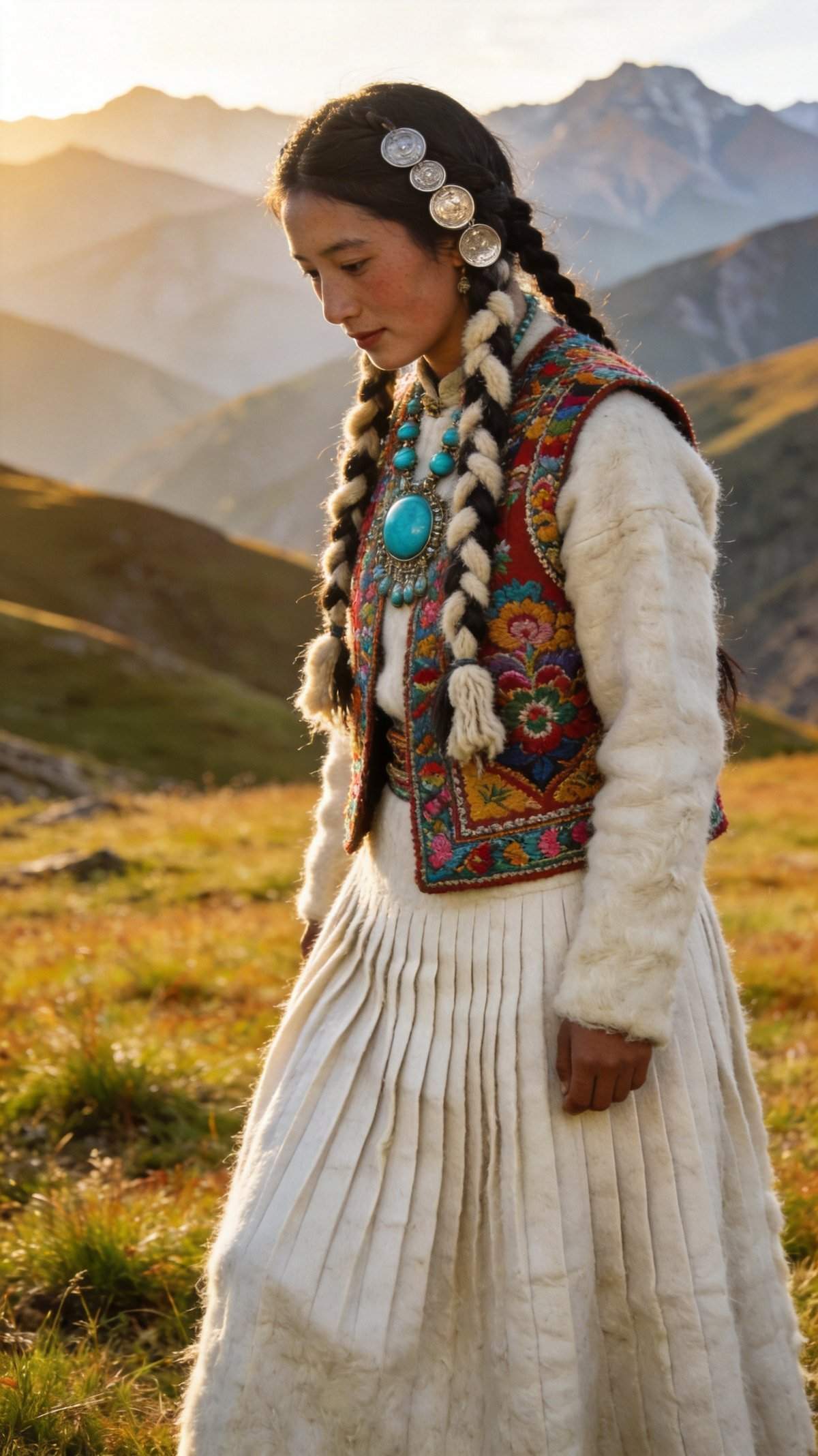
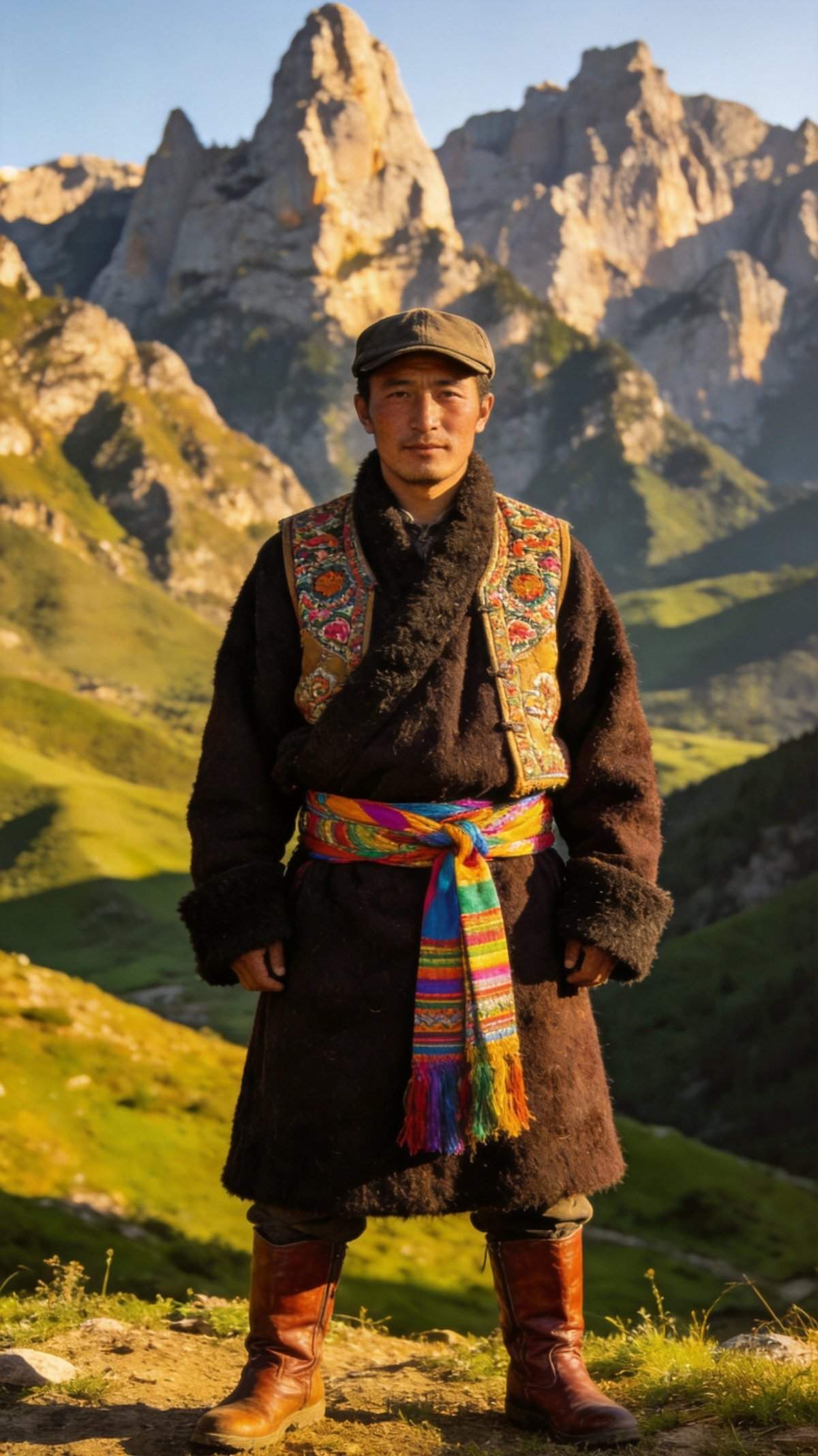
Pumi traditional clothing is characterized by white sheepskin capes, long multicolored pleated skirts for women, and dark jackets with red trim for men. The white sheepskin cape is the most distinctive Pumi garment. The Pumi people, numbering around 42,000, live primarily in the mountainous borderlands of northwestern Yunnan and southwestern Sichuan provinces, with concentrations in Lanping, Ninglang, and Lijiang counties. Their clothing traditions trace back to the ancient Qiang people who inhabited the upper Yellow River region millennia ago, and the sheepskin cape is considered one of the oldest continuously worn garments in East Asia.
Key Features of Pumi Attire
- White sheepskin cape worn over the shoulders
- Long multicolored pleated skirts with horizontal woven bands
- Large silver earrings and coral bead necklaces
- Dark front-fastening jackets with red or blue trim
- Men's white linen or hemp trousers with embroidered leg bands
Traditional Garments
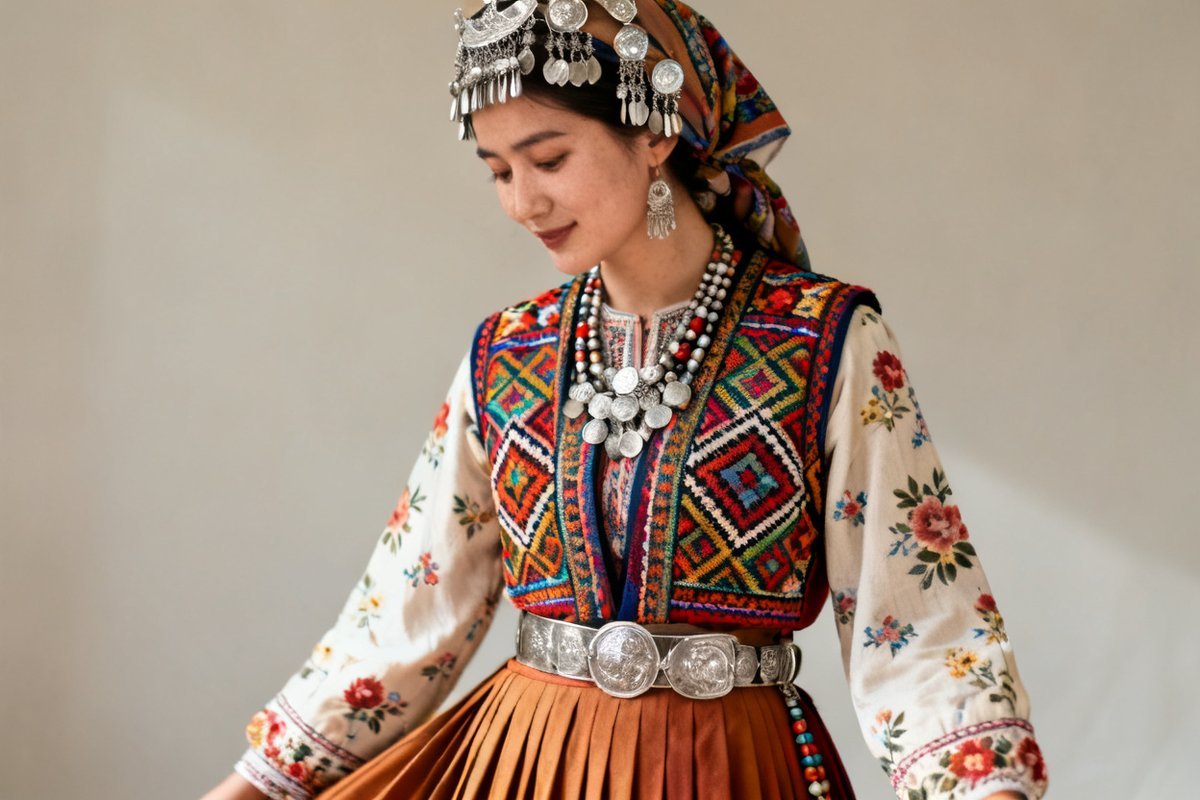
Women wear a long pleated skirt in white or natural wool with colored horizontal bands, a dark blue or black jacket with embroidered collar and cuffs, and the iconic white sheepskin cape draped over the back and shoulders. The pleated skirt, called a huotongqun, contains dozens or even hundreds of fine knife-edge pleats that create a flowing, bell-like silhouette when the wearer walks. The pleats are set by dampening the wool fabric and pressing it between layers of flat stones, a technique that produces permanent creases that survive washing. The horizontal colored bands woven into the skirt are arranged in specific sequences that differ between Pumi communities.
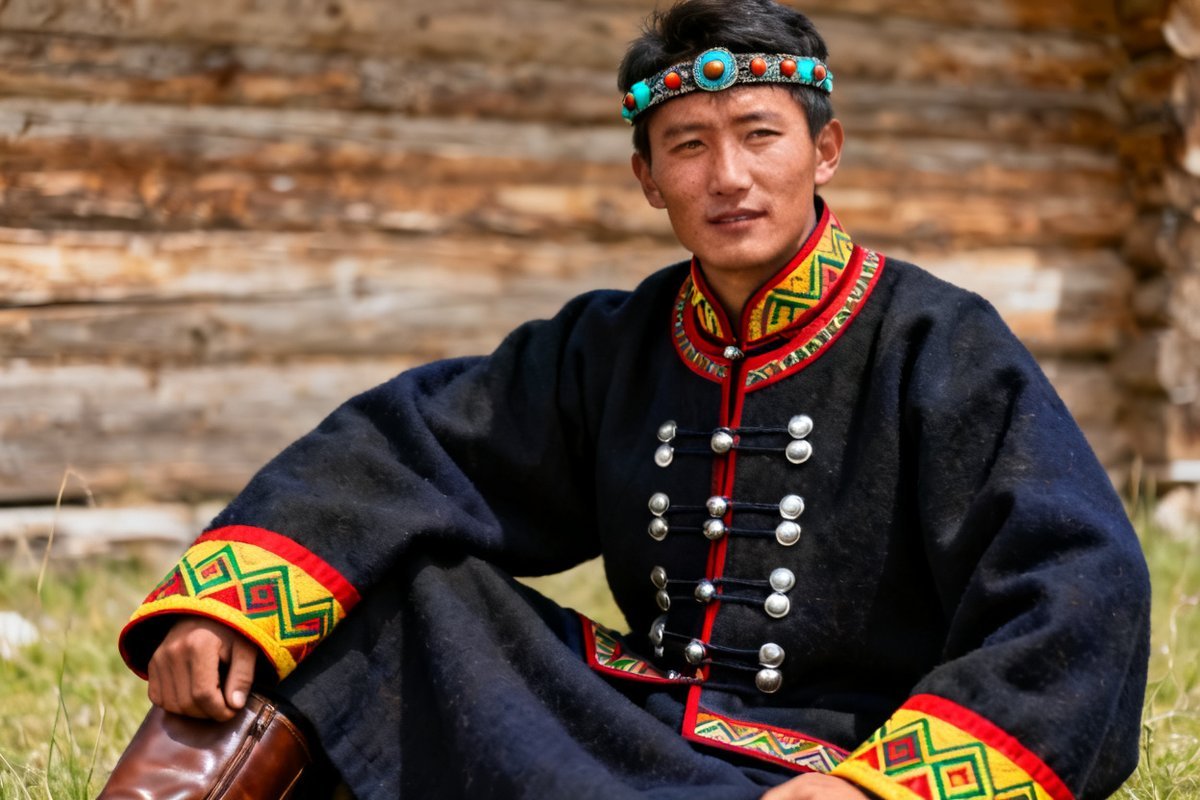
Men wear a dark jacket with red piping over a white shirt, paired with wide-leg white trousers. The men's jacket buttons at the front with cloth knots or simple metal buttons, and the red piping along the collar, front opening, and cuffs adds the color accent that Pumi men favor. White linen or hemp trousers are a distinctive feature of Pumi male dress — the bright white fabric stands out against the dark jacket and signals cleanliness and proper household management. A cloth belt wraps the waist, and an embroidered pouch for tobacco or small personal items is often hung from the belt. Both men and women wear cloth shoes with simple embroidery, though women's shoes have more elaborate decoration including floral motifs on the toe caps.
Headwear and Adornments
Women wrap their hair in a large black or dark blue cloth headdress that extends down the back, called a waba. This distinctive headpiece requires several meters of fabric, wound and folded to create a structured form that frames the face and cascades down the back to the waist or below. The waba is the most time-consuming part of a Pumi woman's daily dressing ritual, taking up to thirty minutes to arrange properly. Once wrapped, however, it stays in place throughout the day of work without requiring adjustment. Some styles incorporate colorful beaded bands at the forehead and silver ornaments attached at the temples, creating a glittering frame for the face.
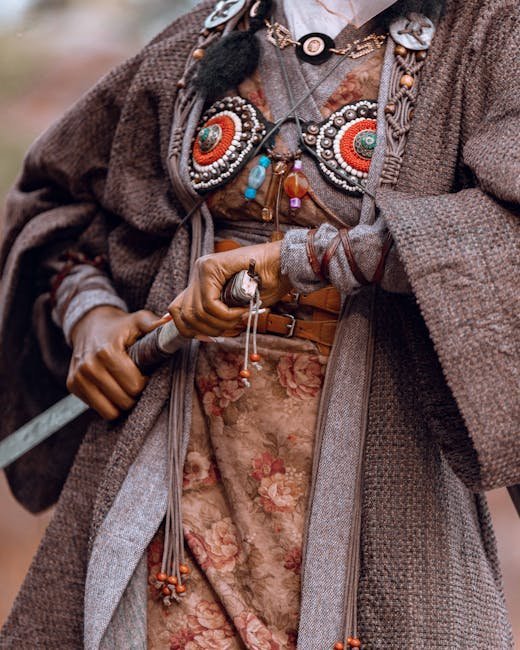
Large silver earrings are a signature element of Pumi women's adornment — these hoops or chandelier-style earrings can be eight to ten centimeters in diameter and are worn from adolescence onward. Coral bead necklaces in graduated strands of bright red-orange complete the jewelry ensemble. The coral is not local but is obtained through trade networks that stretch to the coast, and a full set of coral beads represents a significant household investment. Men wear black or blue head wraps, simpler and smaller than the women's headdress, and may wear a single silver earring in the left ear as a traditional adornment. Silver bracelets and finger rings are worn by both genders.
Embroidery and Decorative Arts
Pumi embroidery concentrates on jacket collars, cuffs, and the edges of the sheepskin cape, featuring floral and geometric patterns in bright threads. The cape edges often bear embroidered bands in red, yellow, and blue, worked in chain stitch or cross-stitch directly onto the sheepskin or onto a cloth strip that is then sewn to the cape. Peony, chrysanthemum, and plum blossom are the most common floral motifs, each carrying specific seasonal and symbolic associations. The geometric patterns include interlocking diamonds, zigzag lines, and spiral forms that echo ancient Qiang artistic traditions.
The embroidery on the sheepskin cape serves both decorative and protective functions — the stitched borders reinforce the edges of the hide where it is most vulnerable to wear and tearing. The wool of the sheepskin is left on the inner side for warmth, while the outer surface may be scraped clean and decorated. Some capes include small embroidered pouches sewn to the inner surface, used to carry needles, thread, or small personal items. A fully embroidered cape represents several months of evening work, and the quality of the embroidery on a woman's cape is a direct reflection of her skill, patience, and diligence — qualities highly valued in Pumi society.
The Pumi white sheepskin cape, worn daily by women for centuries, is considered by cultural historians to be a living fossil of the ancient Qiang sheepherding tradition that dates back over 2,000 years.
Color Symbolism
White dominates Pumi clothing, especially through the sheepskin cape and the men's white trousers. White represents purity, spiritual cleanliness, and the sacred nature of sheep as life-givers in traditional pastoral society. Dark blue or black jackets provide contrast and represent the earth, stability, and the night sky. The colored bands on women's skirts use red (vitality and feminine energy), blue (the sky and masculine principle), green (pastures and fertility), and white (purity). Embroidery employs bright primary colors — red, yellow, blue, green — against the dark jacket fabric, creating accents that catch the eye without overwhelming the restrained overall palette. The red piping on men's dark jackets is the sole color accent in male dress, a minimal but deliberate signal of vitality and good fortune.
Festival Attire
During the Pumi New Year, known as the Wugu Festival, and the Kuoshi Festival that celebrates the spring planting, women wear their finest white sheepskin capes, most elaborately pleated skirts, and full coral bead sets. The Wugu Festival involves offerings to the mountain spirits and ancestors, with community feasting and circle dances that continue through the night. For the dances, the visual effect of dozens of women moving together in white capes and pleated skirts creates a striking spectacle, the skirts swinging in unison as the dancers step and turn.
The Kuoshi Festival features a ceremony in which young women are formally recognized as adults, marked by their first wearing of the full adult ensemble — pleated skirt, dark jacket, and sheepskin cape. Before this ceremony, girls wear simpler, undecorated clothing. The transition to adult dress is a significant life milestone, and families prepare the first adult outfit for months, with the sheepskin cape being the most carefully crafted element. Wedding attire adds additional layers: the bride's cape is the whitest and thickest sheepskin her family can provide, her pleated skirt incorporates additional colored bands beyond the standard, and she wears every piece of coral and silver jewelry owned by her maternal line. After the wedding, the cape and skirt become her festival attire, and she may never again wear so complete a display of her family's textile wealth as on her wedding day.
Modern Influence and Preservation
Pumi sheepskin cape craftsmanship is maintained as cultural heritage in Ninglang County, where older women lead community workshops teaching the full process from raw sheepskin preparation through cutting, fitting, and embroidery. The pleated skirt technique is particularly at risk, as the knife-edge pleat setting method requires physical strength and experience that fewer young women possess. Government cultural programs have documented the traditional pleating process and provided support for master craftswomen to train apprentices. While daily wear of traditional clothing is decreasing, the sheepskin cape remains the most visible and culturally significant Pumi garment, worn not only for festivals but also increasingly by Pumi women in public-facing roles in tourism and cultural demonstration. The cape has become a symbol of Pumi identity recognized throughout Yunnan, and small-scale production of capes for the cultural tourism market provides income for skilled craftswomen while ensuring the tradition continues.
Did You Know?
The Pumi believe that the white sheepskin cape protects not just from cold but from evil spirits - young Pumi women traditionally receive their first sheepskin cape as a protective talisman when they come of age.
White Symbolism and Multi-layered Dress of the Pumi
The Pumi people of Yunnan Province place particular importance on the color white in their clothing traditions, associating it with purity, honesty, and ethnic identity. Pumi women's traditional attire features a white or light-colored inner garment visible at the collar and cuffs of the darker outer jacket, creating a layered visual effect that is a hallmark of Pumi dress. The white trim contrasts sharply with the indigo blue or black of the outer layers, making the white elements immediately visible. For formal occasions, women add a white sheepskin vest worn over the jacket, adding another layer to the ensemble.
Pumi women's headwear is among the most distinctive in Yunnan's ethnic landscape. Married women braid their hair with black and red yarn, wrapping the braids around the head to form a crown-like arrangement. The hair crown is decorated with silver ornaments, colored beads, and sometimes small bells that sound with head movement. The size and elaboration of the hair crown indicate the wearer's social standing and community role, with community leaders' wives wearing the most elaborate versions.