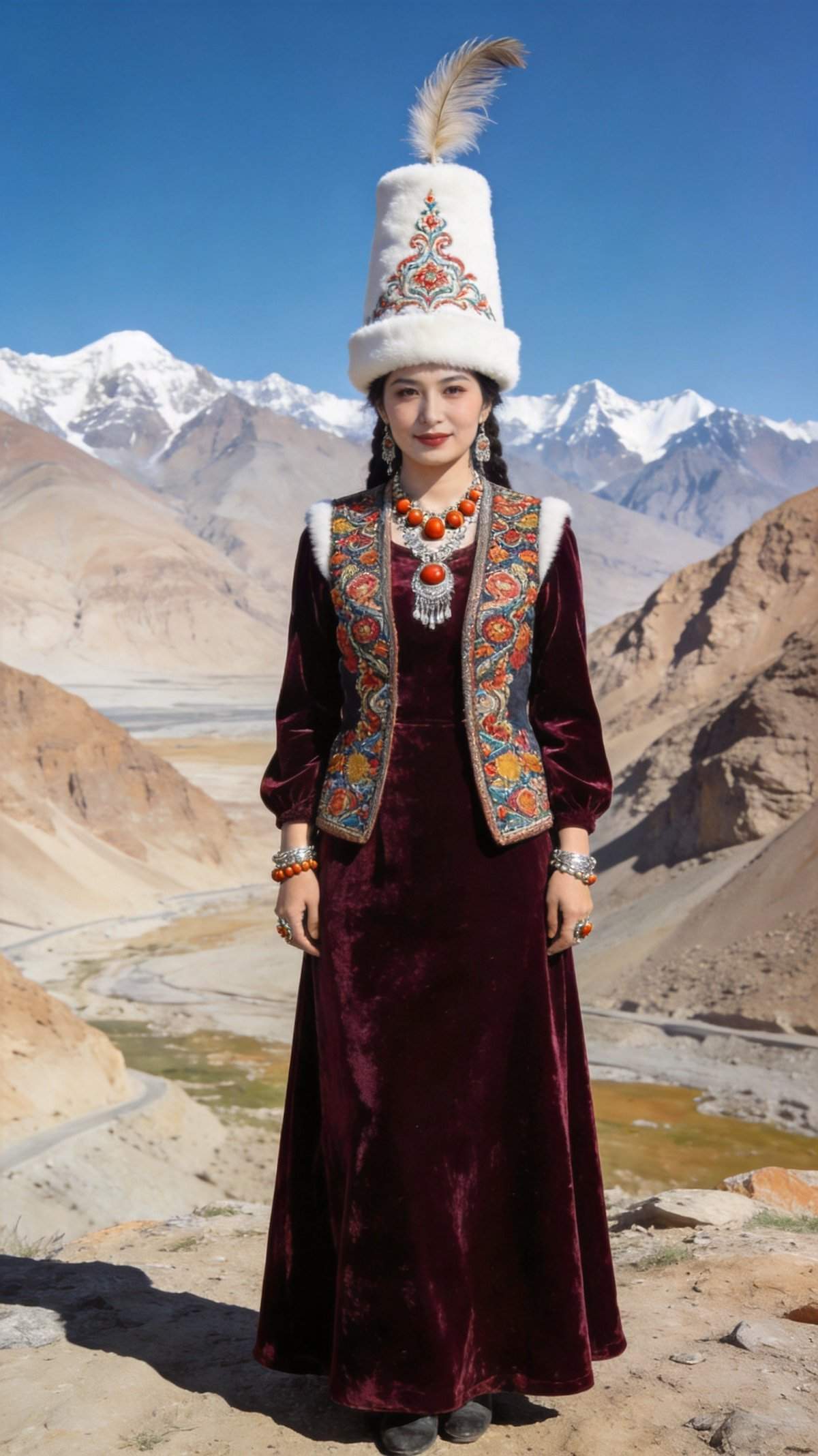
Kyrgyz traditional clothing is defined by the elaborate bridal headdress, silver ornaments, and beautifully decorated fur and felt garments suited to life in the Pamir mountains. The Kyrgyz in China number approximately 180,000, concentrated in the Kizilsu Kyrgyz Autonomous Prefecture of Xinjiang near the borders with Kyrgyzstan and Tajikistan. Their clothing traditions are shared across the international border with the Kyrgyz Republic, reflecting a common nomadic heritage shaped by extreme altitude, harsh winters, and a culture centered on horse breeding and transhumant pastoralism. The white felt kalpak hat for men is a national symbol recognized by UNESCO as intangible cultural heritage.
Historical and Cultural Background
The Kyrgyz trace their ancestry to the Yenisei River region of Siberia, migrating southward over centuries to the Tianshan and Pamir mountain ranges. Their clothing evolved as a specialized adaptation to life at elevations between 2,000 and 4,000 meters, where summer pastures (jailoo) alternate with sheltered winter valleys (kyshtoo). Felt-making was the foundational textile technology: sheep's wool was beaten, wetted, and rolled into dense panels that could be cut and stitched into hats, coats, and yurt coverings. Leather-working was the male domain, producing boots, belts, and horse tack. Silver-working was also a male craft, while women controlled the embroidery and felt applique that transformed practical garments into works of art. The Kyrgyz epic poem "Manas" -- one of the world's longest oral epics -- contains detailed descriptions of clothing that serve as a historical catalog of pre-modern Kyrgyz dress.
Key Features of Kyrgyz Attire
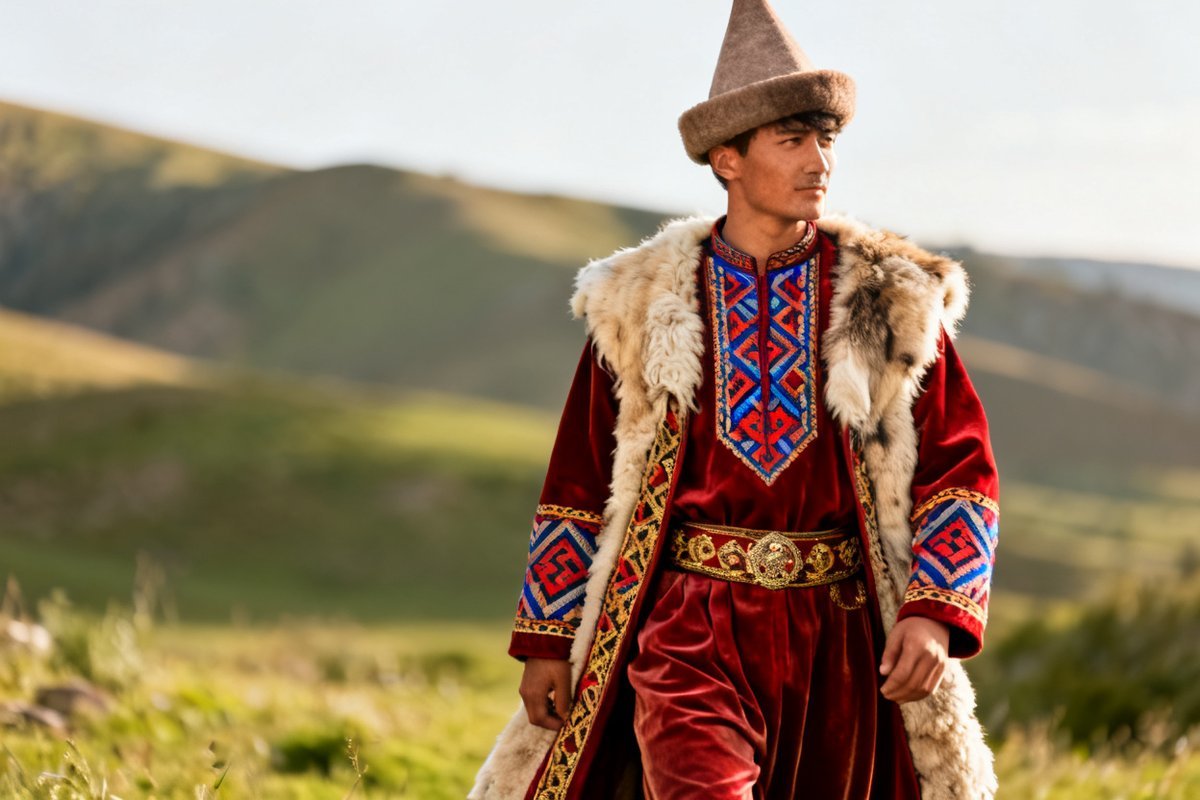
- Mens white felt kalpak hat with black velvet brim
- Womens tall conical bridal headdress with cascading silver and coral
- Heavy silver necklaces with incised geometric patterns
- Embroidered womens vests in floral and rams horn motifs
- Fur-trimmed winter coats made from sheep or fox skins
Traditional Garments
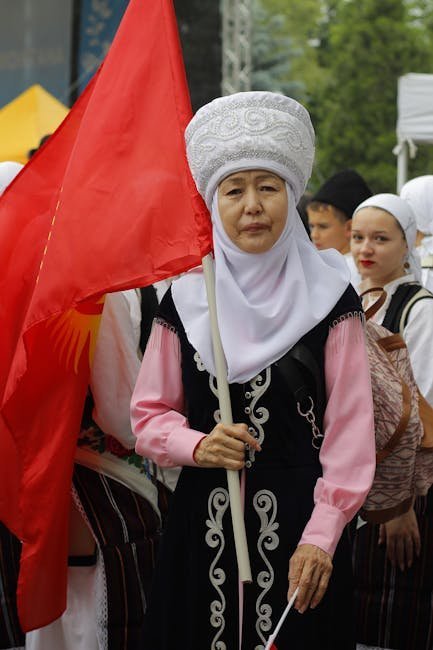
Women wear a long dress under a heavily embroidered velvet vest with silver buttons and a long robe (chepken) for cold weather. The dress is typically ankle-length with long sleeves and a stand-up collar, often made from patterned silk for special occasions. The vest (chapan) is the most labor-intensive garment, covered in embroidery that may take months to complete. Men wear a white shirt under a long velvet robe with embroidered edges and a leather belt set with silver plaques. Traditional leather trousers and knee-high riding boots complete the male ensemble. Winter coats are made from sheepskin with the wool turned inward, sometimes faced with dyed felt or velvet, and trimmed with fox or wolf fur at the collar and cuffs.
Headwear and Adornments
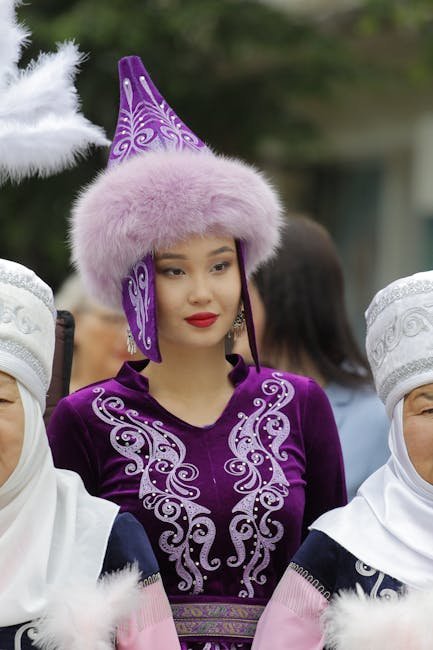
The kalpak -- a white felt hat with a pointed crown and black velvet brim -- is the most iconic Kyrgyz garment, traditionally presented to a boy at his circumcision ceremony and worn throughout his adult life. The four-panel construction represents the four cardinal directions, and the white color evokes the snow-capped peaks of the Tianshan mountains. Different styles of kalpak indicate regional origin and age: young men wear taller crowns with more decoration, while elders wear simpler, lower versions. The bridal shekuele is a tall conical headdress covered in silver coins and coral, so heavy that the bride's female relatives must physically support her during parts of the wedding ceremony. Silver was both decoration and portable wealth, with a full set of women's silver ornaments -- necklace, bracelets, earrings, and hair pendants -- easily weighing 5 to 8 kilograms.
Embroidery and Decorative Arts
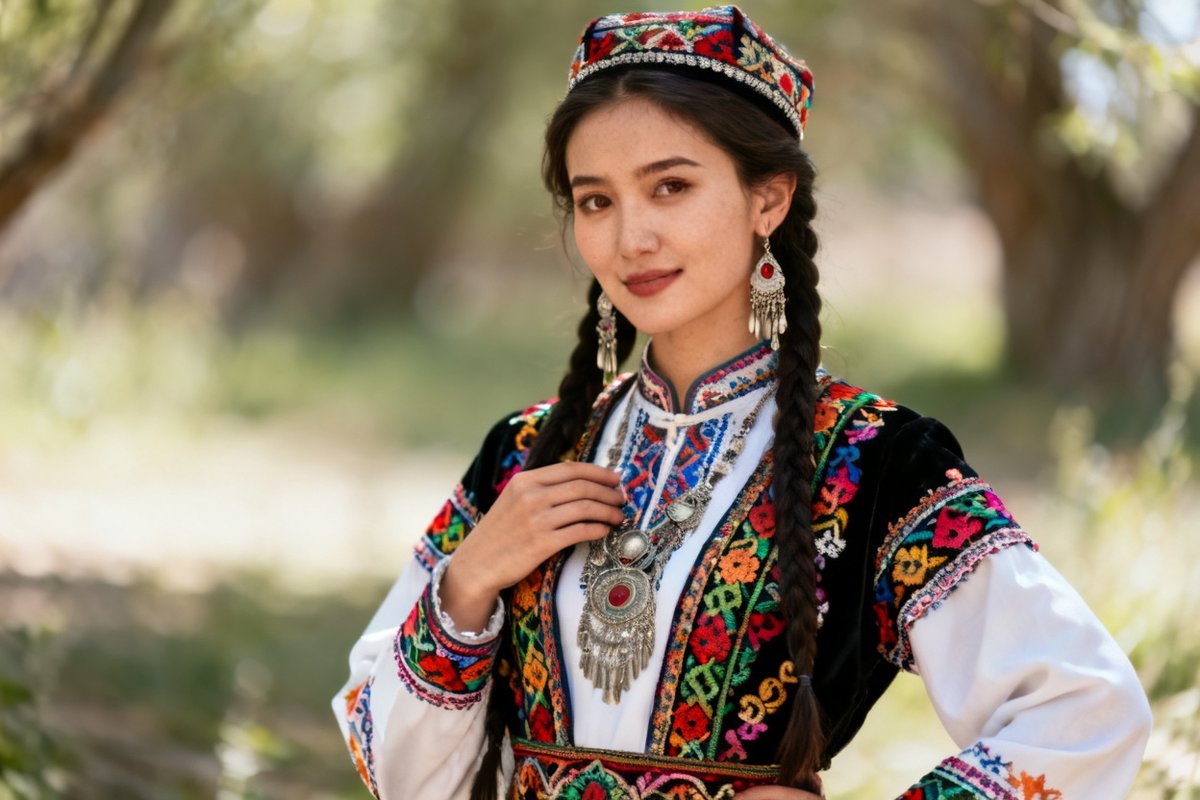
Kyrgyz embroidery features bold floral scrolls, ram's horn (kochkor muyuz) motifs, and geometric patterns in chain stitch and satin stitch on velvet, felt, and leather. The ram's horn is the most recurrent symbol, representing wealth, strength, and the centrality of livestock to nomadic life. Beyond embroidery, the Kyrgyz developed extraordinary felt mosaic techniques (shyrdak) where dyed felt pieces are cut and inlaid to create bold graphic patterns. These felt panels traditionally covered yurt floors and served as wall hangings, but the technique is also applied to saddle blankets and decorative bags. The dyeing of felt uses natural materials: madder root for red, indigo for blue, walnut husks for brown, and various local plants for yellow and green tones.
The Kyrgyz kalpak, whose four-paneled white felt crown represents the four seasons and four cardinal directions, transforms a practical head covering into an atlas of nomadic cosmology.
Color Symbolism
Red, burgundy, and blue velvet for vests, with red being the dominant color for women's garments as it symbolizes youth, vitality, and protection against evil spirits. White for felt kalpaks represents purity of intention and the snow-covered peaks of the ancestral homeland. Embroidery uses bright red, yellow, green, blue, and white, often arranged in concentric bands. Black is avoided for women's clothing but appears in men's outer robes as a mark of sobriety and age. The combination of crimson velvet with silver ornaments set against the stark white of mountain snow creates the visual signature of Kyrgyz festival dress.
Festival Attire
During Nowruz (Persian New Year, March 21), which the Kyrgyz in Xinjiang celebrate alongside their Turkic neighbors, embroidered velvet robes, white kalpak hats, and complete silver jewelry sets are worn. Horse games such as kok-boru (a form of polo played with a goat carcass) see riders in coordinated embroidered vests representing different valleys and clans. The wedding ceremony spans multiple days with prescribed clothing changes: the bride begins in her heaviest silver and the shekuele headdress, transitions to a married woman's white headscarf on the second day, and receives her first kalpak for her new husband on the third. Elders judging traditional clothing competitions at the annual Kizilsu cultural festival evaluate the density of embroidery and the authenticity of silver work.
Modern Influence and Preservation
The Kyrgyz kalpak hat is recognized as a UNESCO Intangible Cultural Heritage item and remains a potent symbol of Kyrgyz identity on both sides of the China-Kyrgyzstan border. In the Kizilsu Kyrgyz Autonomous Prefecture, felt-making cooperatives have revived traditional production, with kalpak-making workshops training young artisans in the multi-day process of beating, rolling, cutting, and stitching a single hat. Kyrgyz embroidery patterns have been adapted for contemporary fashion accessories sold through Xinjiang's cultural tourism markets. The cross-border cultural connection with the Kyrgyz Republic, where the kalpak is a mandatory part of the school uniform in some regions, helps sustain demand for traditional felt work. Annual akyn (folk poet) competitions, where improvisational poets perform in full traditional dress, keep clothing traditions embedded in living cultural practice rather than museum display.
Did You Know?
The Kyrgyz are the only ethnic group in China whose name is shared with a modern nation-state (Kyrgyzstan).
Felt Craft and Nomadic Textiles of the Kyrgyz
The Kyrgyz people of Xinjiang maintain textile traditions shaped by their nomadic pastoral heritage on the high mountain pastures of the Tianshan range. Felt making is a particularly important craft, with sheep's wool being beaten, moistened, and compressed into dense fabric sheets used for both clothing and household items. Felt hats are among the most recognizable Kyrgyz garments, with the white felt Kalpak hat worn by men featuring turned-up brims divided into four panels representing the four seasons or the four elements. The Kalpak is more than a garment: it is a symbol of Kyrgyz identity recognized across Central Asia.
Kyrgyz women's embroidery focuses on bold, geometric patterns executed in vibrant red, orange, and yellow threads against dark fabric grounds. The patterns include ram horns, bird wings, and stylized mountain peaks drawn from the landscape of the Pamir and Tianshan ranges. The most elaborate embroidery is reserved for bridal attire, which may take months to complete with the assistance of female relatives.
Felt Craft and Nomadic Textiles of the Kyrgyz
The Kyrgyz people of Xinjiang maintain textile traditions shaped by their nomadic pastoral heritage on the high mountain pastures of the Tianshan range. Felt making is a particularly important craft, with sheep's wool being beaten, moistened, and compressed into dense fabric sheets used for both clothing and household items. Felt hats are among the most recognizable Kyrgyz garments, with the white felt Kalpak hat worn by men featuring turned-up brims divided into four panels representing the four seasons or the four elements. The Kalpak is more than a garment: it is a symbol of Kyrgyz identity recognized across Central Asia.
Kyrgyz women's embroidery focuses on bold, geometric patterns executed in vibrant red, orange, and yellow threads against dark fabric grounds. The patterns include ram horns, bird wings, and stylized mountain peaks drawn from the landscape of the Pamir and Tianshan ranges. The most elaborate embroidery is reserved for bridal attire, which may take months to complete with the assistance of female relatives.
Seasonal Textile Traditions of the Kyrgyz
The Kyrgyz seasonal clothing cycle reflects the dramatic temperature changes of the Xinjiang highlands, where conditions vary from warm summers to bitterly cold winters. Summer garments use lightweight wool and cotton fabrics in lighter colors, with women wearing sleeveless vests over thin dresses and men wearing open-fronted robes over shirts. The wide-brimmed felt kalpak hat is worn year-round but is particularly important in summer for sun protection. Winter clothing relies on the insulating properties of sheepskin and thick felt, with the heavy robe or ton being the primary outer garment. Multiple layers are added as temperatures drop, with the number of layers providing a rough indicator of the season.
Kyrgyz felt production is a year-round activity that peaks in late summer and early autumn, when freshly shorn wool is processed into felt for winter garments. The felt-making process involves beating raw wool with flexible rods to open the fibers, then layering the fibers in alternating directions before applying moisture, heat, and pressure to mat them into a dense fabric. The finished felt is remarkably strong and water-resistant, providing protection against rain and snow as well as cold. Beyond clothing, felt is used for tent coverings, floor coverings, saddle blankets, and numerous household items, making it the single most important textile in Kyrgyz material culture.