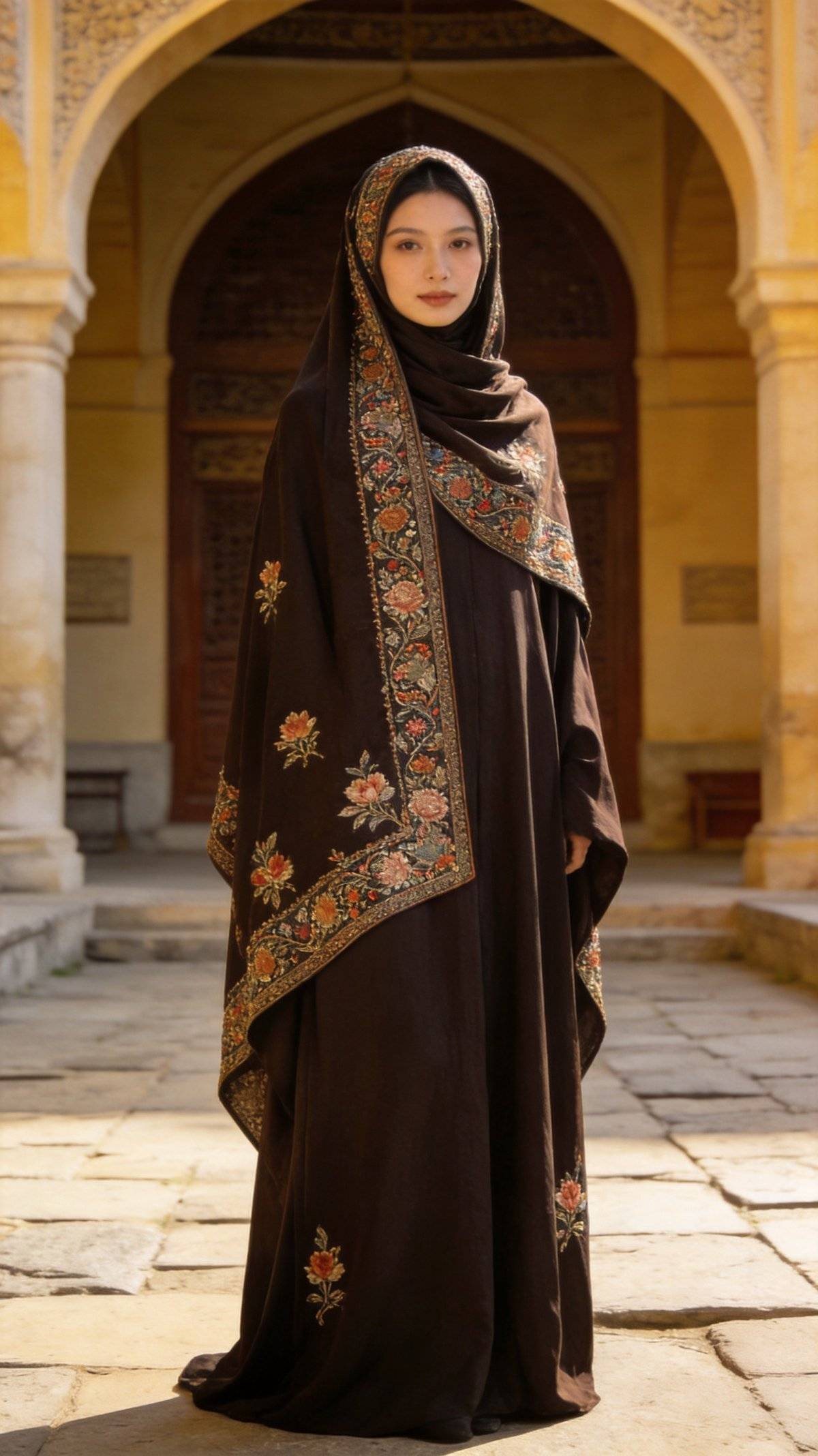
Hui traditional attire reflects Islamic dress codes combined with Chinese and Central Asian influences. Men wear distinctive white or black embroidered skullcaps, while women wear color-coded headscarves. The Hui are the second largest ethnic minority in China with over 10 million people, and the most widely distributed — Hui communities exist in every province, county, and city across the nation.
Historical and Cultural Background
The Hui people trace their origins to the Silk Road era of the 7th to 14th centuries, when Persian and Arab Muslim merchants, soldiers, and scholars traveled to China and gradually settled, intermarrying with local Han, Mongol, and other populations. The name "Hui" is an abbreviation of "Huihui," a historical Chinese term for Muslims of Central Asian origin. Unlike other Chinese ethnic minorities who are concentrated in specific geographic regions, the Hui are unique in their nationwide distribution — from the northwest provinces of Ningxia, Gansu, and Qinghai to urban communities in Beijing, Shanghai, Guangzhou, and cities across the country.
Islam is the unifying cultural force for the Hui, shaping dietary laws (halal), daily prayer routines, festivals, and clothing practices. The Hui have made profound contributions to Chinese civilization over the centuries, including Admiral Zheng He — the great Ming dynasty maritime explorer who led seven treasure fleets across the Indian Ocean — and numerous scholars, artists, and merchants who bridged Chinese and Islamic worlds. The Hui language is Chinese (various dialects), but they maintain distinct cultural identity through religious practice, dietary customs, and visual markers including dress.
Ningxia Hui Autonomous Region, with its capital at Yinchuan, is the only provincial-level Hui autonomous region and serves as the cultural heartland of Hui Islam in China. The region is dotted with historic mosques that blend Chinese architectural traditions — upturned eaves, wooden bracket sets, and courtyard layouts — with Islamic functions and decorative elements such as Arabic calligraphy.
Key Features of Hui Attire
- Mens white embroidered skullcaps worn at all times
- Womens headscarves color-coded by age: green, black, white
- Long loose gowns and robes with modest silhouettes
- Delicate embroidery on skullcaps, collar edges, and cuffs
- Mens black or dark blue jackets worn over white shirts
Traditional Garments
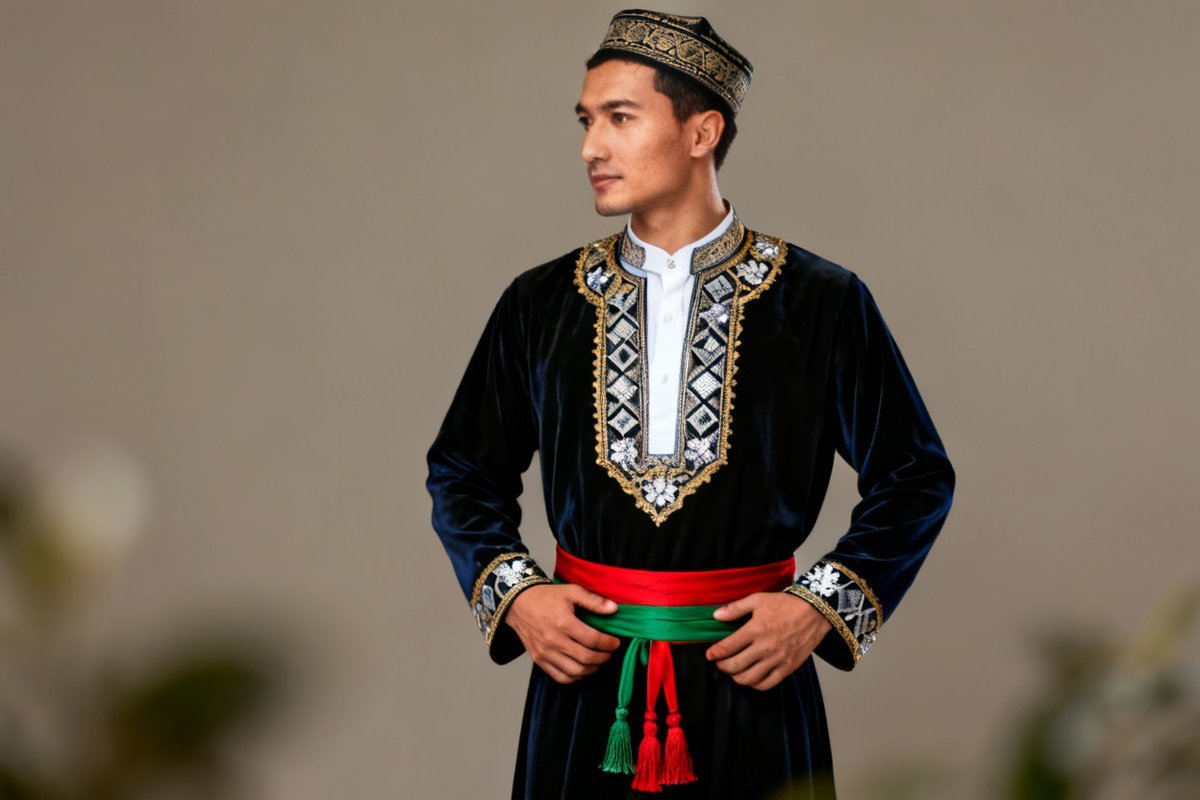
Men wear a white shirt under a short dark jacket or longer robe with loose trousers. For daily wear, urban Hui men often dress similarly to Han Chinese but with the distinctive skullcap as an unmistakable identity marker. In more traditional communities, particularly in Ningxia and Gansu, men continue to wear the changpao — a long robe reaching to the ankles — in black, dark blue, or gray, fastened with cloth buttons along the right side. The robe is worn over white inner garments, with the white collar visible at the neck as a mark of ritual purity.
Women wear long-sleeved high-collared jackets or gowns with loose trousers, always with a headscarf. The traditional womans jacket is cut with a straight, relaxed silhouette that extends below the hip, featuring a standing collar and front opening secured with knotted buttons. The sleeves are generously cut at the wrist for comfort during daily tasks. Some older women continue to wear the dachang — a full-length outer coat — in dark colors for formal occasions. The emphasis on loose, non-revealing garments reflects core Islamic values of modesty and dignity in dress.
Headwear and Adornments
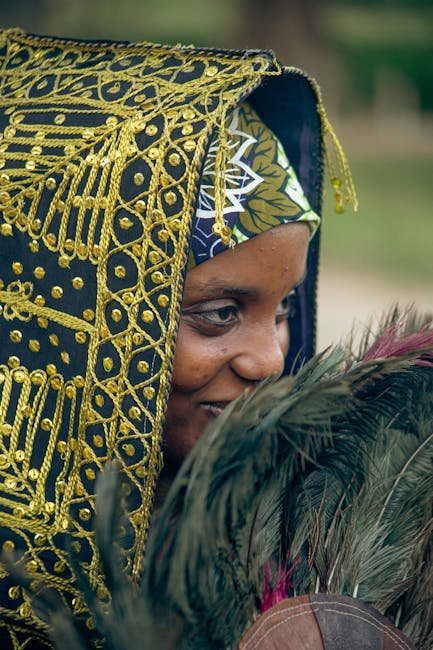
Womens headscarves indicate life stage: green for young women, black for middle-aged, white for elderly. Men wear white or black embroidered skullcaps. The color code of womens headscarves is a visible social grammar understood throughout Hui communities — a glance at a womans scarf immediately conveys her approximate age and social position. Young married women typically wear green or brightly colored scarves during the early years of marriage, transitioning to black once they have children who reach adolescence. White, the color of seniority and spiritual attainment, is worn by grandmothers and respected elder women.
Mens skullcaps, known as baimao or haji caps, are the most universal symbol of Hui identity. The white skullcap is worn for daily activities and prayer, while the black or dark blue version is preferred for formal occasions. The finest skullcaps feature exquisite embroidery — floral arabesques, geometric interlacing, and occasionally Arabic calligraphy of Quranic verses — executed in silk or metallic thread around the crown and band.
Embroidery and Decorative Arts
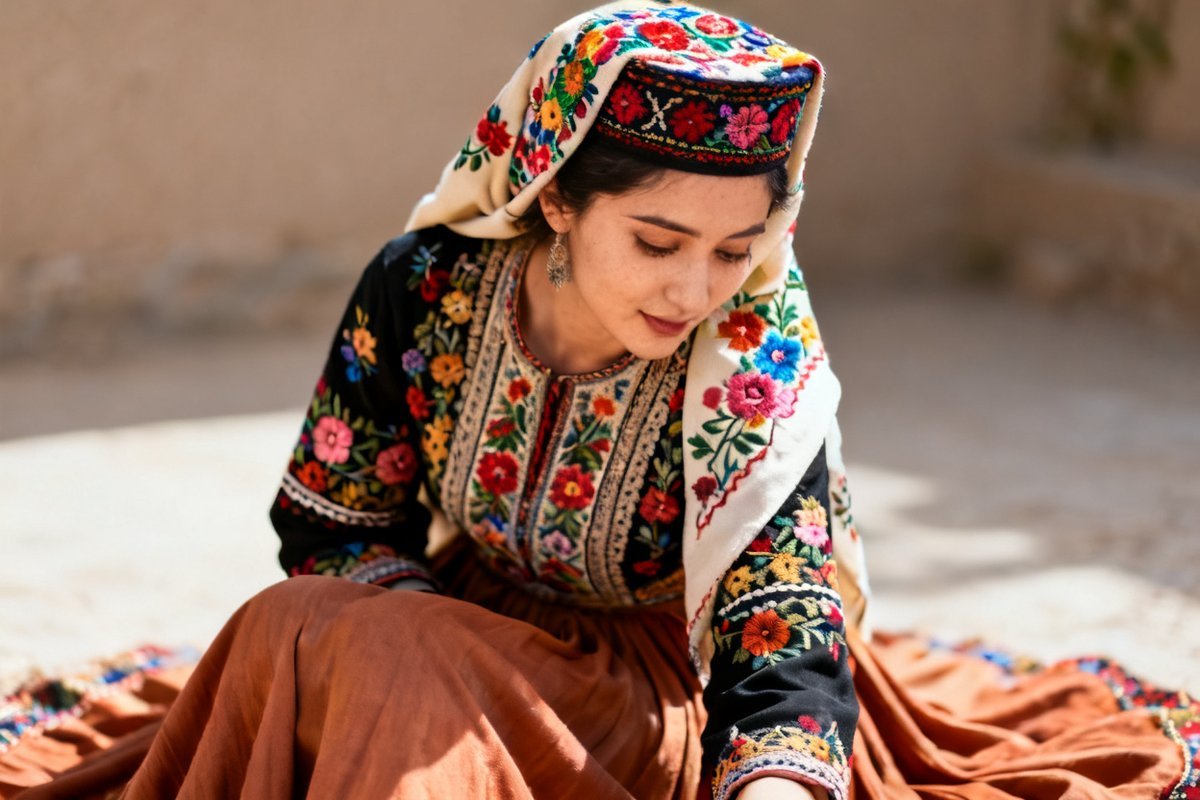
Hui embroidery concentrates on skullcaps, collar edges, cuffs, and cloth shoes, with small floral and geometric patterns in bright threads. Hui embroidery represents a distinctive fusion of Chinese floral embroidery traditions with Islamic aesthetic principles — figurative imagery is avoided in accordance with Islamic aniconism, so designs emphasize stylized botanical motifs, arabesques, and geometric interlacing rather than human or animal figures. Peonies, lotuses, and plum blossoms appear in highly abstracted forms, transformed into rhythmic patterns of scrolling vines and blossoms that suggest rather than depict.
Calligraphic embroidery occupies a special place in Hui decorative arts, with Arabic inscriptions of Quranic verses and the names of Allah rendered in silk thread on skullcaps, wall hangings, and prayer mat covers. This art form requires the embroiderer to be literate in Arabic script and to possess sufficient skill to render the flowing letters with proper proportions. Master calligraphic embroiderers are highly respected within Hui communities.
Among the Hui, a womans headscarf is more than religious modesty - its color silently announces her transition through life stages, a social grammar stitched in fabric.
Color Symbolism
White symbolizes purity and is the base color. Dark blue, black, and gray for outer garments. Headscarves in green, black, and white. White carries profound Islamic significance as the color of cleanliness and spiritual purity — the Prophet Muhammad is said to have preferred white garments, and white is the color of the ihram pilgrimage dress worn during Hajj. Green, the color of paradise in Islamic tradition, is reserved for young married women at the height of their reproductive years. Black headscarves for middle-aged women represent the dignity and gravity of mature social position, while white scarves for the elderly complete the cycle, returning to purity in wisdom and seniority.
Festival Attire
During Eid al-Fitr and Eid al-Adha, new white shirts and finest embroidered skullcaps are worn. Eid al-Fitr, marking the end of Ramadan, is celebrated with communal morning prayers held in large open-air congregations where thousands of Hui men dressed in identical white skullcaps and clean white shirts create a sea of white that visually embodies the unity of the Muslim community. For Eid al-Adha, the Feast of Sacrifice, families who can afford it commission new clothing for all members, with special attention given to children who receive their first set of formal Hui dress. Beyond the major Islamic festivals, Hui weddings are occasions for the most elaborate traditional attire, with brides wearing richly embroidered red jackets and elaborate headdresses that blend Chinese bridal customs with Islamic modesty standards.
Modern Influence and Preservation
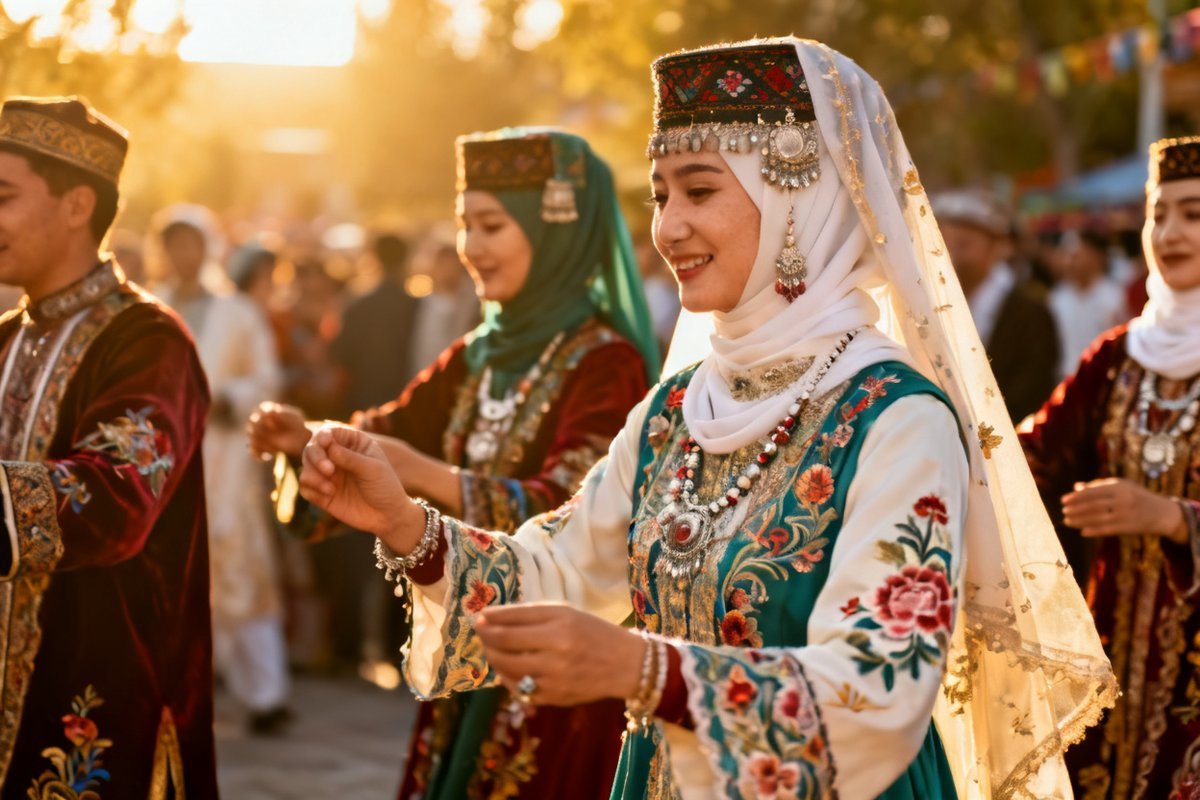
Hui clothing has influenced Islamic fashion in China, with many Muslim Chinese women combining traditional headscarves with modern clothing. A vibrant Hui fashion scene has emerged in cities like Yinchuan, Lanzhou, and Xian, where designers create contemporary modest wear that integrates Hui embroidery motifs, traditional silhouettes, and Islamic dress requirements with current fashion trends. Hui entrepreneurs have established online businesses specializing in embroidered skullcaps and headscarves that reach customers across China and internationally. Cultural heritage museums in Ningxia document and preserve historical Hui garments and embroidery, while community organizations offer classes teaching traditional embroidery techniques to young Hui women who want to connect with their cultural heritage.
Modern Influence and Preservation
Hui clothing has influenced Islamic fashion in China, with many Muslim Chinese women combining traditional headscarves with modern clothing.
Did You Know?
The Hui are Chinas most widely distributed ethnic minority, found in every province and county nationwide.
Tags
Modesty and Elegance in Hui Clothing Traditions
The Hui people, distributed throughout China with concentrations in Ningxia, Gansu, and Xinjiang, follow clothing practices shaped by Islamic principles of modesty combined with Chinese garment construction techniques. Women's daily attire features long-sleeved jackets and ankle-length skirts or trousers in solid, muted colors, with the head covered by a scarf or hood that conceals the hair and neck. The head covering varies by region and personal preference, ranging from simple cotton scarves to elaborately embroidered hoods with lace edging. White is a preferred color for head coverings, symbolizing purity, while older women tend toward darker shades.
Hui men wear white or light-colored skullcaps during prayer and for daily wear, distinguishing themselves from Han Chinese neighbors who do not follow this practice. The skullcaps are typically crocheted or sewn from cotton fabric and may feature subtle embroidered borders for special occasions. For religious festivals, Hui men and women wear their finest garments, with women often choosing silk or satin fabrics in jewel tones that remain within the bounds of modest coverage.