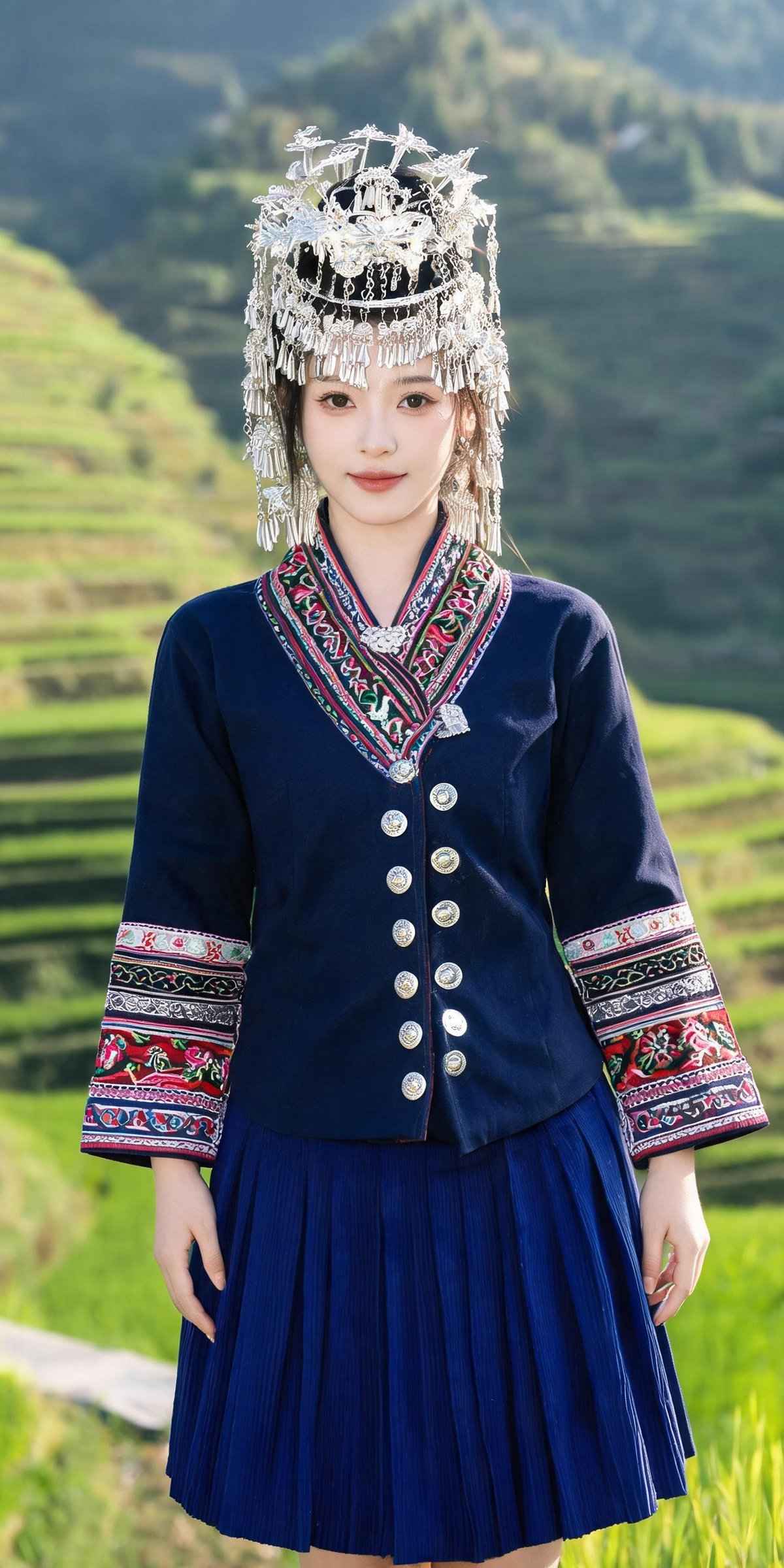
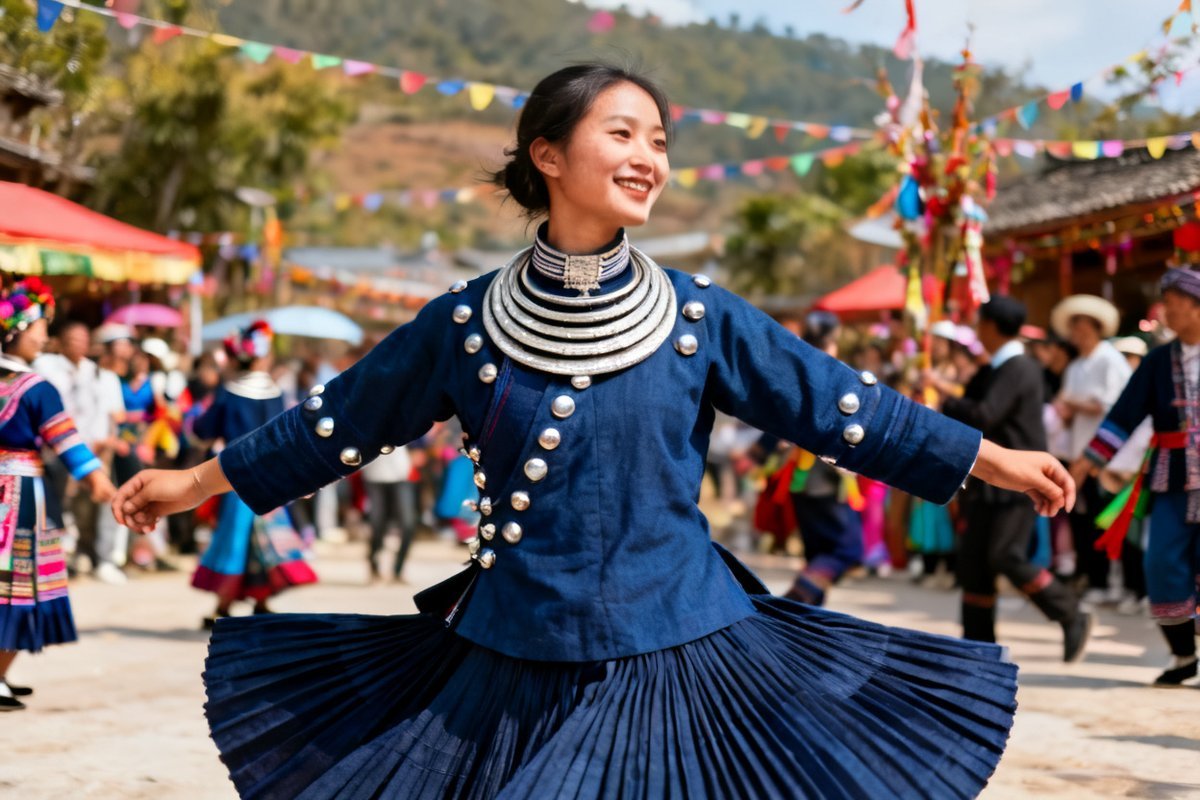
Hani traditional clothing is defined by its deep indigo and black tones accented with striking silver ornaments, and the famous multi-layered embroidered collars worn by women. The Hani are the creators and custodians of the Honghe Hani Rice Terraces, a UNESCO World Heritage site and one of the most remarkable agricultural landscapes on earth.
Historical and Cultural Background
The Hani people, numbering over 1.6 million, are concentrated in the southern Yunnan province, particularly in the Honghe Hani and Yi Autonomous Prefecture, with smaller populations in neighboring Vietnam, Laos, and Myanmar. According to Hani oral epics, their ancestors migrated southward from the Tibetan plateau over two millennia ago, following river valleys until they reached the subtropical mountains of Yunnan. There they developed an extraordinary system of terraced rice cultivation that transformed steep mountain slopes into cascading mirrors of water and green rice shoots, irrigated by an intricate network of channels that distribute forest water from summit to valley.
Hani society is organized around the sacred forests, village settlements, terraced fields, and water systems that form an integrated ecological and cultural landscape. Traditional religious practices blend ancestor worship with animistic beliefs in forest spirits, water deities, and the spirits of the rice plants themselves. The Hani calendar, structured around the agricultural cycle, determines the timing of festivals, rituals, and community labor. Social organization traditionally centered on patrilineal clans, with genealogy recited through long chains of father-son names that can extend back over fifty generations.
The Hani language belongs to the Lolo-Burmese branch of the Tibeto-Burman language family. Hani oral literature is exceptionally rich, including creation epics, migration narratives, rice-origin myths, and seasonal songs that encode the agricultural knowledge and historical memory of the Hani people. These oral traditions, passed down through generations, form the cultural foundation upon which Hani visual arts including clothing, embroidery, and silversmithing are built.
Key Features of Hani Attire
- Multi-layered overlapping embroidered collars forming a V-shape
- Silver studs and cones densely covering jacket fronts
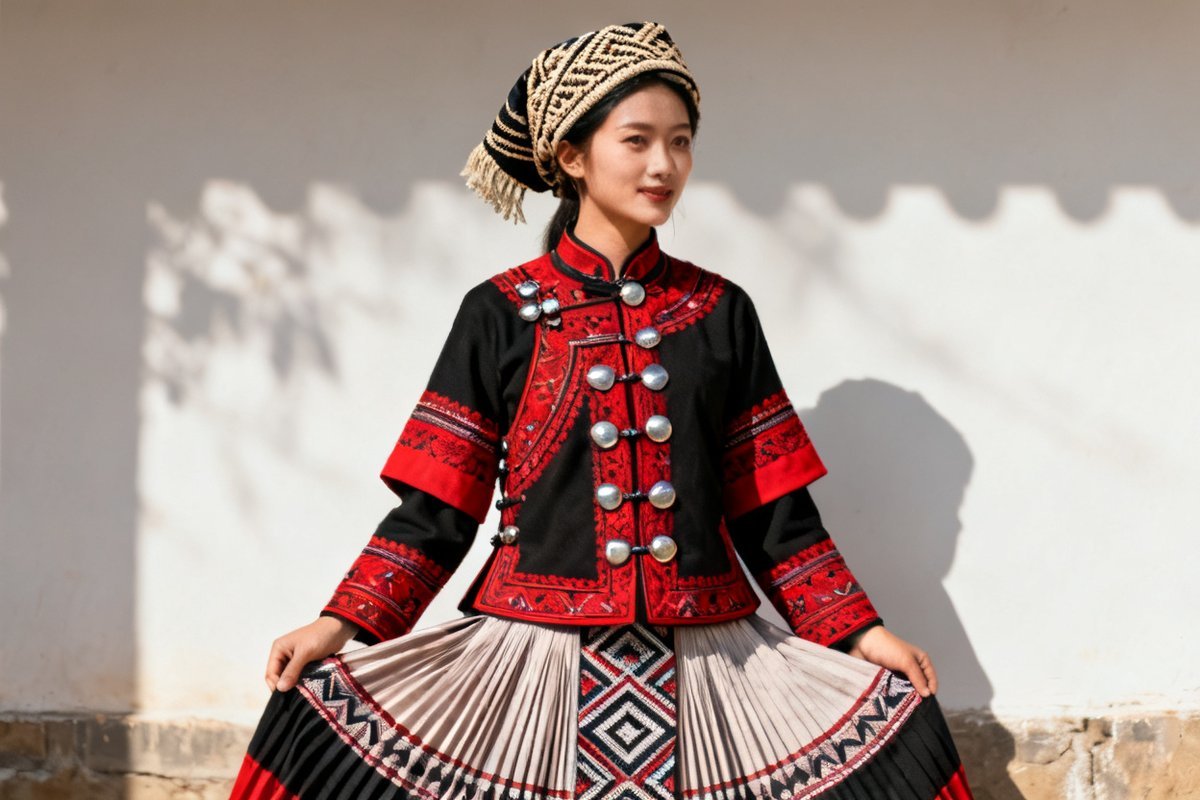
- Short jackets paired with short pleated skirts
- Leg bindings with beaded and embroidered decorations
- Bamboo or silver caps adorned with beads and feathers
Traditional Garments
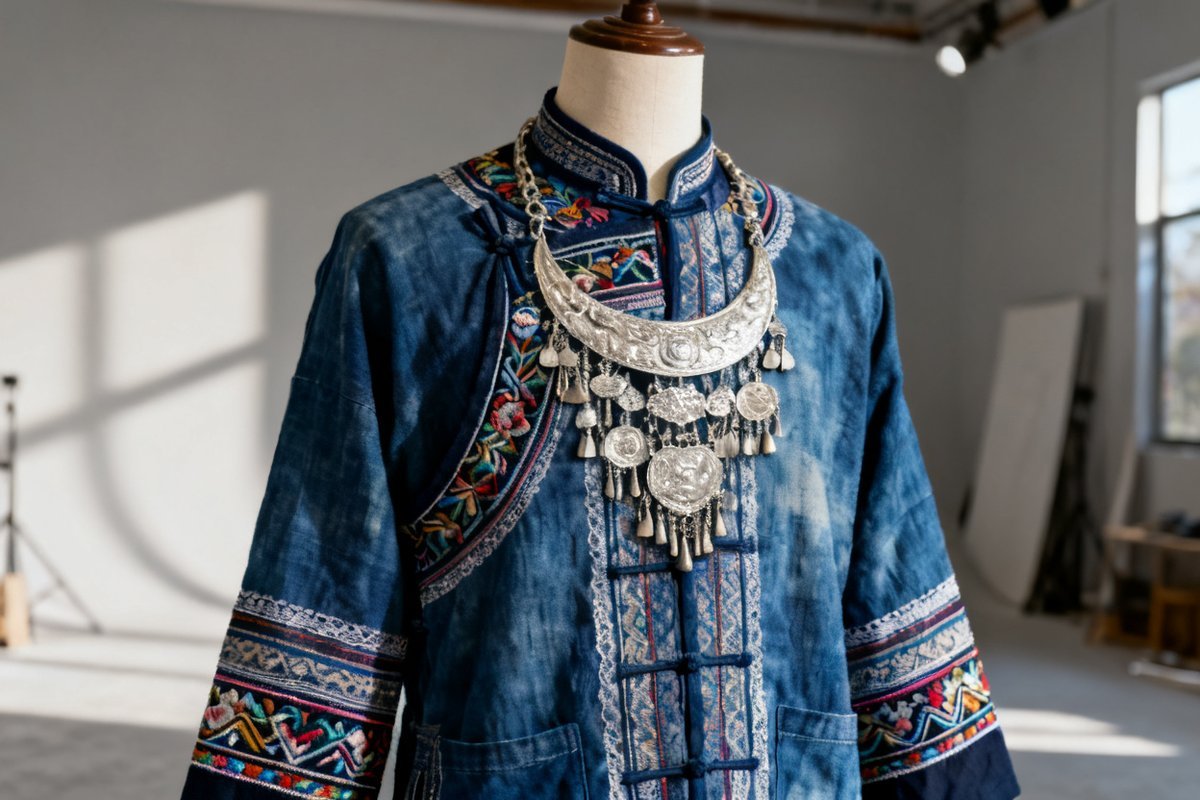
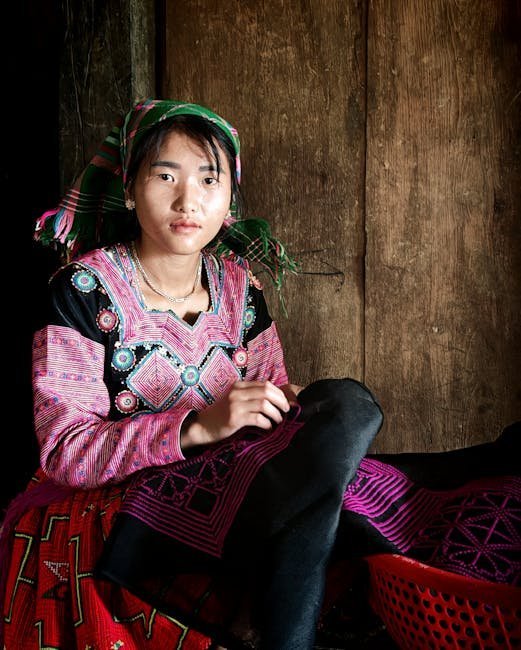
Women wear a short collarless jacket in indigo black with silver cones covering the front, over a short pleated skirt. The multi-layered embroidered collar is the most distinctive feature — some women wear up to seven or eight overlapping collar bands, each embroidered with different geometric and floral patterns. These collars are not attached to the jacket itself but are separate pieces layered over the neckline, creating the characteristic V-shaped decorative frame around the face and upper chest. Each collar layer can represent a significant life event or family lineage marker.
The short pleated skirt allows complete freedom of movement for working on steep terraced slopes, while leg bindings — strips of embroidered cloth wrapped around the calves — provide both decoration and protection against insects and underbrush in the wet rice fields. Men wear front-fastening jackets with wide trousers and a headwrap, with the jacket often featuring silver button ornaments and embroidered shoulder panels. The mens headwrap, typically in black or dark indigo, can be up to three meters in length and is wound in community-specific configurations.
Headwear and Adornments
Unmarried women wear a distinctive cap with silver spikes and coins attached, resembling a crown of metallic rays. This iconic headpiece, known locally as a "chicken comb hat" due to its resemblance to a roosters comb, incorporates rows of silver studs, old coins, and colored beads that create a shimmering halo effect when the wearer moves. The sound of the silver elements gently clinking during walking is considered an attractive feminine quality. Married women wear larger caps decorated with beads and feathers, with the transition in headwear style marking the change in social status after marriage.
Embroidery and Decorative Arts
Hani embroidery is intricate, especially on the multi-layered collars, cuffs, and leg bindings. Geometric patterns and small floral motifs in bright colors on dark indigo. The embroidery stitches most commonly employed are satin stitch, chain stitch, and couching, with designs first outlined in white thread and then filled with colored silk. Hani embroidery patterns are not random decoration — they encode information about the wearers clan affiliation, village origin, marital status, and sometimes even the specific mountain slope where her family farms.
Silversmithing is the companion art to Hani embroidery. Hani silver ornaments include the distinctive cones and studs that cover womens jacket fronts, as well as neck rings, bracelets, earrings, and hairpins. The silverwork is typically executed in repousse technique, with patterns hammered from the reverse side to create raised designs. Traditional Hani silver is alloyed with a higher copper content than Han Chinese silver, giving it a warmer, slightly reddish tone that complements the deep indigo of the garments it adorns.
Anthropologists note that the Hani womans multi-layered collar is both garment and biography - each embroidered layer traditionally commemorates a significant milestone in her life.
Color Symbolism
Deep indigo and black provide the base, with embroidered accents in bright red, yellow, green, white, and pink. Silver studs and coins create metallic contrast. The indigo dye itself carries cultural meaning — the dye vat is considered a living entity with its own spirit, and the process of achieving a deep black-blue color through repeated dyeings mirrors the accumulation of wisdom and experience over a lifetime. Red embroidery represents the life force and vitality of youth, while white accents symbolize the purity of mountain spring water that sustains the rice terraces.
Festival Attire
During the Kuzhazha Festival and Niang Niang Festival, women wear full sets of layered collars, most silver-studded jackets, and finest headdresses. The Kuzhazha Festival, held in the sixth lunar month, is the most important Hani celebration — a three-day event featuring swing competitions, antiphonal singing between young men and women, and the preparation of special sticky rice dyed in bright plant colors. This festival is when young people traditionally seek marriage partners, and clothing is scrutinized as evidence of a potential brides embroidery skills and family wealth. The Angmatu Festival, celebrating the beginning of the spring plowing season, involves the entire village dressing in traditional attire to process to the sacred forest, where rituals are performed to invoke blessings on the rice crop.
Modern Influence and Preservation
Hani silver-working and embroidery techniques are preserved in Honghe Prefectures cultural heritage programs. The UNESCO World Heritage designation of the Honghe Hani Rice Terraces in 2013 brought international attention to Hani culture, catalyzing preservation efforts for traditional crafts. Several embroidery cooperatives now operate in Hani villages, connecting artisans with urban and international markets. Hani silversmiths in towns like Yuanyang produce both traditional ornaments and contemporary jewelry designs that incorporate Hani motifs. Cultural tourism centered on the rice terraces provides a steady market for traditional garments, encouraging younger Hani to learn embroidery and silverwork skills from elder artisans.
Modern Influence and Preservation
Hani silver-working and embroidery techniques are preserved in Honghe Prefectures cultural heritage programs.
Did You Know?
Hani womens short pleated skirts are designed for freedom of movement while working in the Honghe Hani rice terraces, a UNESCO World Heritage site.
Indigo Mastery and Silver Embroidery of the Hani
The Hani people of Yunnan Province are renowned for their mastery of indigo dyeing, producing fabric in shades ranging from pale sky blue to near-black depending on the number of dyeing cycles and the concentration of the dye bath. Hani women manage the entire indigo production process from planting the indigofera plants to harvesting the leaves, fermenting the dye, and finally dyeing the fabric. A single garment may undergo twenty or more immersion cycles, with the fabric being dried and beaten between each dip to ensure even color penetration. The resulting fabric has a rich, deep color that resists fading even after years of wear and washing.
Silver ornaments are an integral part of Hani women's festival attire, with large silver combs, earrings, necklaces, and belts being worn simultaneously for ceremonial occasions. The silver pieces are produced by Hani silversmiths using techniques that have been practiced in the community for centuries. Hani women receive silver pieces gradually throughout their lives as gifts from family members, and a complete set of ceremonial silver can represent a significant portion of a family's assets.
Indigo Mastery and Silver Embroidery of the Hani
The Hani people of Yunnan Province are renowned for their mastery of indigo dyeing, producing fabric in shades ranging from pale sky blue to near-black depending on the number of dyeing cycles and the concentration of the dye bath. Hani women manage the entire indigo production process from planting the indigofera plants to harvesting the leaves, fermenting the dye, and finally dyeing the fabric. A single garment may undergo twenty or more immersion cycles, with the fabric being dried and beaten between each dip to ensure even color penetration. The resulting fabric has a rich, deep color that resists fading even after years of wear and washing.
Silver ornaments are an integral part of Hani women's festival attire, with large silver combs, earrings, necklaces, and belts being worn simultaneously for ceremonial occasions. The silver pieces are produced by Hani silversmiths using techniques that have been practiced in the community for centuries. Hani women receive silver pieces gradually throughout their lives as gifts from family members, and a complete set of ceremonial silver can represent a significant portion of a family's assets.