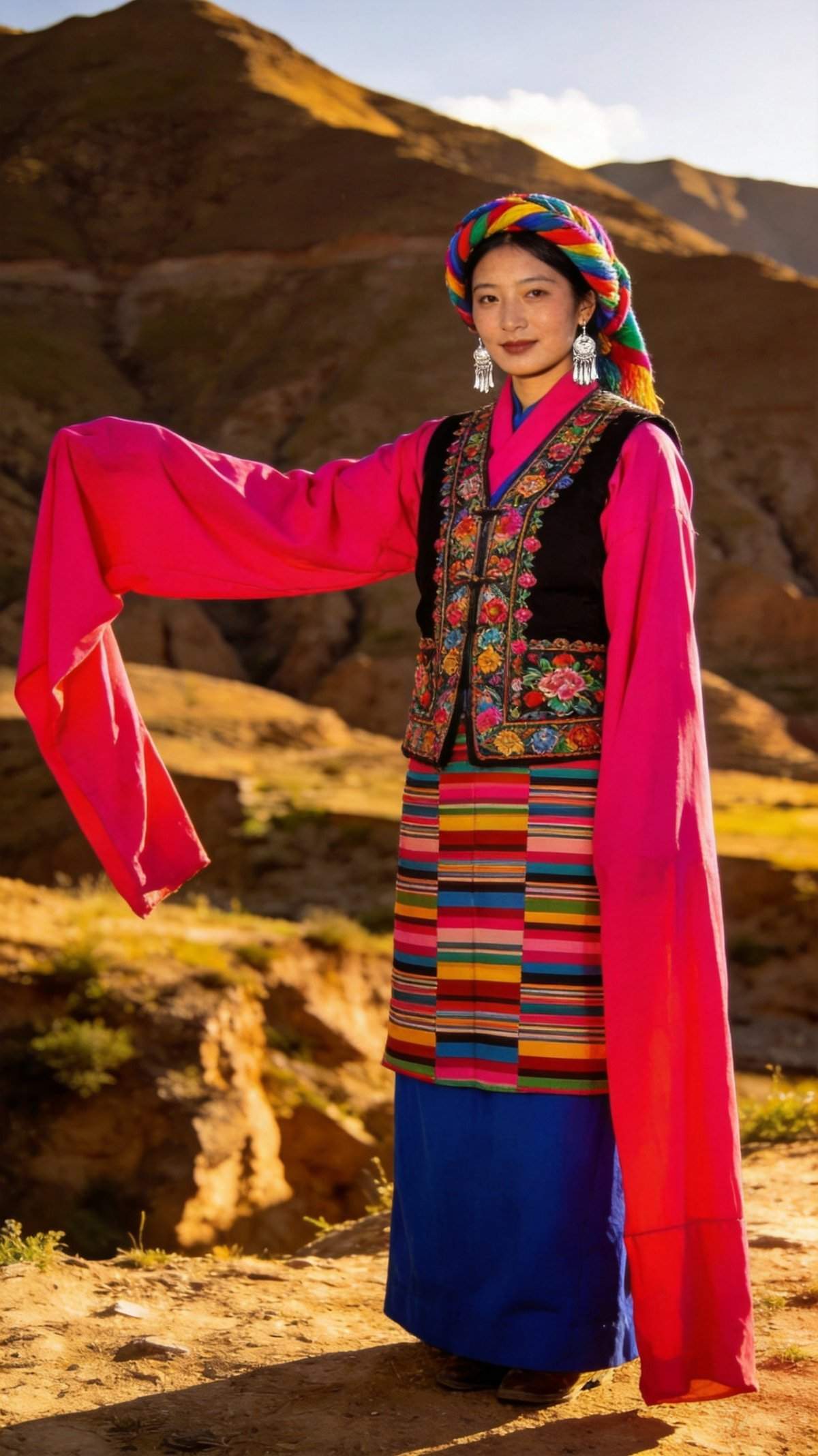
The Bonan people, numbering approximately 20,000, are one of the smallest ethnic groups and reside primarily in the Jishishan Bonan, Dongxiang, and Salar Autonomous County of Gansu Province in northwestern China. As a Muslim community with Central Asian ancestral roots, their clothing tradition represents a unique fusion of Islamic principles of modesty, Turkic and Mongol garment forms, and Han Chinese textile techniques. Bonan attire blends these influences into a coherent aesthetic featuring long robes for men with distinctive embroidered chest panels and brightly colored headscarves for women whose hues signal age and marital status. The Bonan are also renowned metalworkers, famous throughout the region for their hand-forged waist knives known as baoan yao dao, a craft tradition that has influenced the metal buttons and ornaments appearing on their formal clothing.
Key Features of Bonan Attire
- Long single-breasted robes for men with embroidered chest panels
- Womens brightly colored headscarves in green, pink, and white
- Floral embroidery on collar edges, cuffs, and chest panels
- Silver and jade buttons on mens formal overcoats
- Leather boots for men as part of full ceremonial dress
Traditional Garments
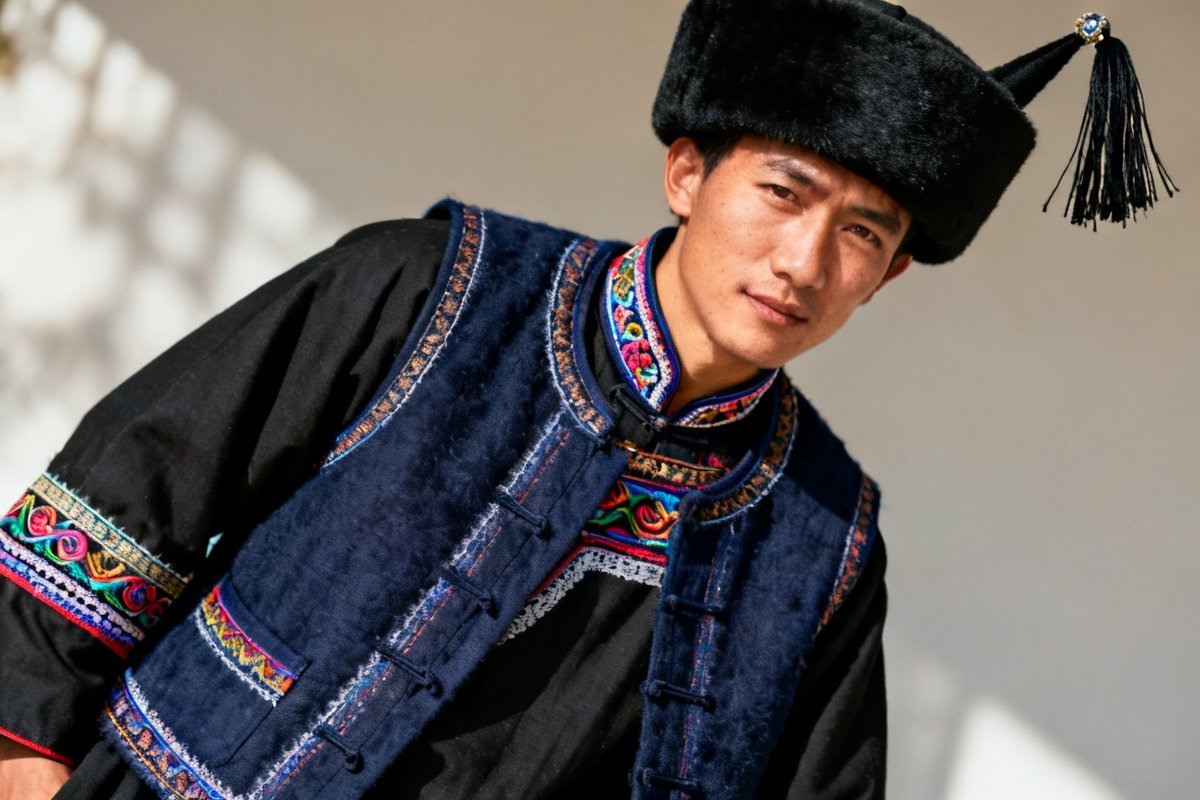
Men wear long single-breasted robes reaching below the knee in dark blue, black, or gray, fastened with cloth buttons or decorative silver and jade buttons for formal occasions. These robes feature a distinctive embroidered chest panel positioned over the heart, decorated with floral motifs including peonies and plum blossoms executed in silk thread. A white shirt with stand-up collar is worn beneath, visible at the neckline. Loose trousers are tucked into leather boots, and a cloth belt or leather sash is tied at the waist, from which a Bonan waist knife in an ornamented sheath may be suspended during formal occasions. Women wear collarless jackets over long trousers beneath a full-length tunic or robe, always with a headscarf covering the hair and neck in accordance with Islamic dress customs. The cut of women's garments is looser than in many other ethnic traditions, prioritizing modesty and comfort while allowing for decorative expression through embroidery and fabric choice.
Headwear and Adornments
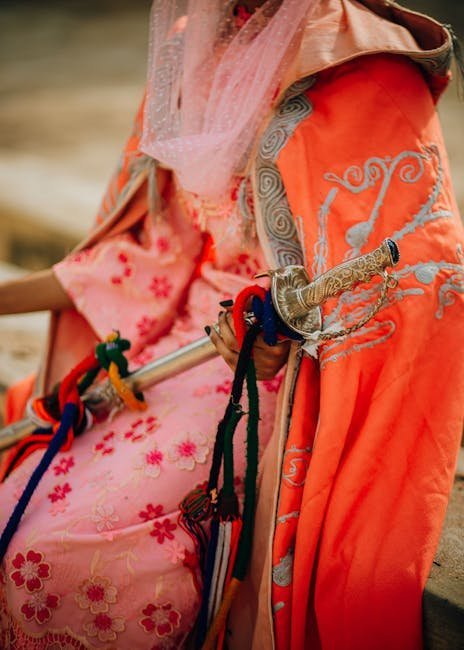
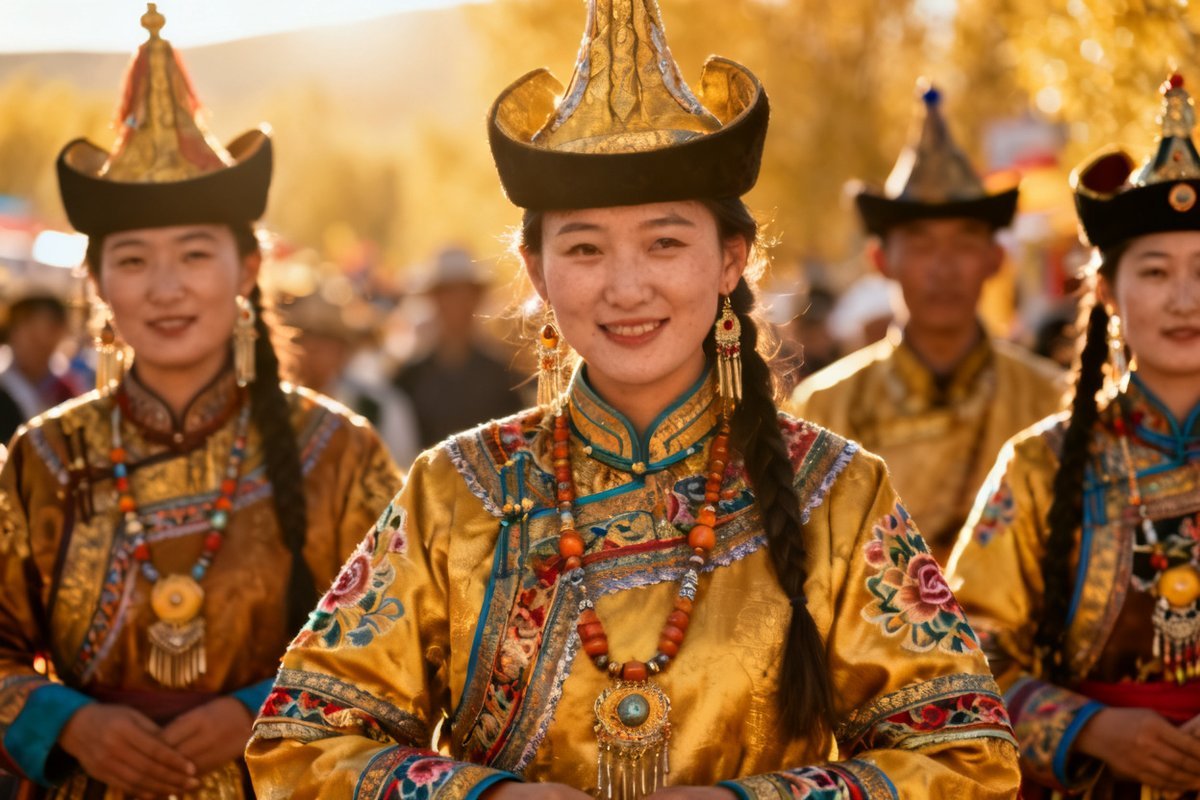
Women wear headscarves in colors determined by age and marital status, with this system functioning as an immediate visual language understood by all community members. Green or pink headscarves with embroidered edges are worn by young unmarried women, while white headscarves signal married status and older age. Black or dark blue headscarves may be worn by elderly widows. The embroidery on headscarf edges features delicate floral patterns, with the fineness of the stitching serving as an informal measure of a woman's needlework skill. Men wear white knitted skullcaps for daily wear and black skullcaps with embroidered bands for formal and religious occasions. The Bonan traditional waist knife, worn suspended from the belt in an ornamented leather and metal sheath, functions as both a practical tool and a marker of male identity, with the finest examples featuring silver-inlaid handles and scabbards decorated with floral and geometric patterns that echo the motifs found in Bonan embroidery.
Embroidery and Decorative Arts
Bonan embroidery features delicate floral patterns applied to collars, cuffs, chest panels, and headscarf edges, with peonies symbolizing wealth and honor, plum blossoms representing perseverance through winter hardship, and chrysanthemums signifying longevity. These motifs reflect the broader Central Asian and Islamic tradition of floral and vegetal decoration, adapted to local Gansu flora and executed in satin stitch and stem stitch using silk threads in bright colors against dark fabric grounds. Geometric border patterns frame the floral designs, drawing from Islamic decorative traditions that favor abstract geometry. The chest panel embroidery on men's formal robes receives particular attention, as it sits at eye level during conversation and serves as the garment's focal point. Metalwork skills from the Bonan knife-making tradition extend to clothing decoration, with custom silver buttons, belt buckles, and ornamental plaques produced by the same artisans who forge the famous waist knives.
Like their Dongxiang neighbors, the Bonan people maintain that the most intricate embroidery on a womans headscarf edge is a silent testament to her patience and domestic virtue.
Color Symbolism
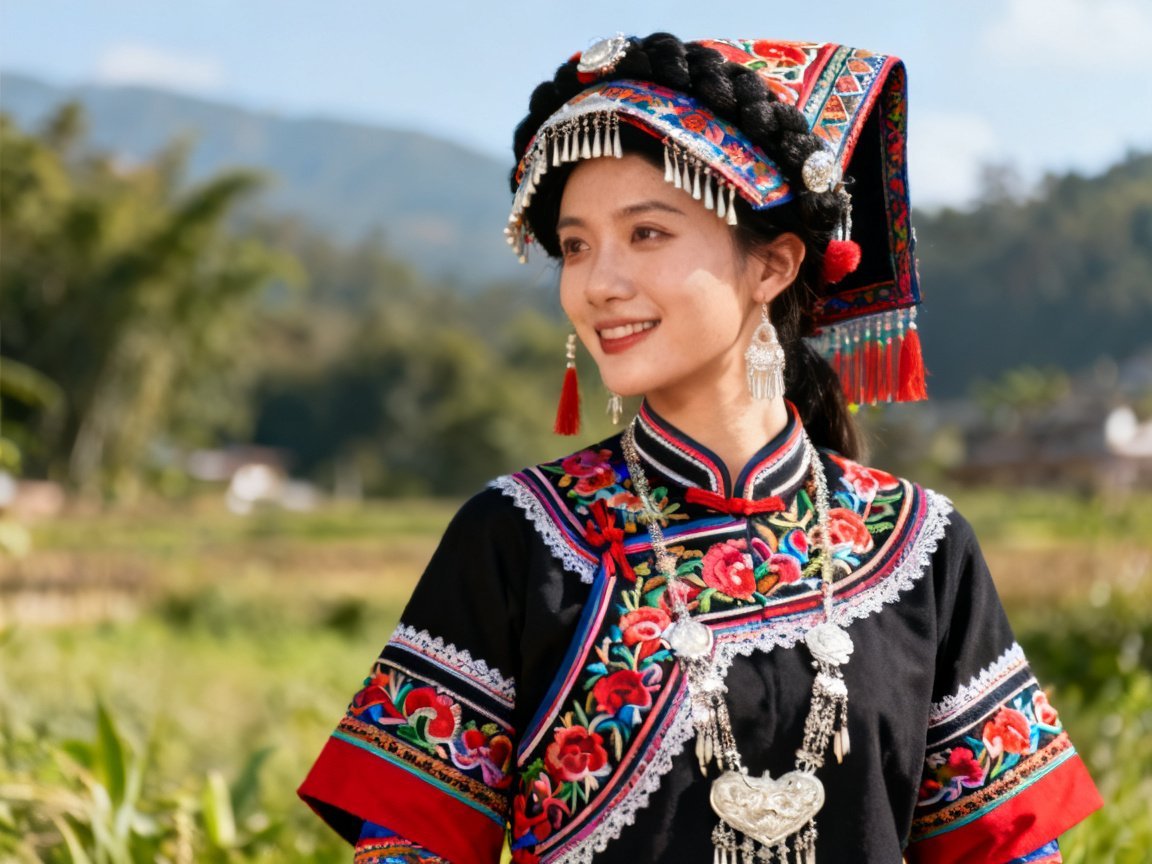
Dark blues, blacks, and grays dominate base garments, reflecting both practical considerations for the dusty Gansu environment and an aesthetic preference for understated masculine dress. Women's garments use these dark grounds as canvases for bright accent colors appearing in embroidery and headscarves. Green carries special significance as a color associated with paradise in Islamic tradition, making it a favored choice for young women's headscarves and embroidery elements. Pink represents youth and vitality, red symbolizes celebration and joy, yellow evokes the golden light of the Gansu plateau, and white signifies purity and is reserved for older married women's headscarves. The restrained Bonan palette distinguishes their clothing from the saturated color schemes of Yunnan-based ethnic groups, reflecting the different cultural, religious, and environmental context of northwestern traditions.
Festival Attire
During Eid al-Fitr and Eid al-Adha, the two major Islamic festivals, Bonan families wear new or freshly cleaned garments with men donning long robes featuring the finest embroidered chest panels and their best waist knives in ornamented scabbards, while women wear their most beautifully embroidered headscarves and tunics with full embroidery on collars, cuffs, and hems. The preparation of festival clothing follows religious and cultural rhythms: garments are washed and pressed in the days before the celebration, silver buttons and knife sheaths are polished, and new embroidery may be added to headscarves. Bonan weddings showcase the most elaborate clothing displays, with brides wearing multiple embroidered layers topped with a bright headscarf and full silver jewelry, while grooms wear new black robes with jade buttons and a ceremonial waist knife presented by the bride's family. These lifecycle celebrations remain the primary occasions for full traditional dress, as daily wear in contemporary Bonan communities has largely shifted to modern clothing.
Modern Influence and Preservation
Bonan embroidery and knife-making are both recognized as intangible cultural heritage practices in Gansu Province, with government-supported training programs aiming to sustain these skills among younger generations. The Bonan waist knife in particular has become the group's most visible cultural export, with collectors throughout the region seeking high-quality examples featuring traditional silver inlay and engraved decoration. The embroidery tradition faces significant pressure, as machine-produced alternatives have largely replaced handwork for daily garments, and the number of women who can execute the intricate chest panel and headscarf embroidery continues to decline. Community museums in Jishishan County preserve historic garments and document embroidery patterns, while cultural festivals provide periodic occasions for the display of traditional dress. The challenge common to many small ethnic groups is particularly acute for the Bonan: with a population of only 20,000, every elder artisan lost represents an irreplaceable repository of knowledge, making documentation and apprenticeship programs urgent priorities for cultural preservation.
Did You Know?
The Bonan people are famous for their handmade waist knives (baoan yao dao), which are renowned across northwestern China and traditionally worn as part of formal attire.
Metalwork and Textile Arts of the Bonan
The Bonan people of Gansu Province are renowned for their metalworking traditions, particularly the production of fine knives and ornamental silver. This metalworking heritage extends directly into their clothing through intricately crafted silver buttons, belt buckles, and hair ornaments that adorn traditional garments. Bonan silversmiths use techniques including filigree, repousse, and granulation to create decorative elements that are both functional and artistic. The silver pieces are often set with coral or turquoise beads, adding color accents to the otherwise restrained palette of Bonan dress.
Bonan women weave wool and cotton fabrics on traditional looms, producing dense, warm textiles suited to the cool climate of the Gansu highlands. The weaving tradition emphasizes durability and warmth, with fabrics often featuring subtle stripe patterns in earthy tones. Embroidery appears primarily on collar edges, cuffs, and the front opening of jackets, with geometric patterns and stylized floral motifs stitched in silk threads.
Metalwork and Textile Arts of the Bonan
The Bonan people of Gansu Province are renowned for their metalworking traditions, particularly the production of fine knives and ornamental silver. This metalworking heritage extends directly into their clothing through intricately crafted silver buttons, belt buckles, and hair ornaments that adorn traditional garments. Bonan silversmiths use techniques including filigree, repousse, and granulation to create decorative elements that are both functional and artistic. The silver pieces are often set with coral or turquoise beads, adding color accents to the otherwise restrained palette of Bonan dress.
Bonan women weave wool and cotton fabrics on traditional looms, producing dense, warm textiles suited to the cool climate of the Gansu highlands. The weaving tradition emphasizes durability and warmth, with fabrics often featuring subtle stripe patterns in earthy tones. Embroidery appears primarily on collar edges, cuffs, and the front opening of jackets, with geometric patterns and stylized floral motifs stitched in silk threads.