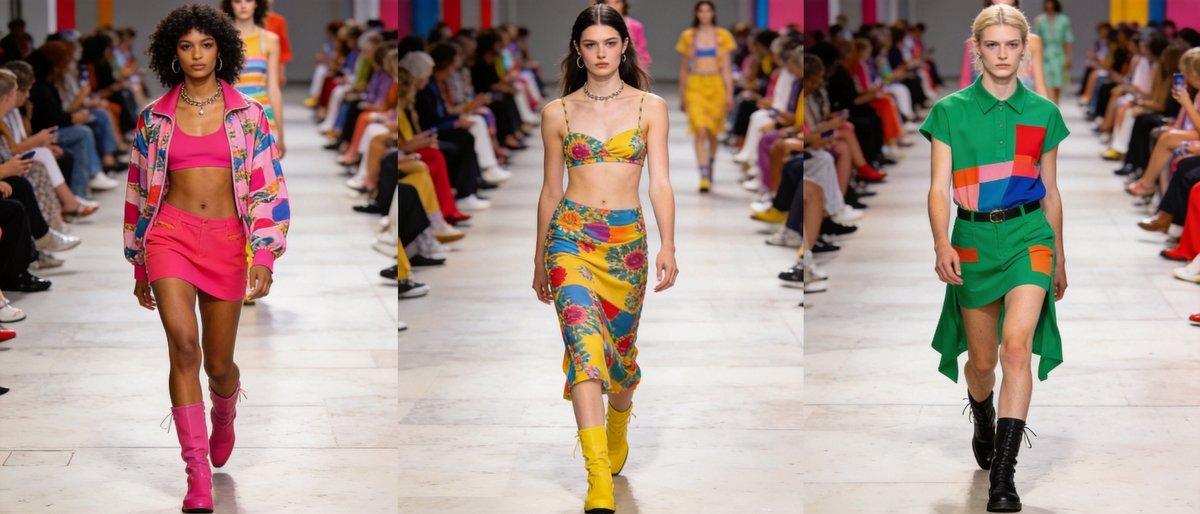
London Spring/Summer 2026 fashion week reaffirmed the British capital's reputation as the world's laboratory of fashion innovation. While Paris and Milan present the industry's establishment view, London is where the future is previewed. This season was particularly rich in ideas, with emerging designers pushing boundaries in silhouette, sustainability, and cultural commentary. The energy was palpable, the risks were real, and the results were often breathtaking.
Key Trends from London SS 2026
The defining characteristic of London SS 2026 was its fearless embrace of the avant-garde. Emerging designers in particular showed collections that challenged conventional notions of beauty and wearability. Deconstruction remained a key theme, with garments that appeared to be in the process of being made or unmade. This intellectual approach to fashion was balanced by a distinctly British sense of eccentricity, with unexpected color combinations, mismatched patterns, and playful proportions adding humor to the collections.
Sustainability as Innovation
London designers led the conversation on sustainable fashion this season, but with a practical, design-led approach rather than a didactic one. Several emerging labels showed collections made entirely from deadstock fabrics, proving that sustainability need not limit creativity. Zero-waste pattern cutting techniques, where every scrap of fabric is used, produced some of the most innovative silhouettes of the season. The message was clear: sustainability is not a constraint but a creative challenge that can produce truly original results.

London Fashion Week has always been where fashion goes to experiment. This season, the experiments paid off. The question is not whether these avant-garde ideas will influence mainstream fashion - they already have, before the last model left the runway.
Silhouette and Construction
London's approach to silhouette was the most experimental of the four fashion capitals. Designers played with proportion in unexpected ways, creating looks that were exaggerated, distorted, and sometimes almost sculptural. Oversized shoulders were balanced by narrow hips; voluminous skirts were paired with tightly fitted bodices. The 'inside-out' trend saw garments with visible seam allowances, exposed linings, and intentional fraying. This deliberate imperfection was not a sign of poor craftsmanship but a philosophical statement about the nature of clothing and construction.
Cultural Commentary
London's designers have never shied away from using fashion as a platform for social commentary, and SS 2026 was no exception. Collections addressed themes of identity, belonging, and cultural fusion. The city's remarkable diversity was reflected in shows that mixed references from the designer's heritage with contemporary British street style. This cultural cross-pollination produced some of the most exciting and original work of the season, demonstrating that fashion's future lies in creative exchange rather than cultural appropriation.
Textile Innovation
London designers showed impressive commitment to textile innovation, particularly in the development of new sustainable materials. A Central Saint Martins graduate presented a collection made from fabric grown from bacterial cellulose, while another used a revolutionary fabric made from recycled fishing nets. These innovations were not presented as conceptual art pieces but as wearable, commercial garments, signaling that sustainable textile technology has reached a point where it can compete with conventional fabrics on both aesthetics and performance.
Did You Know?
A London-based designer created a fully biodegradable collection using fabric made from mushroom roots and natural dyes derived from food waste. The entire collection, including the thread, was designed to compost completely within six months.
Prints, Patterns, and Graphic Expression
Prints took on a new significance in London this season. Designers moved beyond the floral and geometric patterns of recent seasons toward more narrative, almost illustrative approaches. Digital printing technology enabled photorealistic imagery on flowing silks and structured cottons alike, while hand-painted and block-printed fabrics celebrated slower, more artisanal methods. The print story was particularly strong among emerging designers, who used pattern not merely as decoration but as a storytelling medium. Abstract motifs referencing British cultural iconography, from the Union Jack to punk album covers, appeared reinterpreted through a sophisticated fashion lens that elevated them from novelty to legitimate design statements.
Notable Designers and Collections
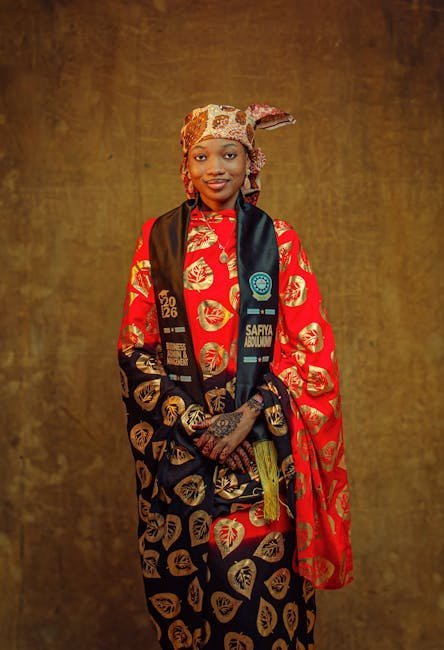
Several emerging designers made significant impressions at London SS 2026. A Central Saint Martins graduate presented a collection exploring the intersection of traditional British tailoring and digital culture, with garments that appeared pixelated when viewed from a distance but resolved into intricate woven patterns up close. Another standout was a designer of Nigerian-British heritage who fused Ankara prints with classic British suiting, creating pieces that celebrated dual cultural identities. Established names also delivered strong seasons, with one heritage house reimagining its archive pieces through a contemporary lens of deconstruction and reconstruction. The energy at London's shows this season suggested a new generation of British designers coming into their own, confident in their craft and unafraid to challenge conventions that have governed fashion for decades.
Street Style and Cultural Impact
London's street style during fashion week was, as always, a show in itself. Attendees demonstrated the city's famous mix-and-match approach to dressing, combining high and low, vintage and new, tailored and casual with an insouciance that no other fashion capital quite matches. The most photographed looks featured oversized proportions, unexpected layering, and a distinct preference for individuality over conformity. This street style energy fed directly back onto the runway, with several designers citing the fashion week crowd itself as inspiration for their collections. London's ecosystem of fashion education, emerging talent, and fearless personal style creates a feedback loop that continuously regenerates the city's creative energy, ensuring that each season brings genuinely new ideas rather than variations on established themes.
Commercial Outlook and Global Reach
While London has traditionally struggled to convert creative buzz into commercial success, SS 2026 showed signs that the gap is narrowing. Several emerging designers announced partnerships with major retailers, and the British Fashion Council's support programs have helped young brands navigate the business side of fashion more effectively. The trends established in London this season, particularly around sustainable materials and deconstructed tailoring, have already begun appearing in high-street collections worldwide. The question remains whether London can retain its creative talent as designers increasingly face pressure to show in Paris or Milan for commercial reasons. What is certain is that without London's willingness to take risks, the global fashion industry would be far less interesting. London's role as the industry's research and development laboratory remains secure, even if its commercial rewards are sometimes captured elsewhere.
Key Trends from London SS 2026
London Fashion Week for Spring-Summer 2026 delivered a compelling mix of avant-garde experimentation and streetwise practicality, reflecting the city unique position as both a creative incubator and a global fashion capital. The most talked-about trend was the resurgence of sculptural silhouettes, with designers exploring exaggerated shoulders, asymmetric hemlines, and structural elements that transformed garments into wearable art. British designers known for their conceptual approach pushed boundaries with deconstructed tailoring, visible seam work, and garments that appeared intentionally unfinished, celebrating the beauty of the design process itself. This emphasis on raw, unpolished aesthetics resonated with a fashion audience increasingly interested in authenticity and the handmade quality that distinguishes luxury fashion from mass production.
Sustainability continued to shape London collections, with emerging designers leading the way in innovative approaches to eco-conscious fashion. Several shows featured collections made entirely from upcycled materials, deadstock fabrics, and innovative textiles developed from agricultural waste and recycled fibers. The use of natural dyes and low-impact production methods was highlighted prominently, with designers proving that environmental responsibility need not compromise creative expression. London's fashion schools, particularly Central Saint Martins and the Royal College of Art, continued to produce graduates who prioritize sustainability as a fundamental design principle rather than an afterthought. The city commitment to nurturing young talent was evident throughout fashion week, with several emerging designers presenting collections that challenged established brands in terms of both creativity and environmental consciousness.
Colors and Fabrics Defining the Season
The London SS 2026 color palette embraced both bold statements and nuanced neutrals. Electric blue emerged as the standout color of the season, appearing across multiple collections in everything from full-length coats to accent accessories. This vibrant shade was balanced by softer tones such as powder pink, butter yellow, and sage green, creating a palette that ranged from energetic to serene. Designers paired unexpected color combinations with confidence, such as electric blue with burnt orange or sage green with lavender, reflecting London fashion characteristic willingness to take risks. Neutral shades of cream, beige, and stone provided the foundation for more adventurous pieces, ensuring that collections remained wearable despite their experimental elements.
Fabric innovation was central to the London SS 2026 season, with designers exploring both high-tech materials and traditional craftsmanship. Lightweight technical fabrics with moisture-wicking and temperature-regulating properties appeared in both performance wear and tailoring, blurring the line between athletic and luxury fashion. At the same time, traditional British fabrics such as tweed, wool crepe, and cotton lawn were reimagined through modern cuts and unexpected colorways, connecting contemporary design with the country rich textile heritage. Sheer fabrics, particularly organza and fine mesh, were layered to create depth and movement in evening wear, while lightweight linens and cottons dominated daywear collections. The combination of technical innovation and respect for tradition created a uniquely London aesthetic that honors the past while embracing the future of fashion.