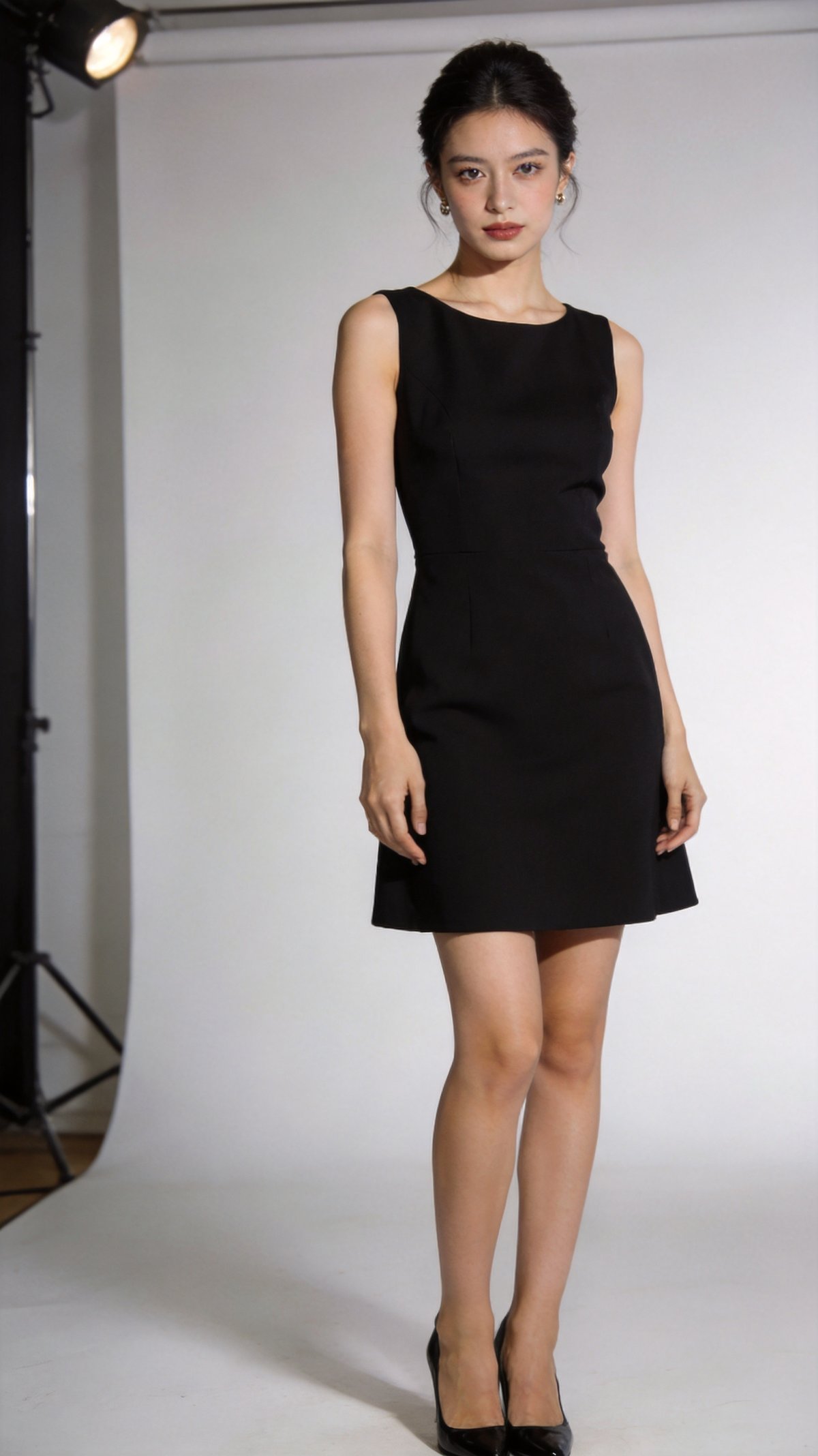
The little black dress, universally known as the LBD, is perhaps the most iconic garment in Western fashion history. Its story begins in 1926 with a simple illustration in American Vogue magazine and ends - if it can be said to end - with a garment that has become the ultimate symbol of timeless elegance. No other piece of clothing has achieved such universal recognition while remaining so simple in its execution.
Chanel's 1926 Revolution
In October 1926, Vogue published a drawing of a simple, straight black dress by Coco Chanel. The magazine compared it to the Ford Model T car, predicting it would become 'a uniform for women of taste.' The comparison was apt - just as Ford had democratized the automobile, Chanel democratized fashion. Her little black dress was affordable, accessible, and adaptable. It could be dressed up with jewelry for evening or worn simply for daytime. At a time when women's fashion was still dominated by corsets and elaborate decoration, Chanel's simple black frock was revolutionary.
From Mourning to Fashion
Before Chanel, black was primarily associated with mourning in Western culture. Respectable women did not wear black unless they were in mourning, and even then, the mourning period was strictly prescribed by social convention. Chanel's genius was to reclaim black from its mournful associations and present it as a chic, sophisticated choice. The little black dress was not about grief - it was about style, confidence, and the radical idea that a woman could wear black simply because she wanted to.
The Hollywood Moment
The little black dress achieved icon status in 1961, when Audrey Hepburn wore it in the film 'Breakfast at Tiffany's.' Designed by Hubert de Givenchy, Hepburn's dress featured a sleeveless bodice, a backless cut, and a hemline that ended just below the knee. The scene where Hepburn stands outside Tiffany's window, wearing her black dress, pearls, and sunglasses, eating a croissant, is one of the most famous fashion moments in cinema history. The dress sold at auction in 2006 for over 900,000 dollars.
The little black dress is the fashion equivalent of the perfect white shirt: it requires no justification, no explanation, no apology. It simply works. It always has, and it always will.
Evolution Through the Decades
Each decade reinterpreted the little black dress for its era. The 1960s saw shorter, more playful versions. The 1970s brought longer, more relaxed silhouettes. The 1980s power-dressing era produced structured, shoulder-padded LBDs. The 1990s favored slip dresses and minimalist interpretations. The 2000s and beyond have seen every possible variation, proving that the LBD can adapt to any aesthetic while maintaining its essential character.
The Modern LBD
Today, the little black dress is a staple of virtually every woman's wardrobe. It is the garment that fashion experts recommend as the first investment piece a young woman should buy. The LBD has been reinterpreted by every major designer, from Yves Saint Laurent to Alexander McQueen, Karl Lagerfeld to Stella McCartney. It appears on red carpets, in offices, at cocktail parties, and on casual dates. Its versatility is unmatched - with the right accessories, a single LBD can take a woman from day to night, from casual to formal, from conservative to daring.
Did You Know?
The average woman owns at least three little black dresses. According to surveys, the LBD is the single most common item found in women's closets worldwide, with an estimated 500 million LBDs in circulation globally.
Styling the LBD for Every Occasion
The versatility of the little black dress is unmatched in fashion. For daytime wear, an LBD pairs naturally with flat shoes, a tailored blazer, and minimal jewelry. The same dress transforms for evening with heeled sandals, statement earrings, and a clutch. Seasonal adaptations are equally effortless: add opaque tights and ankle boots for autumn, or wear with bare legs and strappy sandals for summer. The key is understanding that the LBD is not a single garment but a canvas upon which accessories and attitude paint a different picture each time it is worn. A sleek ponytail and ballet flats read business lunch; loose waves and red lipstick read cocktail party; a leather jacket and combat boots read downtown cool. The LBD never competes with the wearer. It amplifies whatever version of herself she chooses to present on any given day.
Fabric, Fit, and Construction
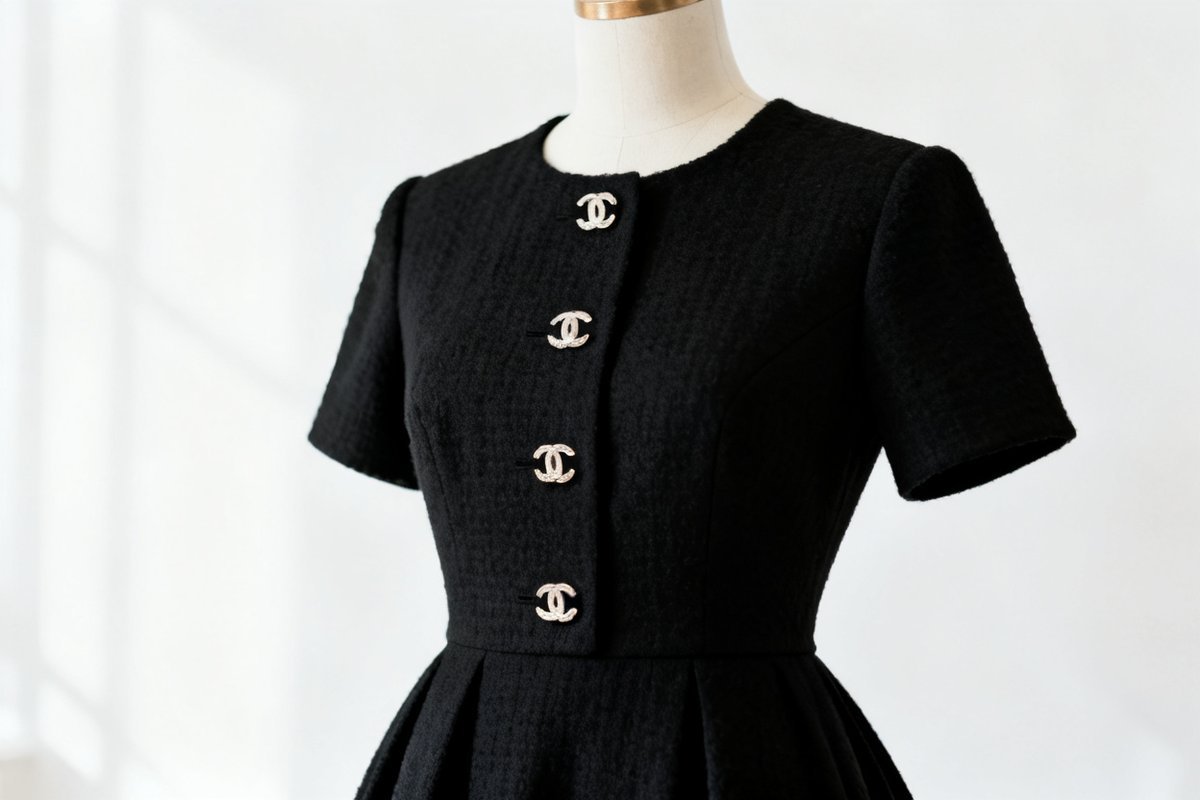
Not all little black dresses are created equal. The fabric choice fundamentally alters the dress's character: crepe offers structure and professional polish, jersey provides comfort and drape, silk charmeuse brings sensual movement, and wool blends offer season-spanning versatility. Fit is equally critical. The LBD should skim the body without constricting, with armholes that allow full movement and a hemline that works for the wearer's lifestyle. Quality construction details like French seams, underarm shields, and weighted hems separate a dress that will last a decade from one that will pill and sag after a single season. The best LBDs are those that feel as good as they look, constructed with the same attention to interior finishing as exterior design. A properly fitted LBD does not need constant adjustment throughout the day because the engineering has been done at the pattern stage.
The LBD in Popular Culture
Beyond Hepburn's iconic moment, the little black dress has played a starring role in popular culture for decades. Princess Diana wore a revealing black cocktail dress by Christina Stambolian on the night Prince Charles admitted his infidelity on television, instantly dubbed the Revenge Dress and cementing the LBD as a garment of power and independence. Elizabeth Hurley's safety-pin Versace LBD at a 1994 film premiere launched her career and redefined red carpet dressing. More recently, the LBD has been embraced by a new generation of designers reinterpreting it with sustainable fabrics, size-inclusive patterns, and gender-neutral silhouettes. The little black dress endures not because it is simple but because it is adaptable to every era's definition of elegance. Each generation projects its values onto this humble black frock, and each time it absorbs them without losing its essential character. That is the definition of a true classic.
Choosing the Perfect Little Black Dress for Your Shape
The key to making the LBD work for you lies in selecting a silhouette that complements your body type. A-line dresses with a fitted bodice and flared skirt suit pear-shaped and hourglass figures by emphasizing the waist while skimming over hips and thighs. Sheath dresses create a clean, column-like line that works well on straight and athletic body types, offering a minimalist canvas that can be dressed up or down with accessories. Wrap dresses are universally flattering, their adjustable fit accentuating the waist and creating a V-neckline that elongates the torso, making them an excellent choice for almost any body shape.
Fit and fabric quality dramatically affect how an LBD looks and feels. Look for dresses with internal structure such as boning or a built-in slip that helps the garment hold its shape. The fabric should have sufficient weight to drape well, lightweight jersey is comfortable but may cling in unflattering ways, while heavier crepe, ponte knit, or double-faced satin provide a smoother silhouette. Pay attention to the hemline length that flatters your legs, knee-length or just above the knee is the most versatile for various occasions. Sleeve length also matters, cap sleeves balance broader shoulders, three-quarter sleeves elongate the arms, and sleeveless styles work well for warmer weather or when layering with jackets.
Building a Wardrobe Around the Little Black Dress
A single well-chosen LBD can serve as the foundation for dozens of distinct outfits through the strategic use of layering and accessories. For a professional look, layer a tailored blazer over the dress and add closed-toe pumps and a structured handbag. Swap the blazer for a leather jacket and add ankle boots for an edge evening ensemble. A silk scarf tied at the neck, statement jewelry, or a colorful belt can completely transform the dresses personality without requiring additional clothing items. The LBD transitions between seasons with ease, worn alone in summer with sandals, layered with tights and boots in fall, or topped with a wool coat and scarf in winter.
Quality accessories elevate the LBD from simple to sophisticated. A pair of pearl studs or diamond drop earrings adds timeless elegance, while a bold cocktail ring or chunky necklace brings contemporary flair. The right handbag matters, a clutch for evening events, a structured tote for the office, or a crossbody bag for casual outings. Footwear choices range from classic black pumps and strappy sandals to colorful heels that add a pop of personality. The beauty of the LBD is that it serves as a neutral backdrop, allowing your accessories to shine while ensuring you always look appropriately dressed for any occasion that arises.