
Wedding attire is where cultural differences in dress become most visible and most significant. The contrast between Eastern and Western wedding garments is not merely a matter of color or style - it reflects fundamentally different beliefs about marriage, family, and the role of the individual in society. A Chinese wedding gown and a Western wedding dress tell very different stories about what a wedding means. Across Asia, wedding attire traditions vary dramatically even within what Western observers might view as a single category: a Korean bride wears a richly colored hanbok with a jeogori jacket and chima skirt, a Japanese bride may change between a white shiromuku kimono for the ceremony and a colorful uchikake for the reception, while an Indian bride typically wears a red or maroon lehenga heavily embroidered with gold zari work. These variations underscore that 'Eastern' wedding attire is not one tradition but a constellation of distinct cultural practices, each with its own aesthetic language and ceremonial logic.
The Meaning of Color
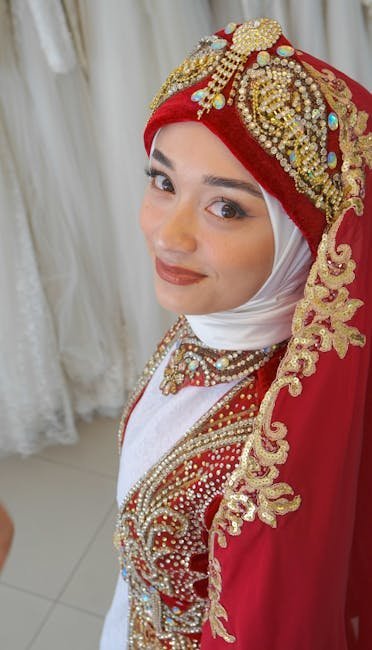
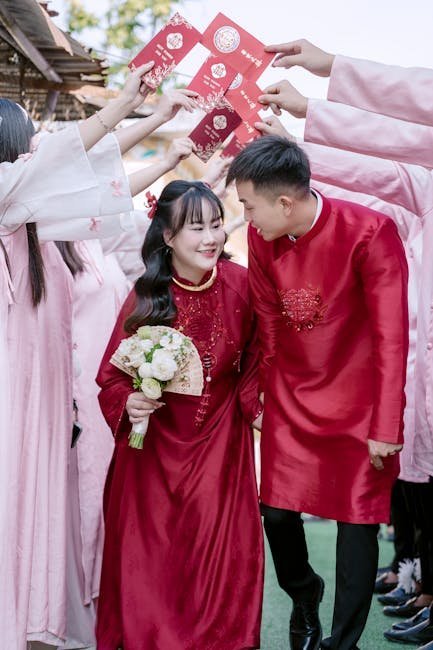
The most striking difference between Eastern and Western wedding attire is color. In Chinese tradition, red is the color of weddings, symbolizing luck, prosperity, joy, and fertility. The bride's red gown is believed to ward off evil spirits and bring good fortune to the new couple. Gold embroidery adds wishes for wealth and abundance. In Western tradition, white symbolizes purity, innocence, and virginity. The white wedding dress tradition was popularized by Queen Victoria in 1840, when she wore a white lace gown for her wedding to Prince Albert.
Silhouette and Construction
Traditional Chinese wedding attire typically consists of a two-piece ensemble: an embroidered jacket and a long pleated skirt, known as qun kwa or longfeng gua. The jacket is fitted through the bodice and may have wide or narrow sleeves, while the skirt is full and floor-length. The Western wedding dress is typically a one-piece gown that can take many forms - ball gown, mermaid, A-line, sheath - but is almost always designed to create a dramatic, memorable silhouette.
The Groom's Attire
- Chinese groom: Red or dark blue changshan with a magua jacket, or a Zhongshan suit
- Western groom: Black tuxedo or suit, often with a white shirt and bow tie
- Chinese tradition: Groom's attire matches the bride's in formality and color scheme
- Western tradition: Groom's attire contrasts with the bride's white gown
- Chinese accessories: Red sash, silk shoes, and sometimes a hat matching the dynasty style
- Western accessories: Cummerbund, cufflinks, and formal shoes
A Chinese bride dresses for her family; a Western bride dresses for herself. This is not a judgment but an observation - the red gown speaks of community and continuity, the white dress speaks of individuality and romance. Both are beautiful expressions of love.
Ceremonial Garments and Rituals
Chinese wedding attire is closely tied to specific rituals. The bride typically wears her red gown for the tea ceremony, where she serves tea to her new in-laws as a sign of respect. She may change into additional outfits for the wedding banquet and evening events. Western brides also follow specific rituals - the 'something old, something new' tradition, the garter toss, and the father-daughter dance each relate to specific garments or accessories. In both traditions, the wedding attire is not just clothing but a participant in the ceremony itself.
Modern Blending of Traditions
Contemporary weddings increasingly blend Eastern and Western elements. Many Chinese brides now wear a white Western-style gown for the ceremony and change into a red qun kwa for the reception. Grooms may wear a Western suit for the ceremony and a Chinese changshan for the banquet. This dual-gown approach has become so common that most Chinese bridal shops offer both styles, and many brides have more outfit changes than the average celebrity at a red carpet event. The logistics of managing multiple outfit changes during a wedding day have spawned an entire sub-industry of bridal assistants who specialize in rapid wardrobe transitions, helping brides change from a white gown with a train to a fitted red qun kwa in under ten minutes between ceremony segments. This hybrid approach extends beyond Chinese weddings: Korean couples often wear Western attire for the ceremony and hanbok for the pyebaek ritual, while Japanese couples may wear a Western dress and tuxedo for the ceremony and traditional kimono for the reception. The blending of traditions reflects a broader reality of modern life in which cultural boundaries are increasingly fluid, and personal identity is constructed from multiple sources rather than a single inherited tradition.
Symbolism in Details
The details of wedding garments carry deep symbolic meaning in both traditions. In Chinese wedding attire, the double happiness character (xi) appears in embroidery, the dragon and phoenix motifs represent the couple's union, and the color red is believed to protect against evil spirits. In Western tradition, the veil was originally believed to protect the bride from evil, the garter is a symbol of the groom's conquest, and the bouquet toss is a fertility ritual dating back to medieval times. Interestingly, both traditions have incorporated the concept of covering the bride's face: the Chinese red veil and the Western white veil serve similar symbolic functions of modesty and the dramatic reveal, though they evolved independently. The Chinese bridal veil, typically a square of red silk embroidered with gold, is lifted by the groom using a ceremonial scale or stick at the end of the wedding ceremony, revealing the bride's face for the first time on the wedding day. The western veil, by contrast, is lifted by the father of the bride or the groom at the altar, a gesture that has been adapted and reinterpreted countless times across cultures.
Did You Know?
Some modern Chinese brides change outfits up to six times on their wedding day: a Western white gown for the ceremony, a red qun kwa for the tea ceremony, a cocktail dress for the reception, and often multiple evening gowns for the banquet. This has spawned a dedicated 'wedding outfit change' industry in Chinese bridal fashion.
Economic and Social Significance of Wedding Attire
The wedding attire industry represents a significant economic force in both Eastern and Western markets. In China, the bridal wear market exceeds 100 billion yuan annually, with brides typically spending between 10,000 and 50,000 yuan on their wedding outfits alone. Western brides in the United States spend an average of $1,800 on their wedding dress, according to industry surveys, with the total bridal market worth approximately $2 billion annually. These figures reflect not just the cost of materials and craftsmanship but the deep cultural investment in making wedding attire a meaningful and memorable part of the celebration.
The social pressure to invest heavily in wedding attire exists in both traditions, though it manifests differently. In Chinese culture, the bride's red gown and the groom's matching attire are seen as direct reflections of the family's status and prosperity. The quality of embroidery, the richness of the fabric, and the number of outfit changes all communicate social standing. In Western culture, the emphasis is more individual: the bride's dress is expected to be the most beautiful garment she has ever worn, and its cost and designer label carry significant social weight. Both traditions share the fundamental belief that the wedding attire should be extraordinary, marking the day as different from all others through the special nature of the clothing worn.
The Influence of Royal and Celebrity Weddings
Royal and celebrity weddings have historically shaped wedding attire trends in both Eastern and Western cultures. When Princess Diana married Prince Charles in 1981, her dress with its 7.6-meter train and puffed sleeves influenced wedding fashion worldwide for a decade. Similarly, when Kate Middleton married Prince William in 2011, her Alexander McQueen lace gown was replicated by bridal designers globally. In Chinese culture, the influence of celebrity weddings has been equally transformative. When popular Chinese actress Liu Shishi married in 2016, her custom-made Guo Pei qun kwa featuring traditional dragon and phoenix embroidery sparked renewed interest in classic Chinese wedding attire among young couples. The wedding of Angelababy and Huang Xiaoming in 2015, which featured both European-style gowns and traditional Chinese red wedding attire, exemplified the dual-gown trend that has since become standard practice across Chinese weddings.
The economic dimensions of wedding attire reveal fascinating contrasts between Eastern and Western markets. In the United States, the average cost of a wedding dress in 2024 was approximately $1,900, with the overall wedding attire budget (dress, alterations, accessories, shoes) often exceeding $3,500. The Western bridal market is dominated by established designers and bridal chains, with most dresses purchased new from specialized boutiques or, increasingly, online retailers offering made-to-order options. In China, the wedding attire market tells a different story: the average couple spends between 10,000 and 30,000 RMB ($1,400-$4,200) on attire alone, but this budget typically covers two to four complete outfits including the Western-style white gown and the traditional Chinese qun kwa or xiu he fu. The Chinese market has seen explosive growth in rental options and custom tailoring, with specialized wedding districts in cities like Shanghai's Bund and Beijing's CBD offering hundreds of shops within walking distance. Both markets are increasingly influenced by sustainability concerns, with vintage and second-hand wedding attire gaining traction among younger couples who prioritize environmental consciousness over tradition.