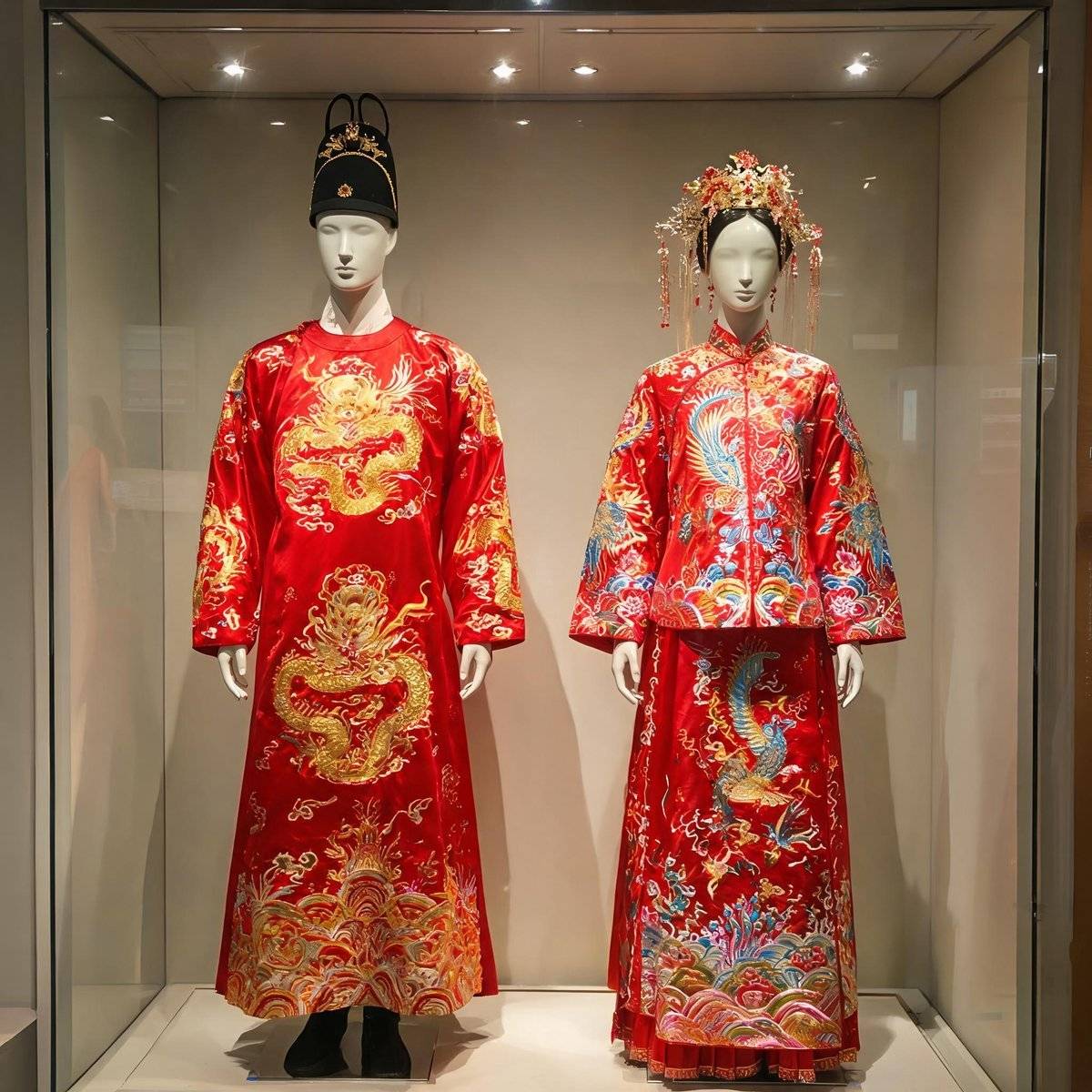
The dragon and phoenix wedding attire, known as longfeng gua, is the most iconic bridal ensemble in Chinese tradition. This magnificent garment, resplendent in red and gold, represents the perfect union of yin and yang, with the dragon symbolizing the groom and the phoenix symbolizing the bride. The longfeng gua is not merely a wedding dress - it is a portable work of art, an investment piece, and a carrier of centuries of cultural meaning.
The Symbolism of Dragon and Phoenix
In Chinese cosmology, the dragon is a yang symbol representing the male principle, associated with power, strength, and good fortune. The phoenix is a yin symbol representing the female principle, associated with beauty, grace, and peace. Together, they represent the perfect balance of masculine and feminine energies that constitutes a harmonious marriage. The pairing of dragon and phoenix is so pervasive in Chinese wedding symbolism that the term longfeng chengxiang, meaning 'dragon and phoenix bringing prosperity,' is a standard wedding blessing.
The construction of a longfeng gua follows strict traditional rules that have been preserved for centuries. The jacket is cut with a standing mandarin collar, a diagonal front placket fastened with hand-knotted frog buttons, and wide three-quarter-length sleeves that taper slightly at the cuff. The matching skirt uses up to eight panels of silk, each pleated by hand into fine accordion folds that open gracefully when the bride walks. A fully handcrafted longfeng gua requires more than one hundred hours of skilled labor, with the embroidery alone accounting for the majority of the work. The finest examples come from the Chaoshan region of Guangdong province, where gold embroidery has been a specialized craft for over a thousand years. Chaoshan embroidery uses real gold-wrapped thread that is couched onto the surface of the silk, creating a raised, sculptural effect that shimmers with every movement.
Styles of Chinese Wedding Attire
- Longfeng gua: Dragon and phoenix embroidered jacket and skirt, the most formal style
- Qun kwa: A two-piece bridal set with a jacket and pleated skirt
- Xiuhefu: A more relaxed two-piece set with a shorter jacket and longer skirt
- Mamianqun: Horse-face skirt paired with an embroidered jacket
- Modern qipao: Fitted one-piece dress in red silk, often with gold embroidery
- Zhongshan suit: The groom's alternative to Western-style suits
A traditional Chinese wedding gown is not bought - it is saved for, passed down, and treasured across generations. Each stitch of gold thread carries a wish for prosperity, each phoenix feather a prayer for harmony.
Embroidery Techniques and Symbolism
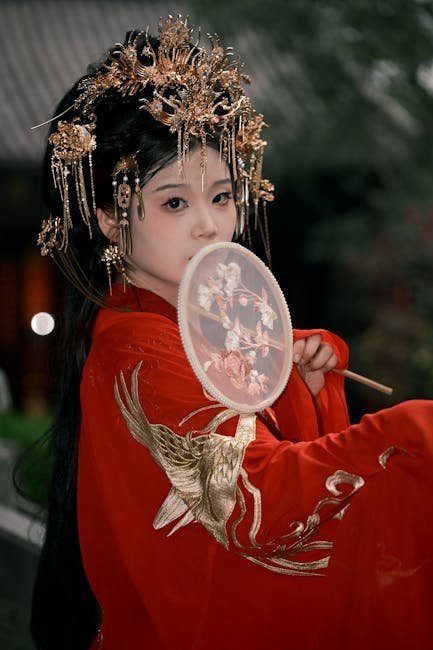
The embroidery on a dragon and phoenix wedding gown is among the finest in Chinese textile art. Gold thread is used to create raised, textured patterns that catch the light as the bride moves. Skilled embroiderers may spend months working on a single gown, using techniques passed down through generations. The Suzhou embroidery school, with its characteristically fine and even stitches, is particularly prized for wedding garments. Beyond dragons and phoenixes, the embroidery typically includes auspicious motifs such as peonies for prosperity, bats for happiness, lotus flowers for harmony, and the double happiness character xi.
Ceremonial Significance
The longfeng gua is not simply worn for photographs—it plays an active role in multiple wedding rituals. During the hair-combing ceremony on the night before the wedding, the bride's mother or a woman blessed with a happy marriage combs the bride's hair while reciting blessings for fertility and prosperity. The bride typically wears a simpler red robe for this intimate family ritual before changing into the full dragon and phoenix gown for the tea ceremony. During the tea ceremony, the bride kneels before her new in-laws and presents them with tea, the weight and richness of the embroidered gown emphasizing the gravity of the occasion. Cantonese brides traditionally pair the longfeng gua with an elaborate gold bridal necklace called a gold pig necklace, while Teochew brides may wear a distinctive phoenix crown with dangling pearl strands that frame the face.
Modern Interpretations
Contemporary Chinese weddings often feature a blend of Eastern and Western traditions. Many brides wear a white Western-style wedding gown for the ceremony and change into a red dragon and phoenix gown for the reception and tea ceremony. This dual-gown approach allows brides to honor both traditions and has become increasingly popular among Chinese brides worldwide. Modern designers have also created updated versions of the longfeng gua with shorter jackets, higher necklines, and more wearable silhouettes that appeal to contemporary tastes. In recent years, rental services for luxury longfeng gua have expanded dramatically, making museum-quality garments accessible to brides who could never afford to purchase them outright. Some rental shops in Hong Kong stock gowns valued at over five hundred thousand Hong Kong dollars, with waiting lists that extend months ahead of peak wedding season. Celebrities have further popularized the longfeng gua: when Hong Kong actress Myolie Wu married in 2015, she famously wore a longfeng gua so heavily embroidered that the gold thread alone weighed over ten pounds, sparking a massive surge in demand for similar gowns across the region.
The longfeng gua also exemplifies the Chinese concept of investing in heirloom-quality garments. Unlike a Western wedding dress, which is typically worn once and preserved, a traditional longfeng gua is often passed from mother to daughter. In Cantonese culture particularly, a bride's mother may present her with the family's longfeng gua during the pre-wedding rituals, accompanied by blessings and stories of the women who wore it before her. Some families maintain records of which brides wore the gown, on what date, and for which branch of the family tree, transforming the garment into a textile family chronicle. This tradition of intergenerational transmission adds emotional weight to an already symbolically rich garment, making each wear not just a fashion choice but an act of connection to ancestral lineage.
Did You Know?
The most expensive dragon and phoenix wedding gowns are embroidered with real gold thread and can cost more than a luxury car. A truly hand-embroidered gown takes three to six months to complete, with the finest examples requiring over a year of work.
The Art of Dragon and Phoenix Embroidery
The embroidery on dragon and phoenix wedding attire represents some of the finest needlework in Chinese textile tradition. Gold thread embroidery, executed in a technique known as panjin, involves wrapping silk thread with thin strips of gold leaf before stitching, creating a raised, luminous effect that catches light from every angle. The dragon is typically embroidered on the groom's robe using gold and silver threads, with details such as scales, claws, and whiskers rendered in precise satin stitch. The phoenix on the bride's ensemble features more varied colors, with the tail feathers often incorporating five distinct shades representing the five virtues of benevolence, righteousness, propriety, wisdom, and sincerity.
The placement of embroidery on wedding garments follows strict traditional conventions. The dragon and phoenix typically appear on the chest and shoulders, the most prominent position, with smaller motifs extending down the sleeves and along the hem. Clouds, flowers, and geometric patterns fill the background spaces, creating a dense, richly textured surface that signifies prosperity and abundance. The number of dragons or phoenixes on a garment is significant, with nine being the imperial number, reserved for the highest-ranking families. A traditional embroidery set for a complete wedding ensemble can require three to six months of daily work by skilled artisans, using techniques passed down through generations within families of embroiderers who specialize in wedding attire.
Modern Interpretations and Global Influence
Contemporary Chinese wedding fashion has evolved to incorporate dragon and phoenix elements into more modern silhouettes while preserving traditional symbolism. Many modern brides opt for a fusion approach, wearing a white Western-style wedding gown for the ceremony and changing into a traditional red dragon and phoenix ensemble for the banquet. Designers have also created streamlined versions of the traditional longfenggua with simplified embroidery patterns and modern cuts, making the garments more wearable for younger generations while maintaining the essential dragon and phoenix motifs. The influence of dragon and phoenix wedding attire has spread beyond China, with international designers incorporating the motifs into their collections and non-Chinese couples choosing the style for its visual impact and rich symbolism.
The global fashion industry has increasingly recognized the artistry of dragon and phoenix wedding attire. Major fashion houses have referenced the aesthetic in their couture collections, featuring gold embroidery on red fabric and dragon-scale textures. Chinese diaspora communities around the world continue to commission traditional dragon and phoenix wedding garments, often having them made by specialized ateliers in Hong Kong, Shanghai, or Guangzhou that maintain the traditional techniques. The enduring appeal of this wedding attire lies in its perfect balance of symbolism and beauty, where every stitch carries meaning and the combined dragon and phoenix represent one of the most universal human desires, a harmonious and prosperous marriage.