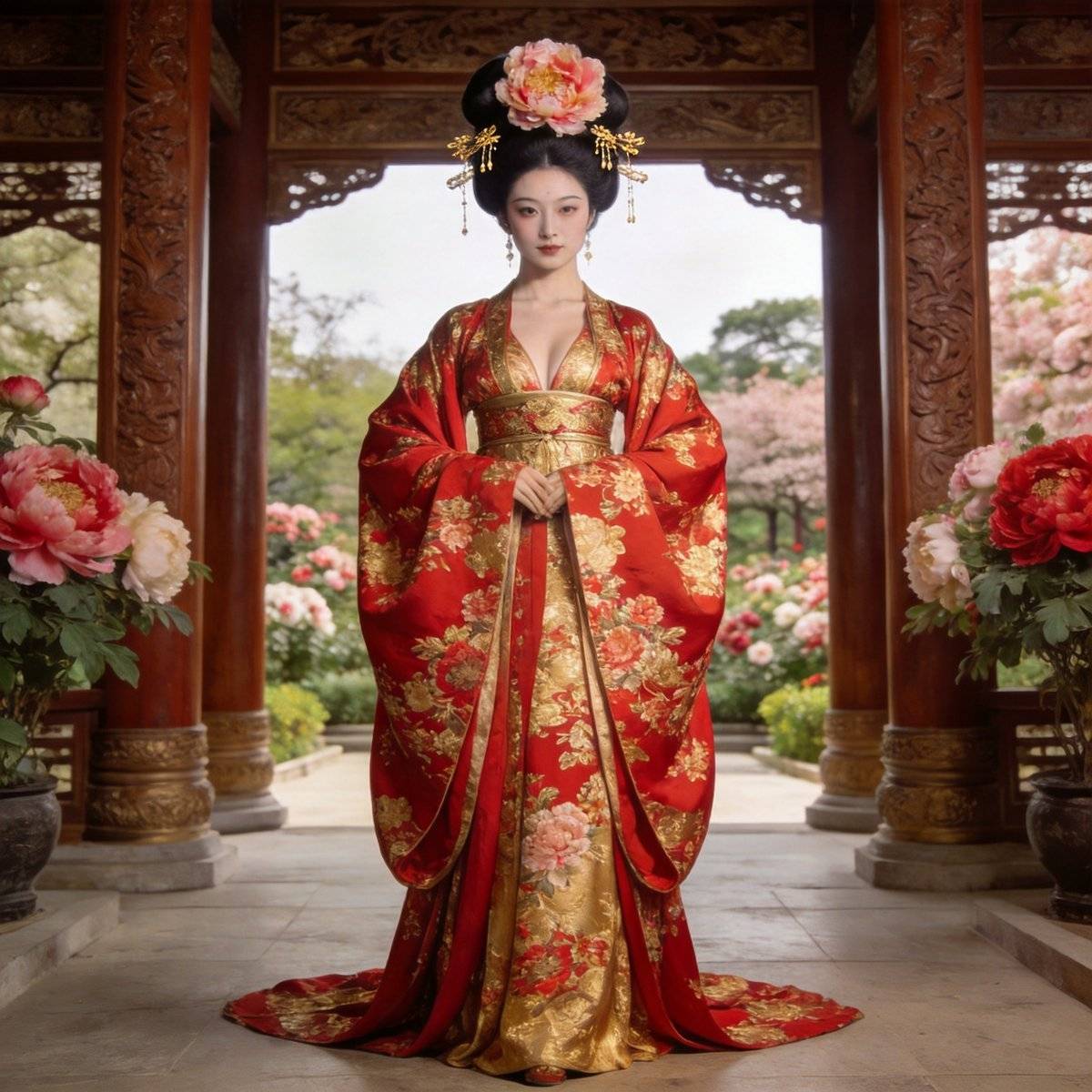
The Tang Dynasty (618-907 AD) is widely regarded as the golden age of Chinese civilization, and nowhere is this more evident than in its fashion. Tang clothing represents a remarkable departure from the restrained elegance of earlier dynasties, embracing bold colors, revealing silhouettes, and foreign influences with unprecedented confidence. The cosmopolitan capital of Chang'an, now Xi'an, was the largest city in the world at the time, and its fashion scene reflected the cultural convergence of the Silk Road.
Women's Fashion: A Revolution in Silk
Tang Dynasty women enjoyed remarkable freedom in their clothing choices, a direct reflection of the era's relatively progressive gender norms. The most iconic Tang garment for women was the qixiong ruqun, a high-waisted skirt tied above the bust with a short jacket. This silhouette created an elongated, graceful line that flattered the figure, and the high waistline placement made women appear taller and more statuesque. During the height of Tang fashion, women also adopted open-collar robes that revealed the cleavage — a style that would have been scandalous in earlier or later dynasties but was celebrated as a sign of the dynasty's cosmopolitan confidence. The Tang was also notable for women adopting masculine attire for certain activities: riding clothes with boots and trousers for polo, and official-style robes for ceremonial occasions. The legendary Princess Pingyang, daughter of the dynasty's founder, was said to have led an army while wearing full armor, and her example encouraged Tang women to freely experiment with clothing that crossed traditional gender boundaries.
The Influence of the Silk Road
The Tang Dynasty's position at the eastern terminus of the Silk Road made it a melting pot of cultures, and this diversity was reflected in its clothing. Persian patterns, Central Asian tailoring techniques, and Indian textile traditions all influenced Tang fashion. Foreign merchants, diplomats, and performers from as far as Byzantium and Japan were a common sight in Chang'an, and their clothing styles fascinated the Tang elite. The most visible foreign influence was in the adoption of narrow-sleeved jackets and high boots from Central Asian nomadic cultures, which were more practical than traditional wide-sleeved Han robes. Women also famously wore men's riding clothes and participated in polo, reflecting the dynasty's embrace of more egalitarian social norms. This cultural openness made Tang fashion uniquely dynamic and experimental — perhaps the most cosmopolitan clothing culture in the world before the modern era.
Key Garments of the Tang Era
- Qixiong ruqun: High-waisted skirt tied above the bust with a short jacket
- Pibo: Long silk sash worn over the shoulders, often several meters long
- Round-collar robe: Official garment for men, adopted from Central Asian styles
- Futou: Black silk hat worn by officials, evolving from soft to stiff form
- Banbi: Half-sleeved jacket worn over the inner garment for layering
- Platform shoes: Cork-soled shoes that added height and formality
Tang Dynasty fashion was Chinese clothing at its most confident and cosmopolitan. Women wore open collars, played polo in riding clothes, and adopted Persian patterns with the same enthusiasm as they embraced Buddhist art and Central Asian music.
Fabrics and Decoration
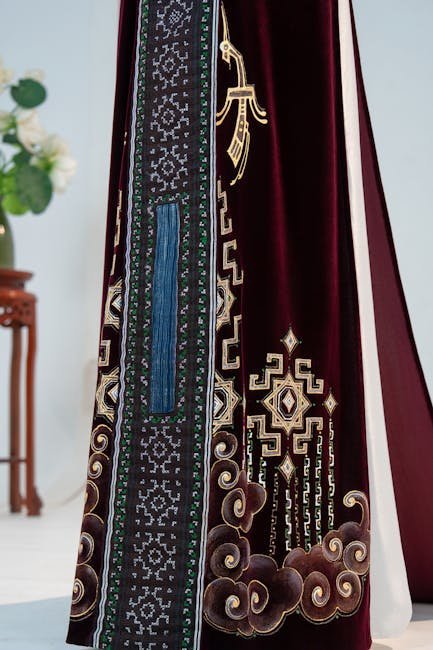
Tang textile technology reached new heights with the development of intricate brocade weaving techniques. The dynasty was famous for its kesi silk tapestry, a technique that allowed for virtually unlimited color and pattern variation. Unlike embroidery applied to finished fabric, kesi weaving built the pattern directly into the fabric structure during the weaving process, resulting in designs that were visible on both sides of the textile with identical clarity. Patterns were often inspired by nature and included lotuses, peonies, clouds, and mythical beasts. Gold and silver thread were incorporated into the finest garments, creating a dazzling effect that announced the wearer's wealth and status. The imperial workshops employed thousands of specialized artisans, and competition among weaving centers in Chang'an, Luoyang, and the southern cities drove continuous innovation. Persian Sasanian roundel patterns and Central Asian animal motifs became so thoroughly integrated into Tang textile vocabulary that they eventually became considered authentically Chinese design elements.
Cosmetics, Hair, and Accessories
Tang Dynasty beauty culture was as elaborate as its clothing. Women applied thick white face powder made from ground rice or lead, followed by bright rouge applied in circular patterns on the cheeks. Eyebrows were a particular focus of fashion, with dozens of documented styles ranging from delicate moth-wing shapes to thick, dark, and dramatically angled forms. A distinctive Tang practice was the application of huadian — small decorative patterns painted or pasted between the eyebrows using gold foil, mica flakes, or colored pigments in shapes such as plum blossoms, crescents, or abstract dots. Hairstyles reached extraordinary heights of complexity, with some requiring hairpieces and wire frames to achieve towering structures decorated with fresh peonies, gold hairpins, and dangling jade ornaments.
Footwear was equally varied. Women wore silk slippers with embroidered toes and thick cork soles for height. The most fashionable women adopted the practice of wearing men's boots for horseback riding, a gender-bending fashion statement that scandalized conservative observers but exemplified Tang cosmopolitan confidence. Perfume was widely used, with sandalwood, musk, and imported frankincense being particularly popular among the elite. The overall approach to personal adornment was maximalist — more color, more pattern, more fragrance, more ornament — reflecting a dynasty at the height of its power and cultural confidence.
Men's Official Court Attire
Tang Dynasty officials followed a strict dress code that indicated their rank through color. The highest-ranking officials wore purple robes, followed by red, green, and finally blue for the lowest ranks. This color hierarchy was codified in the laws of the dynasty and was strictly enforced. The official uniform consisted of a round-collared robe, a black futou hat, and a leather belt decorated with plaques indicating rank. This system of using clothing color to indicate bureaucratic rank was influential throughout East Asia and was adopted by subsequent dynasties across the region.
Did You Know?
Tang Dynasty women were known to wear men's clothing publicly - a practice that shocked visiting envoys but was accepted in Chang'an's cosmopolitan society. The emperor's own daughter was recorded as preferring masculine attire for horseback riding.
Tang Dynasty Silhouettes and Fabric Innovation
The Tang dynasty is remembered as a golden age of Chinese fashion, characterized by bold silhouettes, vibrant colors, and unprecedented cultural exchange. Womens fashion during the Tang period was remarkably liberated compared to earlier dynasties. The most iconic Tang garment was the ruqun, a high-waisted skirt paired with a short jacket, often cut with a low neckline that revealed the upper chest, a style that would have been scandalous in more conservative eras. Court fashion favored full, billowing skirts made from multiple panels of silk, creating a wide silhouette that emphasized graceful movement. The sleeves of Tang garments became increasingly wide throughout the dynasty, with some court robes featuring sleeves measuring over four feet across.
Tang dynasty textile production benefited from the cosmopolitan nature of the Tang capital Chang'an, which attracted weavers and dyers from across Asia and the Middle East. Persian-style patterns featuring pearl roundels, paired animals, and hunting scenes became integrated into Chinese silk design, creating a fusion aesthetic that was distinctly Tang. The development of more sophisticated loom technology allowed for larger pattern repeats and more complex weaves, including damasks and brocades with gold and silver thread. The imperial textile workshops in the eastern capital Luoyang employed thousands of skilled artisans who produced silks of extraordinary quality for the court and for diplomatic gifts. Dyeing reached new levels of sophistication with the importation of new dyestuffs from Central Asia, including brighter reds and purples that expanded the fashion palette considerably.
Social Status and Dress Codes
Tang dynasty sumptuary laws strictly regulated what could be worn based on social rank, though the prosperous merchant classes often found ways to circumvent these restrictions. Official court dress followed a color-coded hierarchy, with purple reserved for the highest-ranking officials, followed by crimson, green, and blue for progressively lower ranks. Yellow remained exclusive to the imperial family, and unauthorized use of imperial yellow was a serious offense. The Tang dynasty also saw the codification of the official court robes known as pufu, which included specific hat styles, belt ornaments, and insignia that identified the wearers position at a glance. The number and type of belt plaques, made from jade, gold, silver, or iron depending on rank, provided an immediate visual indicator of status.
The influence of foreign dress was particularly evident in Tang dynasty accessories and hairstyles. Women adopted elaborate towering hairstyles that required wire frames and extensive padding, decorated with gold combs, jade hairpins, and fresh flowers. Men of the court adopted the felt hats and boots of Central Asian nomadic peoples, incorporating these practical elements into Chinese dress for riding and hunting. The cosmopolitan atmosphere of the Tang capital encouraged the adoption of foreign dance costumes and performance wear, with Central Asian styles influencing stage costumes for court entertainments. This openness to external influences made Tang dynasty fashion the most internationally oriented of any Chinese dynasty, setting standards of elegance that would be remembered for centuries.