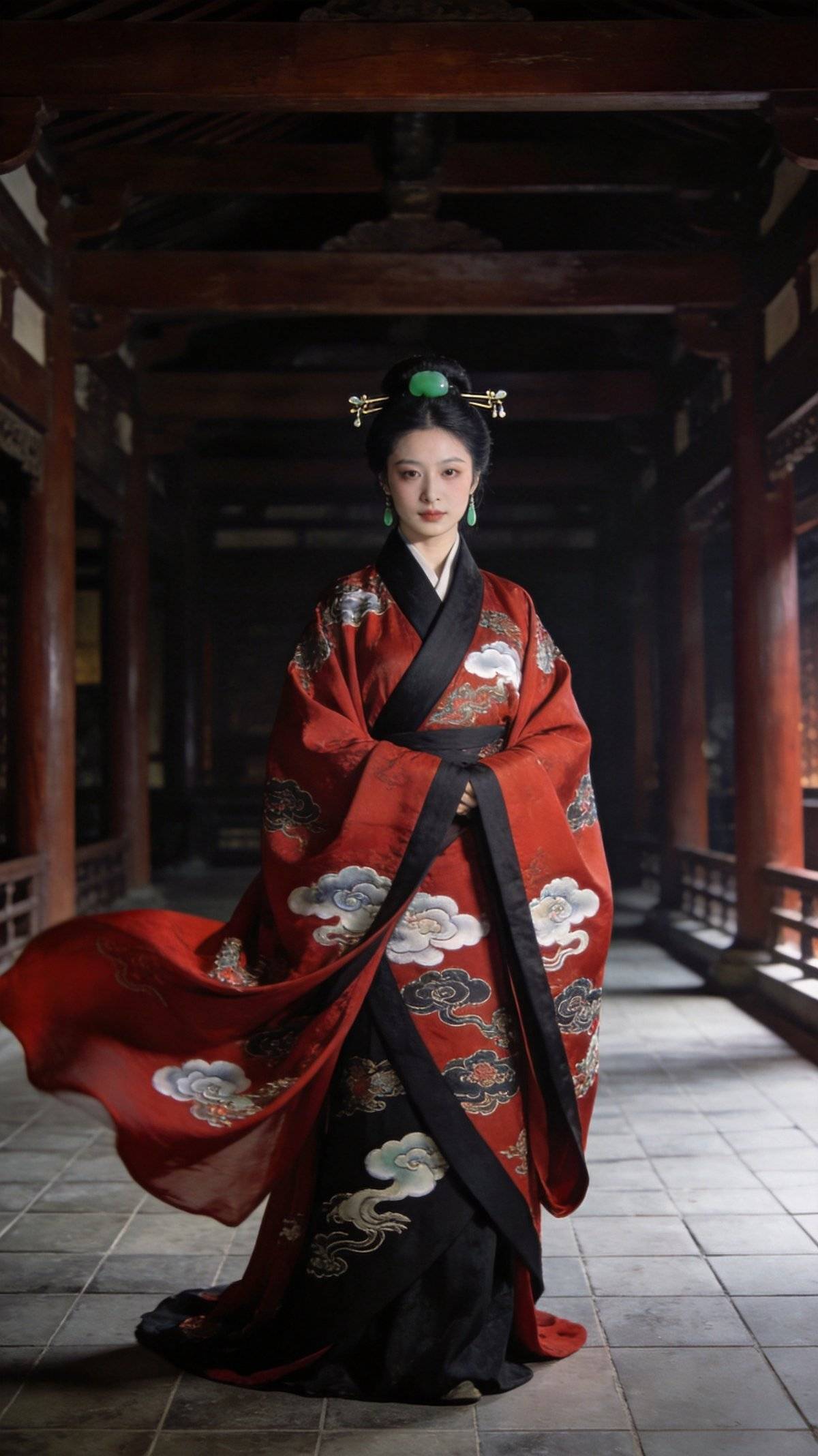
The Han Dynasty (206 BC-220 AD) represents the foundational era of Chinese clothing culture. It was during this period that the basic elements of Hanfu - the traditional dress of the Han Chinese - were codified and standardized. The most influential garment to emerge from this era was the Shenyi, or 'deep robe,' a full-body garment that wrapped around the wearer and was secured with a sash at the waist. This garment set the template for Chinese clothing for the next two millennia.
The Shenyi: Garment of Cosmic Harmony
The Shenyi was more than just clothing - it was a philosophical statement. Its design incorporated five key principles: the front and back panels represented the relationship between heaven and earth; the twelve panels of the skirt corresponded to the twelve months of the year; the round sleeves symbolized the heavens; the square collar represented the earth; and the sash at the waist bound the garment together with balance and harmony. This deep philosophical embedding made the Shenyi a garment for both scholars and officials, embodying Confucian ideals of order and propriety.
The Cross-Collar: A Cultural Marker
One of the most distinctive characteristics of Han Dynasty clothing is the cross-collar closure with the right lapel overlapping the left, known as youren. This right-over-left closure became an enduring symbol of Han Chinese identity. The left-over-right closure, zuoren, was reserved for the deceased or considered characteristic of non-Han peoples, making the direction of the collar fold a powerful cultural marker. This seemingly small detail carried enormous significance and remains one of the defining features of Hanfu to this day.
Key Characteristics
- Right-over-left closure (youren) as a definitive cultural marker of Han identity
- Round sleeves symbolizing celestial harmony and cosmic order
- Jade belt ornaments indicating social rank and scholarly achievement
- Layered silk construction with inner, middle, and outer garments
- Broad flowing sleeves for formal robes, up to 1.4 meters wide
- Dark-colored upper garments paired with lighter-colored lower skirts
The Han Dynasty standardized what we now call Hanfu - a clothing system so deeply embedded in philosophy that its collar direction, sleeve width, and panel count all carried cosmological meaning. Wearing a Shenyi was, in essence, wearing the universe.
Fabrics and the Silk Road
Silk was the dominant fabric of Han Dynasty fashion, with advanced weaving techniques producing brocades, gauzes, and damasks of extraordinary quality. The opening of the Silk Road during the Han Dynasty dramatically expanded textile trade, bringing Central Asian wool and cotton into Chinese markets while Chinese silk traveled westward. The Mawangdui archaeological site in Changsha unearthed silk garments from 168 BC that remained remarkably preserved, revealing intricate weaving patterns and dyeing techniques that astound modern textile experts. Among these finds was a plain silk gown weighing merely 49 grams, demonstrating the extraordinary skill of Han weavers.
Men's Everyday and Official Attire
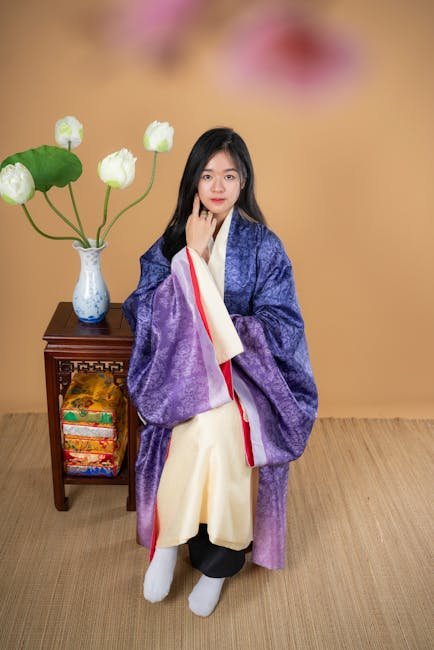
Men's clothing during the Han Dynasty was as carefully regulated as women's, particularly for the scholar-official class that formed the administrative backbone of the empire. The typical male ensemble consisted of a long robe worn underneath an outer jacket, with the entire outfit secured by a wide sash. Officials wore distinctive hats that indicated their rank: the jinxian guan, a tall square hat with a flat top, was worn by civil officials, while military officers wore more practical headgear. The quality and color of the silk used, the width of the sash, and the number of jade ornaments hanging from the belt all communicated precise information about the wearer's rank, office, and social standing. Common men wore simpler versions of the same garments in hemp or coarse silk, with fewer layers and minimal decoration.
Footwear also followed strict conventions. Officials wore thick-soled shoes with upturned toes, a style that would persist through subsequent dynasties. The upturned toe design was not merely decorative — it served the practical purpose of preventing the long robes from dragging on the ground while walking. Leather boots were worn for military campaigns and horseback riding, while straw sandals remained the footwear of laborers and farmers.
Color Symbolism and Status
Color in Han Dynasty clothing was strictly regulated by sumptuary laws. The five primary colors - black, red, green, white, and yellow - corresponded to the five elements of Chinese cosmology: water, fire, wood, metal, and earth. Black and red were considered the most prestigious colors, reserved for formal and ceremonial occasions. The emperor wore black robes with red trim for the most important rituals, following the Qin-Han cosmological belief that water, symbolized by black, had conquered fire, symbolized by red.
Women's Fashion
Han Dynasty women wore long, flowing robes that emphasized grace and modesty. The typical ensemble consisted of an inner garment, a long robe with a train, and a sash tied at the waist. The silhouette was columnar and elegant, with the body's form suggested rather than revealed through the drape of the fabric. Hairstyles were elaborate, with hair gathered into buns and decorated with combs, hairpins, and jeweled ornaments. Married women wore their hair in a coiled bun, while unmarried women wore it in a braid or ponytail. The distinction between married and unmarried women extended to clothing details as well: married women wore longer trains on their formal robes and more elaborate sash knots, while unmarried women's clothing was slightly simpler but allowed more freedom in color choices.
Women of the imperial court set fashion trends that rippled outward to the provinces. Palace ladies competed in elegance, and new styles originating in the capital would be copied throughout the empire within months. Court women also pioneered the use of face paint and cosmetics, with white foundation made from ground rice powder and rouge from safflower petals becoming standard elements of the formal appearance. Eyebrow styling was particularly important, with dozens of documented shapes described in poetry and paintings of the era. The overall aesthetic was one of understated elegance that prioritized graceful lines over ostentatious decoration, yet achieved remarkable sophistication through layering, fabric quality, and precise accessorizing.
Did You Know?
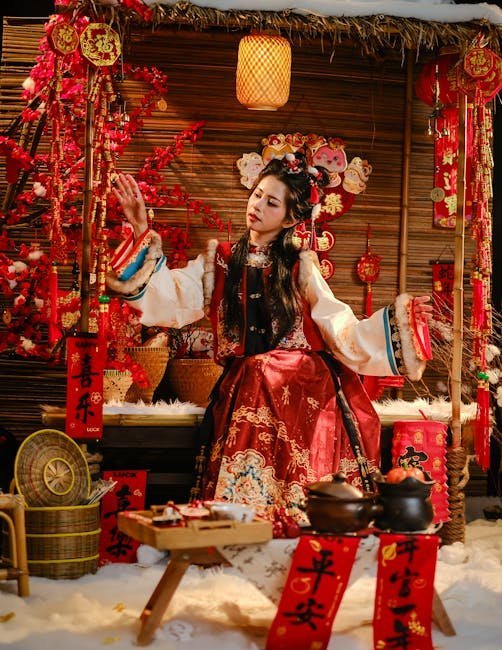
The phrase 'Hanfu' literally means 'Han clothing' and has become a rallying cry for a cultural revival movement. Since 2003, Hanfu enthusiasts have grown from a handful of pioneers into a community of millions across China and overseas, with annual sales exceeding one billion yuan.
Han Dynasty Silhouettes and Construction
The Han dynasty established clothing conventions that influenced Chinese dress for over two thousand years. The basic garment structure consisted of separate upper and lower pieces, with the upper garment called yi and the lower garment called chang. For everyday wear, common people wore short jackets paired with trousers or skirts made from hemp or ramie fabric, while the elite class wore long robes that extended to the ankles. The most distinctive Han dynasty innovation was the shenyi, a wrapped robe that crossed from left to right and was secured with a sash at the waist. This garment wrapped around the body multiple times, creating a layered look that was both practical and elegant, remaining a standard form of dress throughout subsequent dynasties.
Sleeve styles varied significantly by social status and occasion. Wide, flowing sleeves known as pao sleeves were favored by scholars and officials, their generous proportions allowing for dramatic movement and signifying leisure status, as wide sleeves made manual labor difficult. Narrower sleeve openings were worn by laborers and soldiers who needed freedom of movement. The construction of Han dynasty garments relied on straight-line cutting, where rectangular pieces of fabric were sewn together with minimal waste, a practice that reflected Confucian values of frugality. Garments were typically secured with fabric belts rather than buttons, and the overall silhouette emphasized modesty through full body coverage while allowing graceful movement through the natural drape of the fabric.
Textile Production in the Han Era
The Han dynasty saw remarkable advances in textile technology that expanded the range and quality of available fabrics. Silk production reached new heights during this period, with weavers in the Shu region producing brocades of exceptional quality that were traded as far west as Rome along the burgeoning Silk Road. The invention of the drawloom allowed weavers to create complex repeating patterns, including geometric designs, cloud scrolls, and stylized animals that became characteristic of Han textile art. Dyeing techniques also advanced significantly, with plant-based dyes derived from indigo, madder, and gardenia producing a range of colors from deep blues to rich reds and bright yellows. The most prized color was yellow, reserved exclusively for the imperial household.
Embroidery flourished as both a decorative art and a status indicator during the Han period. Elaborately embroidered silk robes worn by nobles and officials featured designs that conveyed specific meanings, such as cranes for longevity, dragons for imperial authority, and clouds for good fortune. The number and type of embroidery motifs on a garment directly indicated the wearers rank within the court hierarchy. Embroidery techniques included satin stitch, chain stitch, and seed stitch, each producing different textures and visual effects. The government maintained strict control over textile production through state-run workshops that produced silks for imperial use and diplomatic gifts, while private workshops in major cities catered to the growing merchant class who sought to emulate aristocratic dress codes.