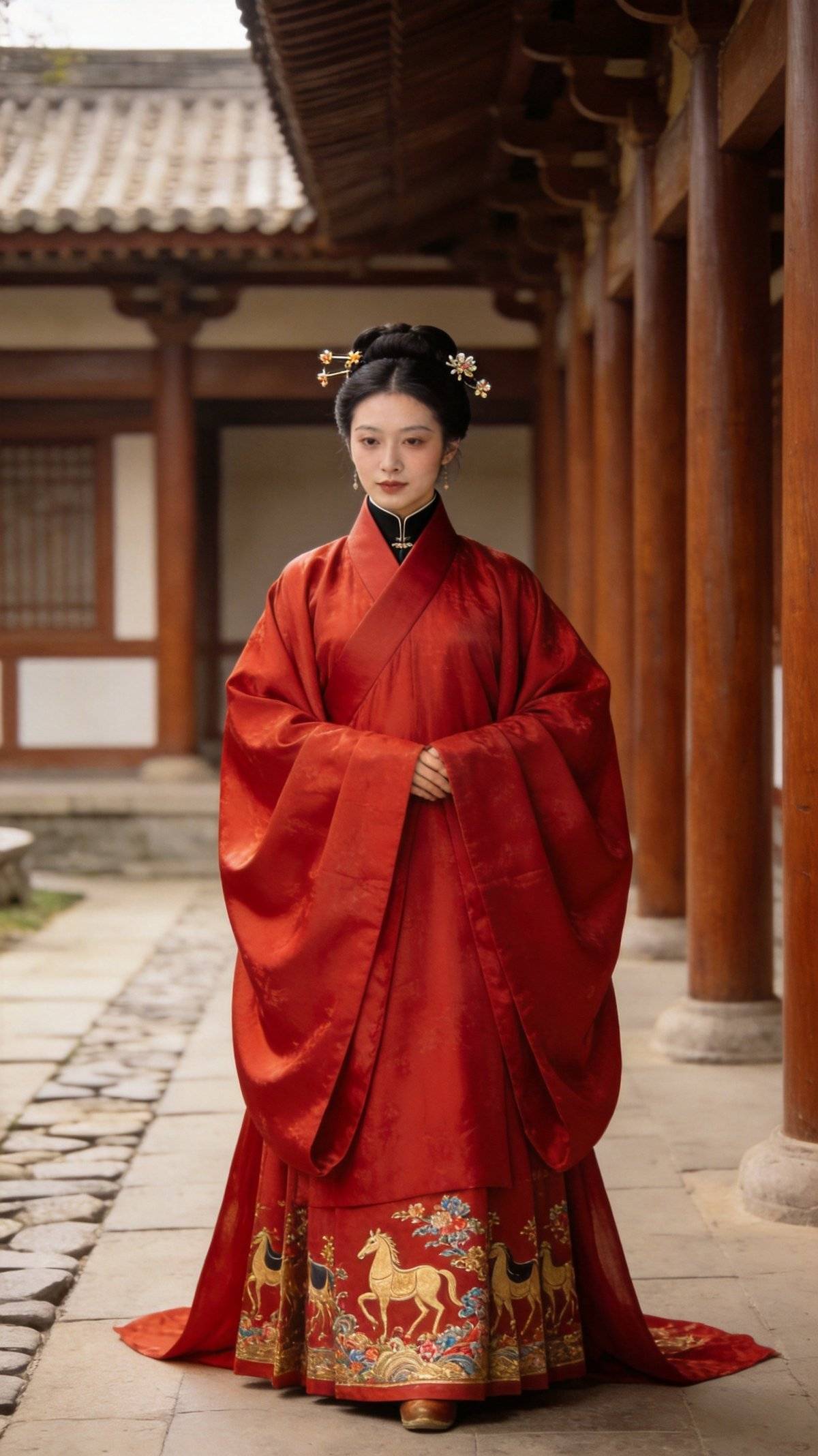
The Ming Dynasty (1368-1644 AD) represents a pivotal moment in Chinese clothing history. After nearly a century of Mongol rule under the Yuan Dynasty, the Ming emperors were determined to restore Han Chinese cultural traditions. This included a conscious revival of Tang and Song Dynasty clothing styles, but with distinctive Ming innovations that would come to define Chinese dress for centuries. The Ming Dynasty is often considered the golden age of Hanfu and the direct stylistic ancestor of the modern Hanfu revival movement.
The Han Chinese Restoration
When the Hongwu Emperor founded the Ming Dynasty, he issued decrees specifically aimed at restoring Han Chinese clothing traditions that had been suppressed or altered under Mongol rule. He banned the Mongolian-style clothing that had become popular and mandated a return to Tang and Song-style garments. However, this was not a simple replication - Ming Dynasty fashion incorporated new innovations that reflected the changing tastes of the era. The result was a distinctive Ming aesthetic that combined traditional elements with fresh design ideas.
The Horse-Face Skirt: A Ming Innovation
The most iconic Ming Dynasty garment for women is the mamianqun, or horse-face skirt. This unique skirt features flat panels at the front and back with pleated sections on the sides. The flat panels are decorated with embroidery, while the pleats allow for ease of movement. Despite its unusual name, the skirt is elegant and practical. The mamianqun has experienced a remarkable revival in recent years and is now one of the most popular Hanfu styles among modern enthusiasts, prized for its flattering silhouette and historical significance.
Key Ming Dynasty Garments
- Mamianqun: Horse-face skirt with flat embroidered panels and side pleats
- Aoqun: Jacket and skirt combination, the standard women's ensemble
- Standing collar: A Ming innovation that became a defining feature of later Chinese clothing
- Dragon robe: Five-clawed dragon robes reserved for the emperor
- Mangfu: Python robe worn by high-ranking officials
- Tieli: Informal jacket with narrow sleeves for daily wear
The Ming Dynasty perfected what the Han Dynasty had begun. The mamianqun, the standing collar, and the aoqun are not just historical garments - they are the direct inspiration for twenty-first century Hanfu, proving that great design transcends centuries.
Fabrics, Weaving, and Regional Production
Ming Dynasty textile production reached industrial scales, with specialized weaving centers emerging across the empire. Suzhou became famous for its intricate silk brocades, Nanjing for its cloud brocade (yunjin) incorporating gold and silver threads, and Sichuan for its Shu brocade tradition dating back over a thousand years. The Ming government established official textile workshops that employed thousands of weavers, and private commercial workshops flourished alongside them. The resulting fabric diversity meant that clothing quality varied enormously by social class — the nobility wore silk so fine it was nearly translucent, while common farmers wore sturdy hemp and cotton garments dyed with locally available plant materials.
Cotton cultivation expanded dramatically during the Ming period, making comfortable, washable clothing accessible to common people for the first time on a large scale. Before the Ming, cotton was a luxury import; by the dynasty's end, China had become the world's largest cotton producer. This democratization of textiles had profound social effects, allowing ordinary citizens to own more garments and to participate in fashion trends that had previously been restricted to the elite. The introduction of the cotton gin-like device in China during this period accelerated processing and further reduced costs.
Imperial Regalia and Color Symbolism
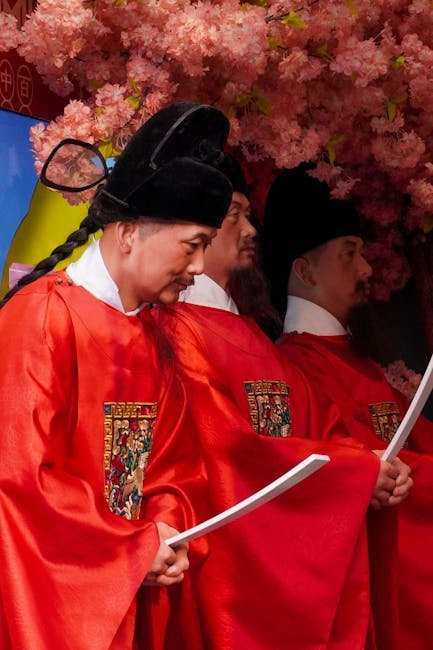
Ming Dynasty sumptuary laws regarding color and pattern were among the most elaborate in Chinese history. The emperor's ceremonial robes were bright yellow, a color that was forbidden to all others. Dragons with five claws adorned imperial garments, while officials were restricted to four-clawed dragons or other mythical beasts. The ranks of civil and military officials were indicated by specific animal badges on their robes, known as buzi or rank badges. These embroidered squares, worn on the chest and back, featured birds for civil officials and animals for military officials, creating a visual hierarchy that was immediately recognizable.
Women's Fashion and Social Class
Ming Dynasty women's clothing varied dramatically by social class, age, and marital status. Elite women wore the full aoqun ensemble with luxurious fabrics and intricate embroidery, while working women wore simpler versions in cotton with minimal decoration. The mamianqun was universally worn across classes but differed enormously in quality: a noblewoman's skirt might feature gold-thread embroidery depicting mythological scenes, while a farmer's wife's version was plain indigo cotton with modest pleating. One distinctive Ming practice was the wearing of multiple layered skirts, each visible through the side slits of the outer skirt, creating subtle color reveals as the wearer moved. The number and quality of visible skirt layers communicated wealth as clearly as any jewelry.
Foot binding, which had begun during the Song Dynasty, became widespread among Han Chinese women during the Ming, particularly in urban areas. This practice dramatically influenced women's footwear and gait, and by extension their clothing. The lotus shoes worn by bound-foot women were tiny embroidered slippers that became objects of elaborate craft in their own right, with some featuring embroidery so fine it required magnification to appreciate. However, it is important to note that foot binding was primarily an elite urban practice; rural women, Manchu women, and women from many ethnic minority groups did not bind their feet and wore practical flat shoes suitable for agricultural work.
Legacy and Modern Revival
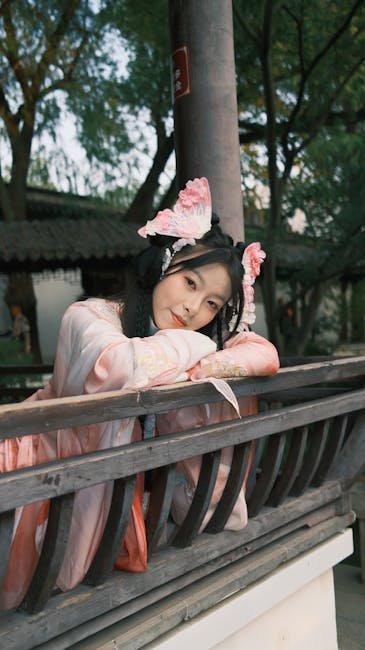
The Ming Dynasty's influence on Chinese clothing extends far beyond its historical period. Ming-style clothing is the primary inspiration for the modern Hanfu revival, which began in the early 2000s and has grown into a significant cultural movement. The Ming aoqun and mamianqun are among the most popular styles purchased by modern Hanfu enthusiasts. This is partly because Ming clothing is well-documented in paintings and extant garments, making accurate reproduction possible, and partly because Ming aesthetics - elegant, structured, and refined - appeal strongly to contemporary tastes.
Did You Know?
The Ming Dynasty invented the standing collar, now considered an essential feature of Chinese traditional clothing. This collar design was later adopted in the qipao and continues to influence modern Chinese fashion design.
Ming Dynasty Silhouettes and Garment Innovation
The Ming dynasty represented a conscious return to Han Chinese clothing traditions after nearly a century of Mongol rule under the Yuan dynasty. The Ming court actively promoted traditional Han dress codes, reviving elements from the Tang and Song periods while introducing distinct innovations that would define Ming fashion. The most notable Ming contribution to Chinese clothing was the standing collar, a narrow vertical band that rose around the neck, often fastened with small metal or fabric buttons. This collar design was a significant departure from the cross-collar closures of earlier periods and became one of the most recognizable features of Ming dress. The standing collar would later influence the design of the qipao in the twentieth century.
The mamianqun, or horse-face skirt, was another important Ming innovation that has seen a remarkable revival in contemporary Hanfu fashion. This distinctive skirt featured flat, ungathered panels at the front and back, with pleated sections at the sides that allowed for ease of movement. The flat panels were often richly decorated with embroidery, creating a striking visual contrast with the pleated sections. Mamianqun were typically worn with a long jacket or robe called an ao, which featured the standing collar and was fastened at the right side with fabric knots or metal buttons. The combination of the ao and mamianqun created a sophisticated layered silhouette that was both practical and visually distinctive, with the skirt panels creating a graceful A-line shape when the wearer walked.
Imperial Authority and Color Symbolism
Ming dynasty clothing was deeply intertwined with imperial authority and Confucian ritual. The emperor and his court wore elaborate dragon robes called longpao, which featured five-clawed dragons embroidered in gold thread against richly colored silk backgrounds. The number of dragons, the color of the robe, and the specific cloud patterns all conveyed specific meanings about the wearer's position and the occasion. The Ming court revived the ancient system of color-coded official robes, with crimson for the highest-ranking officials, followed by blue, green, and brown for descending ranks. The twelve imperial symbols, including the sun, moon, stars, mountains, and dragons, were reserved exclusively for the emperor's ceremonial robes, each symbol representing a specific imperial virtue.
The Ming dynasty also saw the flourishing of elaborate headwear as markers of status and occasion. Officials wore distinctive black gauze hats with winged extensions called wushamao, the wings indicating rank through their shape and angle. Commoners wore simpler headcloths or conical bamboo hats, while the emperor wore elaborate crowns for ceremonial occasions. Women's headwear included the diadem-like fengguan, or phoenix crown, worn by brides and noblewomen, adorned with pearls, kingfisher feathers, and gold filigree. The level of ornamentation in Ming dynasty clothing reflected the period's prosperity and the Confucian emphasis on proper dress as an expression of moral order, with each garment serving as a visible statement of the wearer's place in the social hierarchy.