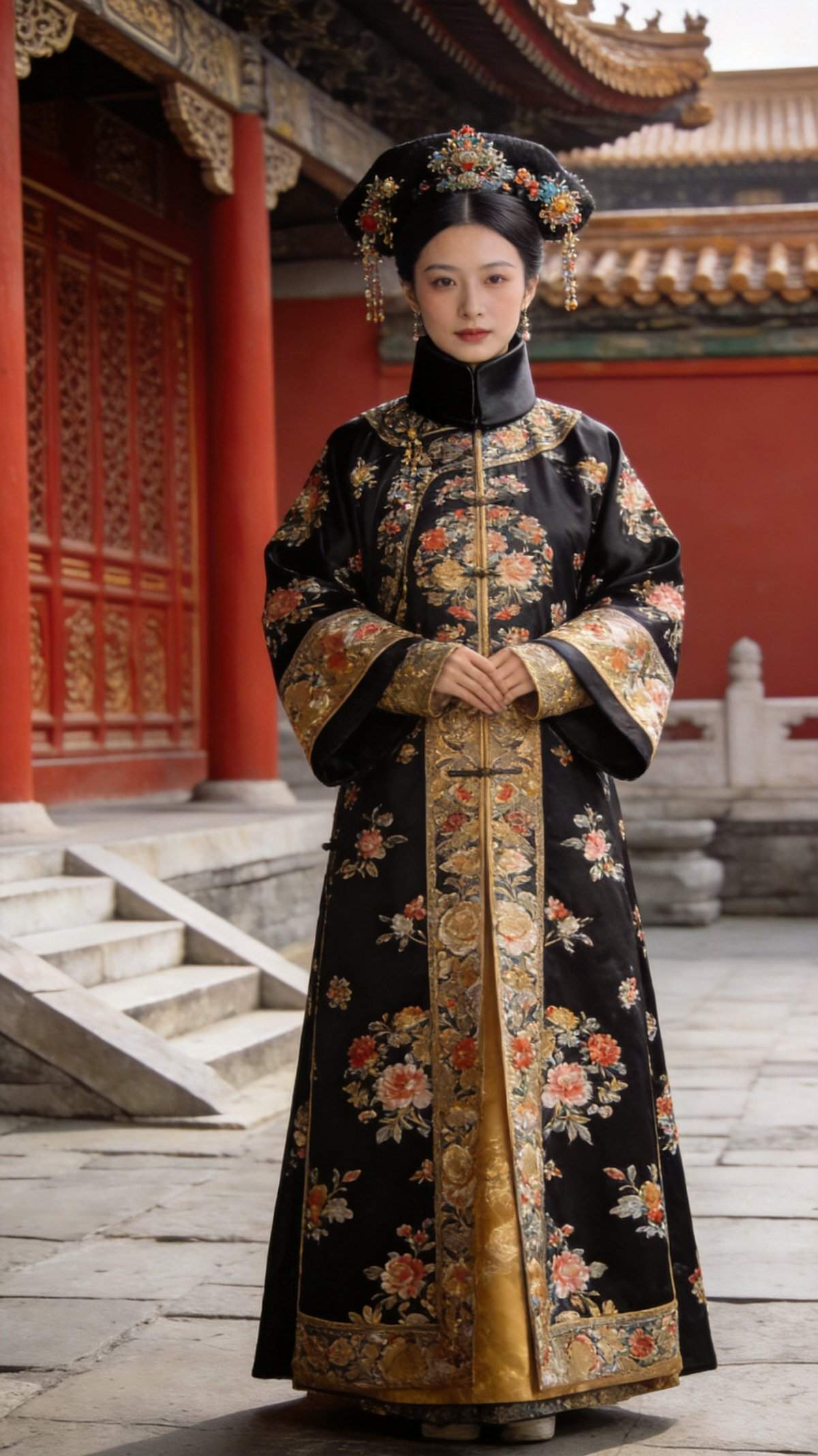
The Qing Dynasty (1644-1912 AD) was the last imperial dynasty of China, ruled by the Manchu people from the northeast. The Manchus brought their own distinctive clothing traditions, which they imposed on the Han Chinese population through the infamous queue order. This period saw a fundamental transformation of Chinese dress, with Manchu styles gradually blending with Han traditions to create the garments that the world now recognizes as quintessentially Chinese - most notably, the qipao and changshan.
Manchu Influence on Chinese Dress
Upon conquering China, the Manchu rulers enforced a dramatic change in Chinese clothing. Han Chinese men were required to shave their foreheads and braid their remaining hair into a queue, and to wear Manchu-style clothing. The traditional Han Chinese clothing system, with its flowing robes and wide sleeves, was largely replaced by Manchu garments featuring narrow sleeves, front-fastening jackets, and practical designs suited to the Manchu's equestrian lifestyle. This cultural imposition was deeply resented but ultimately reshaped Chinese fashion permanently.
The Evolution of the Qipao
The qipao, also known as the cheongsam, began as a loose, straight-cut Manchu woman's dress. The early Qing version was a two-piece ensemble consisting of a long robe and a separate skirt. Over the centuries, the qipao evolved dramatically, becoming more fitted and form-revealing. The most significant transformation occurred in the 1920s Shanghai, when the qipao was modernized into a one-piece, body-hugging dress with side slits and a standing collar. This modern qipao bore little resemblance to its Manchu ancestor but became the definitive Chinese dress of the twentieth century.
Qing Dynasty Attire
- Qipao: One-piece Manchu dress that evolved into the iconic cheongsam
- Changshan: Long men's robe, often worn with a short jacket
- Magua: Short riding jacket worn over the changshan
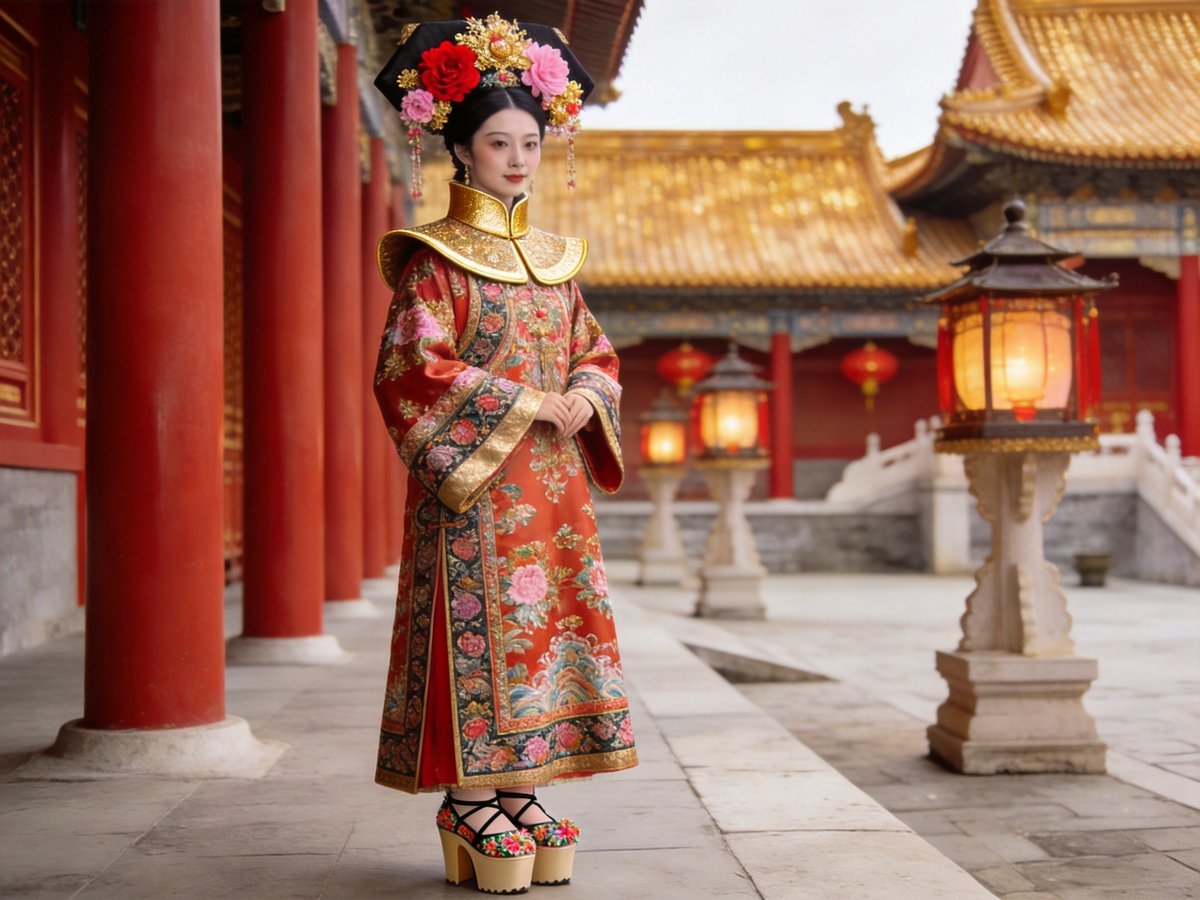
- Platform shoes: Manchu women's shoes with a central platform
- Liangbatou: Elaborate two-headed phoenix headdress for Manchu women
- Chaozhu: Court necklace worn by officials, similar to rosary beads
The qipao's journey from Manchu court robe to Shanghai fashion icon is one of fashion's greatest transformations. It began as a symbol of conquest and ended as a symbol of Chinese femininity - a garment that tells the story of cultural collision and creative reinvention.
Fabrics, Embroidery, and Craftsmanship
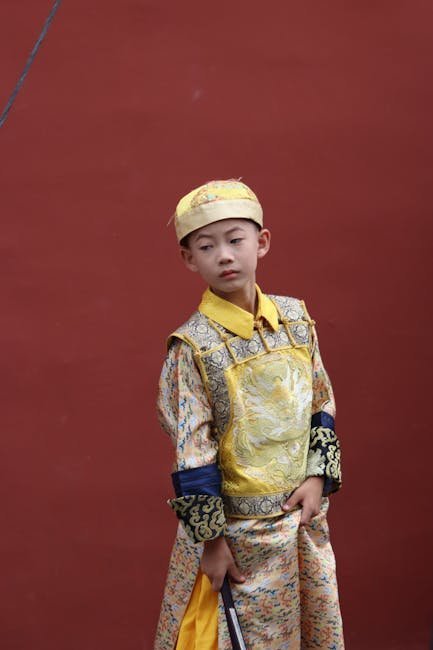
Qing Dynasty textile arts reached extraordinary heights of technical sophistication, particularly in imperial workshops. The dragon robes worn by the emperor and his court featured embroidery so dense and precise that a single garment could require several years of work by a team of specialized artisans. Gold and silver wrapped threads were used extensively in court garments, along with kingfisher feather inlay for the most precious pieces. The Qing also perfected the technique of kesi silk tapestry, which allowed for pictorial designs of breathtaking complexity. Beyond the court, regional embroidery styles developed distinct identities: Suzhou embroidery was known for its realistic shading, Hunan embroidery for its bold tiger and lion motifs, Sichuan embroidery for its bright colors, and Guangdong embroidery for its gold-thread opulence.
Manchu traditions introduced new fabric preferences to Chinese fashion. Felt, leather, and fur became more prominent, reflecting the Manchu people's northern origins and equestrian culture. Sable, fox, and lambskin were highly prized for winter garments and trim. The Manchu also favored thicker, more structured silks that held their shape better than the flowing Han fabrics, contributing to the more architectural silhouette characteristic of Qing court dress.
Court Dress and Rank Badges
The Qing Dynasty maintained and adapted the Ming system of rank badges, with birds and animals indicating official position. However, the Manchu rulers introduced their own innovations, including the chaozhu court necklace and the distinctive hat system. Officials wore conical hats topped with finials of different materials - ruby, coral, sapphire, and crystal - depending on their rank. The winter hat was made of fur, while the summer hat was woven from rattan or bamboo. This elaborate system of visual hierarchy was one of the most sophisticated in imperial China.
Men's Clothing Under Manchu Rule
For men, the most visible change under Qing rule was the mandatory adoption of the queue hairstyle and Manchu-style clothing. The changshan, a long robe reaching to the ankles, became the standard male garment. It was typically worn with a short riding jacket called a magua on top, creating the distinctive layered Manchu silhouette. The magua was originally a practical garment for horseback riding, with short sleeves and a front opening, but evolved into a formal garment worn on all official occasions. By the late Qing period, a man's social standing could be determined at a glance by the quality and cut of his changshan and magua combination. Dark blue and black were the most common colors for men's formal wear, while lighter colors were reserved for summer and informal occasions.
The Manchu also introduced their distinctive hat culture to Chinese dress. The Qing official's hat was a conical structure with an upturned brim, topped with a finial indicating rank. In winter, the hat was made of fur; in summer, it was woven from bamboo or rattan and covered with silk. The finial material — ruby, coral, lapis lazuli, crystal, or gold — precisely indicated the wearer's position in the nine-rank official system. Peacock feathers were awarded as special imperial honors and attached to the hat, with the number of "eyes" on the feather indicating the level of distinction. This hat system was one of the most elaborate rank-indicating mechanisms in any historical clothing tradition.
Blending of Traditions
Despite the Manchu imposition of their clothing styles, Han Chinese fashion traditions did not disappear entirely. Women, particularly in southern China, often continued to wear Ming-style clothing into the early Qing period. Over time, a fusion of Manchu and Han styles emerged, particularly in women's dress. The late Qing period saw the beginning of the qipao's transformation into a modern garment, as Shanghai tailors began experimenting with fitted silhouettes that combined Manchu and Western design principles.
Did You Know?
The infamous queue hairstyle mandated by the Qing rulers required Han Chinese men to shave the front of their heads and braid the remaining hair into a long ponytail. Refusal to wear the queue was punishable by death, making it one of the most strictly enforced dress codes in history.
Manchu Influence on Qing Dynasty Clothing
The Qing dynasty was founded by the Manchu people from the northeast, and their cultural traditions fundamentally reshaped Chinese clothing. Upon taking power, the Manchu rulers implemented a policy requiring Han Chinese men to adopt Manchu dress as a sign of submission, while women were allowed to continue wearing traditional Han clothing, creating a gendered divide in fashion that persisted throughout the dynasty. The Manchu changpao, a long robe with narrow sleeves and a horse-hoof shaped cuff, became the standard garment for men. This practical design originated from the Manchu horse-riding tradition, with the narrow sleeves preventing wind resistance during riding and the distinctive cuffs providing hand protection in cold weather.
The queue hairstyle was mandated alongside Manchu dress for Han men, requiring the front of the head to be shaved while the back hair was grown long and braided into a pigtail. This hairstyle became one of the most recognizable symbols of the Qing period and sparked considerable resistance among Han Chinese who viewed it as a humiliating imposition. Over time, however, the queue became so associated with Chinese identity that its forced removal after the 1911 revolution was itself experienced as traumatic by many. The Manchu also introduced distinctive footwear, with Manchu women wearing platform shoes called huapen di, or flowerpot shoes, which featured a high wooden platform at the center of the sole that elevated the wearer and required a distinctive swaying gait.
The Evolution of the Qipao
The qipao, also known as the cheongsam, evolved during the Qing dynasty from the Manchu womans long robe into one of the most iconic Chinese garments in history. The earliest qipao was a loose, straight-cut garment that hung from the shoulders to the ankles, with wide sleeves and minimal tailoring. It was typically worn with a jacket or vest over it and was made from silk or cotton depending on the wearers status. The garment changed little during the early and middle Qing periods, remaining a modest, concealing robe that reflected Manchu cultural values. It was distinct from the two-piece ensembles worn by Han Chinese women, consisting of a separate jacket and skirt, and the qipao was initially worn only by Manchu women of the court and banner families.
The late Qing period saw the gradual transformation of the qipao from an ethnic Manchu garment into a broader symbol of Chinese femininity. As Han and Manchu women increasingly mingled in urban centers, elements of both traditions began to merge. The qipao became more fitted through the bodice, and the sleeves narrowed, reflecting Han preferences for more defined silhouettes. Elaborate embroidery featuring botanical motifs, butterflies, and auspicious symbols became standard decorative elements on high-quality qipaos. By the end of the Qing dynasty in 1912, the qipao had developed into the foundation for the figure-hugging, side-slit garment that would become a fashion sensation in the Republican era. The Qing dynastys clothing legacy thus represents a complex fusion of Manchu and Han traditions that continues to influence Chinese fashion today.